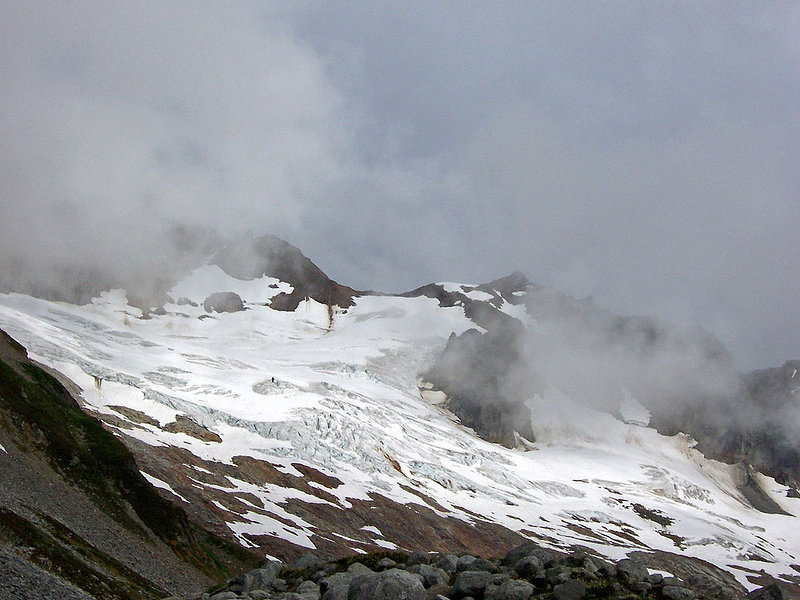
Ryder Glacier, Northern Greenland Transient snowline rise

Ryder Glacier drains from the northern margin of the Greenland Ice Sheet into Sherard Osborn Fjord. The glacier was first surveyed by Lauge Koch in 1917. By 1956 the glacier had lost 75% of its floating tongue. Since 1990 the glacier front has advanced slightly with much of this change beginning in a mini-surge in 1995. As noted in the Arctic Report Card 2010 since 2000, the net area change of the 35 widest marine-terminating glaciers is -1535 km2. This is an effective average glacier length change of -1.7 km since year 2000. While the overall area change indicates the largest observed retreat, 7 of 35 glaciers did advance in 2010 relative to 2009. The largest glacier advances were at Ryder and Storstrømmen glacier, each advancing 4.6 and 4.2 km2, respectively.The shelf front of Ryder Gletscher advanced has advanced recently at about the
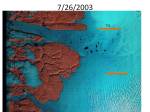
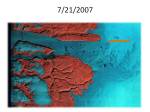
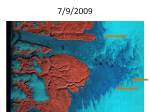
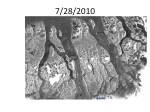
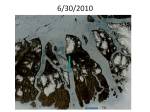
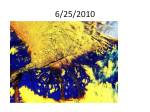
rate of flow, but it is thin <200 m and fractured in the floating region. This does not appear to be an advance driven by increased mass balance. In the last decade particularly since 2003 the transient snowline observable in satellite images has in most years reached 1000 m. The floating tongue has to date managed to avoid the large losses on Petermann Glacier. Both glaciers have experienced enhanced surface melt, the key has been greater basal melt to date at Petermann Glacier. This is in contrast to the 800 m level reported in the Satellite image Atlas of Greenland. The transient snowline (TSL) on the outlet glaciers of the local ice caps provides a crucial measure of annual balance and the extent of significant melting on the Ice Sheet. The number of satellite images available has increased dramatically providing the capability for TSL identification daily if clouds permit using MODIS. MODIS, Landsat 7, NOAA Microwave imagery and ENVISAT images below indicate the transient snowline for the Ryder Glacier area. Note that many of images from late June indicate a TSL in the 1000 m range even early in the melt season. To the west of Ryder Glacier (R), Steensby Glacier (S) and sometime Petermann Glacier (P) are evident n the outlet glaciers of Steensby Gletscher and Ryder Gletscher, where
it reaches an altitude of approximately 800 m. Ryder Glacier’s TSL lies very close to the southern boundary of the processed images from the Danish Meteorological Institute. The first slide is the topgraphy of the Ryder Glacier near the TSL, the second is a 1976 satellite image from the USGS Greenland Satellite Image Atlas 1386-c. The rest are annotated images downloaded from DMI or from the USGS for the Landsat images which are false color images. The TSL tends to rise from 975 m to the east of the glacier outlet to 1100 m south of and west of the fjord entrance.

This slideshow requires JavaScript.

.

Sara Umaga (Tos) Glacier, India snowline rise and retreat-Hydropower

Sara Umaga Glacier drains into the Beas River in the Himachal Pradesh region of India. The glacier has retreated over 1600 meters since initial 1970. The glacier is also a key water source for hydropower, this will be detailed below. The glacier is 15 km long extending from 5600 m to 3900 m. The glacier has retreated at a rate of 44 meters/year from 1989-2004 (Kulkarni, 2005). The glacier is adjacent to the Chota Shingri Glacier which has retreated at a rate of 7 m/year from 1970-1989 and 27 m/year from 1990-2000. The retreat is the result of the rise of the equilibrium line, approximately the snowline at the end of the summer, where ablation equals accumulation. In the late 1980’s the snowline averaged 4700 m. In recent years the snowline has been a high as 5180 meters (Wagnon et al., 2007). This same rise has led to high snowlines on the Sara Umaga Glacier. In recent satellite images the snowline is above 4900 m, and the snowline is below where the ELA will be at the end of the melt season. The snowline and the head of the glacier are noted in the image below. This leaves only 20 % of the length of the glacier in the accumulation zone. In terms of area 25-30% of the area of the glacier has been above the current ELA. For a glacier to be in equilibrium at least 50% of the glacier must be in the accumulation zone. The Sara Umaga is retreating as it cannot sustain the large lower elevation ablation area. Retreat has revealed two vegetation trimlines. The older is a Little Ice Age trimline-the former the trimline is from the 1950-1970 period. This is an attempt to restore equilibrium. An examination of the heavily debris covered ablation zone indicates that the lowest 2.25 km of the glacier is stagnant and will melt away. The end of the stagnant zone is indicated by the green arrow and the change in thickness to the Little Ice Age lateral moraine by the brown arrow and the current terminus by the pink arrow.
. The lower section of the glacier is heavily debris covered which reduces melt rates. There is no apparent crevassing or convex shape to the glacier cross profile in the lower 2.25 km indicating stagnation. The debris covered section is not sensitive to soot deposition, as it is already sufficiently dark. The Glacier drains into the Beas River, which flows first through the Larji Hydropower project, which alters streamflow often leaving the stream below nearly dry. The Beas River is then impounded by the Pandoh Dam-and lake, third image below, which diverts water through a tunnel into the Saltuj (Sutlej) River, fourthimage, and thence the Bakrhra Dam at 1200 MW hydropower project. The tunnel from Pandoh is the largest tunneling project in Inida 13 km with a diameter of 8 m. larji hydropower
Larji Hydropower looking upstream to reservoir and beyond. Notice the influence of the dam on the river which is nearly dry below the dam on the date of the imagery near Markanada Temple.
larji outlet beas streamflow

Ried Glacier Rapid Glacier loss, Switzerland

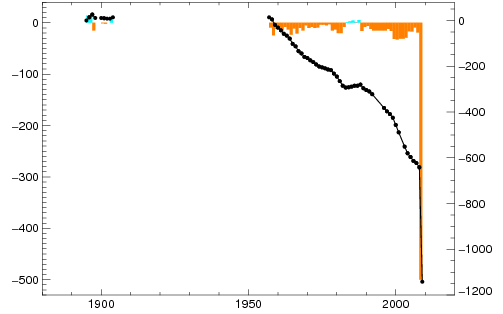
Ried Glacier is beneath the Durrenhorn in the Pennine Alps of Switzerland. The glacier was 6.3 km long in 1973. In 2010 the glacier is 5.1 km long. From the Swiss Glacier Monitoring Network annual measurements, Ried Glacier retreated 300 m from 1955-1990, 8 meters/year. From 1990-2008 retreated an additional 300 m, 30 m/year. Than in 2009 the glacier retreated 500 m. A comparison of a 2004 image taken by M. Funk and a Sept. 2008 image from D. Gara indicate why the change was so abrupt. The glacier had been retreating upvalley with a long gentle terminus tongue. This section of the glacier separated from the glacier in late 2008, with the terminus now ending on a steep rock slope. There is still stagnant ice in the valley below the end of the current glacier. It is heavily debris covered and no longer connected to the glacier system. This glaciers recent rapid retreat parallels that of Dosde Glacier, Italy and Triftgletshcer, Switzerland and Rotmoosferner, Austria. A look at the glacier system and the terminus in Google Earth imagery provides a broader view of the glacier behavior. The terminus in this image still extends downvalley with the low sloping tongue that is now separated. Current terminus marked with red-T.
In the imagery above the glacier is still connected to the terminus tongue. It is evident that the glacier has two primary icefalls at that time. The upper icefall is the location of the annual snowline, where accumulation tends to persist throughout the year. Below this point only seasonal snowfall is retained. The retreat history from the Swiss Glacier Monitoring Network is seen below.

Quien Sabe Glacier Retreat

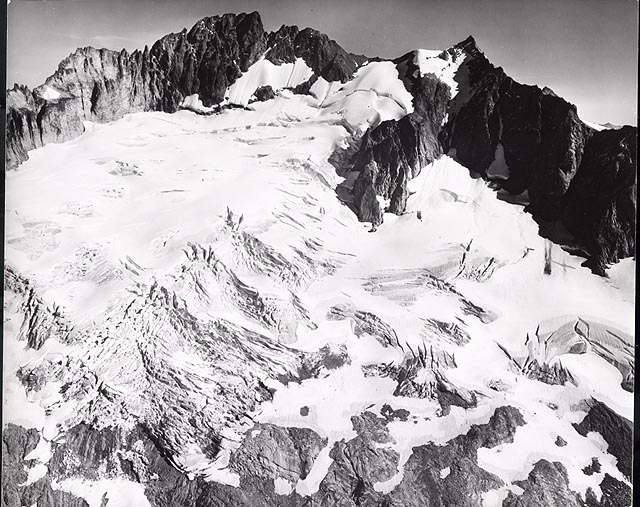
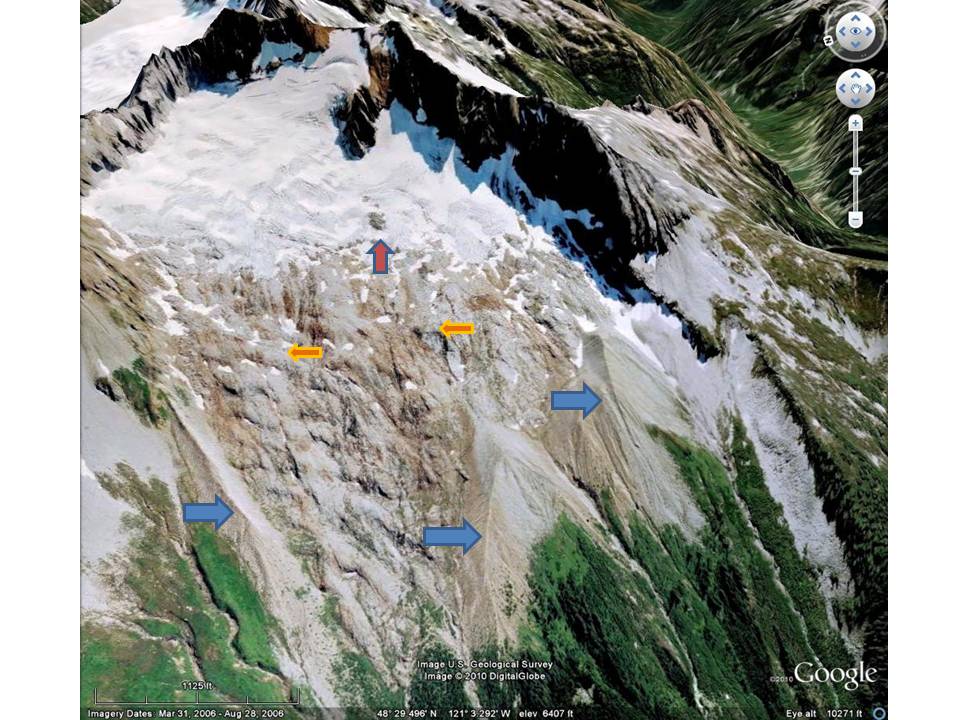
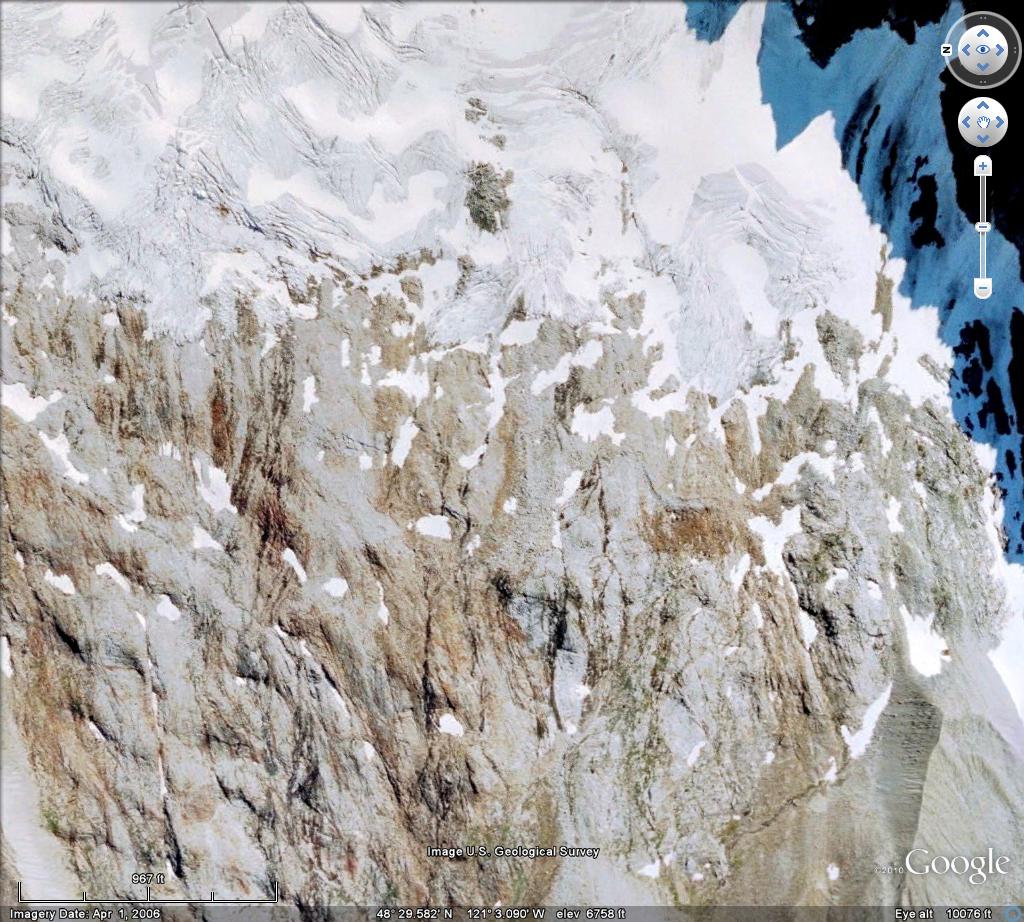
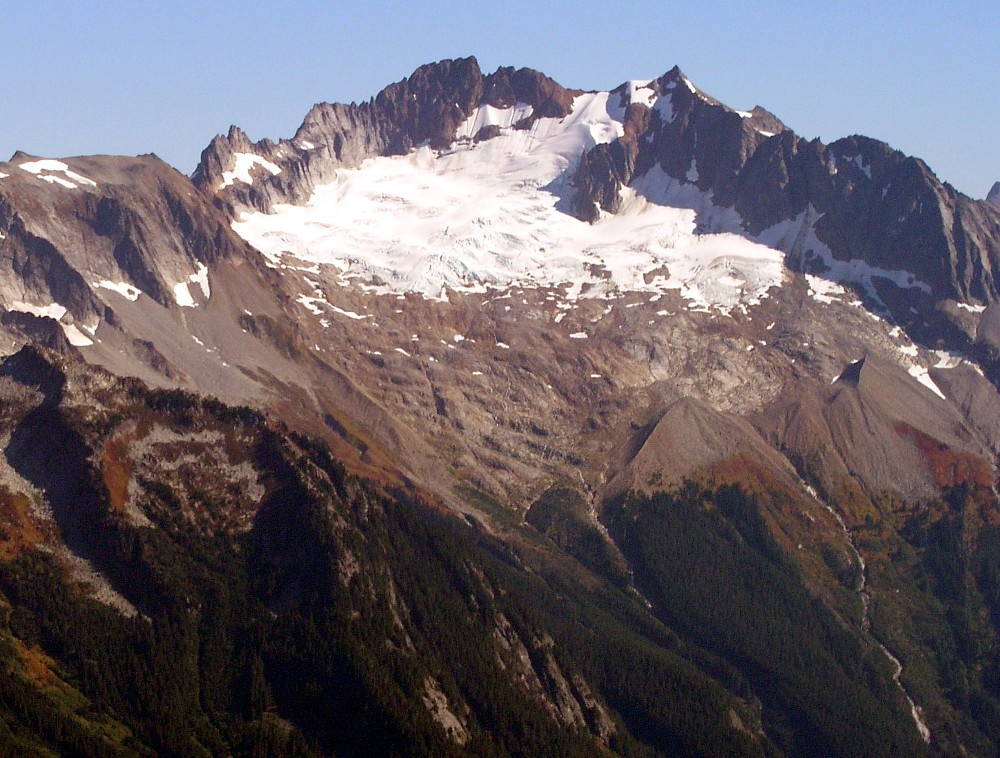
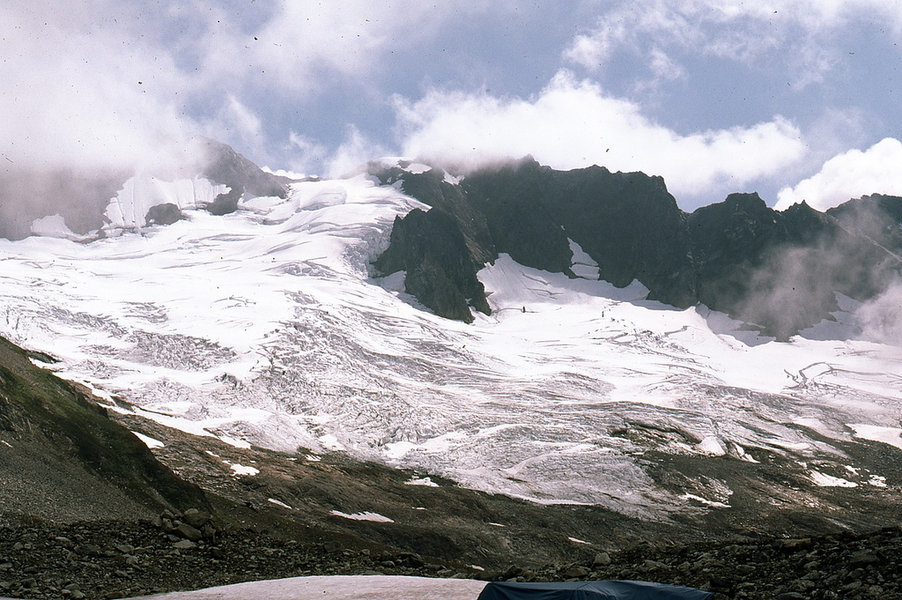
The Quien Sabe Glacier in the North Cascades of Washington has experienced rapid retreat in the last 20 years. This glacier is the largest in Boston Basin near Cascade Pass, its name translates to “who knows?”, well we all know it is not enjoying recent climate. In the 1960 Austin Post photograph he gave to me in 1994, the glacier was heavily crevassed and advancing. By 1975 the advance had ceased, but little retreat occurred until 1987. This glacier faces south and is fed by avalanching off of Forbidden and Sahale Peak. The glacier retreated 1200 meters from its Little Ice Age maximum (moraine indicated with blue arrows) until 1950. Richard Hubley noted the advance by 1955, the total advance was 55 meters by 1975 (advance moraines noted with orange arrows). We were able to identify the advance moraine in 1985 when it was still quite evident. The smooth bedrock, Granodiorite in the basin, provides little friction for this glacier as it moves over the polished slabs. Today the terminus moraines from 1975 range from 150-250 meters from the current glacier terminus averaging just over 200 meters. For a glacier that averages 700 meters in length this is a significant loss of total area. There are a number of bedrock outcrops that have appeared above the terminus indicating how thin the terminal area is and that retreat is ongoing. . In 2009 the glacier lost almost all of its snowcover an occurrence that has become frequent in the last 18 years. In this August image the glacier is 25% snowcovered. Fortunately 2010 was a better year in terms of snowcover, with more than 50% of the glacier snowcovered at the end of the summer, photograph from Neil Hinckley.
Quien Sabe Glacier viewed from a similar location on the western side of the glacier in 1985 and 2007. The reduction in crevassing, thickness is evident as is the marginal retreat and emerging bedrock.

Dosde Glacier, Italy retreat and separation

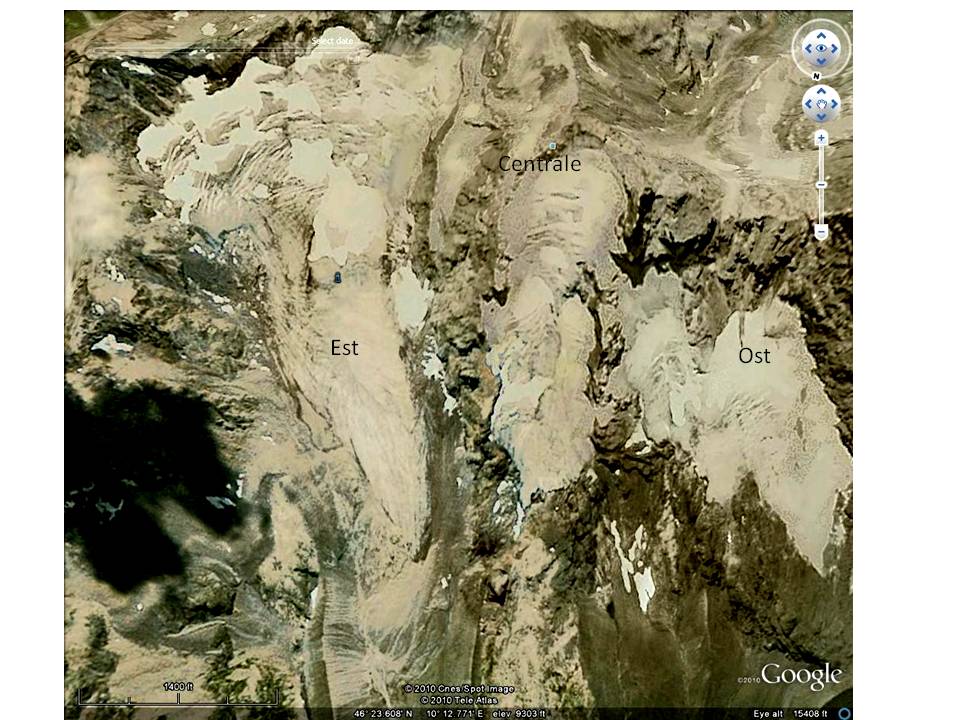
Dosdè Glacier in the Dosdè-Piazzi Group of the Italian Alps has been the focus of research by the University of Milan Department of Geography in the last decade to both chronicle its retreat, examine the causes, and evaluate the impacts and potential mitigation steps. In 1954 there was a Dosdè Est, Dosdè Centrale and Dosdè Ovest glaciers with respective areas of 1.2 and 0.8 and 0.9 square kilometers. By 2003 the areas had been reduced to 0.8, 0.5 and 0.3 square kilometers. This is evident in the picture from 1932 and 2007 of the Dosdè Glacier group from Guglielmina Diolaiuti, University of Milan. I have added arrows annotating key changes Est is on the left, Centale in the middle and Ovest (labelled Ost) on the right. The purple arrow indicates the separation of two glaciers. The blue arrow indicates the change in glacier size near the top of the peak. The orange arrow notes the thinning of the glacier near the current glacier tongue. The green arrow indicates the retreat at the head of the glacier indicating thinning even in the accumulation zone. This glacier lost all of its snowcover in several recent summers including 2010, in this Google Earth view the summer of 2010 is ongoing and their are a few white patches of snowpack from the previous winter, that were then lost. This inconsistency of the accumulation zone is a sign of a glacier that cannot survive In this region at least 6 glaciers have been observed to disappear in the last 50 years. The continued decline in area and lack of accumulation zone persistence does not suggest that glaciers in this mountain massif will survive. Dosdè Est has retreated over 400 meters in the last 50 year, but of more importance to its survival is the degree of thinning apprarent from the terminus to its head. Dosdè Est has been the focus of study utilizing a covering blanket to examine its efficacy in reducing ablation as was done on Stubai Glacier in Austria. The University of Milan group reported a 43% decline in snow ablation and a 100% decline in ice ablation. The retreat of this glacier follows the trend of increasingly rapid and widespread retreat seen throughout the Italian Alps, as chronicled by the Italian Glacier Commission, which reported more than 95% of the over 100 glaciers examined retreating from 2000-2005. The smaller size and elevation range of the Dosdè Glacier group makes them more vulnerable to complete loss than Forni Glacier.