Mount Baker Glacier Mass Balance

Just published in Hydrologic Process is a paper from our 28 years of research on Mount Baker.
Mass Balance Loss of Mount Baker, Washington glaciers 1990-2010” Mass balance is really the annual bank account for the glacier. Deposits are snow accumulation, withdraws are melting. A glacier that has greater income has a positive mass balance and increases in volume. Greater melting leads to losses in volume.

Mount Baker,North Cascades, WA has a current glacierized area of 38.6km2. From1984 to 2010, the North Cascade Glacier Climate Project has monitored the annual mass balance (Ba), accumulation area ratio (AAR), terminus behaviour and longitudinal profiles of Mount Baker glaciers. The Ba on Rainbow, Easton and Sholes Glaciers from 1990 to 2010 averaged 0.52mw.e. a1(m a1).
Terminus observations on nine principal Mount Baker glaciers, 1984–2009, indicate retreat ranging from 240 to 520 m,with amean of 370m or 14ma1. AAR observations on Rainbow, Sholes and Easton Glaciers for 1990–2010 indicate a mean AAR of 0.55 and a steady state AAR of 0.65. A comparison of Ba and AAR on these three glaciers yields a relationship that is used in combination with AAR observations made on all Mount Baker glaciers during 7 years to assess Mount Baker glacier mass balance. Utilizing the AAR–Ba relationship for the three glaciers yields a mean Ba of 0.55m/year for the 1990–2010 period, 0.03ma1 higher than the measured mean Ba. The mean Ba based on the AAR–Ba relationship for the entire mountain from 1990 to 2010 is 0.57m/year. The product of the mean observed mass balance gradient determined from 11 000 surface mass balance measurements and glacier area in each 100-m elevation band on Mount Baker yields a Ba of 0.50 m/year from 1990–2010 for the entire mountain. The median altitude of the three index glaciers is lower than that of all Mount Baker glaciers. Adjusting the balance gradient for this difference yields
a mean Ba of 0.77m/year from 1990 to 2010. All but one estimate converge on a loss of 0.5m/year for Mount Baker from 1990 to 2010. This equates to an 11-m loss in glacier thickness, 12–20% of the entire 1990 volume of glaciers on Mount Baker.

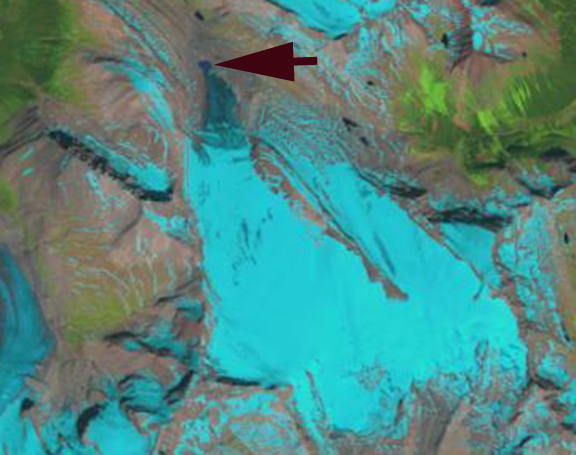
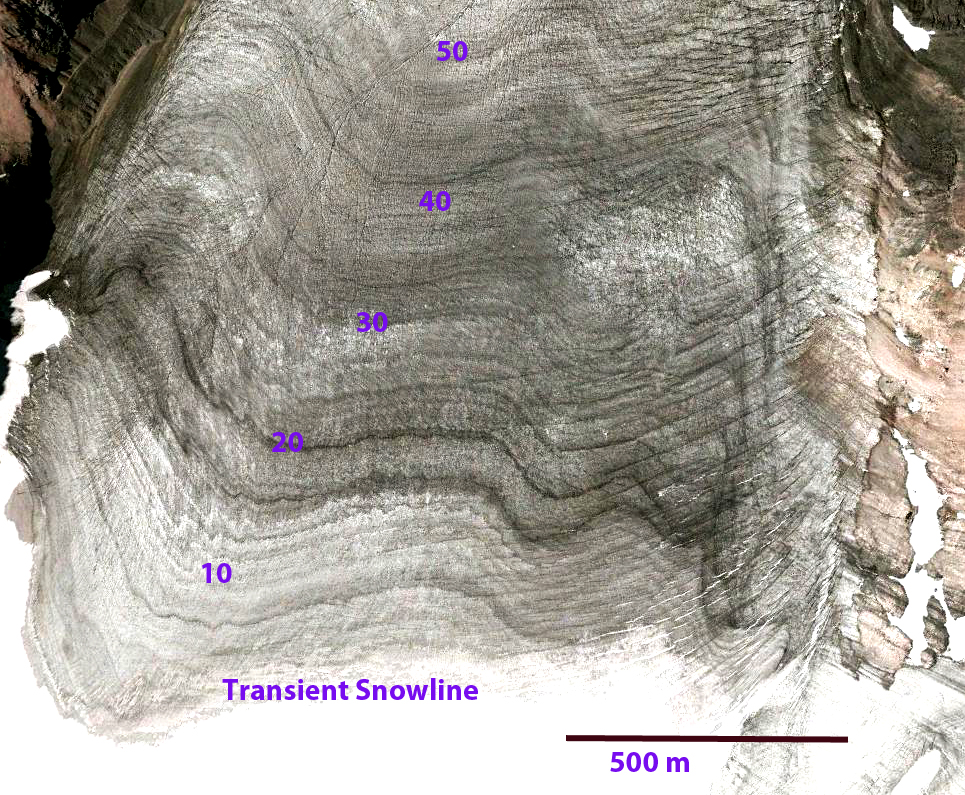
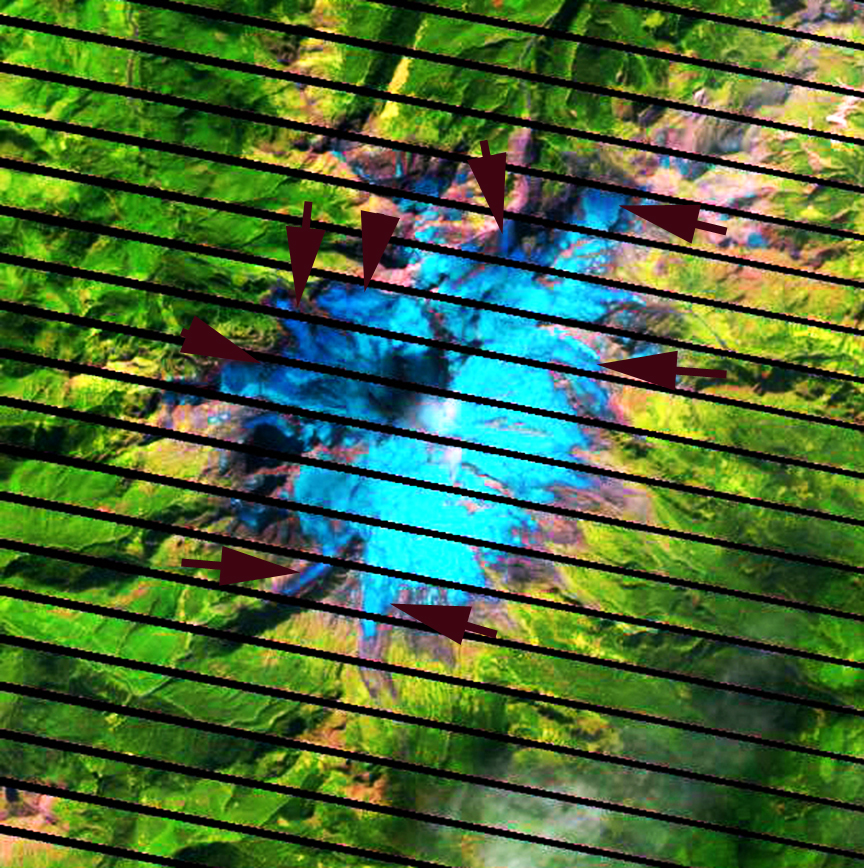
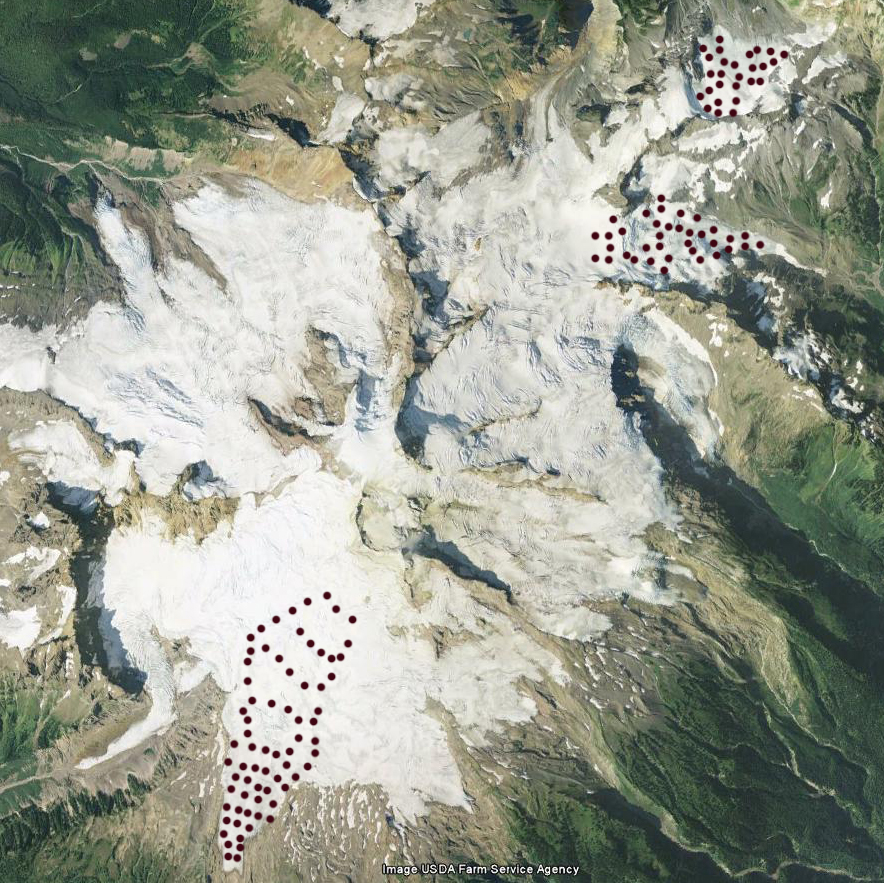
The two key measures of mass balance, which is direct measurements and measuring the snow covered fraction of the glacier at the end of the year, the accumulation area ratio. Below is the 2009 map of the snowcovered areas put together by Courtenay Brown, Simon Fraser University. This same year we were in the field and took measurements at the burgundy dots, in the second image. Each dot is worth three measurements. In two weeks we will adding more measurements to this data set for 2012. We do this largely by using a probe that can be driven through the snowpack from last winter, or in crevasses where the annual layering is evident like tree rings. The contrast between the snowpack distribution in September 2009 and 2011 is evident. The burgundy arrows point out bare ice regions. In 2009 the bare ice extent darker blue, was much larger than in 2011, when snowcover was quite good. The net trend over the last 20 years of mass balance loss is leading to the ongoing retreat of all Mount Baker glaciers.

Easton Glacier Assessment, Washington

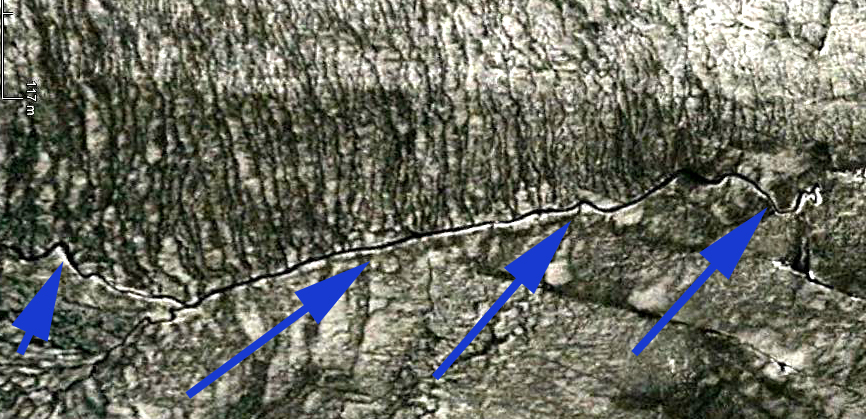
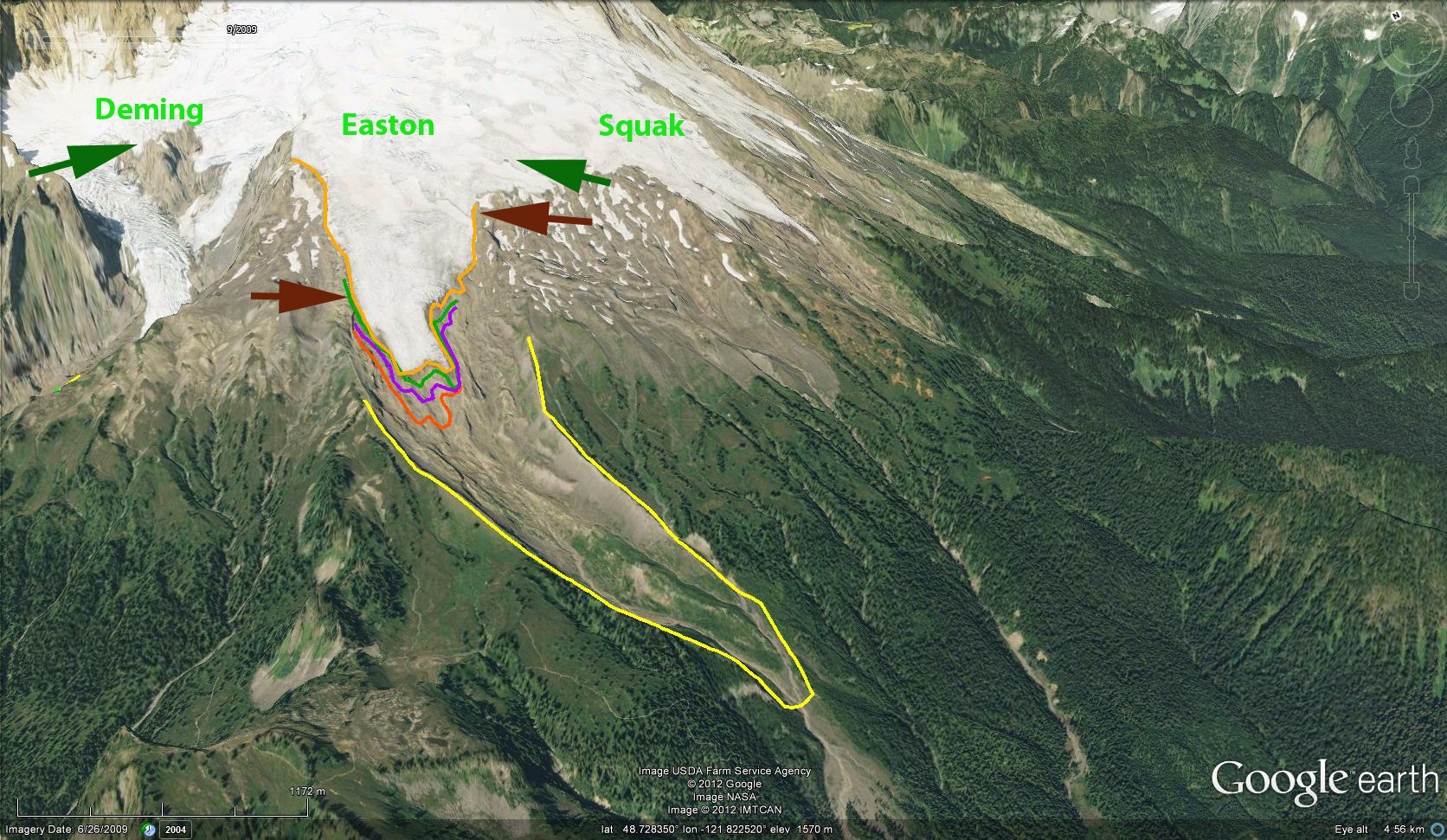
In August we will be making a detailed study of the Easton Glacier for the 23rd consecutive summer. Our main focus is measurement of snow depth and snow melt on the glacier. We will be mapping the terminus position and two profiles of the surface elevation across the glaciers at 1800 m and 1950 m. We will also examine two new bedrock knobs that have melted out in the midst of the glacier at 2050 m. The Easton Glacier is important as a water resource for the Baker lake and Baker River Hydropower system. This hydropower system is capable of producing 170 MW of power. The runoff from Easton Glacier would normally flow into the Baker River below Upper Baker Dam, however it is extracted from the normal stream and routed through a pipeline to enter Baker Lake and then produce power via Upper Baker Dam (second image), note yellow dots showing runoff pathway. The Easton Glacier retreated over 2 km from its Little Ice Age maximum to 1955. By 1965 the glacier was advancing, this advance ended in the early 1980’s and by 1987 retreat from the moraine was evident. Beginning in 1990 we have made an annual survey of the glacier terminus noting a retreat of 320 m from 1987-2010. The first image below is of Easton Glacier from 1912 the second from 2011 with the same locations highlighted. A prominent knob on the upper glacier has changed little, ocher arrow. The lower margin of the glacier on either side of the main Easton at the blue arrow and red arrow show substantial thinning and retreat. The purple arrow indicates the terminus change. The lower Easton Glacier has changed a great deal in the last 100 years, not the upper glacier. This is an indication of a glacier adjusting to climate change that is retaining an accumulation and can survive. The last image in the sequence indicates the Little Ice Age terminus yellow line, the 1993 terminus orange, 1998 terminus is purple, 2004 terminus is green and 2009 terminus is ochre.
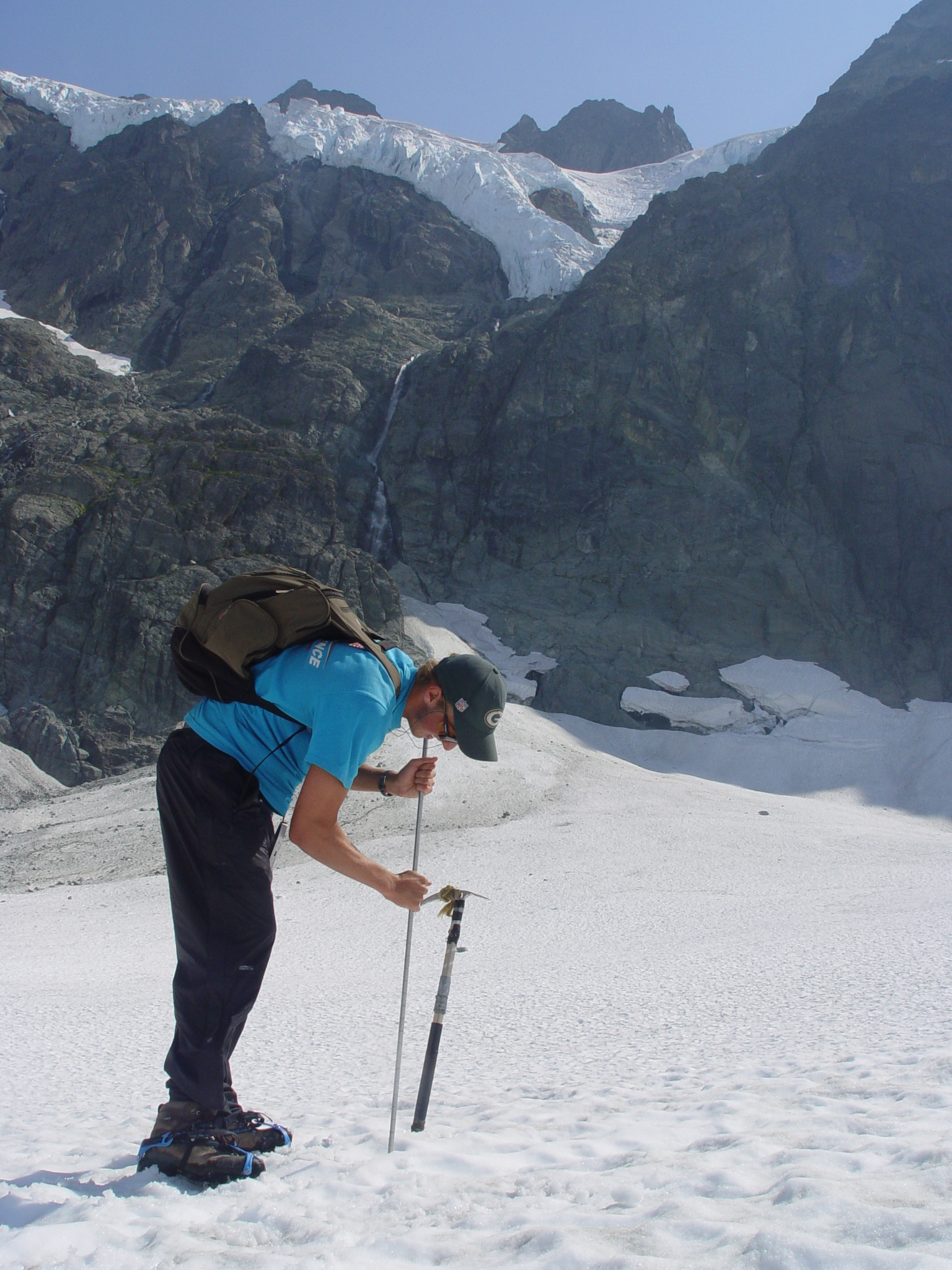
In the above image the red arrows indicate the location of the two survey profiles we complete across the glacier. The green arrows indicate two locations of investigation for the summer, to the left is the top of the Deming Glacier Icefall that will visit and the right green arrow a new bedrock knob that emerged from beneath the glacier in 2009. A month from now we will be surveying the glacier covering the glacier top to bottom and side to side. We will be joned by Peter Sinclair who is going to use is videography skills to examine how we measure glacier change. The first image below is from Steph Abegg a superb climber and photographer who was with us in 2010 as part of Team Juicebox working on the Uncertain Ice documentary. The main goal of our research each year is assessing the glacier’s mass balance. This is the equivalent of its bank account, with snow accumulation being deposits and snow-ice melt being withdraws. We map the changes across the glacier and determine if the bank account grew or declined, 2011 map is below. Since 1990 the bank account has lost 10 meters of thickness of an average of 70 m total. Last year the glacier did gain over a meter. A key measure is the percent of the glacier in the accumulation zone (AAR), below 65% is a loss above a gain, bottom image. The 2012 winter was a La Nina which tends to lead to very good snowpack, the transition out of La Nina took place in late spring-early summer leading to greater melting than 2011, we will see in three weeks.

Alpine Glaciers BAMS State of the Climate in 2011

Below is the section I wrote on Alpine Glaciers for the BAMS State of the Climate in 2011 published on July, 10, 2012. The focus is on glacier changes in 2011.

3) ALPINE GLACIERS—M. S. Pelto

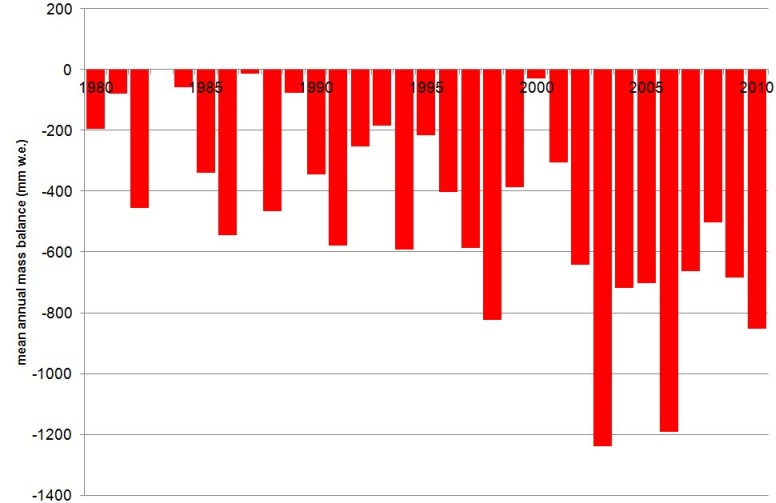
The World Glacier Monitoring Service (WGMS) record of mass balance and terminus behavior (WGMS 2011) provides a global index for alpine glacier behavior. Mass balance was -766 mm in 2010, negative for the 20th consecutive year. Preliminary data for 2011 from Austria, Norway, New Zealand, and United States indicate it is highly likely that 2011 will be the 21st consecutive year of negative annual balances.

Alpine glaciers have been studied as sensitive indicators of climate for more than a century, most commonly focusing on changes in terminus position and mass balance (Oerlemans 1994). The worldwide retreat of mountain glaciers is one of the clearest signals of ongoing climate change (Haeberli at al. 2000). The retreat is a reflection of strongly negative mass balances over the last 30 years (WGMS 2011). Glacier mass balance is the difference between accumulation and ablation. The recent rapid retreat and prolonged negative balances has led to some glaciers disappearing and others fragmenting (Pelto 2010; Bhambri et al 2011; Shahgedanova et al. 2010).

The cumulative mass balance loss of the last 30 years is 13.6 m w.e. (Fig. 2.14), equivalent to cutting a 15 m thick slice off the top of the average glacier. The trend is remarkably consistent from region to region (WGMS 2011). WGMS mass balance results based on a global dataset of 30 reference glaciers with 30 years of record is not appreciably different, -13.1 m w.e. The decadal mean annual mass balance was -198 mm in the 1980s, -382 mm in the 1990s, and -740 mm for 2000–10. The declining mass balance trend during a period of retreat indicates that alpine glaciers are not approaching equilibrium and retreat will continue to be the dominant terminus response.

In 2011 there was below-average winter accumulation in the Alps and significantly above-average spring and summer temperatures. This resulted in consistently strong negative balances on Austrian glaciers in 2011: Sonnblickkees, -2460 mm; Jamtalferner, -1434 mm; Kesselwandferner, -640 mm; and Hintereisferner, and -1420 mm (Fischer 2012). The Austrian Glacier Inventory examined 90 glaciers. Of these, 87 were in retreat, 3 were stationary, and average terminus change was -17 m, reflecting the continued negative mass balances of the region. In Norway, terminus fluctuation data from 31 glaciers for 2011 indicated 27 retreating, 2 stable, and 2 advancing. The average terminus change was -17.2 m (Elverhoi 2012). The retreat rate closely matched the 2010 rates. Mass balance surveys found deficits on all Norwegian glaciers. In the North Cascades, Washington (Pelto 2011), La Niña conditions and record wet and cool conditions from March to June led to positive mass balances on all 10 glaciers examined. In southeast Alaska, 2011 snowlines were 50 m above average on Lemon Creek and Taku Glacier of the Juneau Icefield, indicative of moderate negative balances.
In New Zealand, observations on 50 glaciers found snowlines that were much higher than normal, indicating strong mass balance losses (NIWA 2011). Summer melt conditions were considerably above average.

In the high mountains of central Asia, detailed glacier mapping inventories, such as from GLIMS (Global Land Ice Measurements from Space) using ASTER, Corona, Landsat, and SPOT imagery, of thousands of glaciers indicated increased strong thinning and area loss since 2000 throughout the region except the Karakorum. In the Russian Altai, mapping of 126 glaciers indicated a 19.7% reduction in glacier area from 1952 to 2004, with a sharp increase in losses after 1997 (Shahgedanova et al. 2010). In Garhwal Himalaya, India, for 58 glaciers examined from 1990 to 2006, area loss was 6% (Bhambri et al 2011). In the Nepal Himalaya area, loss from 1963 to 2009 was nearly 20%, (Bajracharya et al. 2011), and thickness losses increased from an average of 320 mm yr-during 1962–2002 to 790 mm yr-1 during 2002–07 in the Khumbu region, including area losses at the highest elevation on the glaciers (Bolch et al. 2011). In the Tien Shan Range, over 1700 glaciers were examined: from 1970 to 2000, glacier area decreased by 13%, and from 2000 to 2007 glacier area shrank by 4% (Narama et al. 2010). An inventory of 308 glaciers in the Nam Co Basin, Tibet, noted an increased rate of area loss for the 2001–09 period; 6% area loss (Bolch et al. 2010). A new means of assessing global glacier volume is via GRACE (Rodell et al. 2011), which, due to its spatial resolution, is unable to resolve specific changes of individual glaciers or watersheds. In the high mountains of central Asia, GRACE imagery found mass losses of -264 mm yr-1 for the 2003–09 period (Matsuo and Heki 2010). This result is in relative agreement with the other satellite image assessments, but is at odds with another more recent global assessment from GRACE that estimated Himalayan glacier losses at 10% of that found in the aforementioned examples for volume loss for the 2003–10 period (Jacob et al.2012). At present, the detailed inventories are better validated.

Longbasba Lake Expansion Glacier Retreat, Tibet

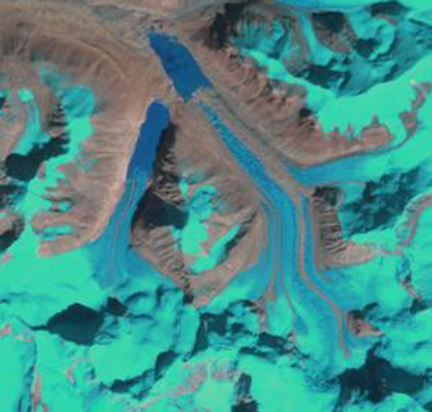
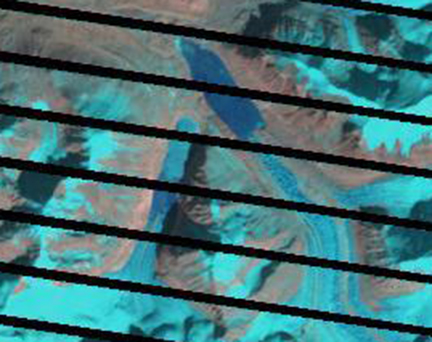
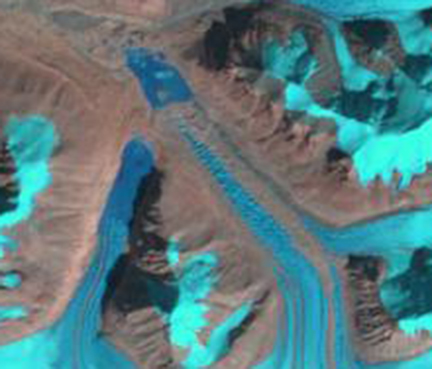
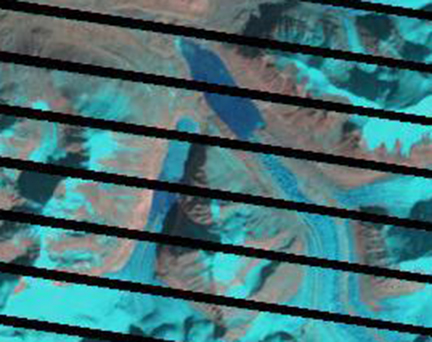
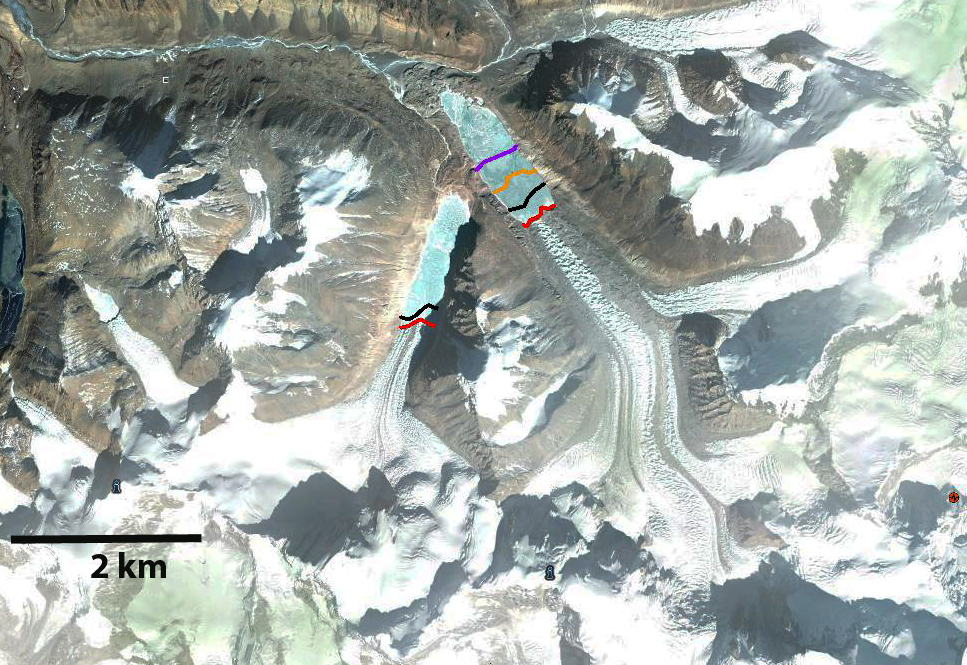
A comparison of imagery from 1989 to 2009 indicates an expansion of Longbasba Lake, a moraine dammed lake in Tibet (Yao et al, 2012). The Longbasba Glacier has retreated 950 meters 1989-2009 and as the depth has increased the volume has quadrupled to 1.3 cubic kilometers (Yao et al, 2012). The concern is to the 23 villages downstream of the lake and the Rongkong Hydropower station. In this post we compare Landsat imagery from 1989, 2000 and 2011 and Google Earth imagery from 2006 and 2010 to identify changes in the terminus position of the glacier and the lake size. Longbasba Lake is near the top trending northwest to the west is a north trending Pida Lake. The lake is quite small in 1989, and more than doubles in length by 2011 with a retreat of the glacier of 1050 m. The terminus positions of the glacier are purple for 1989, orange for 2000, black for 2006 and red for 2011. The 2006 image also indicates the snowline on the glacier which is at 6300 meters. The glacier is following the pattern of Theri Kang Glacier, Reqiang Glacier and North Lhonak Glacier.

Longbashaba Lake Expansion Glacier Retreat, Tibet

A comparison of imagery from 1989 to 2009 indicates an expansion of Longbashaba Lake, a moraine dammed lake in Tibet (Yao et al, 2012). The Longbashaba Glacier has retreated 950 meters 1989-2009 and as the depth has increased the volume has quadrupled to 1.3 cubic kilometers (Yao et al, 2012). The concern is to the 23 villages downstream of the lake and the Rongkong Hydropower station. In this post we compare Landsat imagery from 1989, 2000 and 2011 and Google Earth imagery from 2006 and 2010 to identify changes in the terminus position of the glacier and the lake size. Longbashaba Lake is near the top trending northwest to the west is a north trending Pida Lake. The lake is quite small in 1989, and more than doubles in length by 2011 with a retreat of the glacier of 1050 m. The terminus positions of the glacier are purple for 1989, orange for 2000, black for 2006 and red for 2011. The 2006 image also indicates the snowline on the glacier which is at 6300 meters. The glacier is following the pattern of Theri Kang Glacier, Reqiang Glacier and North Lhonak Glacier.

Olsokbreen Retreat, Svalbard

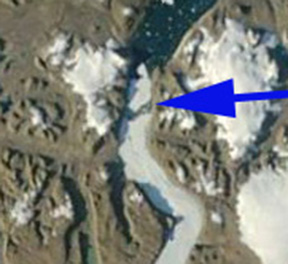
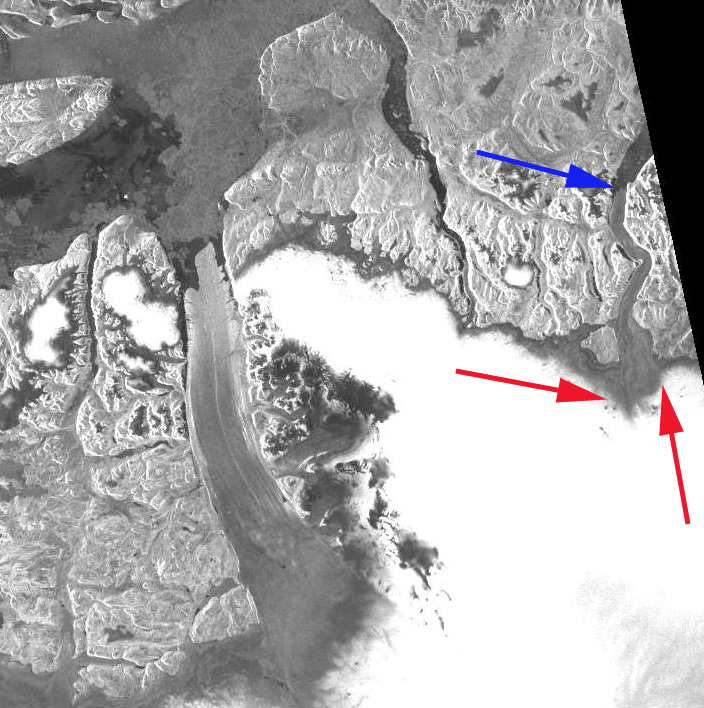
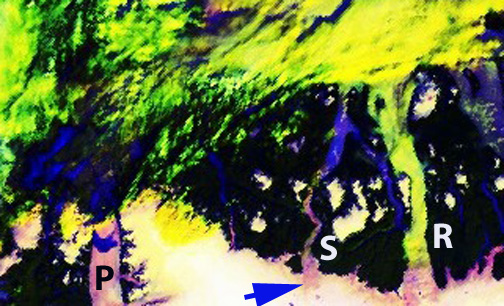
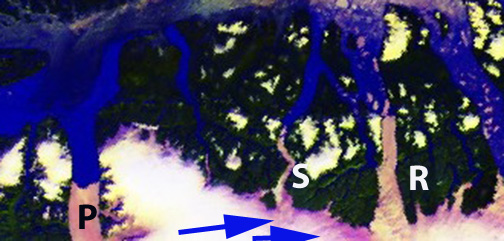
Svalbard is host to 163 tidewater glaciers with a collective calving front of 860 km (BŁASZCZYK et al, 2009). The southernmost of these glaciers on the west coast of Sørkappland is Olsokbreen, purple arrow. Olsokbreen has a 5 km calving front and its retreat was observed to have retreated 3.5 km from 1900-2008 (Zjaja et al, 2008). here we examine Landsat imagery from 2002 and 2010 and Geoeye from 2012 to illustrate a significant change in the ice front of Olsokbreen in the last ten years. The glacier has pulled back from a peninsula extending into the sound from the north side of the fjord that the glacier ended upon in 2002, red arrow. In the 2002 image the 2010 ice front is noted with a violet arrow as is an area of proglacial lakes that become more evident in 2010. In 2010 there are two images, indicating that relatively straight north-south calving front has become quite irregular during the 300-1100 meters of retreat along the ice front. The first image indicates the 2002 calving front (green line) and the snowline. The second image indicates the location of the proglacial lakes and the peninsula. The 2012 image is a Geoeye image and the main changes from 2010 is the extension of open water at the north side of the glacier between the terminus and the peninsula. This extends the calving front width and should increased calving. The southern edge has experienced more retreat since 2010 with the angular shaped calving embayment, green arrow. The Olsokbreen like the nearby Hambergbreen and Hornbreen is retreating and thinning.This glacier would seem to be particularly prone to impacts from warming water in the Barents Sea. In 2011 the ocean heat flux (Walczowski, 2011) passing Olsokbreen illustrates this. The sea ice off of Olsokbreen has also been exiting earlier as is evidenced in a recent image sequence from the Arctic Sea Ice Blog .

Sarqardliup Sermia Supraglacial Lakes

The progression of supraglacial lakes on the surface on particularly the western side of the Greenland Ice Sheet during the course of the melt season illustrates key processes. In this post we are looking at lakes on the surface of the ice sheet just south of Jakobshavn inland of the Sarqardluip Sermia terminus. Box and Ski (2007) surveyed over 300 lakes in this region and found that the maximum volume occurred close to June 24 during the 2000-2005 period. The image below is from their study, lake F and C from this post are also evident in their figure. They further used the water color to determine depth, corroborated by field work, indicating a maximum depth of 12 m and a mean depth of 4 or 5 m. Sundal et al (2009) examined several regions including this same area for lake evolution and found that below 1000 m peak lake area was June 6, between 1000-1200 m June 17, bweteen 1200-1400 m, June 24th and above 1400 m July 18th. Further they found that 90% of the lakes had drained by August 18th, with drainage peaking below 1000 m in late june, from 1000-1200 m in early July and from 1200-1400 m in late July. The evolution and drainage is well illustrated by a figure from the Sundal et al (2009) paper.. Liang et al (2012) provide an excellent view of how often the lakes occupy the same location, it is evident in their figure that most of the large lakes reform the majority of the years, red and white lakes form more than 60 % of the years. This tendency is what Box and Ski (2007) noted that many lakes refill the same topographic depression each year. This topographic depression is the result of flow dynamics of the ice sheet in some cases resulting from bed topogpaphic changes. Below is a sequence illustrating the development of lakes from June 2012 using MODIS and Landsat imagery. The Landsat images are from June 2 and June 19 the arrows and letters indicating specific locations. Note the shift in the main lake formation area from the light green to the dark green arrows. The light green arrows are below 1000 m and the dark green from 1200 to 1300 m, except for lake A which has persisted. Most of the lakes below 1000 m from June 2 are gone by June 19. The same area is also seen in 2005 with some of the same lakes filled The MODIS images are from June 2 and June 30 and again indicate the shift in location of the supraglacial lakes. The lakes evident below 1000 m are almost all gone by the June, and few lakes exist except above 1200 meters, indicating an earlier melt cycle this year. The location of Tiningnilik Lake is also shown, and it has filled somewhat during the month, being the recipient of some of the water from lake drainage events. This is indicative of the progression of the melt season and the development of the hydrologic drainage system. As the melt season begins snowmelt first percolates into the snowpack and can refreeze. After the snowpack has warmed meltwater percolates quickly through the snowpack and gathers into streams and lakes on the glacier surface. The higher the elevation the deeper the snowpack to be warmed and the colder the temperatures further delaying the melt process. Hence, the melt progression with elevation. I have found the lakes to be useful for navigation purposes days to day on the ice sheet, but the lakes do not tend to persist long, most draining within a few week of formation. The drainage of lakes indicates the maturation of the drainage system beneath the ice sheet that takes the water to the margin. The volume of water released is immense, and initially the meltwater would exceed the capacity of the drainage system leading to high basal water pressure which can enhance sliding for a short period (Zwally et al 2002). However, after the drainage system is developed water pressure falls and velocity does dramatically as well, the net impact of the brief acceleration is not large on the mean annual velocity as noted by Sundal et al (2011), but the increased meltings has led to an overall decline in flow speed as the hydrologic system matures over a shorter period. Luthje et al (2006) found that the number of supraglacial lakes is largely controlled by topography and enhanced melting should not increase their number. What will be important is to continue to examine changes in timing of formation and drainage, distribution of the lakes and volume of the lakes. For 2012 the drainage of almost all lakes below 1200 meters by June 30 is an early loss of lake area.

Sarqardliup Sermia Supraglacial Lakes

The progression of supraglacial lakes on the surface on particularly the western side of the Greenland Ice Sheet during the course of the melt season illustrates key processes. In this post we are looking at lakes on the surface of the ice sheet just south of Jakobshavn inland of the Sarqardluip Sermia terminus. Box and Ski (2007) surveyed over 300 lakes in this region and found that the maximum volume occurred close to June 24 during the 2000-2005 period. The image below is from their study, lake F and C from this post are also evident in their figure. They further used the water color to determine depth, corroborated by field work, indicating a maximum depth of 12 m and a mean depth of 4 or 5 m. Sundal et al (2009) examined several regions including this same area for lake evolution and found that below 1000 m peak lake area was June 6, between 1000-1200 m June 17, bweteen 1200-1400 m, June 24th and above 1400 m July 18th. Further they found that 90% of the lakes had drained by August 18th, with drainage peaking below 1000 m in late june, from 1000-1200 m in early July and from 1200-1400 m in late July. The evolution and drainage is well illustrated by a figure from the Sundal et al (2009) paper.. Liang et al (2012) provide an excellent view of how often the lakes occupy the same location, it is evident in their figure that most of the large lakes reform the majority of the years, red and white lakes form more than 60 % of the years. This tendency is what Box and Ski (2007) noted that many lakes refill the same topographic depression each year. This topographic depression is the result of flow dynamics of the ice sheet in some cases resulting from bed topogpaphic changes. Below is a sequence illustrating the development of lakes from June 2012 using MODIS and Landsat imagery. The Landsat images are from June 2 and June 19 the arrows and letters indicating specific locations. Note the shift in the main lake formation area from the light green to the dark green arrows. The light green arrows are below 1000 m and the dark green from 1200 to 1300 m, except for lake A which has persisted. Most of the lakes below 1000 m from June 2 are gone by June 19. The same area is also seen in 2005 with some of the same lakes filled The MODIS images are from June 2 and June 30 and again indicate the shift in location of the supraglacial lakes. The lakes evident below 1000 m are almost all gone by the June, and few lakes exist except above 1200 meters, indicating an earlier melt cycle this year. The location of Tiningnilik Lake is also shown, and it has filled somewhat during the month, being the recipient of some of the water from lake drainage events. This is indicative of the progression of the melt season and the development of the hydrologic drainage system. As the melt season begins snowmelt first percolates into the snowpack and can refreeze. After the snowpack has warmed meltwater percolates quickly through the snowpack and gathers into streams and lakes on the glacier surface. The higher the elevation the deeper the snowpack to be warmed and the colder the temperatures further delaying the melt process. Hence, the melt progression with elevation. I have found the lakes to be useful for navigation purposes days to day on the ice sheet, but the lakes do not tend to persist long, most draining within a few week of formation. The drainage of lakes indicates the maturation of the drainage system beneath the ice sheet that takes the water to the margin. The volume of water released is immense, and initially the meltwater would exceed the capacity of the drainage system leading to high basal water pressure which can enhance sliding for a short period (Zwally et al 2002). However, after the drainage system is developed water pressure falls and velocity does dramatically as well, the net impact of the brief acceleration is not large on the mean annual velocity as noted by Sundal et al (2011), but the increased meltings has led to an overall decline in flow speed as the hydrologic system matures over a shorter period. Luthje et al (2006) found that the number of supraglacial lakes is largely controlled by topography and enhanced melting should not increase their number. What will be important is to continue to examine changes in timing of formation and drainage, distribution of the lakes and volume of the lakes. For 2012 the drainage of almost all lakes below 1200 meters by June 30 is an early loss of lake area.

Glacier Post Index 2009-2012

Glacier Index List
Below is a list of the individual glacier posts examining our warming climates impact on each glacier. This represents the first 3 years of posts, 208 total posts, 194 different glaciers. I have worked directly on 43. The others are prompted by fine research that I had come across, cited in each post or inquiries from readers and other scientists. I then look at additional often more recent imagery to expand on that research. The imagery comes either from MODIS, Landsat, Geoeye or Google Earth.

United States
Columbia Glacier, Washington
Lyman Glacier, Washington
Boulder Glacier, Washington
Deming Glacier Icefall, Washington
Deming Glacier, Washington
Ptarmigan Ridge Glacier, Washington
Anderson Glacier, Washington
Eel Glacier, Washington
Milk Lake Glacier, Washington
Suiattle Glacier, Washington
Paradise Glacier, Washington
Easton Glacier, Washington
Redoubt Glacier, Washington
Honeycomb Glacier, Washington
Vista Glacier, Washington
Rainbow Glacier, Washington
Daniels Glacier, Washington
Colonial Glacier, Washington
Quien Sabe Glacier, Washington
Mazama Glacier
Fairchild Glacier, Washington
White Glacier, Washington
Banded Glacier, Washington
Borealis Glacier, Washington
Hinman Glacier, Washington
Lower Curtis Glacier, Washington
McAllister Glacier, Washington
Lewis Glacier, Washington
Kennedy Glacier, Washington
Fremont Glacier, Wyoming
Minor Glacier, Wyoming
Sourdough Glacier, Wyoming
Grasshopper Glacier, Wyoming
Grasshopper Glacier, Montana
Harrison Glacier, Montana
McDonald Glacier, Montana
Sperry Glacier, Montana
Hopper Glacier, Montana
Old Sun Glacier, Montana
Yakutat Glacier, Alaska
Grand Plateau Glacier, Alaska
Eagle Glacier, Alaska
Gilkey Glacier , Alaska
Gilkey Glacier ogives, Alaska
Lemon Creek Glacier, Alaska
Taku Glacier, Alaska
Bear Lake Glacier, Alaska
Chickamin Glacier, Alaska
Okpilak Glacier, Alaska
Sawyer Glacier, Alaska
Valdez Glacier, Alaska
Antler Glacier, Alaska
Field Glacier
East Taklanika Glacier, Alaska
Brady Glacier, Alaska
Brady Glacier Retreat lake expansion 2004-2010, Alaska
Thiel Glacier, Alaska
Speel Glacier, Alaska
Romanzof Glacier, Alaska
Pedersen Glacier, Alaska

Canada
Icemantle Glacier, BC
Bridge Glacier, British Columbia
Washmawapta Glacier, British Columbia
Bubagoo Glacier, British Columbia
Hector Glacier, Alberta
Helm Glacier, British Columbia
Melbern Glacier
Warren Glacier, British Columbia
Castle Creek Glacier, British Columbia
Hoboe Glacier, British Columbia
Tulsequah Glacier, British Columbia
Decker and Spearhead Glacier, British Columbia
Columbia Glacier, British Columbia
Freshfield Glacier, British Columbia
Apex Glacier, British Columbia
Great Glacier, British Columbia
Devon Ice Cap, Nunavut
Penny ice Cap, Nunavut
Northern Outlet Devon Ice Cap, Nunavut
Penny Ice Cap SW, Nunavut
Snowshoe Peak, Yukon
Petain Glacier, Alberta

New Zealand
Tasman Glacier
Murchison Glacier
Donne Glacier
Mueller Glacier, NZ
Gunn Glacier, NZ

Africa
Rwenzori Glaciers
Tyndall Glacier, Kenya

Himalaya
Ngozumpa Glacier, Nepal
West Barun Glacier, Nepal
Samudra Tupa, India
Zemu Glacier, Sikkim
North Lhonak Glacier, Sikkim
Theri Kang Glacier, Bhutan
Zemestan Glacier, Afghanistan
Khumbu Glacier, Nepal
Imja Glacier, Nepal
Gangotri Glacier, India
Milam Glacier, India
Satopanth Glacier, India
Kali Gandaki Headwaters, Nepal
Menlung Glacier, Tibet
Boshula Glaciers, Tibet
Urumquihe Glacier, Tibet
Sara Umaga Glacier, India
Dzhungharia Alatau, Kazakhstan
Petrov Glacier,Kyrgyzstan
Hailuogou Glacier, China
Reqiang Glacier Retreat, Tibet
Himalaya Glacier Index

Europe
Taconnaz GLacier, France
Mer de Glace, France
Dargentiere Glacier, France
Grand Motte and Pramort Glacier Tignes Ski area, France
Saint Sorlin, France
Sommelier Glacier
Obeeraar Glacier, Austria
Ochsentaler Glacier, Austria
Pitzal Glacier, Austria
Dosde Glacier, Italy
Maladeta Glacier, Spain
Presena Glacier, Italy
Triftgletscher, Switzerland
Gietro Glacier, Switzerland
Rotmoosferner, Austria
Stubai Glacier, Austria
Hallstatter Glacier, Austria
Ried Glacier, Switzerland
Cavagnoli Glacier, Switzerland
Chuebodengletscher and Ghiacciaio-del-Pizzo-Rotondo
Forni Glacier, Italy
Careser Glacier, Italy
Peridido Glacier, Spain
Engabreen, Norway
Midtdalsbreen, Norway
Tunsbergdalsbreen, Norway
TungnaarJokull, Iceland
Langjökull, Iceland
Gigjokull, Iceland
Skeidararjokull, Iceland
Kotlujokull, Iceland
Lednik Fytnargin, Russia
Rembesdalsskaka, Norway
Irik Glacier, Mount Elbrus, Russia

Greenland and European Arctic
Mittivakkat Glacier
Ryder Glacier
Humboldt Glacier
Petermann Glacier
Kuussuup Sermia
Tiningnilik Glacier Lake
Jakobshavn Isbrae
Umiamako Glacier
Kong Oscar, Glacier
Upernavik Glacier
Epiq Sermia
Sortebrae Glacier, Greenland
Severnaya Zemlya, Russian Arctic
Hansbreen, Svalbard
Nannbreen, Svalbard
Hornbreen and Hambergbreen, Svalbard
Albrechtbreen, Svalbard
Roze and Sredniy Glacier, Novaya Zemyla
Nizkiy and Glazova Glacier, Novaya Zemyla

South America
Colonia Glacier, Chile
Artesonraju Glacier, Peru
Nef Glacier, Chile
Tyndall Glacier, Chile
Alemania Glacier, Chile
Zongo Glacier, Bolivia
Sierra Nevade del Cocuy Glaciers, Colombia
Ritacuba Blanco Glacier, Colombia
Llaca Glacier, Peru
Joerg Montt Glacier, Chile
Arhuey Glacier, Peru
Seco Glacier, Argentina
Onelli Glacier, Argentina
Quelccaya Ice Cap, Peru
Glacier Gualas, Chile

Antarctica and Circum Antarctic Islands
Pine Island Glacier
Fleming Glacier
Hariot Glacier
Smith Glacier, Antarctica
Amsler Island
Stephenson Glacier, Heard Island
Neumayer, South Georgia
Ampere, Kerguelen
Cook Ice Cap, Kerguelen Island
Nordenskjold Coast, Antarctic Peninsula
Prospect Glacier, Antarctic Peninsula
Ross Hindle Glacier, South Georgia
Vega Island Ice Cap
Rohss Bay, James Ross Island, Antarctica

North Cascade Glacier Climate Project Reports

Forecasting Glacier Survival
North Cascade Glacier Mass Balance 2010
Columbia Glacier Annual Time Lapse
North Cascade Glacier Climate Project 2009 field season
28th Field Season Schedule of the North Cascade Glacier Climate Project
North Cascade Glacier Climate Project 2011 Field Season
BAMS 2010
2011 Glacier mass balance North Cascades and Juneau Icefield
Taku Glacier TSL Paper

Sourdough Glacier Retreat, Wind River Range, Wyoming

Sourdough Glacier descends the north side of Klondike Peak in the Wind River Range of Wyoming. Thompson et al (2011) identified the loss in area of Wind River Glaciers from 1966 to 2006. The total surface area of the 44 glaciers was estimated to be 45.9 km2 in 1966 and 28:6 km2 in 2006, a decrease of 42%. The retreat has varied from substantial on Minor and Grasshopper Glacier to limited on Upper Fremont Glacier. For Sourdough Glacier the 1966 USGS map of the area based indicates the glacier ending in a small lake, orange line in images. We use 1994, 2006 and 2009 images in Google Earth to examine the glacier changes. By 1994 (green line) the glacier had retreated 160 meters and the lake nearly doubled in size. By 2006 (magenta line) retreat from 1966 was 280 meters with a more pronounced calving face developing. In 2009 the calving face remains and the glacier had retreated another 20 meters overall, 40 meters in the glacier center. The increased height of the calving face suggests the lake is deeper than at the 1994 terminus position and that the lake will continue to expand with further retreat. The calving front and slope of the glacier is similar to Lyman Glacier. The retreat from 1966-2006 is a 20% reduction in overall glacier length. If a glacier lacks a persistent accumulation zone it will not survive (Pelto, 2010). The key indicator of a glacier without a consistent accumulation zone if retreat of the upper margin of the glacier and emergence of rock outcrops on the upper glacier. There are some limited changes of this nature on Sourdough Glacier, but most of the change has been at the terminus. The forecast for survival of Sourdough Glacier is not as clear cut as on Minor and Grasshopper Glacier. The crevasses indicate the glacier is still actively moving.

Pedersen Glacier Retreat Lake Expansion, Alaska

Pedersen Glacier is an outlet glacier of the Harding Icefield in Kenai Fjords National Park near Seward, Alaska. The glacier drops quickly from the plateau of the icefield through a pair of icefalls terminating 3.5 km in a lake at 25 meters. Bruce Molnia of the USGS as part of an effort in repeat photographs of Alaskan glaciers to show historic changes captures the changes of Pedersen Glacier. A photographic pair taken from about the same shoreline location of Pedersen Glacier. The photographs identify significant changes that have occurred during the 95 years between 1909 and 2004. The 2004 photograph a 1.5 km retreat of Pedersen Glacier from the field of view. In a recent study of the glaciers, by NASA and the NPS, (Hall et al, 2005) identify the retreat of the glacier as slow but steady from 1973-1986 at 510 m (35 m/a) and 110 m (8 m/year) from 1986-2000. Here we compare a 1994 Landsat, 2005 Google Earth, 2010 Landsat and 2011 Google Earth imagery illustrating a rapid increase in retreat rate from the previous periods. The red line in the Google Earth images is the 1994 terminus, the green line the 2005 terminus and the orange line the 2011 terminus. In 1994 the lake at the terminus is small and not continuous across the ice front (top image), the green dots are the terminus and the burgundy dots the snowline on the date of the image, near the top of the icefall. In the second image from 2005 the lake is now well developed but the number of icebergs in the lake limited. The third image from 2010 indicates a rapid lake expansion which is now largely filled by icebergs. In 2011 the lake remains filled with some very large icebergs indicating the recent nature of terminus collapse in the lake. The retreat from 1994-2005 was 450 meters (40 m/year) and 650 meters from 2005-2011,(110 m/year). The snowline is somewhat above the top of the icefalls on Pedersen Glacier. .. A closeup view of the terminus area from 2005 and 2011 indicate that the lake has more than doubled in size since 1994, and there is no distinct change in glacier width or surface elevation to suggest the glacier is near a point where the rapid terminus retreat will end. The glacier follows the pattern of nearby Bear Glacier, Yakutat Glacier, Gilkey Glacier and the predicted impending retreat of Brady Glacier.

Great Glacier Retreat, Stikine Icefield, BC Canada

Great Glacier is the largest outlet glacier of the Stikine Icefield terminating in Canada. The name came from the large expanse of the glacier in the lowlands of the Stikine River during the late 19th and early 20th century, that has now become a large lake. The glacier filled what is now a large lake at the terminus of the glacier pushing the Stikine River to the east side of the valley. In 1914 the glacier was easy to ascend from the banks of the Stikine River, the picture below is from the National Railroad Archive. By 1965 the new lake had formed, but the glacier still reached the far side of the lake in several places as indicated by the 1965 Canadian Topographic Map, green arrows. A comparison of 1986 Landsat, 2005 Google Earth and 2011 Landsat imagery illustrates the retreat. The yellow arrow indicates a glacier dammed lake, the violet arrows the snowline and the red arrow the northeast tributary. By 1986 the new lake had largely developed, and the glacier was beginning to retreat into the mountain valley above the lake. Retreat from the moraines of the late 19th century was 3200 m. By 2011 the glacier had retreated further into valley, 900 m retreat from 1986-2011. Great Glacier is following the pattern of behavior of other Stikine Icefield glaciers such as Sawyer Glacier There is a glacier dammed lake that has to date changed little at the yellow arrow, this lake fills and drains under the glacier periodically, top image below. A view of the glacier from across the lake today indicates the distance to the now valley confined glacier, and the trimlines of the former ice surface, yellow arrows in middle image The Great Glacier has one major tributary on the northeast tributary that is very low in elevation with a top elevation of 800 m. Given the regional snowline of 1100-1200 meters (Pelto, 1987)this is too low to retain snowcover through the summer and will lead to progressive thinning. This branch of the glacier has and will thin faster than the rest of the glacier and is doomed given its limited top elevation. The proglacial lakes on its periphery will continue to grow as this downwastes, green arrow bottom image.