
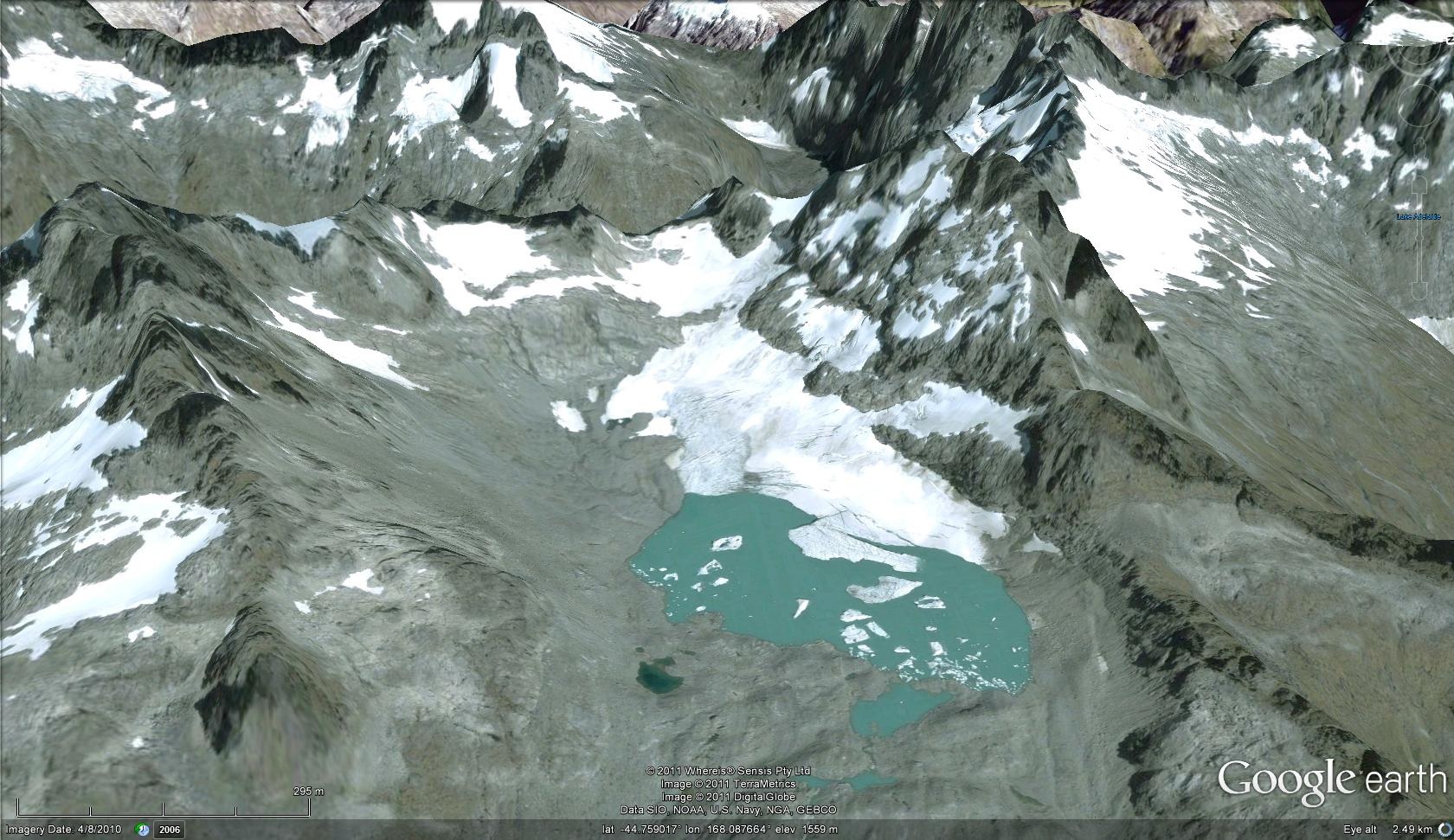
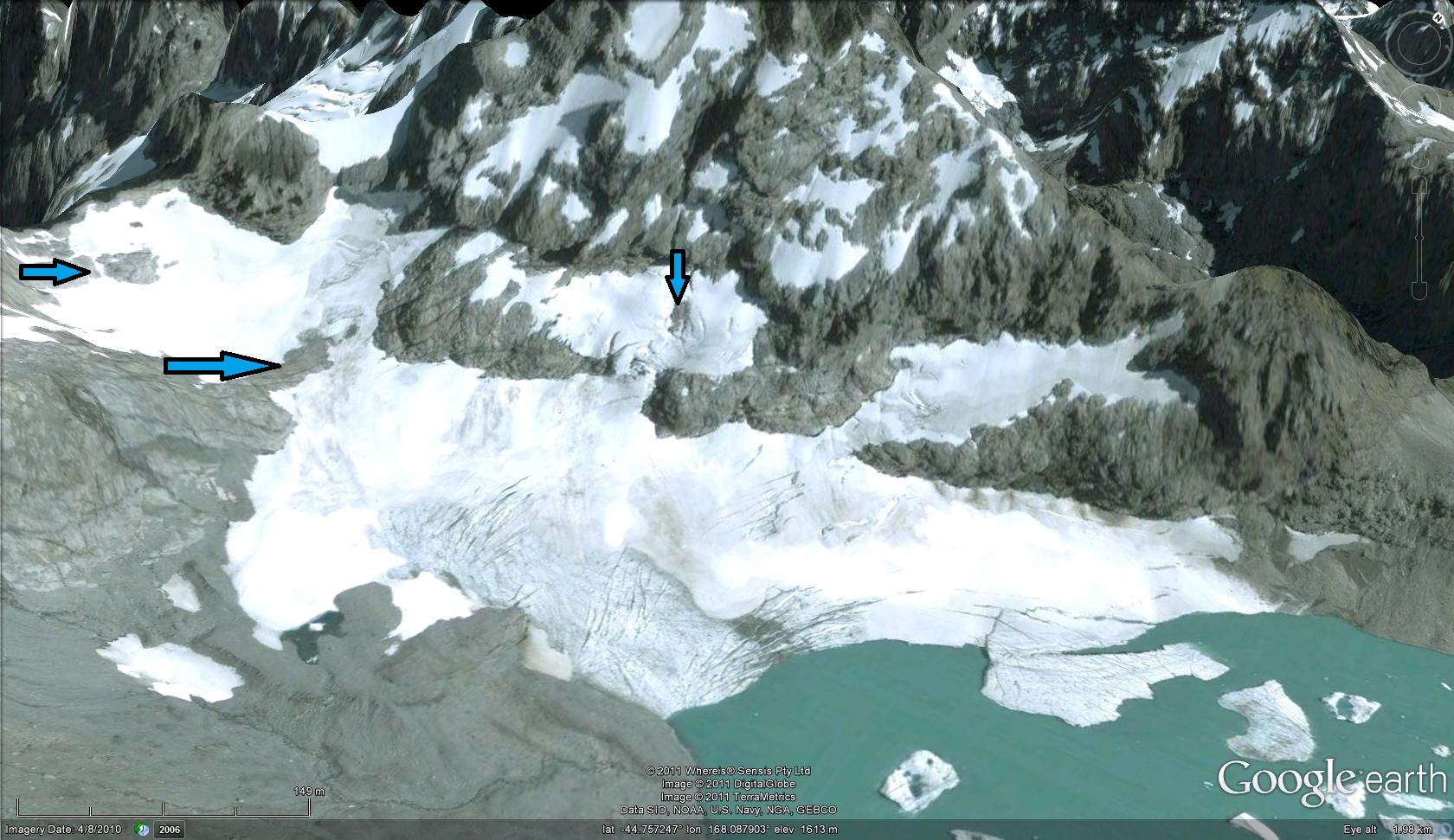
Gunn Glacier is a small cirque glacier that lies beneath Mount Gunn. A lake has formed recently and is continuing to expand. The 2000 based map of the area published in 2010, does not show a lake, but does at the terminus indicate a small water body surrounded by snow . The New Zealand NIWA has monitored the snowline of New Zealand glaciers over the last 15 years and monitored the volume and area loss of these glaciers including Tasman and Donne Glacier, other like Murchison Glacier are also retreating. On Gunn Glacier the key factor is that four of the last 11 years NIWA has observed that the glacier has lost nearly all of its snowcover indicating a glacier without a persistent accumulation zone (Pelto, 2010). The glacier area has been reduced by 40% from its 1972 mapped area. The 2006 imgery in Google Earth indicates a number of new icebergs adrift in the lake. The lake is now 300 meters across. A view of the cirque indicates a number of bare rock patches on upper sections of the glacier (bottom image), indicating a lack of a consistent accumulation zone. This glacier is thin and without a consistent accumulation it cannot survive (Pelto, 2010). The largest glacier section has an area of 0.2 square kilometers in 2006. The continued expansion of rock areas amidst the glacier and of the lake will lead to the loss of this glacier in the next two decades with a continuation of current climate.
Category: Glacier Observations
Post detailing changes in a glacier
Index of Glacier Posts 2009-2011
Glacier Index List
Below is a list of the individual glacier posts examining our warming climates impact on each glacier. This represents the first 2.5 years of posts, 151 total posts, 138 different glaciers. I have worked directly on 37 on fine research that I had come across, cited in each post, I then look at additional often more recent imagery to expand on that research. The imagery comes either from MODIS, Landsat, Geoeye or Google Earth.
North America
Columbia Glacier, Washington
Lyman Glacier, Washington
Boulder Glacier, Washington
Ptarmigan Ridge Glacier, Washington
Anderson Glacier, Washington
Milk Lake Glacier, Washington
Paradise Glacier, Washington
Easton Glacier, Washington
Redoubt Glacier, Washington
Honeycomb Glacier, Washington
Vista Glacier, Washington
Rainbow Glacier, Washington
Daniels Glacier, Washington
Colonial Glaer, Washington
Quien Sabe Glacier, Washington
Mazama Glacier
Fairchild Glacier, Washington
White Glacier, Washington
Banded Glacier, Washington
Borealis Glacier, Washington
Hinman Glacier, Washington
Bridge Glacier, British Columbia
Bubagoo Glacier, British Columbia
Hector Glacier, Alberta
Helm Glacier, British Columbia
Melbern Glacier
Warren Glacier, British Columbia
Castle Creek Glacier, British Columbia
Hoboe Glacier, British Columbia
Tulsequah Glacier, British Columbia
Decker and Spearhead Glacier, British Columbia
Columbia Glacier, British Columbia
Freshfield Glacier, British Columbia
Apex Glacier, British Columbia
Devon Ice Cap, Nunavut
Penny ice Cap, Nunavut
Minor Glacier, Wyoming
Grasshopper Glacier, Wyoming
Fremont Glacier, Wyoming
Grasshopper Glacier, Montana
Harrison Glacier, Montana
Sperry Glacier, Montana
Hopper Glacier, Montana
Old Sun Glacier, Montana
Yakutat Glacier, Alaska
Grand Plateau Glacier, Alaska
Eagle Glacier, Alaska
Gilkey Glacier , Alaska
Gilkey Glacier ogives, Alaska
Lemon Creek Glacier, Alaska
Taku Glacier, Alaska
Bear Lake Glacier, Alaska
Chickamin Glacier, Alaska
Okpilak Glacier, Alaska
Sawyer Glacier, Alaska
Antler Glacier, Alaska
Field Glacier
East Taklanika Glacier, Alaska
Brady Glacier, Alaska
Brady Glacier Retreat lake expansion 2004-2010
Thiel Glacier, Alaska
New Zealand
Tasman Glacier
Murchison Glacier
Donne Glacier
Africa
Rwenzori Glaciers
Himalaya
Zemu Glacier, Sikkim
Theri Kang Glacier, Bhutan
Zemestan Glacier, Afghanistan
Khumbu Glacier, Nepal
Imja Glacier, Nepal
Gangotri Glacier, India
Milam Glacier, India
Satopanth Glacier, India
Kali Gandaki Headwaters, Nepal
Menlung Glacier, Tibet
Boshula Glaciers, Tibet
Urumquihe Glacier, Tibet
Sara Umaga Glacier, India
Europe
Mer de Glace, France
Dargentiere Glacier, France
Grand Motte and Pramort Glacier Tignes Ski area, France
Saint Sorlin, France
Sommelier Glacier
Obeeraar Glacier, Austria
Ochsentaler Glacier, Austria
Pitzal Glacier, Austria
Dosde Glacier, Italy
Maladeta Glacier, Spain
Presena Glacier, Italy
Triftgletscher, Switzerland
Rotmoosferner, Austria
Stubai Glacier, Austria
Ried Glacier, Switzerland
Cavagnoli Glacier, Switzerland
Chuebodengletscher and Ghiacciaio-del-Pizzo-Rotondo
Forni Glacier, Italy
Peridido Glacier, Spain
Engabreen, Norway
Midtdalsbreen, Norway
TungnaarJokull, Iceland
Gigjokull, Iceland
Skeidararjokull, Iceland
Kotlujokull, Iceland
Lednik Fytnargin, Russia
Rembesdalsskaka, Norway
Hansbreen, Svalbard
Nannbreen, Svalbard
Hornbreen and Hambergbreen, Svalbard
Roze and Sredniy Glacier, Novaya Zemyla
Greenland
Mittivakkat Glacier
Ryder Glacier
Humboldt Glacier
Petermann Glacier
Kuussuup Sermia
Jakobshavn Isbrae
Umiamako Glacier
Kong Oscar, Glacier
Upernavik Glacier
South America
Colonia Glacier, Chile
Artesonraju Glacier, Peru
Nef Glacier, Chile
Tyndall Glacier, Chile
Zongo Glacier, Bolivia
Llaca Glacier, Peru
Seco Glacier, Argentina
Onelli Glacier, Argentina
Quelccaya Ice Cap, Peru
Antarctica and Circum Antarctic Islands
Pine Island Glacier
Fleming Glacier
Hariot Glacier
Amsler Island
Stephenson Glacier, Heard Island
Neumayer, South Georgia
Ampere, Kerguelen
Nordenskjold Coast, Antarctic Peninsula
Prospect Glacier, Antarctic Peninsula
Ross Hindle Glacier, South Georgia
North Cascade Glacier Climate Project Reports
Forecasting Glacier Survival
North Cascade Glacier Mass Balance 2010
Columbia Glacier Annual Time Lapse
North Cascade Glacier Climate Project 2009 field season
28th Field Season Schedule of the North Cascade Glacier Climate Project
North Cascade Glacier Climate Project 2011 Field Season
BAMS 2010
2011 Glacier mass balance North Cascades and Juneau Icefield
Hornbreen-Hambergbreen Retreat Svalbard
Hornsund is a fjord that in 2010 almost cuts through the southern Island of Svalbard. The Institute of Geophysics Polish Academy have maintained a Polish Research Station in Hornsund since 1957. The 1984 map, from the University of Silesia, of the glaciers and geomorphology document the extent of the glaciers in 1983. At that time the eastern end of Hornsund was fronted by a single glacier terminus comprised of the Sotrbreen (ST), Hornsbreen (HO), Svalisbreen (SV) and Mendelejevbreen (ME). By 2010 retreat has led to the separation of these four glaciers. The top image is the map superimposed on the Landsat image both below, from commenter Andylee. 

 Pälli et al (2003)in a joint University of Oulu, Finland and University of Silesia noted that Hornbreen has retreated by 13.5 km from the central part of the front, and Hambergbreen (HA) by 16km from 1901-2000. As part of this project surveys of the basal topography beneath the glaciers was examined.
Moore et al, 2003) found that there is not a below sea level connection underneath the Hornbreen-Hamberbreen divide that would separate Sorkappland from Torrelland. The ice divide of Hornbreen-Hambergbreen is below the local snowline at 300 m and Pälli et al (2003) indicate that this connection cannot survive current climate. Kvamstø et al (2011) in a Bergen University led study noted the melt season had increased by more than two weeks in Svalbard from 192-2010. In 1983 the distance from the terminus of the Hornbreen to the terminus of Hambergbreen was 17 km. In 2010 the distance is 9 km, as seen below. 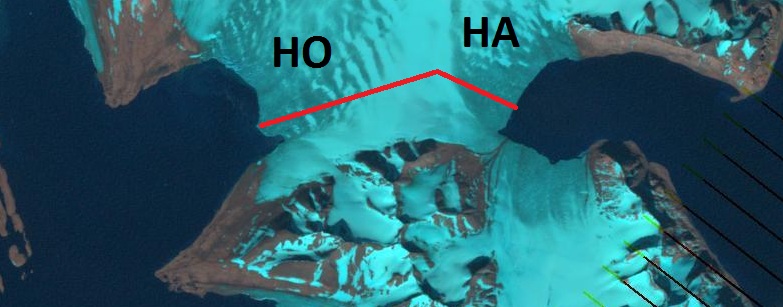 . A comparison of locations in the 1983 map and the 2010 Landsat image indicate the retreat from 1983 to 2010 has been approximately 5.5 km for Storbreen, 6 km for Hornbreen, 3 km for Svalisbreen and 1.5 km for Mendelejevbreen.
 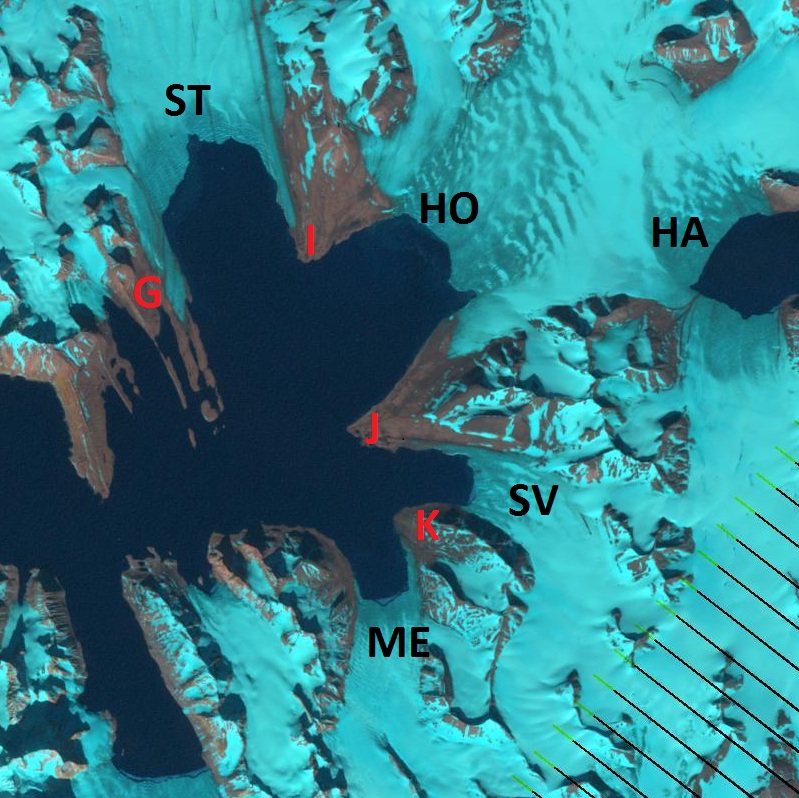 . The retreat of the glaciers at the head of Hornsund follow the pattern of other glacier in the region Nannbreen and Hansbreen.
Mass balance 2011 North Cascades, Washington and Juneau Icefield, Alaska
In the summer of 2011, the North Cascade Glacier Climate Project completed 430 measurements of snowpack on 10 glaciers using probing and crevasse stratigraphy. This is much less than our normal number because of the exceptionally deep snowpack. The probe we use was 5 meters long, beyond that only crevasses could be used. 
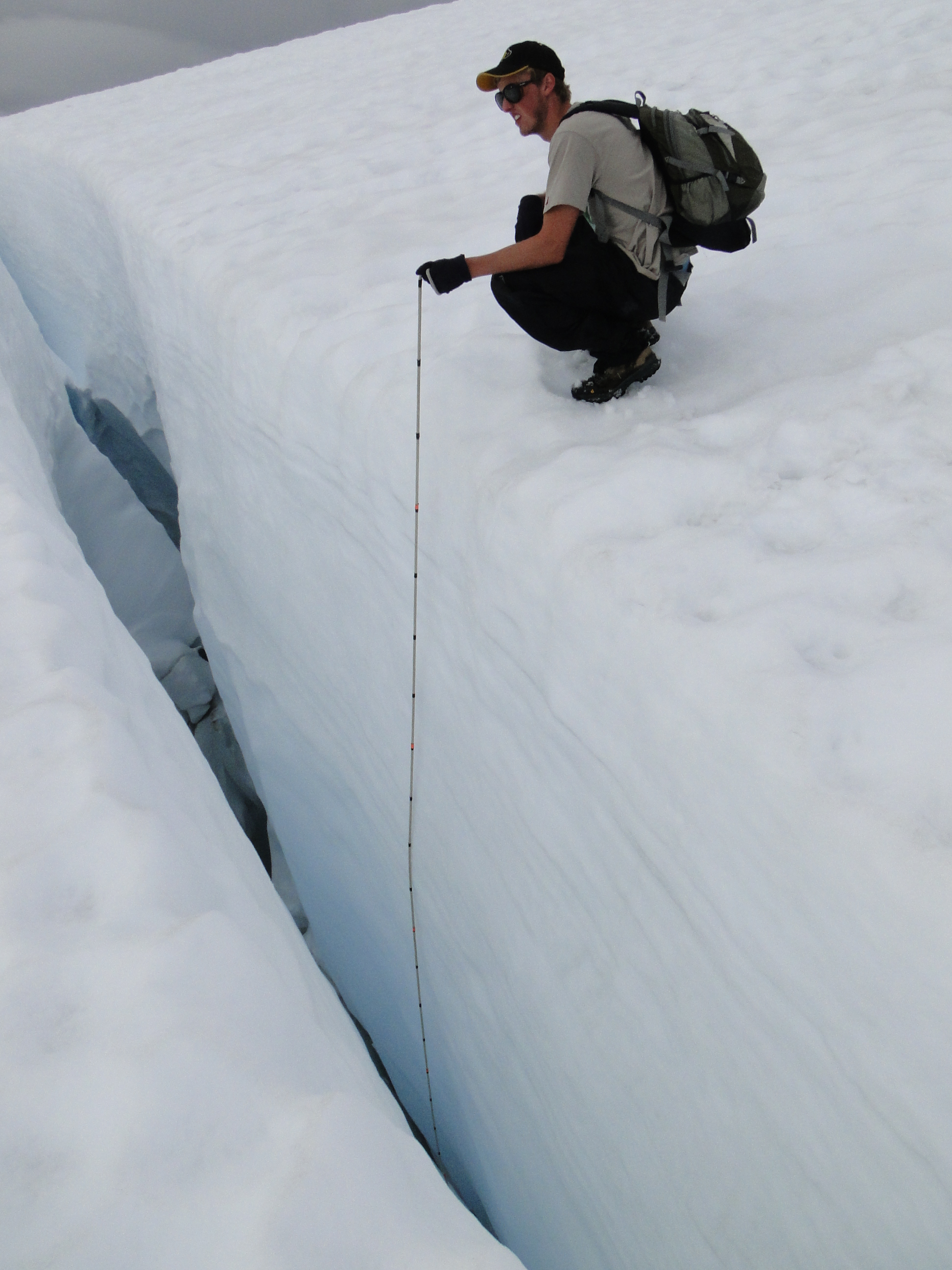
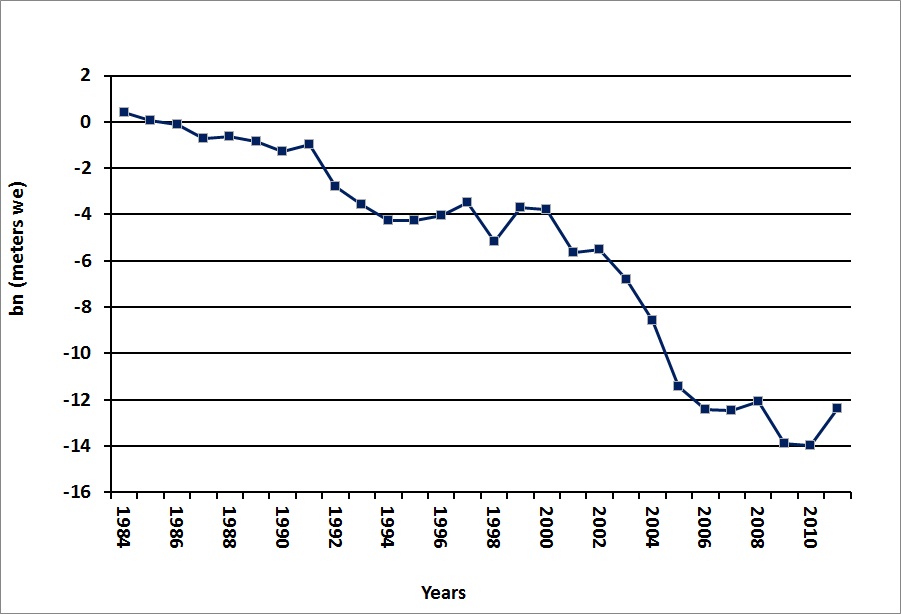
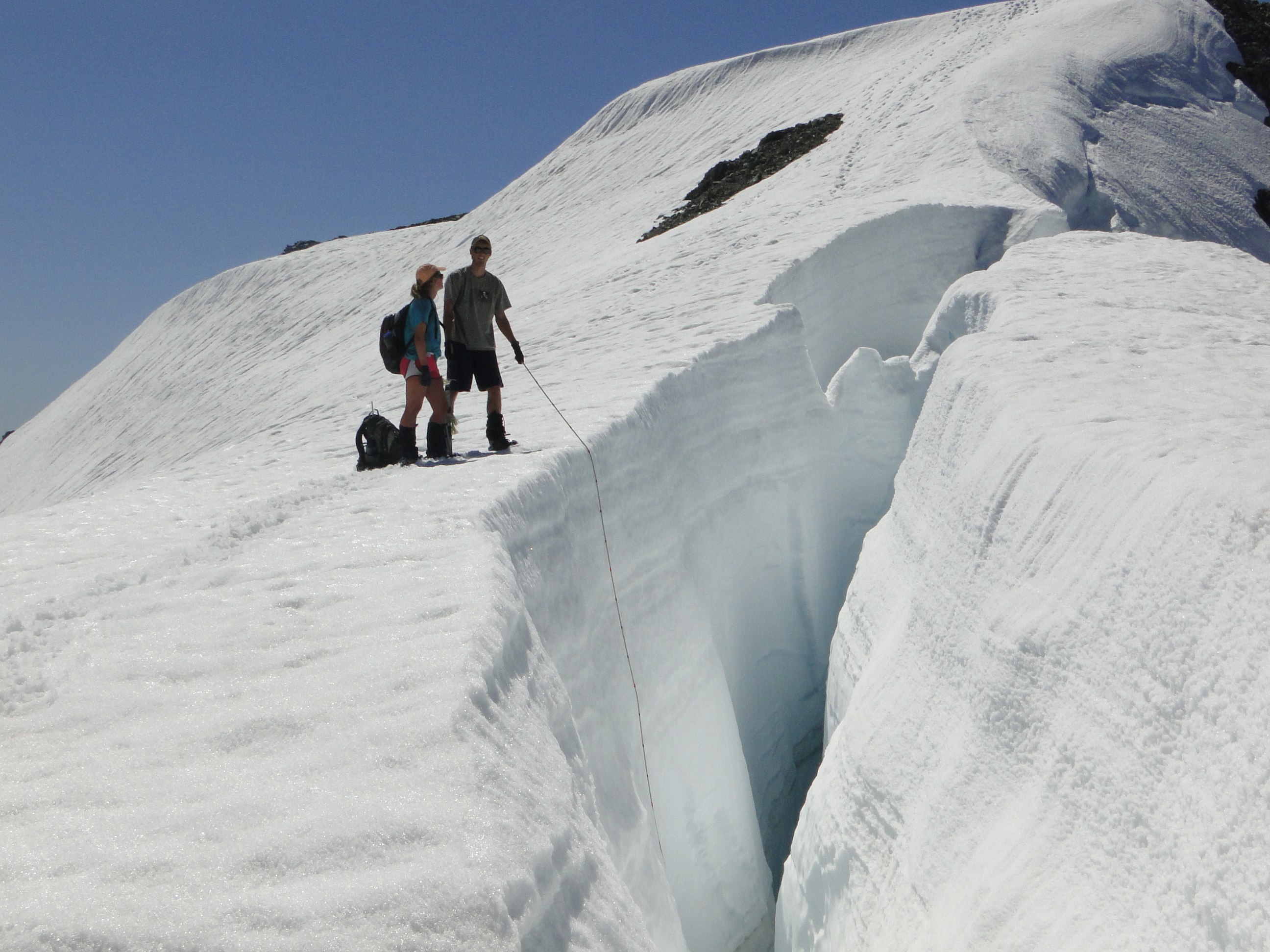 The mass balance was quite positive for the first time since 2002. The combination of a La Nina and a negative PDO almost always deliver a mass balance in the North Cascades, 9 of 11 times (Pelto, 2008). The March-May period was the coldest and wettest spring ever in the North Cascade region. Summer was also cool in the region. This led to positive balances ranging from +1.2 to +2.2 m, the first year with significant mass balance since 1999. The first image below is the preliminary mass balance map for the Lynch Glacier in 2011, indicating the measurement points, black dots, and the blue contour line is the snowline. The cumulative mass loss since 1984 is still 12 meters, or 20-30% of the total volume of these glaciers, second image below.
 . Below is the field season captured in images.
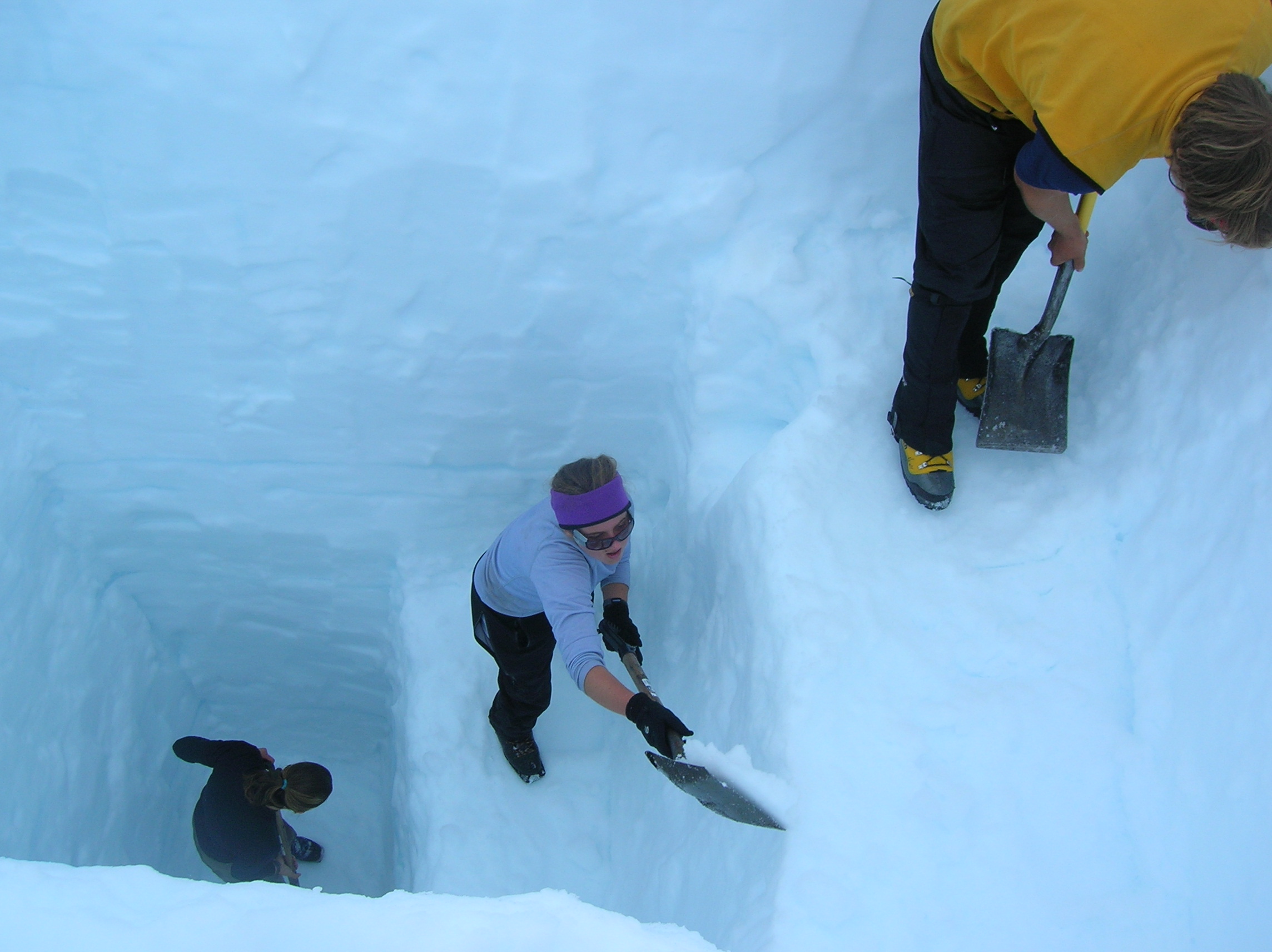
Fourteen hundred kilometers north the Juneau Icefield glaciers did not fare as well. As part of the Juneau Icefield Research Program mass balance measurements are made every summer on the Taku and Lemon Creek glaciers. This summer the program was headed by Jay Fleisher, the mass balance portion was spearheaded by Chris McNeil and Toby Dittrich, Portland Community College. Satellite imagery from Sept. 11, 2011 indicates the snowline at the end of the melt season was just over 1000 meters on Taku Glacier and nearly 1100 meters on Lemon Creek Glaciers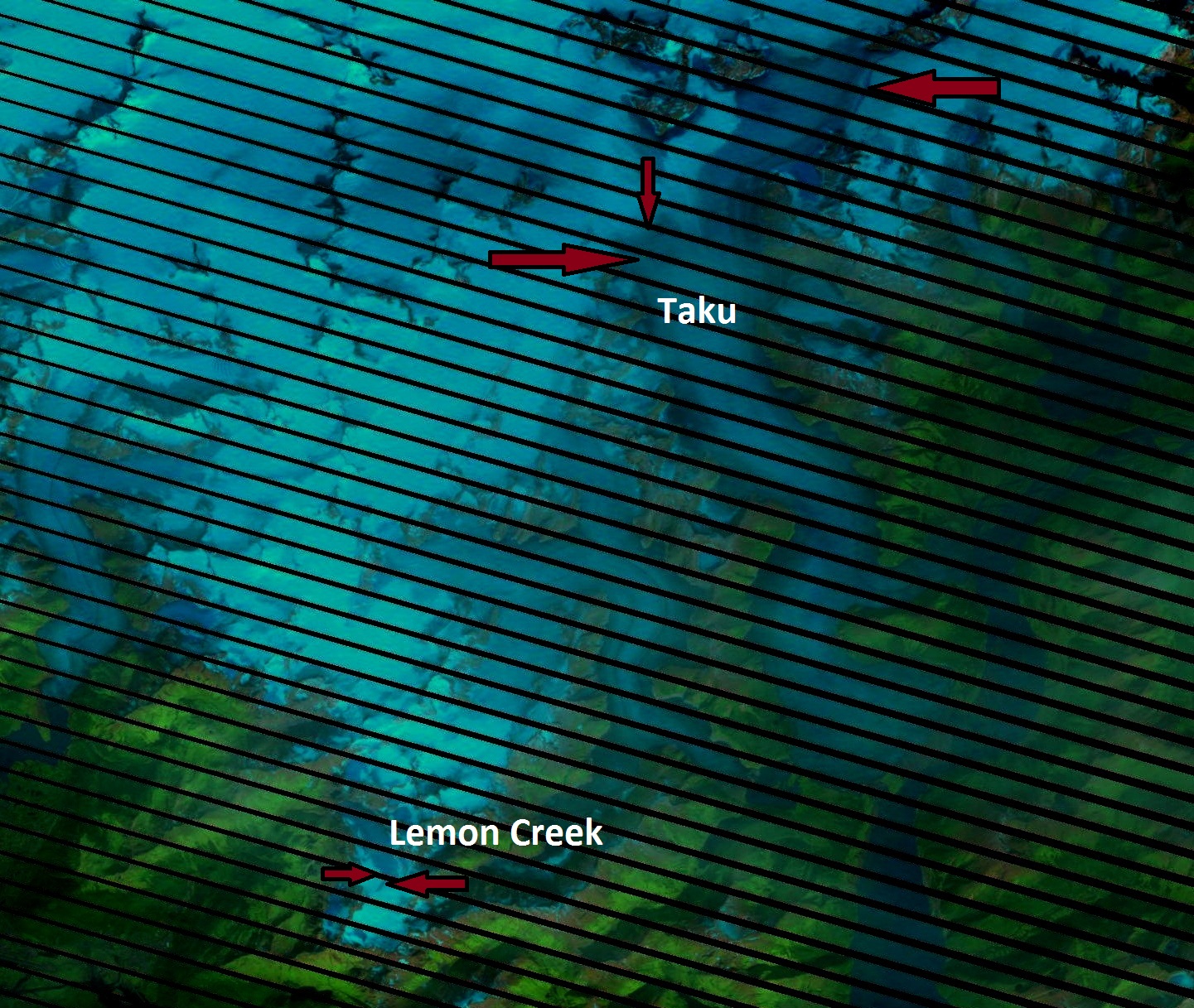 . This is higher than average and indicates negative mass balances for both glaciers. Snowpit and probing measurements at 40 locations, will yield a more specific mass balance, than provided by the snowline. The snowline is quite similar to 2009 and 2010 with snowpack depths generally a bit lower, 2009 and 2010 were also negative mass balance years. The snowpits are typically 2-4 meters deep and quite an effort to dig, the image below is from Cathy Connor at University of Alaska Southeast.
  The cumulative mass balance loss since 1953 on Lemon Creek Glacier is 25 meters, 15 meters since 1984.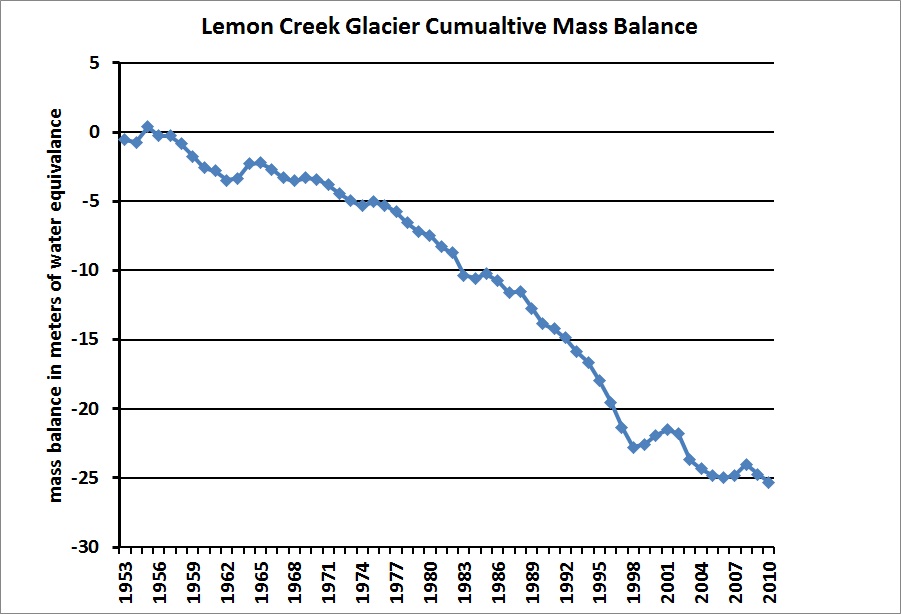
Saint Sorlin Glacier Retreat, France
The Saint Sorlin glacier above the resort of Saint-Sorlin d’Arves has lost over 50% of its surface area since 1870. The mass balance of the glacier is measured and reported annually to the World Glacier Monitoring Service, since 1980 the glacier’s cumulative mass balance is -28 meters water equivalent, equivalent to an average loss of over 30 meters in thickness 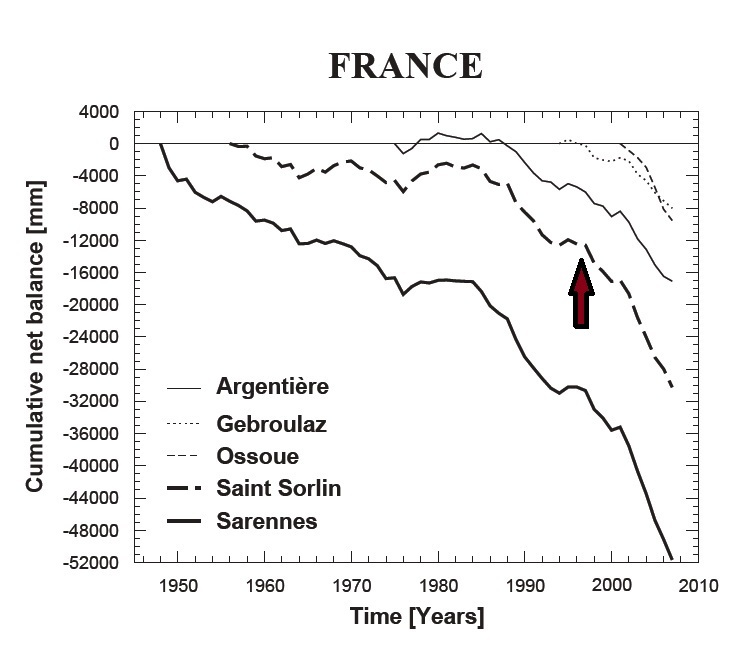 The glacier is measured as part of the GLACIOCLIM program by the Laboratory of Glaciology and Geophysics of the Environment (LGGE) at the Université Grenoble. The LGGE has applied a glacier model that forecasts the disappearance of the glacier before 2100. The glacier retreat and accumulation zone thinning from 2002 to 2006 are evident in Google Earth Imagery. The average retreat during the four years is 60 meters, the red line in both images is the 2002 terminus position.
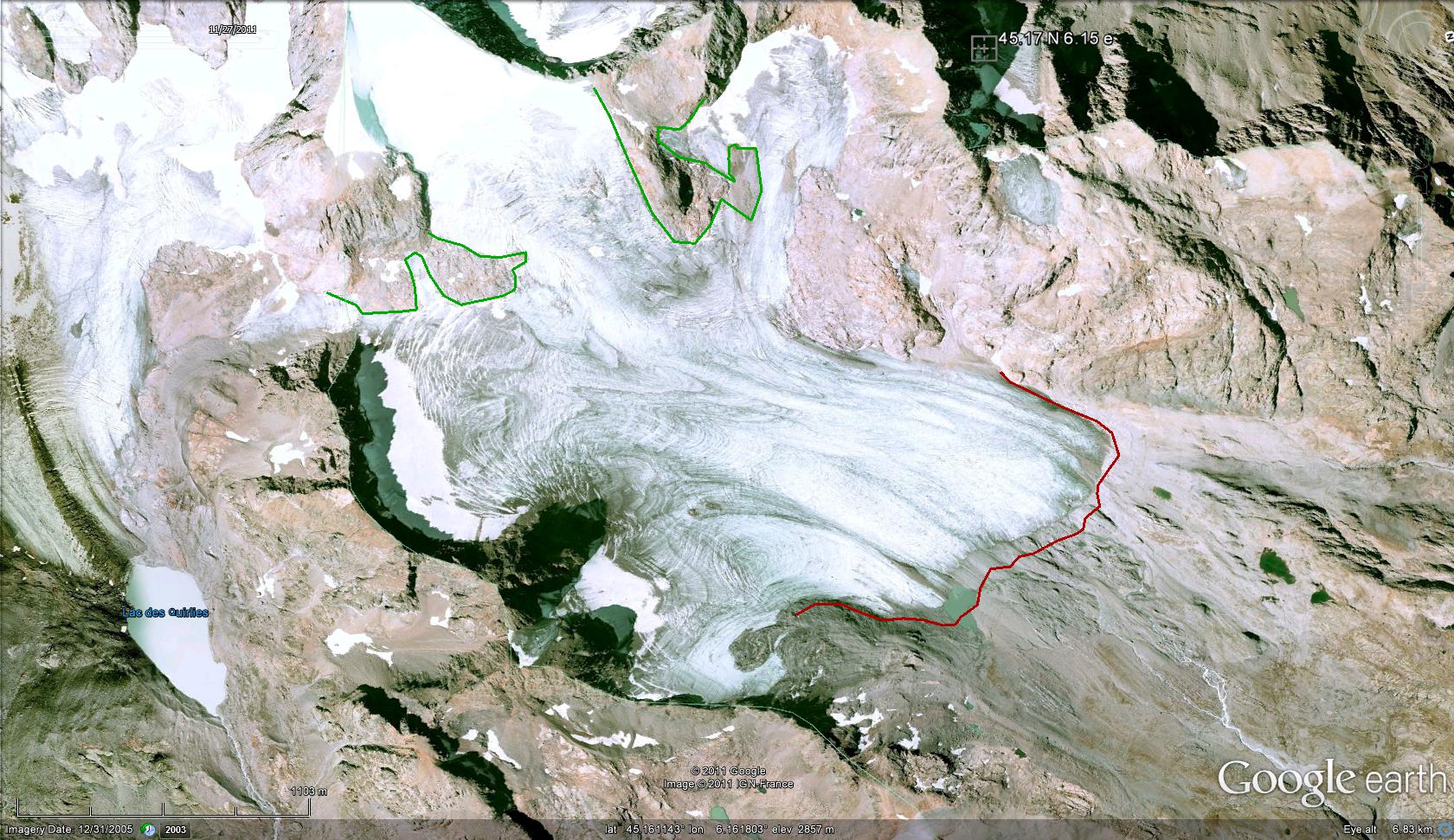 More worrisome for the glacier is the expansion of bare rock areas high on the glacier, green lines outline the bare rock margins in 2006, which cross significant glacial ice just four years previous.
 . A view of the glacier from the hut beyond the terminus, from Lakiki, affords a view of both the thinning terminus (blue arrow) and rock outcrops emerging on the upper glacier (red arrows) that are a sign of a glacier that is thinning in its former accumulation zone. This is not a sign of a glacier that can survive (Pelto, 2010).
Field Glacier, Alaska Retreat, Lake expansion, tributary separation

Above is a paired Landsat image from 1984 left and 2013 right, indicating a 2300 m retreat in this period, below is further detailed examination.
The Field Glacier flows from the northwest side of the Juneau Icefield, and is named for Alaskan glaciologist and American Geographical Society leader William O. Field. Bill also helped initiate the Juneau Icefield Research Program, which Maynard Miller then ably managed for more than 50 years. The JIRP program is still thriving today. In 1981, as a part of JIRP, I had my first experience on this glacier. It was early August and there was new snowfall everyday that week. Jabe Blumenthal, Dan Byrne and myself undertook a ski journey to examine the geology on several of the exposed ridges and peaks, note the burgundy line and X’s on image above. This was truly a remote area. The glacier begins from the high ice region above 1800 meters, there are several icefalls near the snowline at 1350 meters, and then it descends the valley ending at 100 meters. The runoff descends the Lace River into Berners Bay.  This post focuses on the significant changes occurring at the front of the Field Glacier. The development of a proglacial lake at the terminus is accelerating and spreading into the main southern tributary of the glacier. This lake is going to quickly expand and develop a second arm in that valley. The USGS map from 1948 imagery and the 1984 imagery indicate little change in the terminus position, with only a small lake at the terminus.
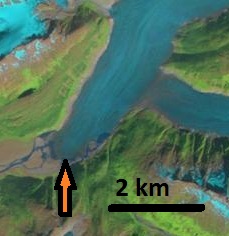 . After 1984 the mass balance of the Juneau Icefield became more negative, this was apparent from the rise in the snowline elevation on all the glaciers and by the increasing losses and resultant thinning typified by the Lemon Creek Glacier (Miller and Pelto, 1999)
 . The Field Glacier by 2006 had developed a proglacial lake at the terminus that averaged 1.6 km in length, with the east side being longer. There are several small incipient lakes forming at the margin of the glacier above the main lake, each lake indicated by black and orange arrow. In 2009 the lake had expanded to 2.0 km long and was beginning to incorporate the incipient lake on the west side of the main glacier tongue. By 2011 the main lake has nearly reached the southern tributary lakes. The lake has expanded to 2.6 km long, with the west side having caught up with the east side, and an area of 4.0 square kilometers. In addition the main lake has joined with the fringing lake on the south side of the south tributary. There is also a lake on the north side of this tributary. This lake should soon fill the valley of the south tributary and fully merge with the main, as yet unnamed lake at the terminus, maybe this should be Field Lake. Below in order is the 2006, 2009 and 2011 Landsat images.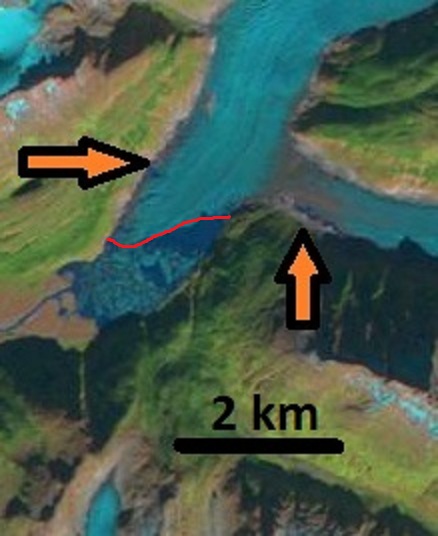

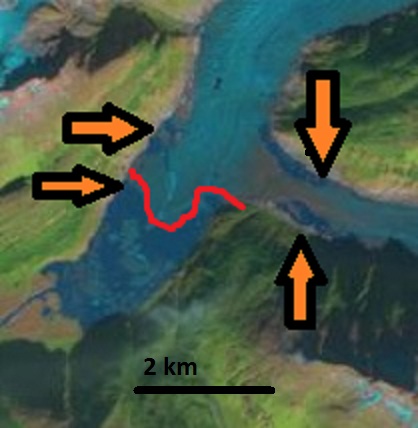 This glacier is experiencing retreat and lake expansion like several other glaciers in the icefield, Gilkey Glacier, Eagle Glacier, and Antler Glacier.
Ross Hindle Glacier Separation and Retreat, South Georgia
The Ross-Hindle Glacier enters Royal Bay on the east coast of South Georgia Island has now separated into the Ross and Hindle Glaciers. In a 2003 Landsat image the glaciers are joined, as they had been for quite some time.  By 2008 the glaciers had separated. The tidewater glaciers of South Georgia in general maintained fairly advanced positions unitl 1980. Gordon et al., (2008) observed that larger tidewater and sea-calving valley and outlet glaciers generally remained in relatively advanced positions until the 1980s. For Ross-Hindle the retreat was minimal from 1960 to 1989. The change in glacier termini position have been documented by Alison Cook at British Antarctic Survey in a BAS retreat map
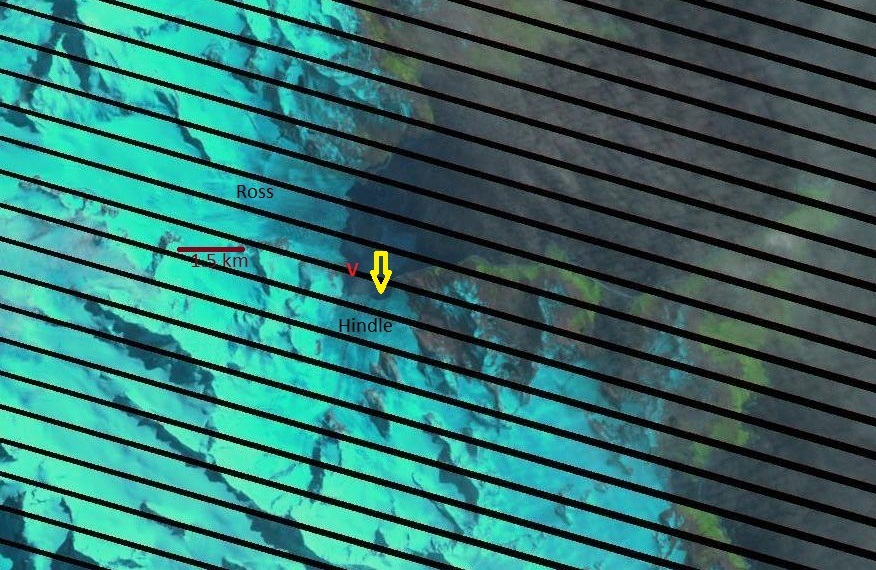
 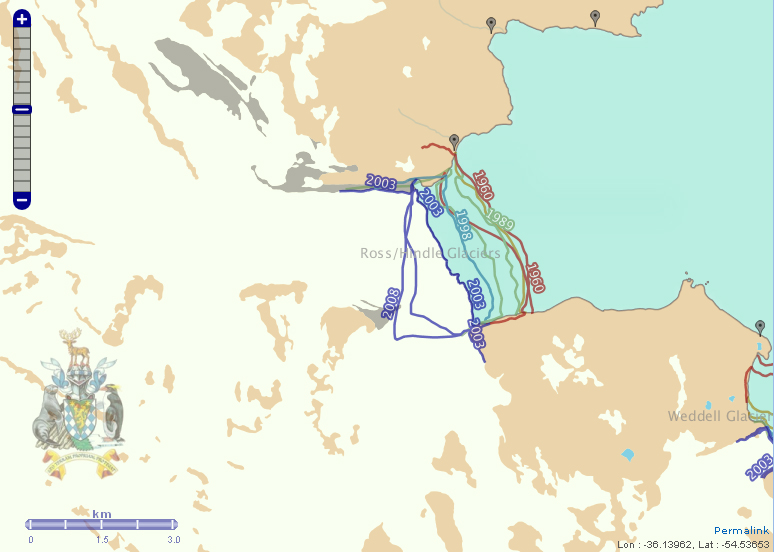 The sequence of annotated Landsat images below indicates the retreat and separation from 2003 top, to 2008 and then 2010. Hindle Glacier front is noted with red arrow, Ross Glacier green arrow, V marks the location of the ridge at the beginning of their juncture. The retreat of Ross Glacier ranges from meters on the north shore to meters on the south side. The Hindle Glacier has retreated 1.5-2.1 km in this period. By 2008 the glaciers have separated, by 2010 a new bay has formed at the front of Hindle Glacier. The new bay is evident, note yellow arrow.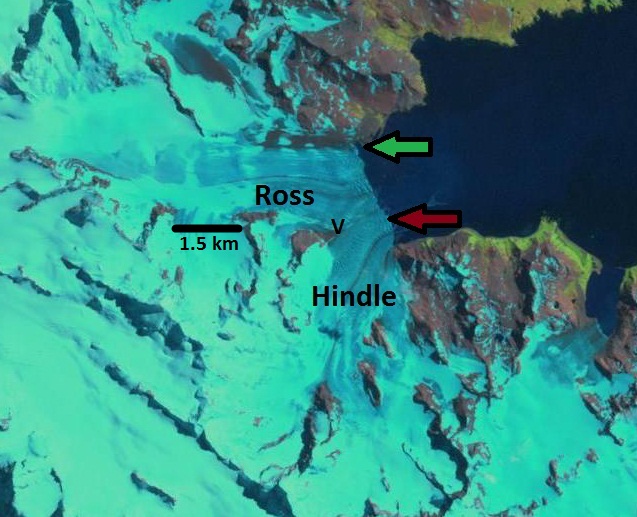

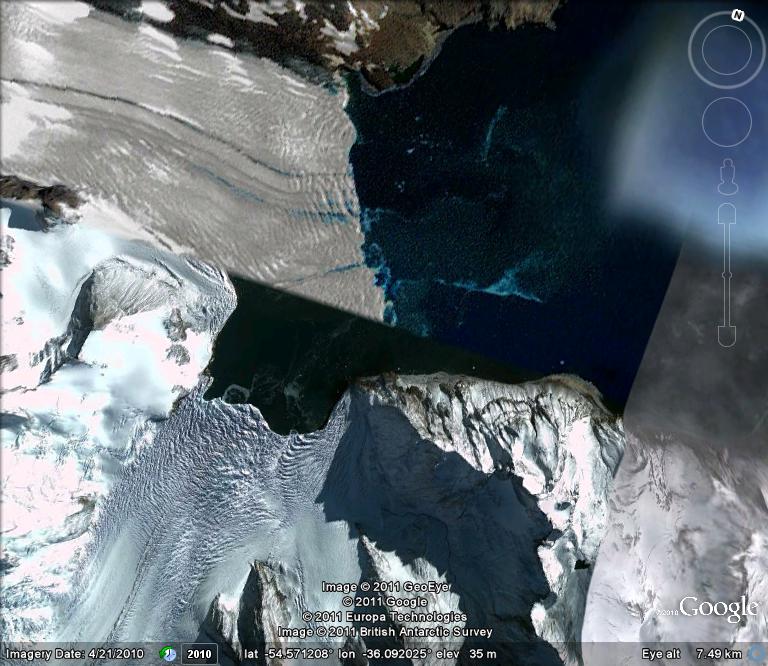
 This leads to the strange juxtaposition in Google Earth of the 2003 image front for Ross Glacier and the 2010 image front for Hindle Glacier. Further added crrevassing near the ice front indicates an acceleration of the Hindle Glacier. This suggests the Ross Glacier was impeding its flow previously and that Hindle is in a rapid retreat mode.
 The rapid recent retreat parallels that of Neumayer Glacier further up the coast. The BAS research effort on glacier front retreat has been documented by Alison Cook . Her comparison of glacier fronts from old aerial photographs and comparing them with satellite images — she identified that 212 of the Peninsula’s 244 marine glaciers have retreated over the past 50 years and that rates of retreat are increasing.
Retreat of Prospect Glacier, Antarctic Peninsula
Prospect Glacier flows into the Sea on the E=West Coast of Antarctica. The glacier used to drain into the Wordie Ice Shelf which was formerly located at 69o on the west coast of the Antarctic Peninsula. In a joint study released by the USGS and British Antarctic Survey (BAS) the history of the Wordie Ice Shelf is reviewed. Below is the view in a Landsat 1979 image of the ice shelf.  . The ice shelf advanced from 1947 to 1966. The ice shelf advanced on the northern end and retreated on the southern end from 1966 to 1974. The retreat at the southern end where Prospect Glacier fed the ice sheet was 1-2 km. By 1989 an additional 2 km of retreat had occurred. From 1989 to 1997 a general advance of the ice shelf occurred. From 1999 to 2001 retreat of 3-10 km occurred which marked the end of the ice shelf. The retreat is summarized in a figure from the USGS(2011).
  . The demise of the Wordie Ice Shelf was first documented by D.Vaughan and C.Doake (1991) of the BAS. The USGS long term project of mapping the changes with Landsat has been led by R. Williams, C.Swithinbank and J.Ferrrigno Examination of recent Landsat imagery indicate continued retreat of Prospect Glacier like its neighbor Fleming Glacier since ice shelf loss. A comparison of the ice front in the Prospect Glacier area is indicated in Landsat imagery from 1989 (top), 2002 (middle) and 2009 (bottom). Mount Balfour is at the northern edge of the Prospect Glacier, and may well become an island. The retreat is more pronounced on the southern side of the glacier note the locations A-E are the same prominent mountain features in the 2002 and 2009 images. The terminus is retreating eastward along Mount Balfour, from 1989-2002 but not significantly from 2002-2009.

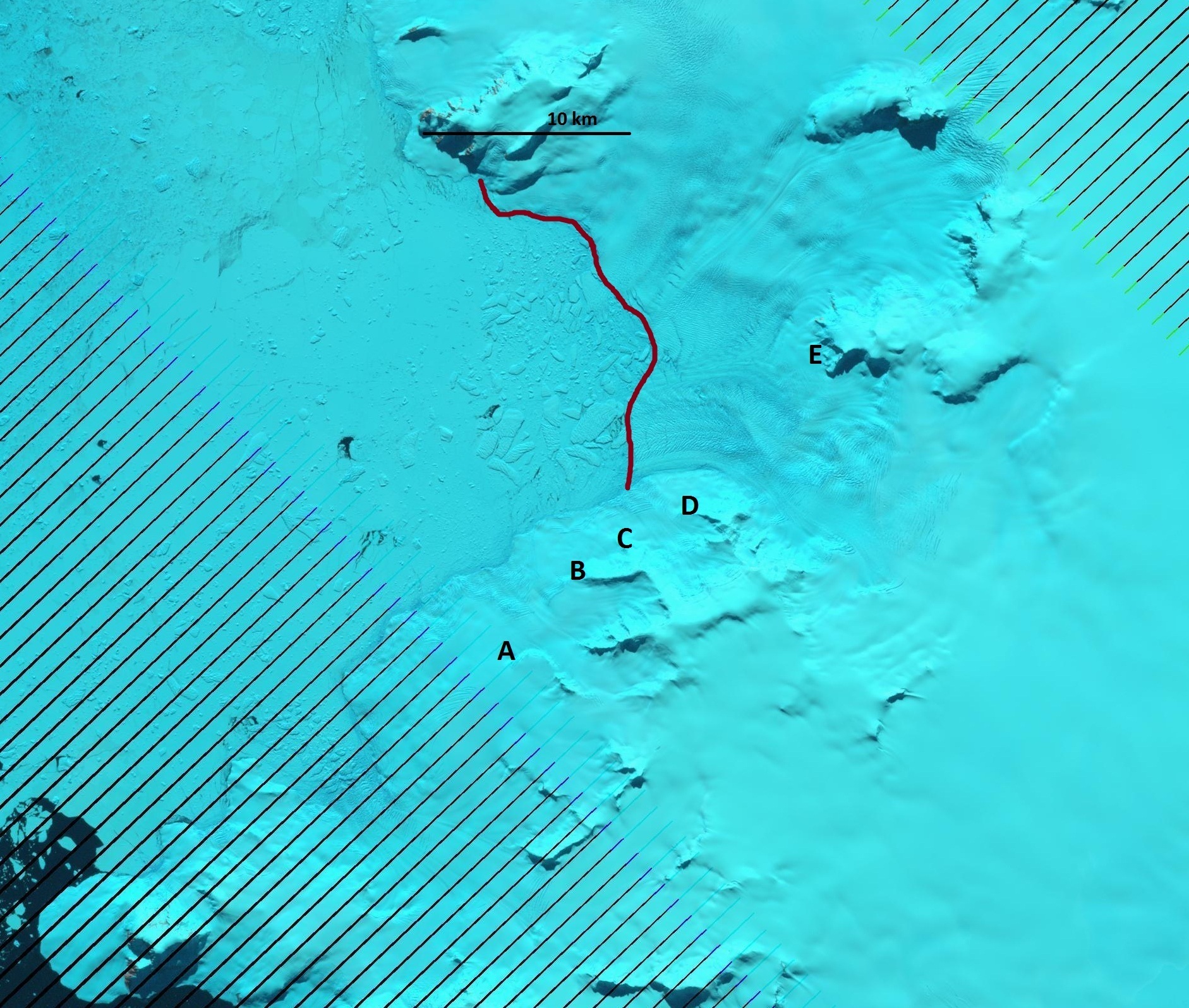 . A closeup view of the 2009 terminus indicates considerable rifting near the ice front, that represent icebergs that will soon calve off leading to further retreat. Surface melt in this area is quite limited, and the loss of the ice shelf through thinning and then rifting and breakup must have been triggered in part by increased basal melt. With the loss of the ice shelf, there is less back force slowing glacier motion at the ice front. The acceleration is leading to further thinning and continued extensive rifting. Rifts are indicated by red arrows and are likely due to basal crevasses expanding towards the surface.
Retreat of Roze and Sredniy Glacier and New Island Formation Novaya Zemyla
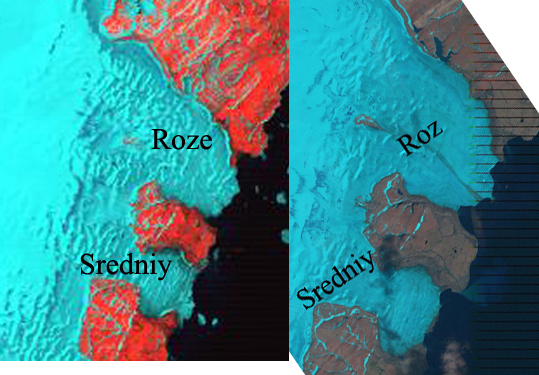
The glaciers of northern Novaya Zemyla, Russia receive little attention. There remoteness and lack of importance as a water resource being the key reasons. A recent map produced by LEGOS (Laboratoire D’Eetudes en Geophysicque et Oceanographie Spatiales) in France highlights the changes of these glaciers from 1990-2000. The Roze Glacier and Sredniy glacier are the two northern most glaciers that reach tidewater on the east coast. Roze glaciers is noted by LEGOS (Alexei Kouarev, Frédérique Rémy and Benoit Legresy) as having lost 6.5 square kilometers of area from 1990-2000. Sredniy Glacier lost 1.35 square kilometers. In this post we examine the changes from 1989 to 2011 and zoom in the retreat from 2006 to 2011 using Landsat images. The first image is from 2006 and illustrates the snowline at 900 feet and the tidewater termini. he second image is a comparison of 1989 to 2011. In 1989 the Sredniy has quite a broad tidewater terminus compared to 2011. The Roze Glacier protruded beyond the coastline in 1989, by 2011 it is retreating into and expanding bay. on the northeast side a new peninsulas has been exposed. This is not the only new island as Krivosheina Glacier on the northwest coast has retreated exposing a new island as well. 
 . A closeup pairing of a 2006 (left) and 2011(right) image indicate that Sredniy Glacier retreat is exposing a new island (red arrow) and a new cape is also evident green arrow). On Roze Glacier the combined 2006-2011 image illustrates the retreat on the northeast side of the terminus (red arrow), and the increasing distance from the terminus to a small island (green arrow).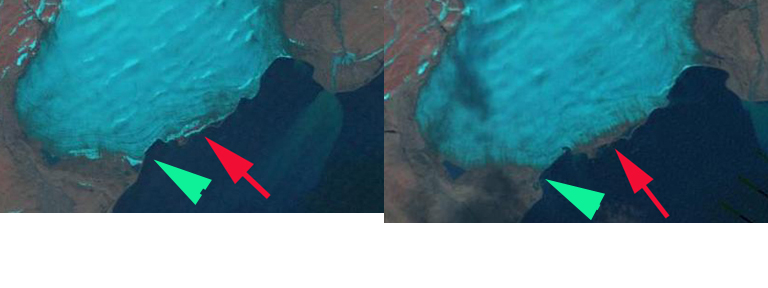

Lower Fremont Glacier, Wyoming Disappearing
The Wind River Range is host to 40 glaciers that all have retreated significantly over the last 25 years and 45 years. Of the 15 glaciers observed in detail, nine will not survive current climate (Pelto, 2008). The Lower Fremont is one of the glaciers that will not survive. A comparison of its extent from 1966 USGS map, 1994 USGS aerial photography and 2006 satellite image in Google Earth indicate the retreat. The 1966 glacier boundary is outlined in orange. 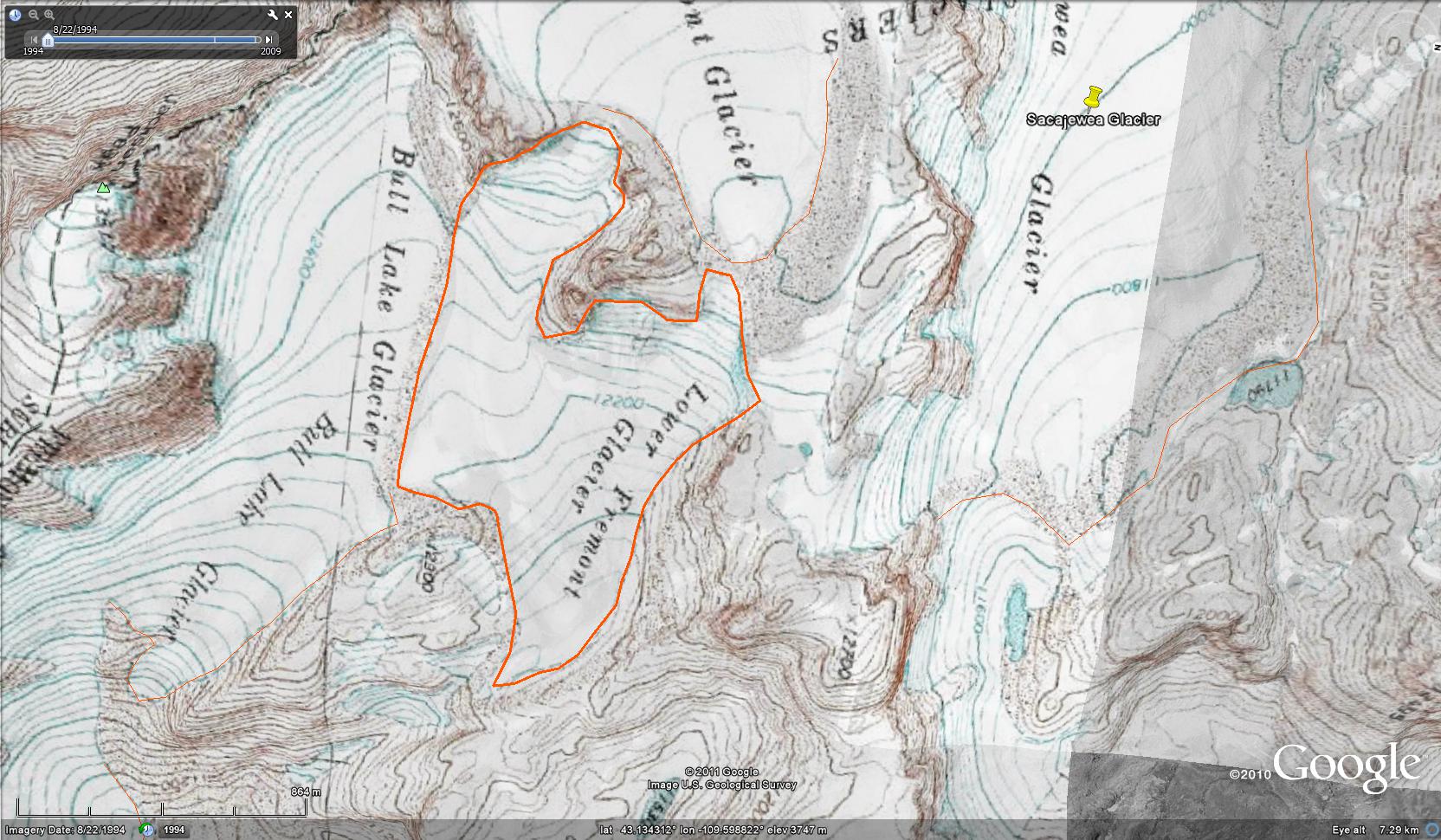
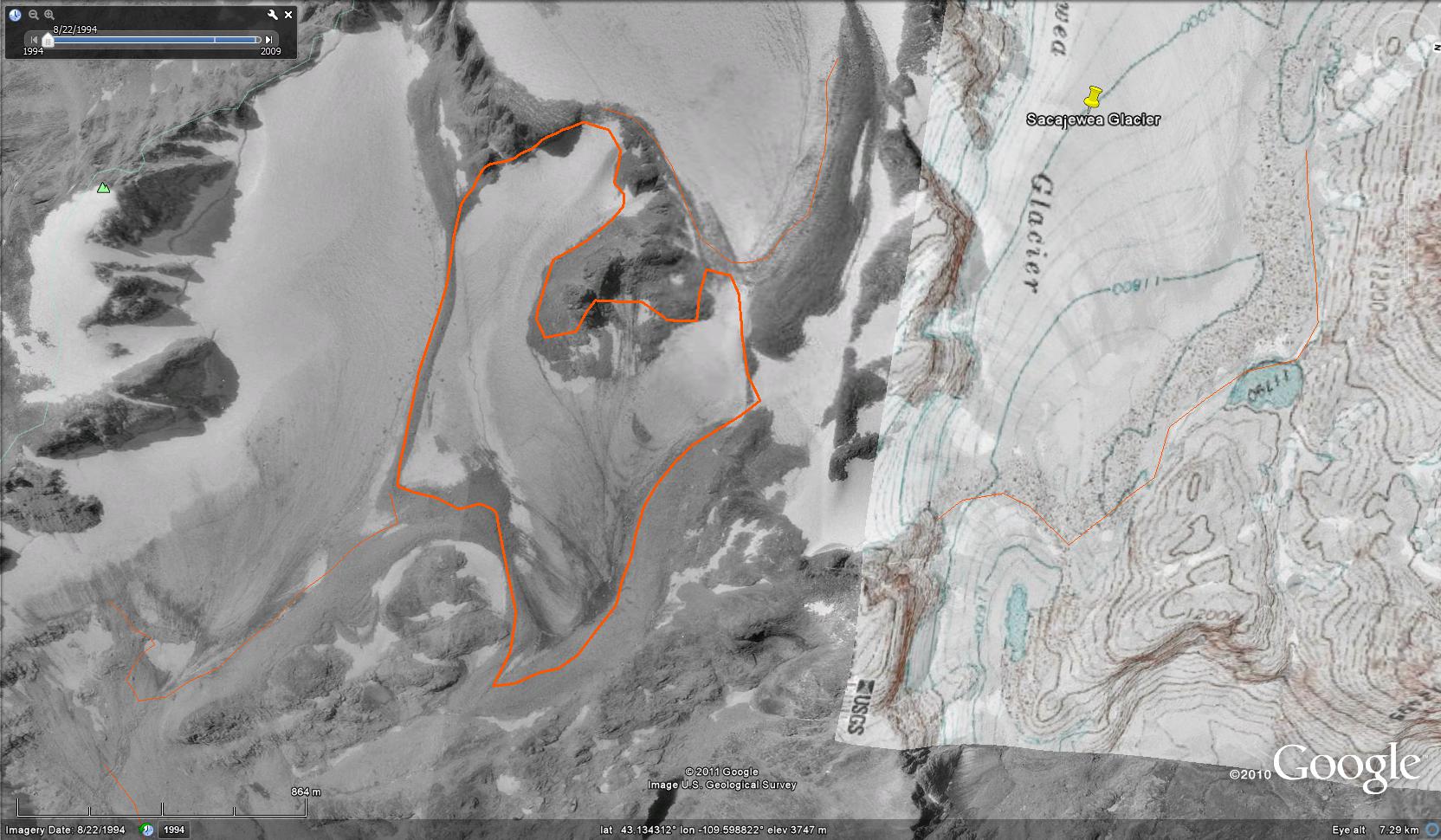
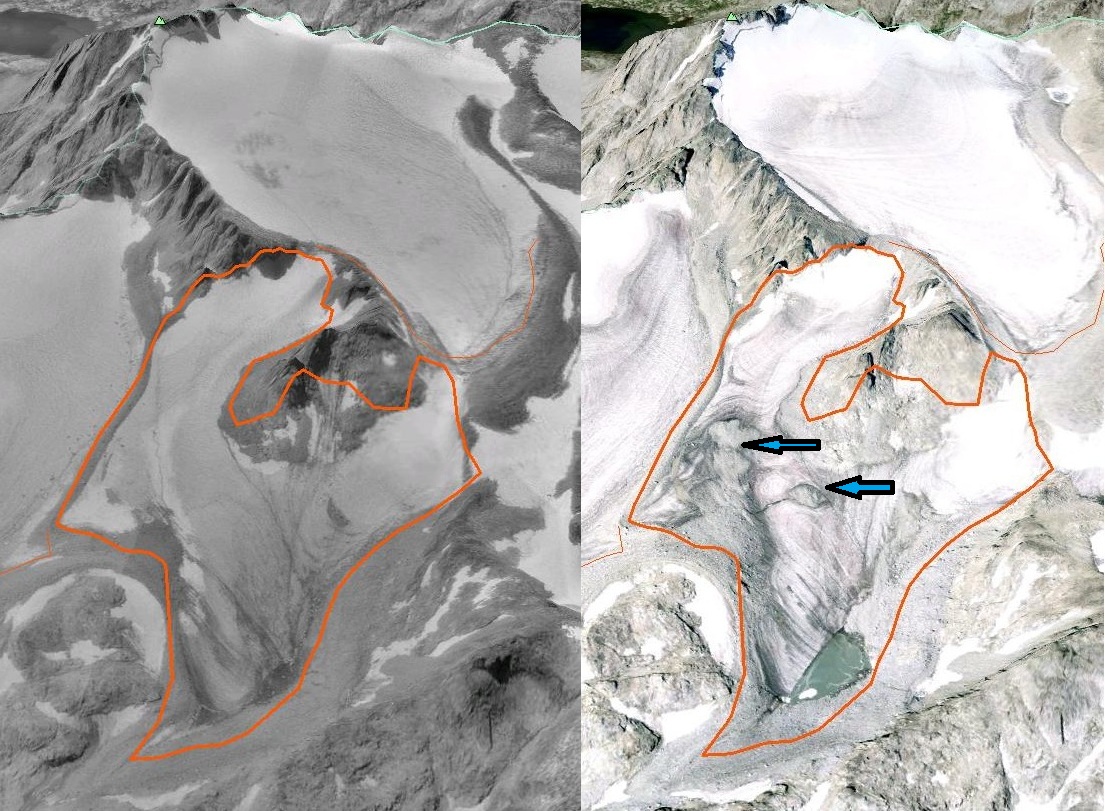
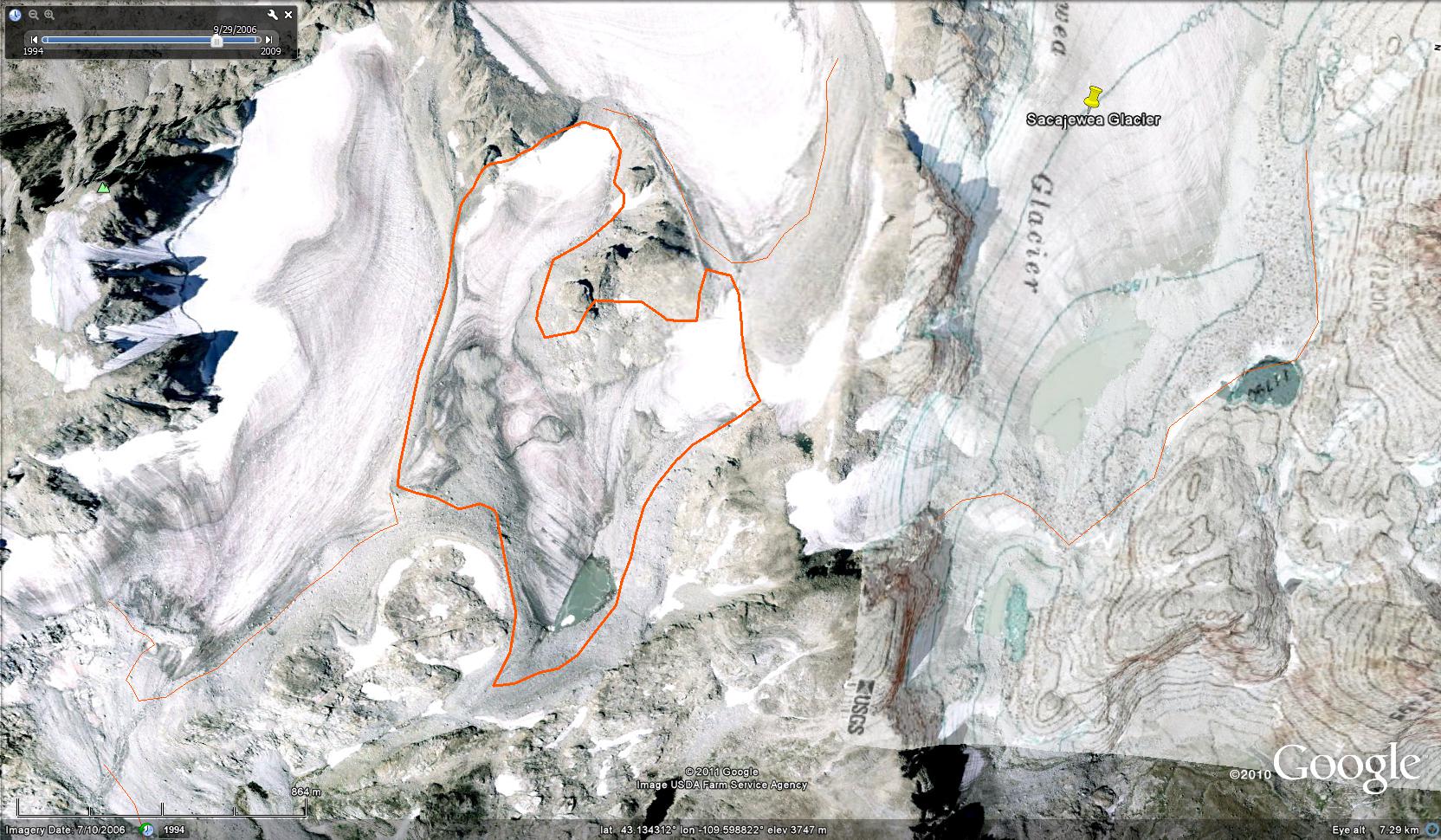 . The glacier has lost 23 % of its area and the terminus has 130 retreated meters. A new lake has formed since 1994 at the terminus, and new outcrops of rock have emerged, as noted in the combined 1994-2006 image below.
 The key changes that indicate the glacier is not going to survive are the outcrops of rock that have emerged in the upper portion of this glacier, blue arrows. The new lake is indicated by the red arrow. The green arrows indicate the numerous firn layers exposed at the surface.
 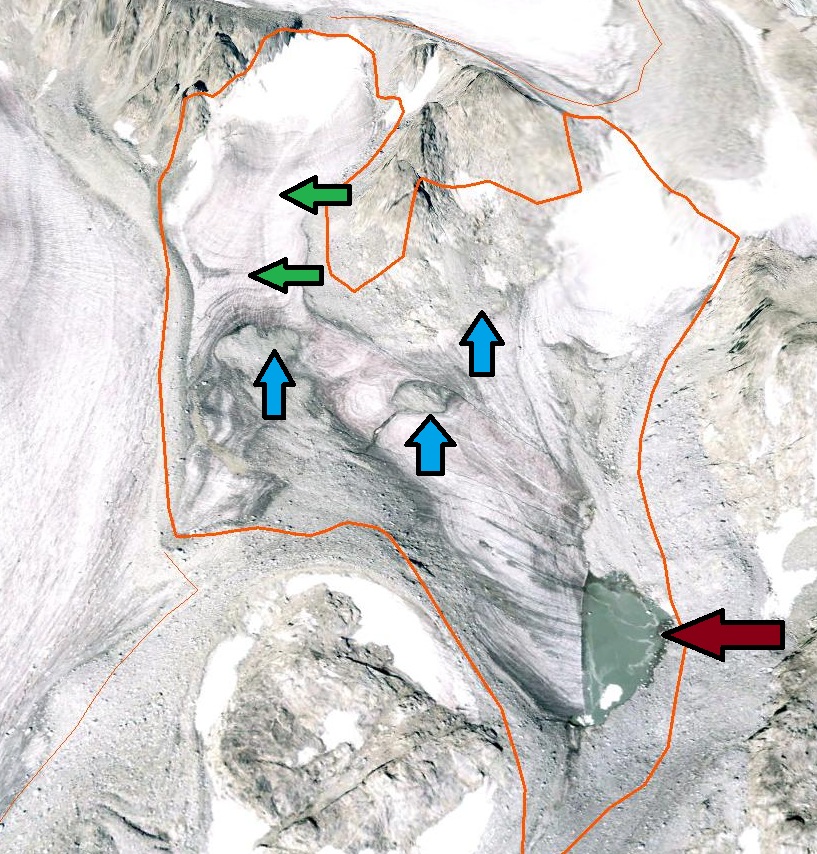 Both the exposure of firn layers and the emergence of bedrock and rock through the glacier indicates the lack of a consistent and persistent accumulation zone. This indicates the glacier will not survive ((Pelto, 2010 and Pelto, 2011).
Milam Glacier Retreat, India
Milam Glacier flows south from the summit of Trisul in the Indian Himalaya. The glacier is fed by a number of tributaries flowing off the north ridge of Nanda Devi as well. A recent paper by Raj (2011) documents the retreat of this glacier from 1954-2006. In the October 16, 2011 satellite image below, the snowline is at 5100 meters (black arrows) and the terminus at 3600 meters (red arrow). The accumulation zone stretches from the icefall regions at 5000-5200 meters to near the summit of Trisul at 7000 meters. 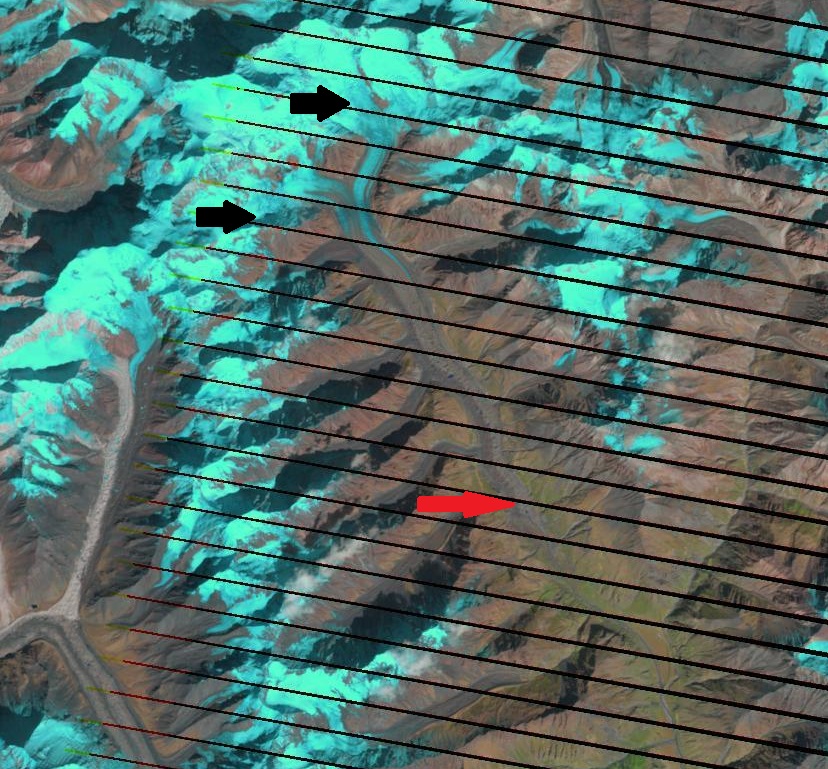 From 1954-1976 Milam Glacier retreated at 20 Meters/year, 440 m. From 1976 to 1990 retreat was still 20 meters/year, 290 m. From 1990-2006 the glacier retreated 40 meters/year, 600 meters. The image below is from the Raj (2011) paper. Raj et al (2014) note that the glacier has retreated 480 m from 2004-2011 an acceleration. They further note an increase in the number of ponds and their size on the glacier, with the growth of 47 notable ponds on the glacier surface (Note their Figure 3, below).
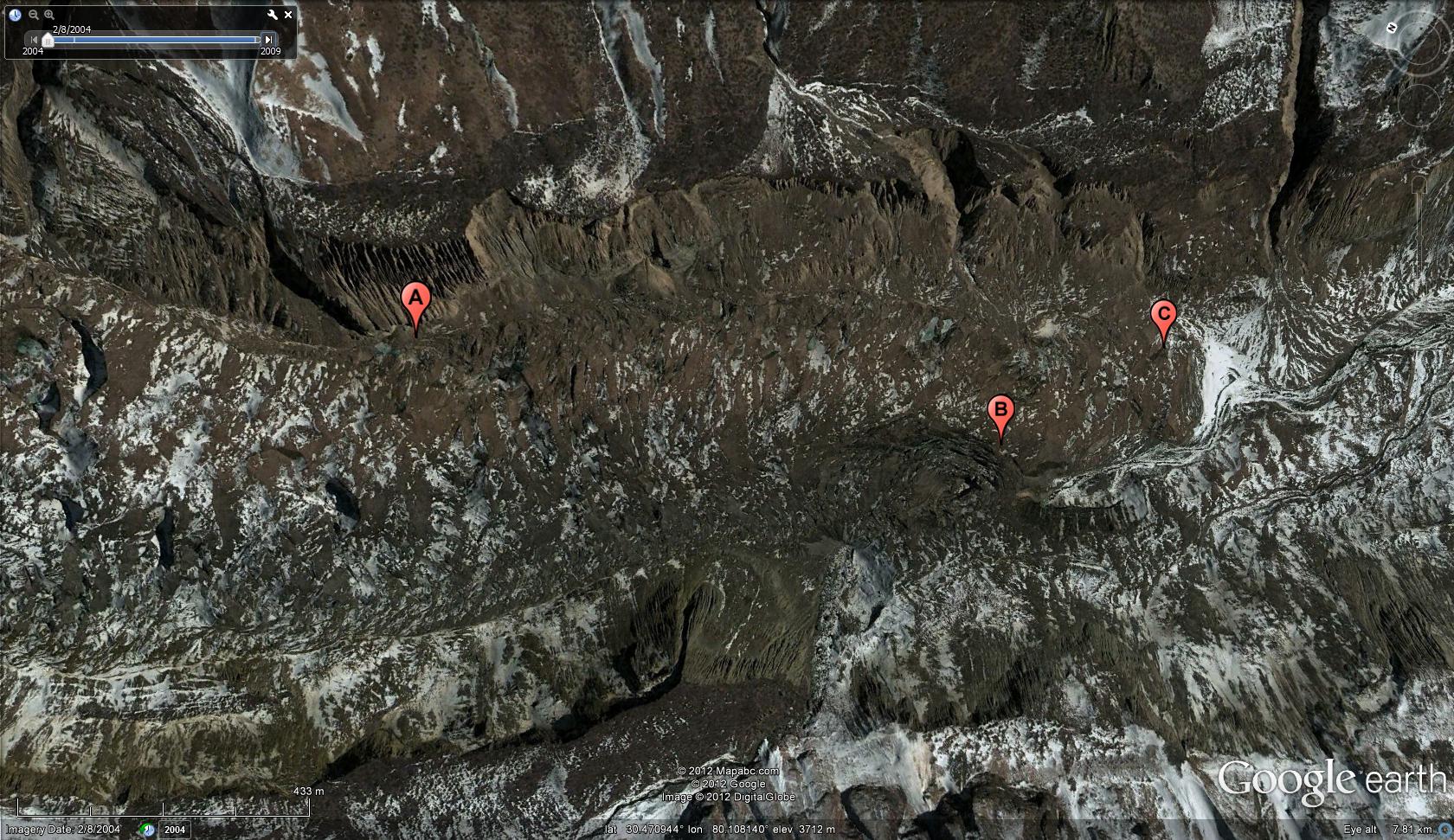
  The Milam Glacier feeds the Gori Ganga River where a 370 MW hydropower system is anticipated to be built, the system will be a run of the river hydro project. A closeup view from Google Earth imagery of the terminus indicates its stagnant nature and the location of the glacier outlet stream emerging from the under the glacier is a good marker of the terminus, note arrow in top image below. A comparison of 2004 (middle) and 2009 (bottom) indicate the stagnant debris covered nature of the glacier terminus area. A new lake has developed upglacier of the terminus at Point A after 2004. The lake beyond the terminus at Point C has expanded. The terminus where the stream issues from under the glacier is at Point B.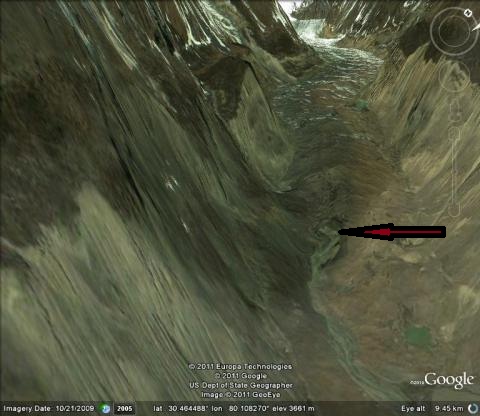


Fuigure 3 from the Raj et al (2014) in Journal of Geological Society of India. The glacier is fed by a number of tributaries that now barely reach and contribute little in the way of volume to the Milam Glacier. These are labelled in the base map from Raj (2011). A closeup example is the Pachmi Drachnu Glacier. The red arrow points out the lateral moraine that now is 100 meters above the current Milam and Pachmi Drachnu Glacier surface. The blue arrow indicates the meager ice supply reaching the Milam Glacier 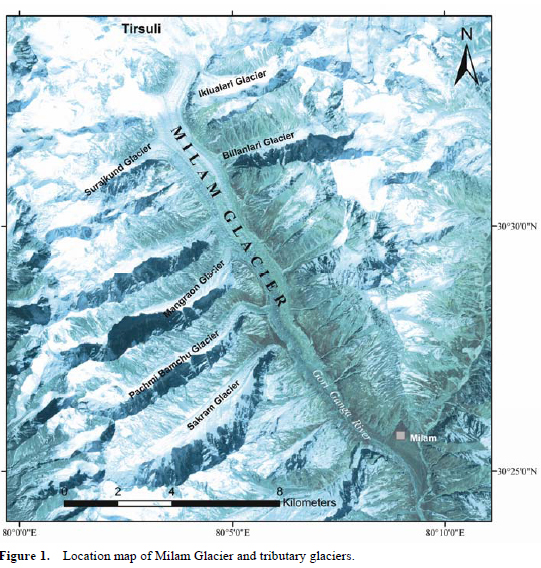
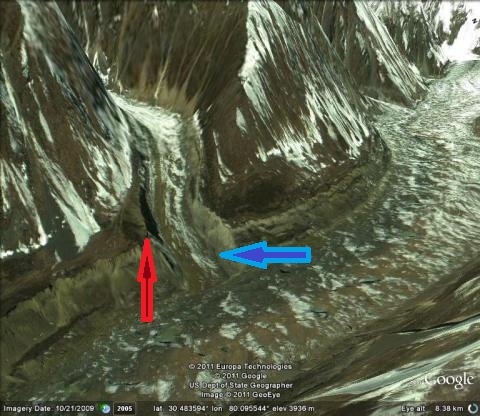 . The Milam Glacier is a summer accumulation type glacier receiving the bulk of its melt and accumulation during the summer monsoon season. This type of glacier is not sensitive to black carbon ablation enhancement as the lower section is debris covered and the upper section covered by frequent new summer snowfall. The retreat of this glacier is similar to that of neighboring glaciers such as the Parbati Glacier, Gangotri Glacier and Satopanth Glacier
Borealis Glacier separation and retreat
The Borealis Glacier in the North Cascades of Washington, descends the north side of Primus Peak. Unfortunately the peak is not in prime condition. The thinning glacier has separated into two ice masses, the lower section has also developed a new lake since 1995. The USGS map for the glacier indicates the upper and lower glacier connected by two ice tongues (top image). This connection has been severed by 1990 in an aerial photograph from the USGS(second image). At this point no lake exists below the lower glacier. 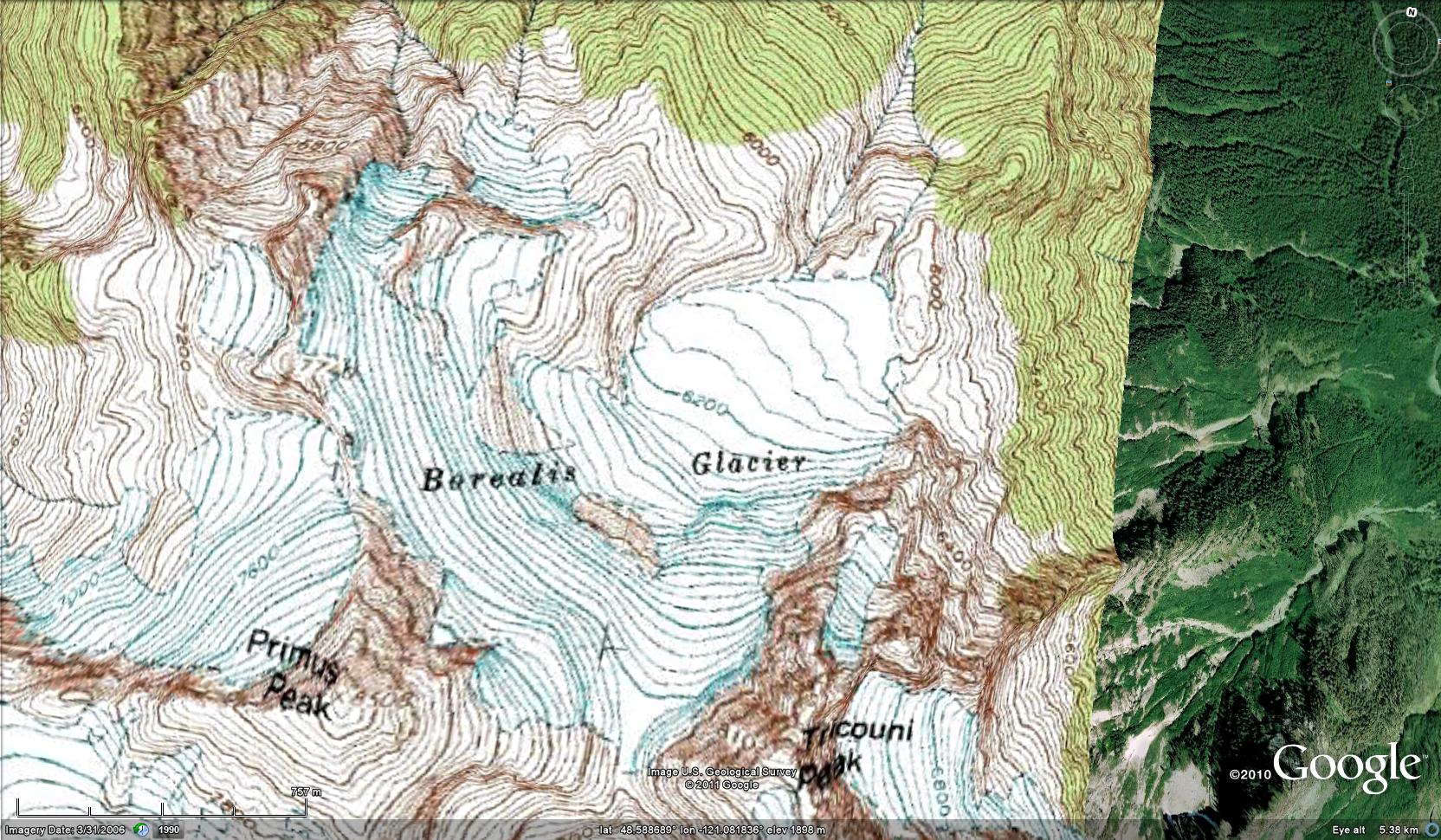 . In 2006 the lower section of the glacier has undergone a rapid retreat of 200 meters since 1990 and a new lake has formed (top image below). By 2009 the lake has expanded as the glacier has retreated and additional 40 meters (second image below).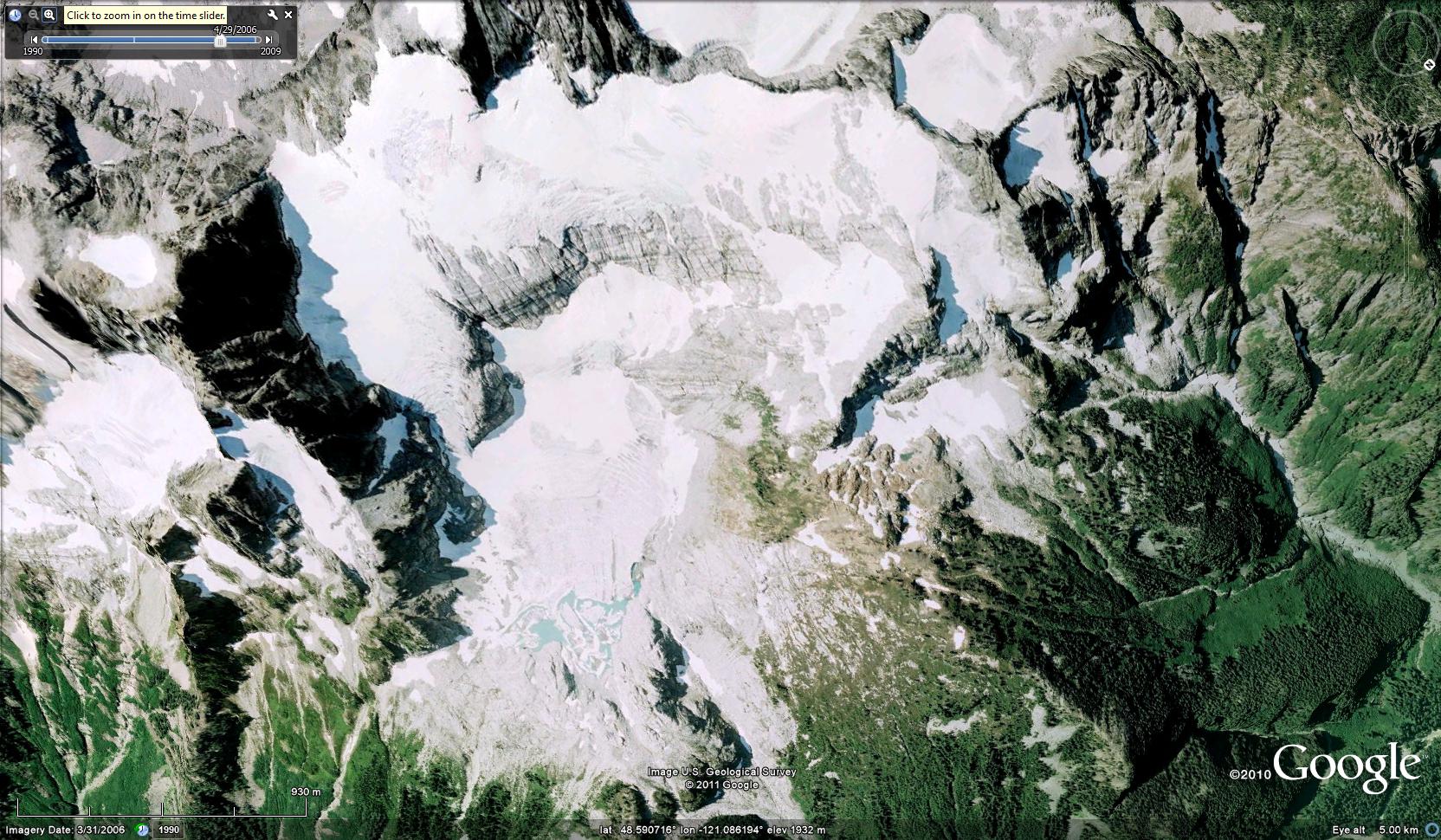
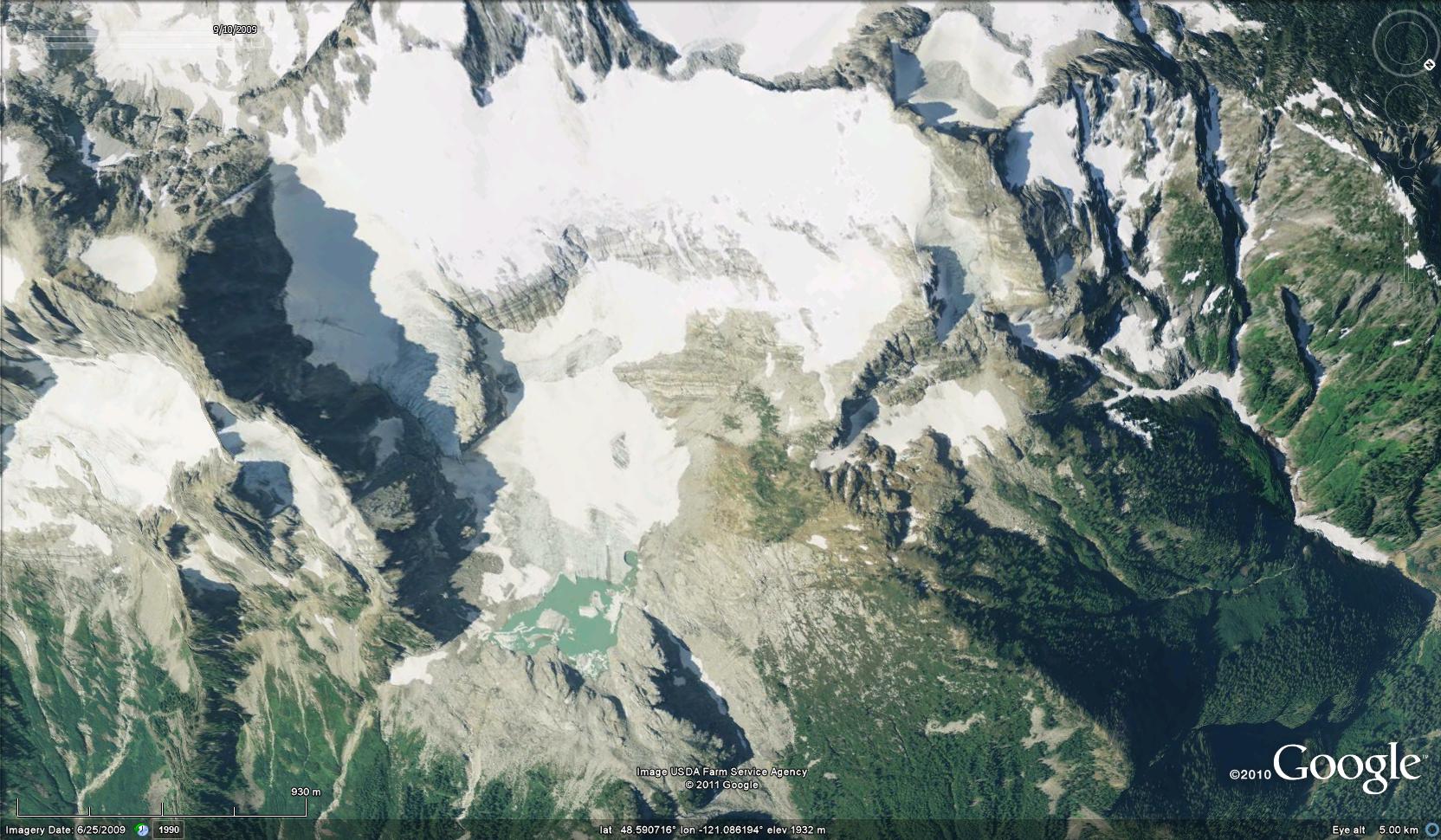 . This glacier viewed from the edge of the terminus lake in 2009 illustrates the stagnant nature of the lower glacier. The lake will continue to expand at the expense of the lower glacier. The upper glacier has been retreating slowly.
 From a Glaciers Perspective