
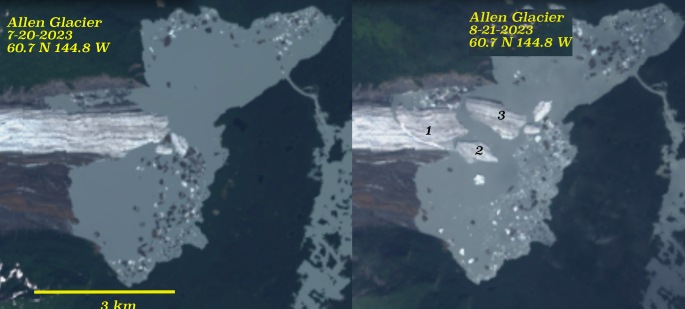
Allen Glacier terminus in Landsat image from 8-21-2023 indicating the three new icebergs with an area of 1.5 km² that calved. Lake area is now 14 km².
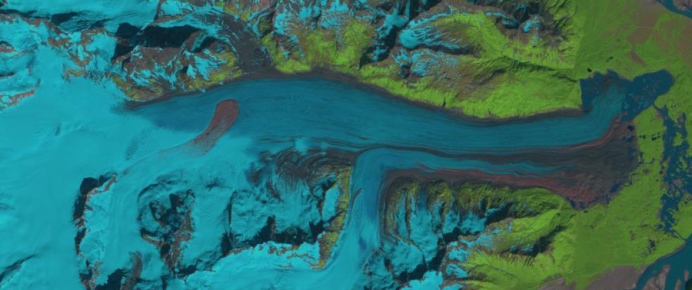
Allen Glacier drains east from the Chugach Mountains terminating in an expanding proglacial lake adjacent to the Copper River. In 1987 the terminus filled most of the proglacial with only the northeast corner open, lake area 2 km². A landslide is also evident spreading below across the snowline in this Landsat image below.
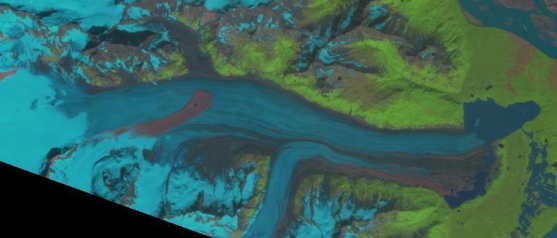
By 2002 the lake had expanded with the northern bay ice free and a fringing area of open water along entire margin. In this Landsat image below lake area 6 km².

In 2017 a southern bay had opened and become ice free, with a central tongue separating the northern and southern bays of the proglacial lake, lake area 11 km². The Landslide continues to move downglacier in this Landsat image below.
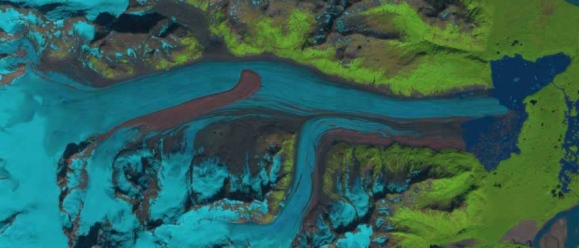 In 2021 rifting had developed 2 km upglacier of the terminus, with the central tongue calving some smaller icebergs ~01. km² in this Landsat image below.

In July 2023 the central tongue continued to calve small icebergs in this Landsat image, with a rift evident that had developed in 2022.

On August 21 2023 a calving event occurred along the rift that had been visible for over a year. This generated several icebergs with the 3 primary icebergs having a combined area of 1.5 km². The proglacial lake has expanded from 2 km² to 14 km² since 1987. Terminus retreat has been ~3 km in this interval.
 From a Glaciers Perspective