Deming Glacier Icefall Deceleration 2017-2022 Driven by Mass Balance Loss

Deming Glacier velocity from NASA MEaSUREs ITS_Live at four locations from below icefall at blue X to above icefall at red X. There is not a significant change in velocity above the icefall (red X), but significant deceleration in the icefall and below the icefall. 

The Deming Glacier drains the southwest side of the summit of Mount Baker a stratovolcano in the North Cascades of Washington, with a massive icefall feeding the lower valley terminus reach of the glacier. The icefall begins at 2200 meters and descends to 1600 meters. The glacier feeds the Middle Fork Nooksack River which provides water supply to Bellingham, WA. I first observed the Deming Icefall from the terminus area of the glacier in 1987. This visit demonstrated that it is not safe to hike to the terminus of this glacier. In 1990 we began annual observation of Deming Glacier. Each summer we monitor the adjacent Easton Glacier in detail including mass balance, while also taking several specific observations of Deming Glacier including terminus position, and accumulation between 2400-2700 m. This combined with mass balance assessment on Easton Glacier provides an annual assessment of the meltwater provided by the glacier to the Nooksack River system. During heatwaves the tributaries of the Nooksack fed by glaciers have had the impacts mitigated, while those without glaciers have seen significant temperature increase and discharge decrease (Pelto et al 2022).

Pelto and Brown (2012)  identified a mean annual mass balance loss of -0.52 m/year from 1990-2010 on Mount Baker glaciers. From 2013-2021 the mass loss had more than doubled to -1.30 m/year. The declining mass balance is less pronounced above the icefall. The icefall transitions the glacier from the accumulation zone to the ablation (melt) zone at the bottom of the icefall. Above the icefall at 2400-2700 meters the average snow depth left at the end of the summer based on several thousand crevasse stratigraphy measurements from 1990-2013 had been 2.75 meters, from 2014-2021 the average depth has been 2.4 m.

The result of the declining mass balance of the entire glacier and the upper glacier will be glacier deceleration. The NASA Measures ITS_LIVE application uses feature tracking to determine glacier velocity. An examination of velocity change from the top of the icefall to the bottom on Deming Glacier from 2015-2022 indicates deceleration at the three points within or below the icefall, but no change at the top of the icefall.  At the top of the icefall red X velocity has declined ~20%. In the middle of the icefall, green X, velocity has also declined ~20% since 2017. Near the base of the icefall, orange X, velocity has a chaotic signal lacking a clear trend.  Below the icefall at the blue X, velocity has declined by ~20-30%.  The resulting reduction in flux to the terminus will continue the rapid retreat.  Pelto and Brown (2012) measured a 360 m retreat of Deming Glacier from 1979-2009, ~20 m/year. From 1979-2021 the glacier has retreated 725 m, with the rate of retreat from 2009-2021 of ~30 m/year.

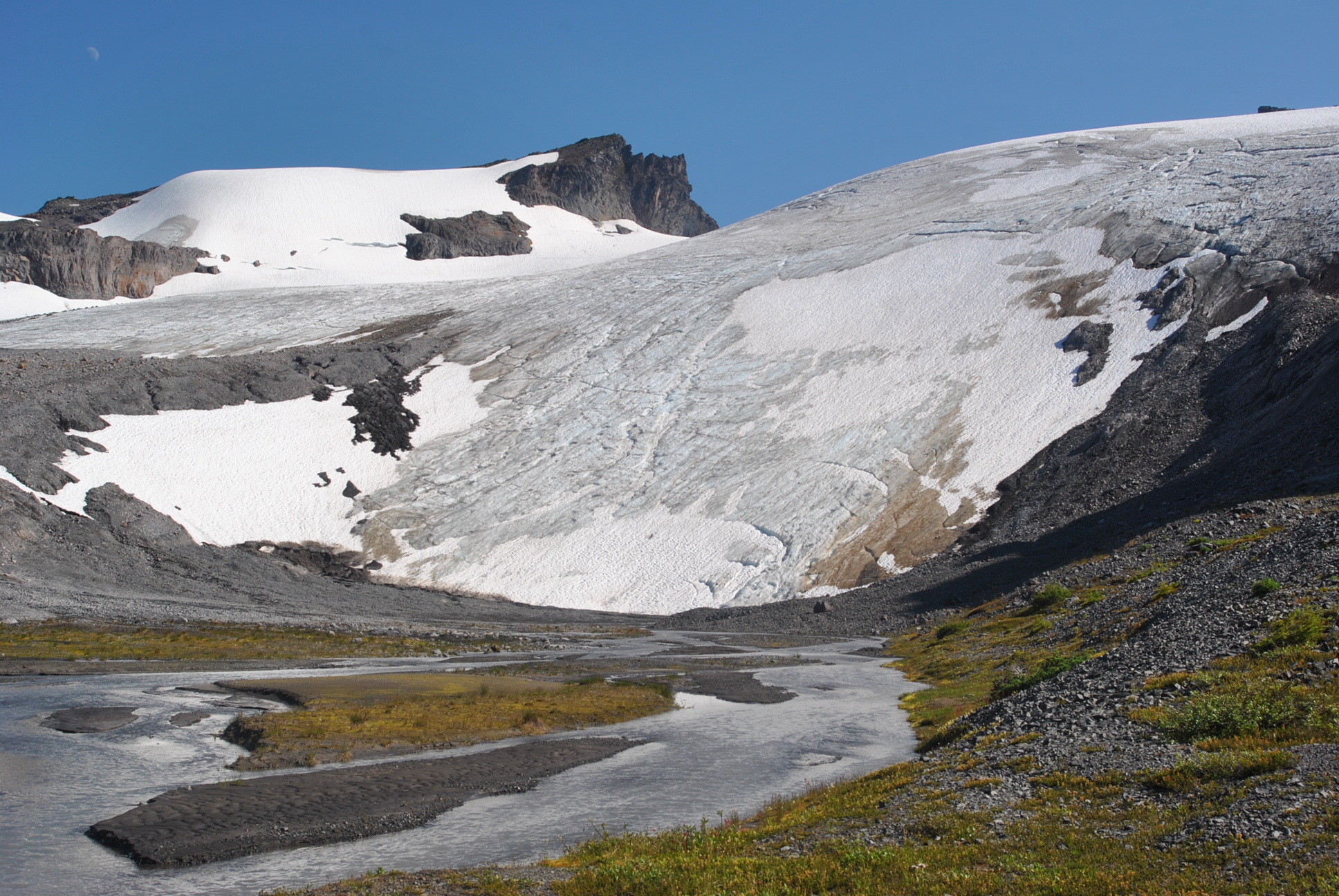
View of the Deming Glacier from terminus to top of icefall in 2019. Jill Pelto at left, Abby Hudak and Mauri Pelto at right. X’s mark the velocity locations, Point A ties this to the upper glacier view, red arrow is the 1987 terminus location.

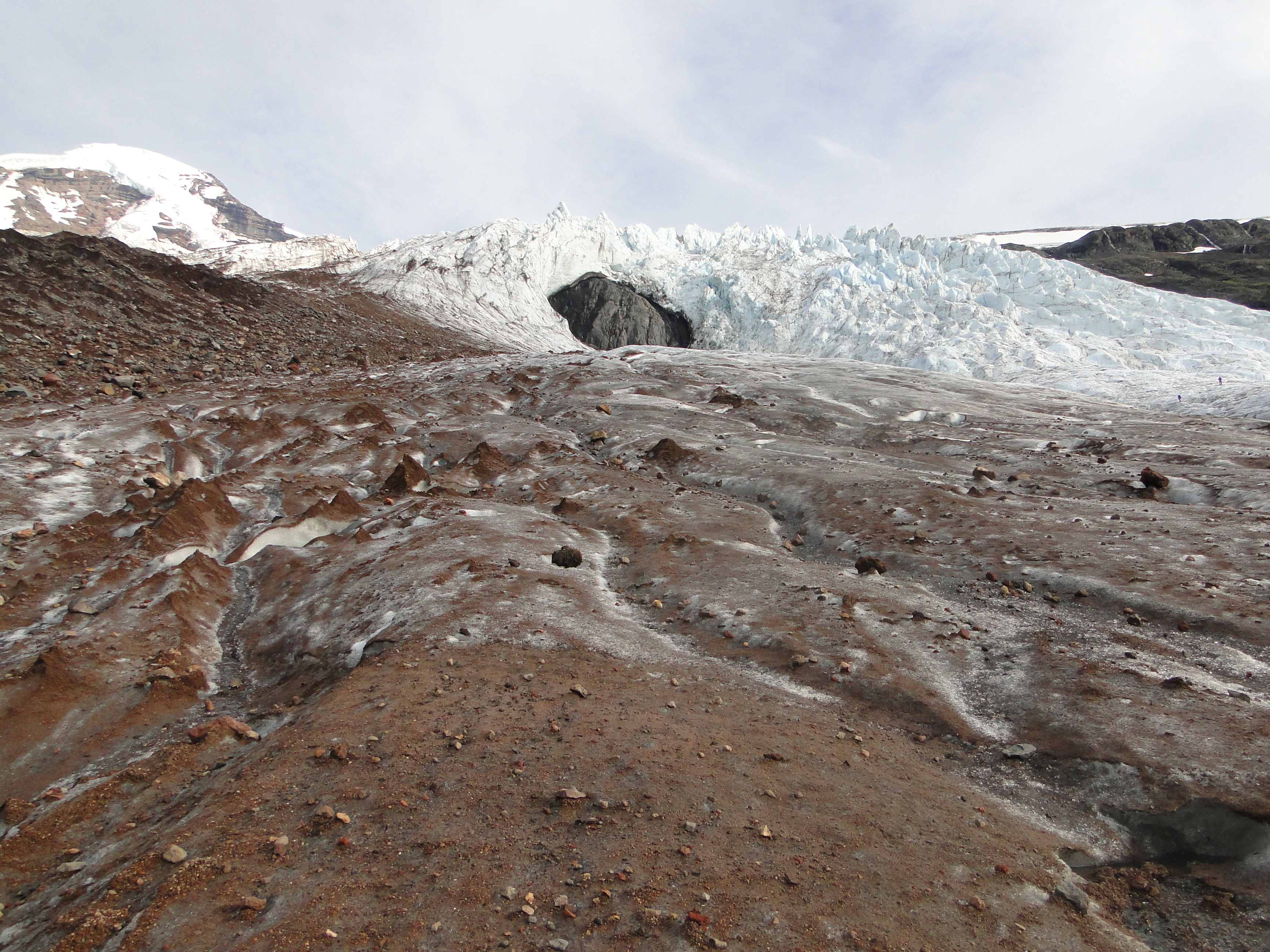
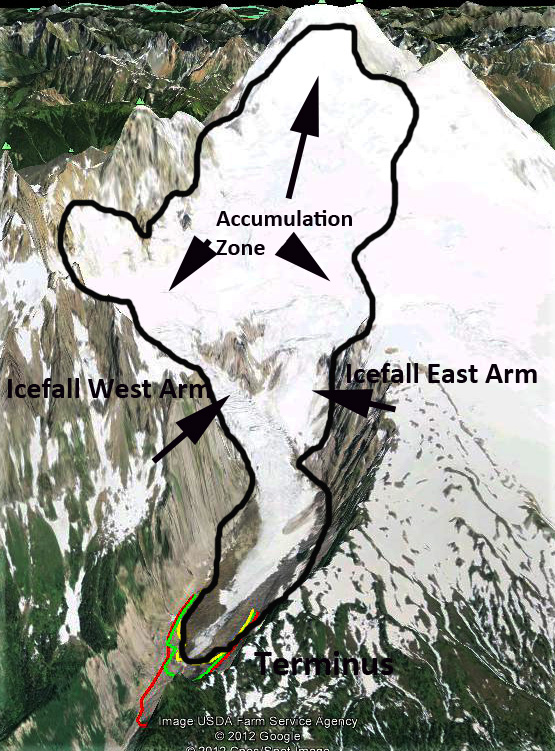
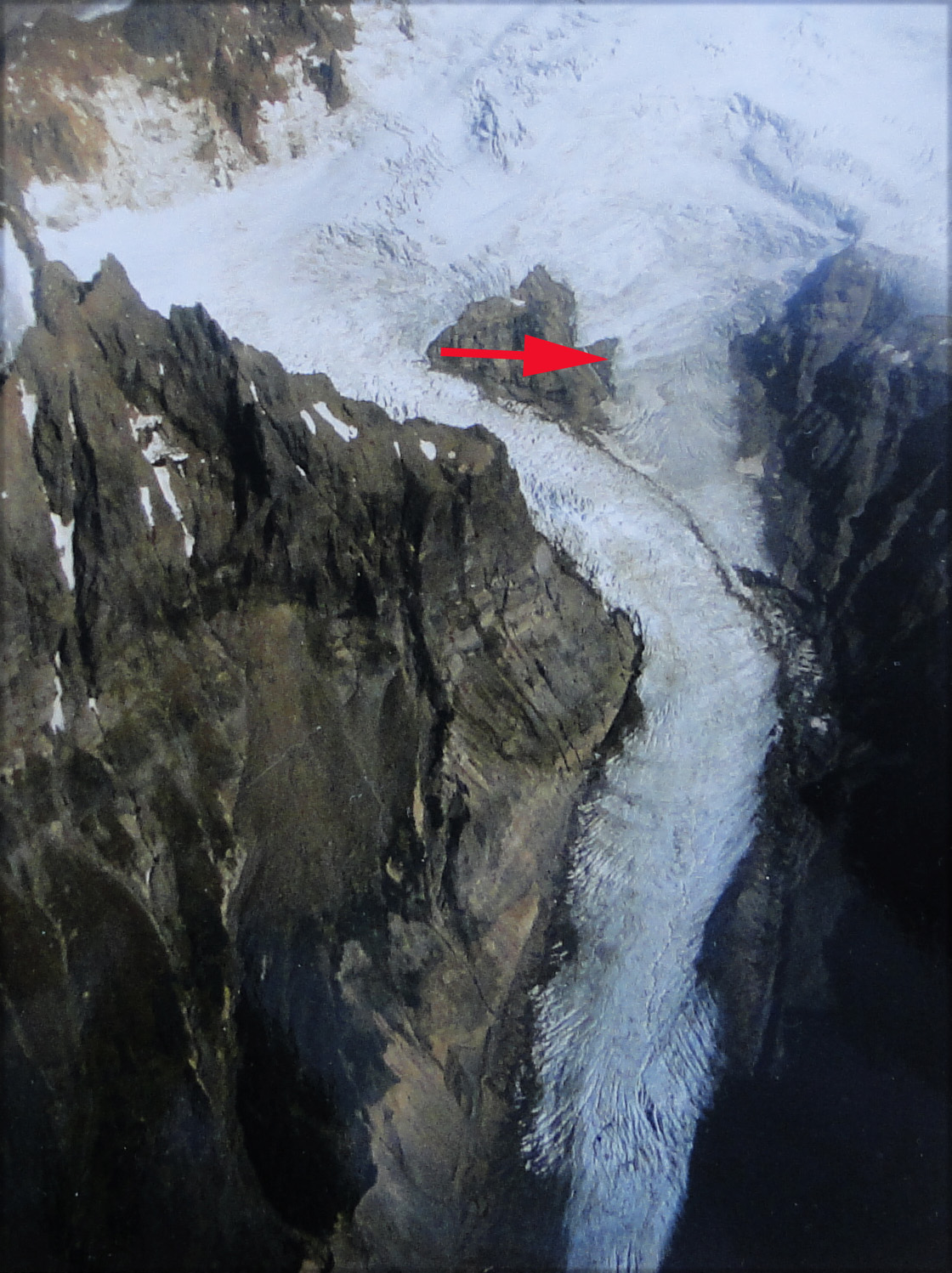
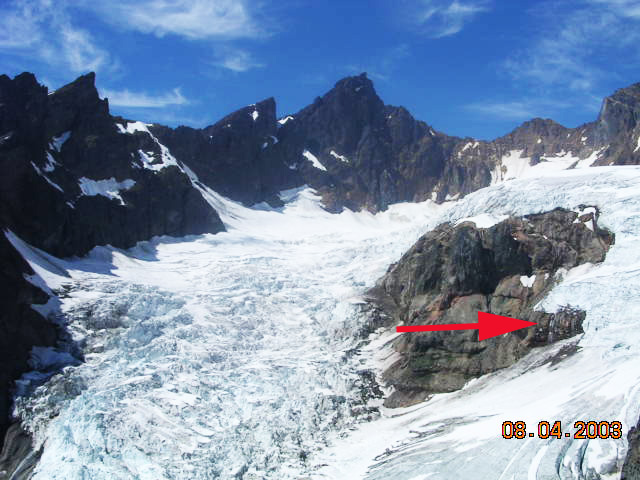
The icefall sweeps around a bedrock with an east and a west arm splitting above and rejoining below the knob.

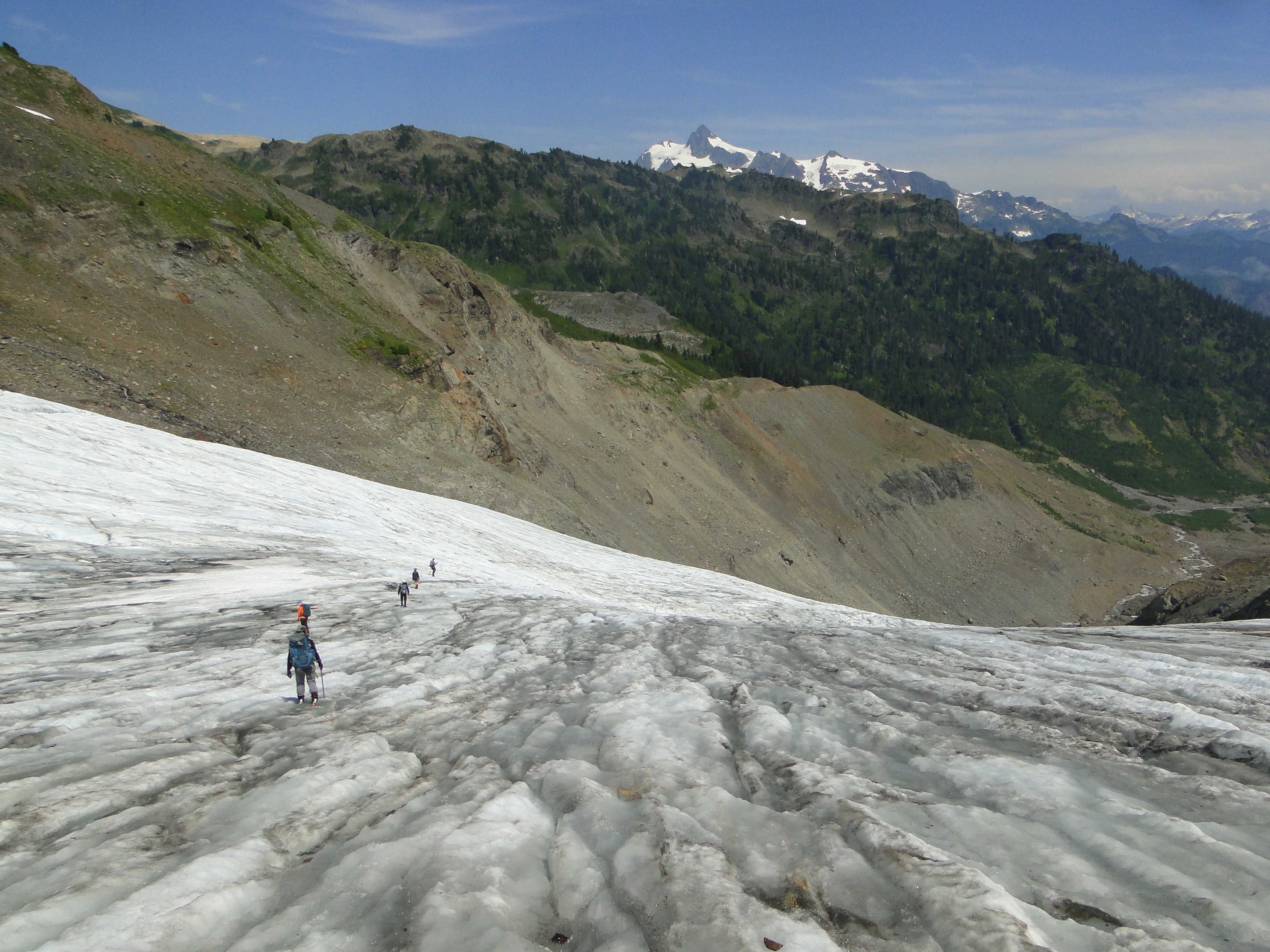
The Deming Glacier from the top of the icefall to the summit of Mount Baker in 2020.

In mid-August 2022 snowpack was particularly low right to the top of Deming Glacier. Comparison with 2020 which was an average year for the last decade, but still a significant mass balance loss.
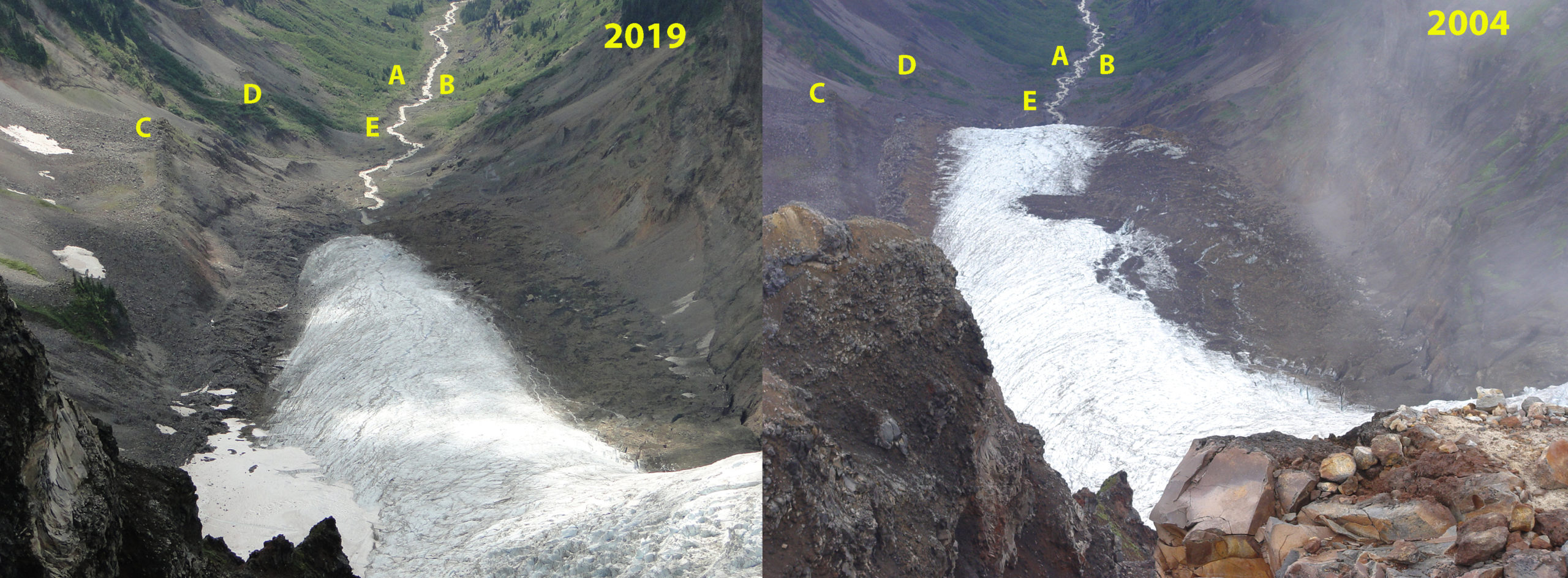
Deming Glacier terminus annotated to show retreat from 2004 to 2019 in photographs from Mauri Pelto

Terminus of Deming Glacier in 2004 and 2019 illustrating the ongoing retreat of the terminus, 725 m from 1979-2021.

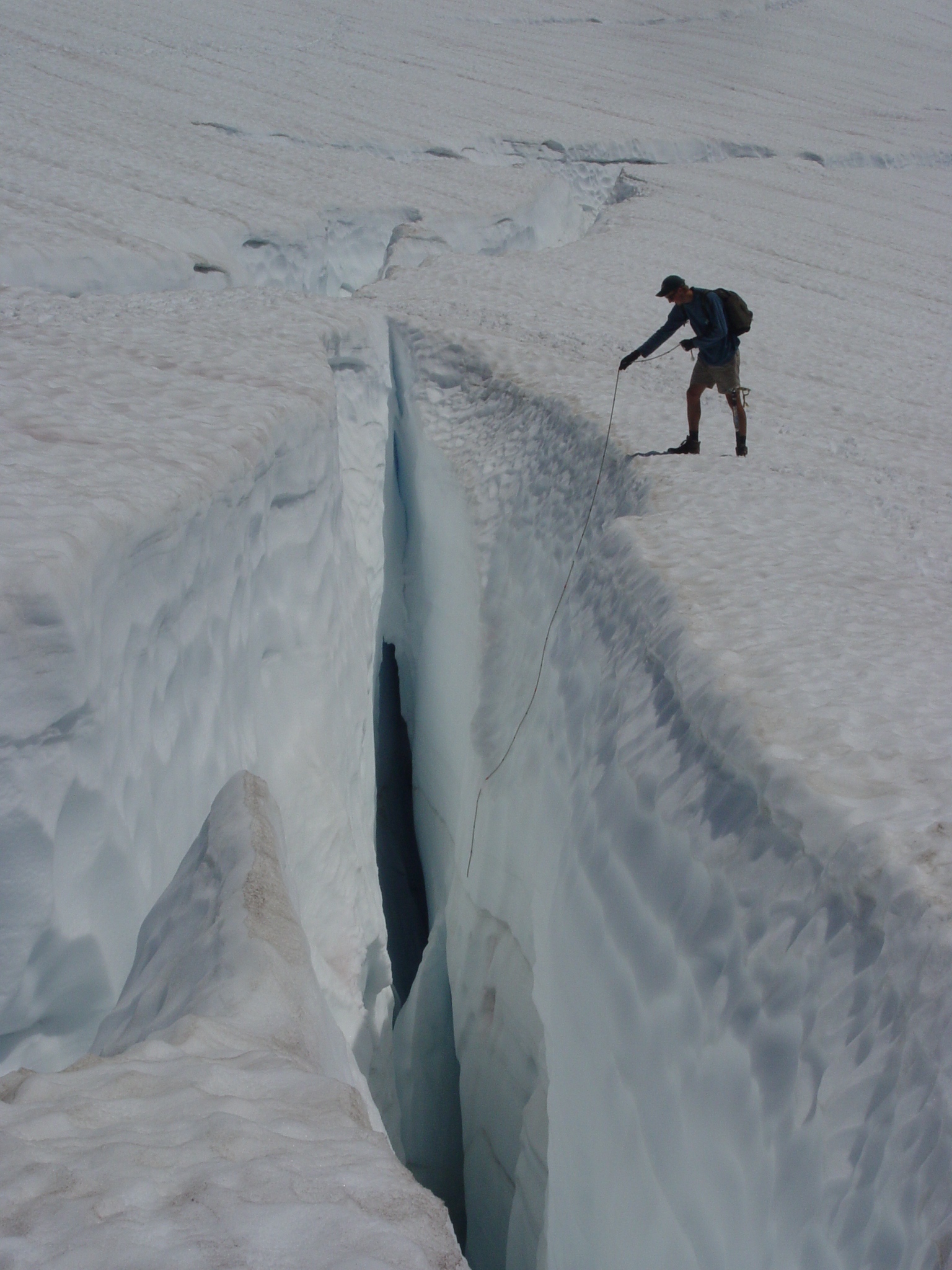
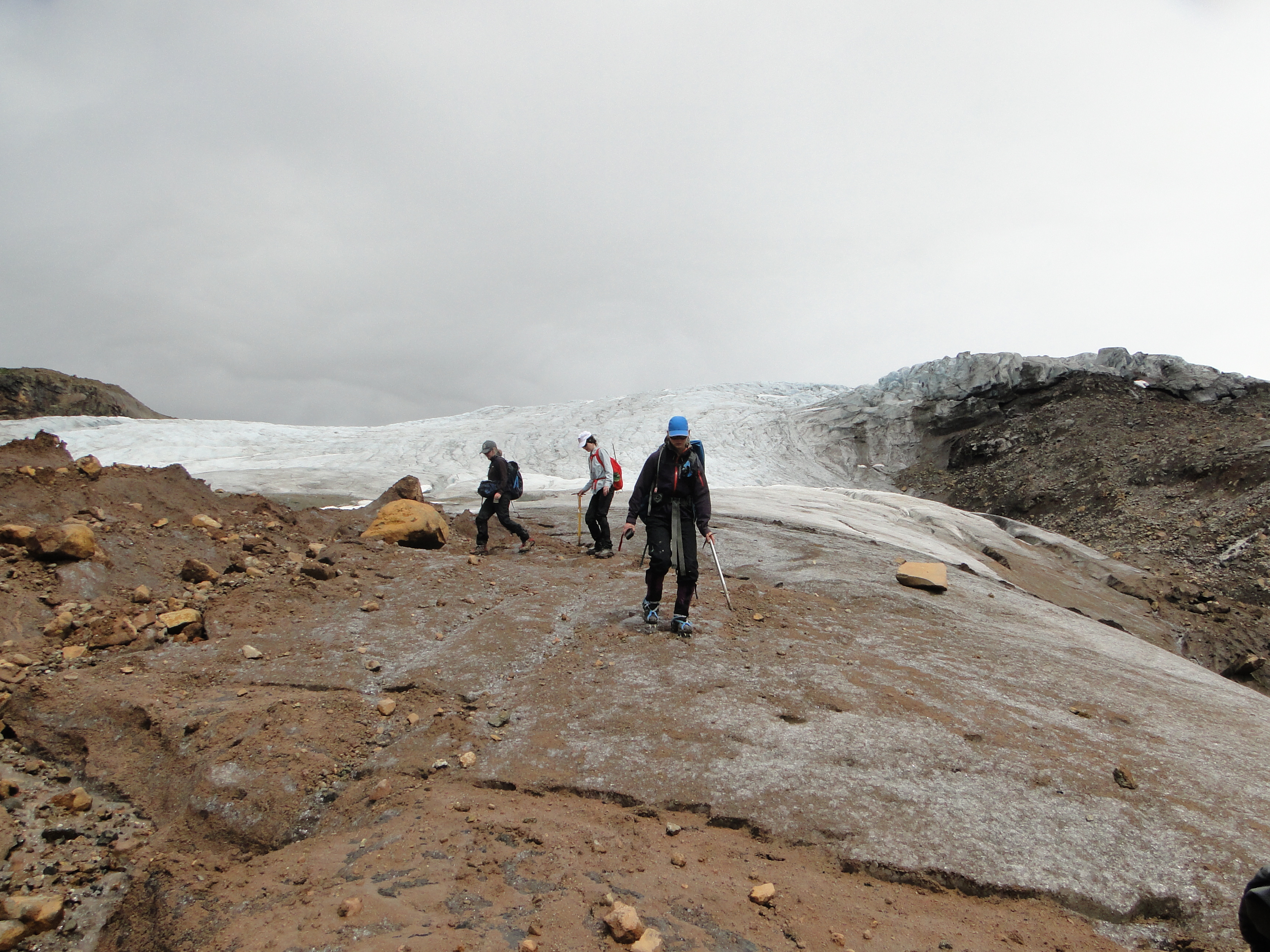
Jill Pelto measuring Crevasse depth and snowpack thickness in Crevasse at 2500 m on Deming Glacier.
North Cascade Glacier Climate Project 2019, 36th Annual Assessment


The summer of 2019 found the North Cascade Glacier Climate Project in the field for the 36th consecutive summer monitoring the response of North Cascade glaciers to climate change.  This long term monitoring program was initiated partly in response to a challenge in 1983 from Stephen Schneider to begin monitoring glacier systems before and as climate change became a dominant variable in their behavior.

The field team was comprised of Clara Deck, Ann Hill, Abby Hudak, Jill Pelto and myself.  All of us have worked on other glaciers. The bottom line for 2019 is the shocking loss of glacier volume. Ann Hill, UMaine grad student observed, that “Despite having experience studying glaciers in southeast Alaska and in Svalbard, I was shocked by the amount of thinning each glacier has endured through the last two and a half decades.”  Glaciers are typically noted as powerful moving inexorably.  Clara Deck, UMaine MS graduate, was struck by “the beauty and fragility of the alpine environment and glaciers.”  Fragile indeed in the face of climate change. Abby Hudak, Washington State grad student, looked at both the glacier and biologic communities as under stress, but glaciers cannot migrate, adapt or alter there DNA.

Over the span of 16 days in the field, every night spent in the backcountry adjacent to a glacier, we examined 10 glaciers in detail. All glaciers are accessed by backpacking.  The measurements completed add to the now 36 year long data base, that indicate a ~30% volume loss of these glaciers during that period (Pelto, 2018). Here we review preliminary results from each glacier. Each glacier will have a mass balance loss of  1.5 -2.25 m, which drives continued retreat.  Columbia and Rainbow Glacier are reference glaciers for the World Glacier Monitoring Service, with Easton Glacier joining the ranks later this year. Below and above is the visual summary. Specific mass balance and retreat data will be published here and with WGMS after October 1.

Easton Glacier, Mount Baker.  Terminus has become thin and uncrevassed as a rapid retreat of 15 m per year continued, 405 m retreat since 1990.

Easton Glacier icefall at 2200 m typically has 1.8 m w.e. at the end of the summer, this year it will be 0 m. The overall mass balance will be ~2 m of loss.

Deming Glacier, Mount Baker has now receded over 700 m since our first visit 35 years ago.

On Lower Curtis Glacier a key accumulation source the NE couloir now shows bedrock. Overall by summers end ~25% of the glacier will retain snowcover, far short of what is needed to maintain its volume.

The Lower Curtis Glacier terminus continues to retreat at 8 m/year, but thinning and slope reduction has been more notable.  

In early August the majority of Sholes Glacier has lost its snowpack.  The thin nature of the terminus indicates the glacier is poised for continued rapid retreat that has exceeded 15 m per year during the last 7 years.

Runoff assessment confirmed ablation stake measurement of 11 cm of ablation/day from 8/6-8/8 on Sholes Glacier.

High on Rainbow Glacier there are still plenty of regions lacking snowcover, instead of a thick mantle of snowpack.

Rainbow Glacier was awash in meltwater streams, see video.  This area should have 1 m of snowpack left. Rainbow Glacier has retreated 650 m since 1984.

Just getting to each glacier does involve overcoming various miseries.

A transect across lower Coleman Glacier, Mount Baker indicates 38 m of thinning since 1988.

Limited snowpack remaining on Columbia Glacier, with six weeks of melt left. Lake in foreground expanded dramatically in last two years.  Retreat ~45 m from 2017-2019 and 210 m from 1984-2019, more than 10% of its length.

Upper basin of Columbia Glacier mainly bare of retained snowpack.

Ice Worm Glacier terminates in expanding lake.

Ice Worm Glacier continues to retreat at the top and bottom of the glacier.  Mass loss is leading to a more concave shape each year.

Daniels Glacier had a maximum snowpack of 1.75 m, instead of 4 m.

Foss Glacier measurements discontinued as it disintegrates, only 20% snowcover in mid-August.

Lynch Glacier less than 50% snowcovered with six weeks of melt left.


The team which completed over 1200 mass balance measurements, 40,000 vertical feet and 110 miles of travel across glacier clad mountains.


Deming Glacier Terminus Retreat

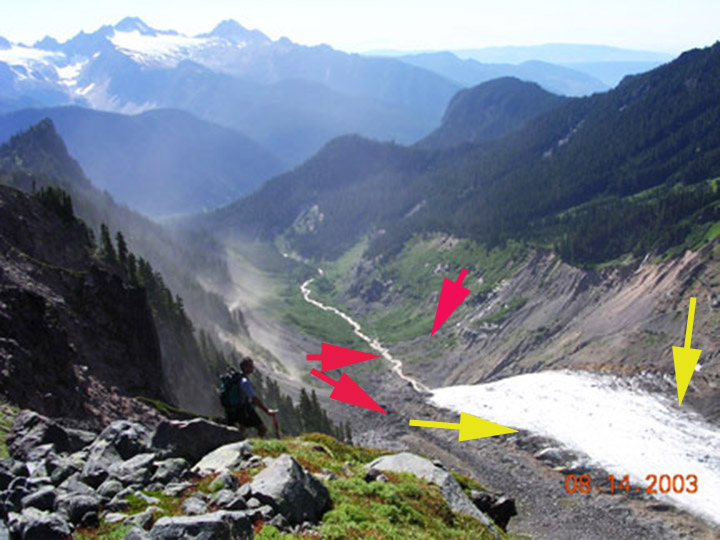
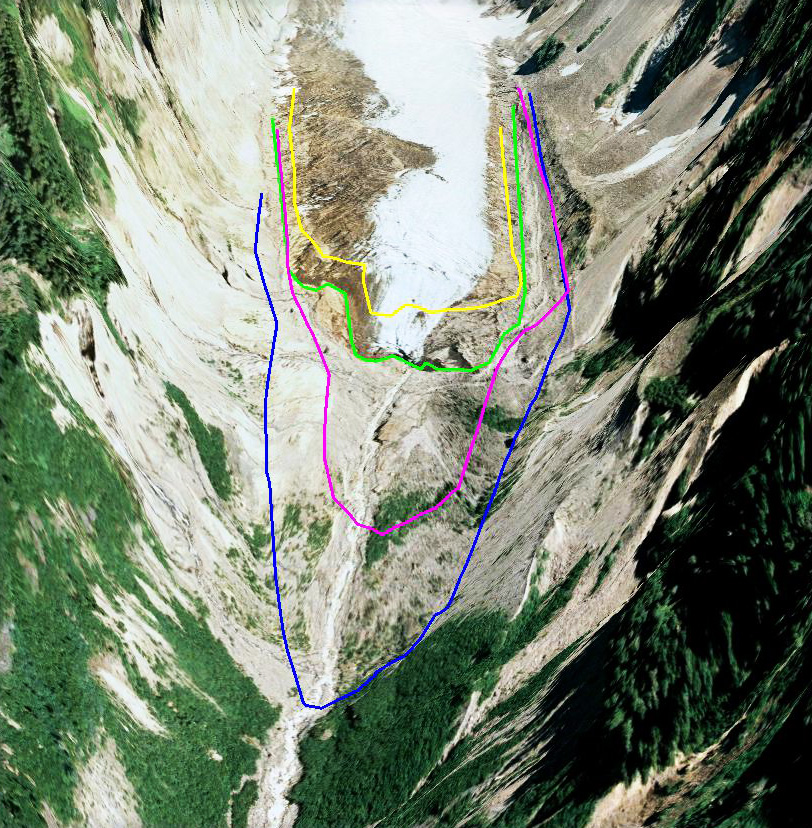
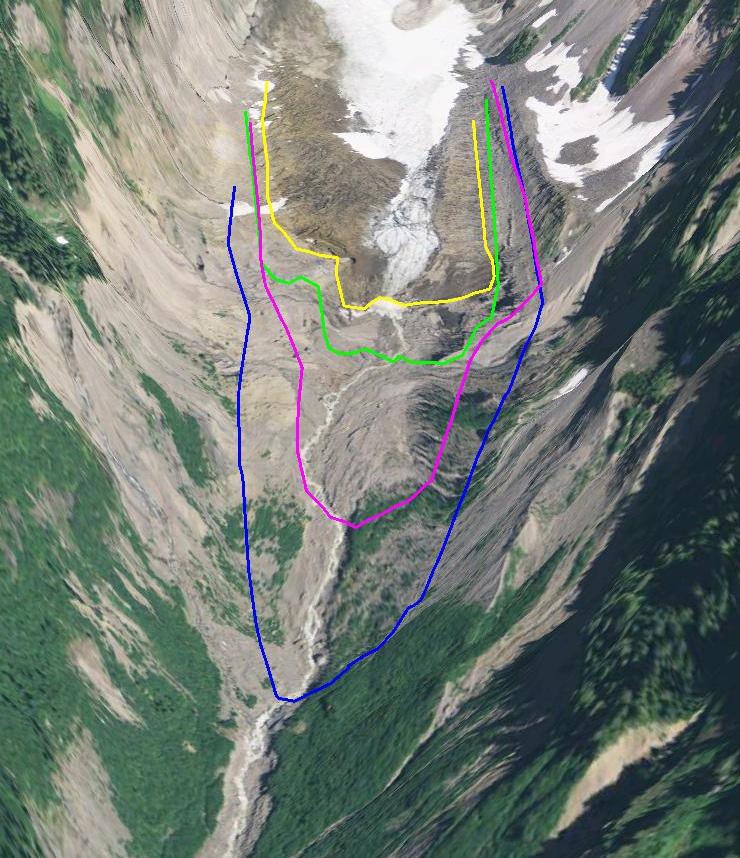
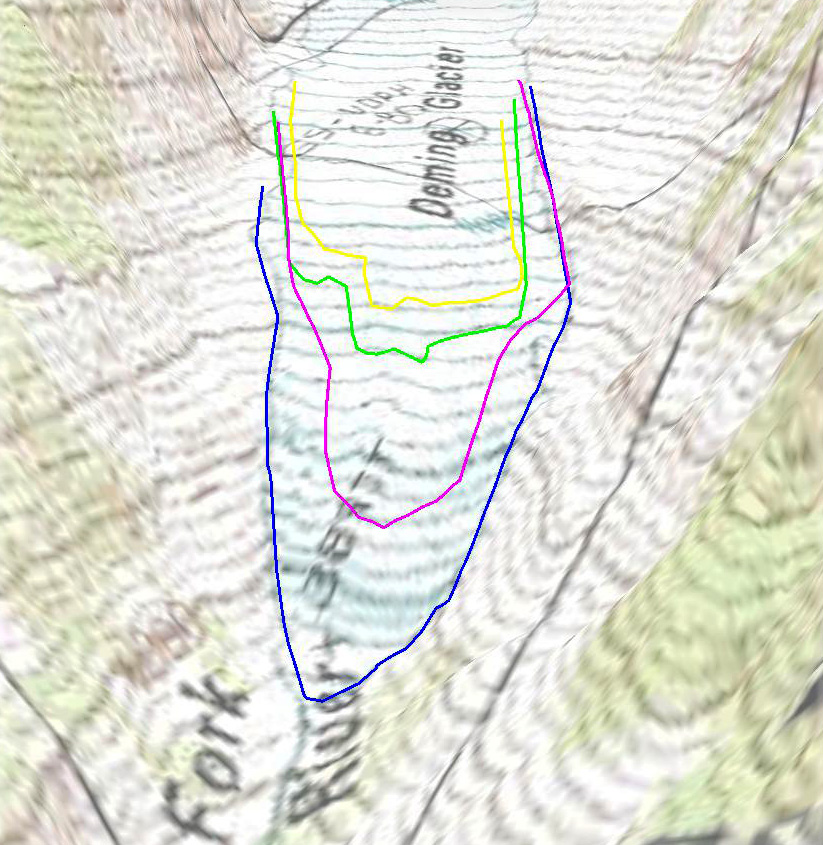
The reduction in width and crevassing in the Deming Glacier Icefall indicates a reduced flow into the terminus reach of the Deming Glacier. This post examines the retreat of the Deming Glacier from 1984-2010. The glacier has retreated significantly as have all 47 glaciers we observe in the field. The retreat parallels that of other Mount Baker glaciers, Boulder Glacier and Easton Glacier (Pelto,2006). Each year since 1990 we have been able to observe the terminus of the Deming Glacier from afar at our survey point. Only in two years have we actually visited the terminus 1996 and 2002. The latter proved hazardous enough to discourage further attempts. Deming Glacier advanced dramatically during the 1950’s and did not retreat substantially until the late 1980’s. The first set of images are from the survey point in 2003, 2006, 2007, 2008 and 2010. The yellow arrows indicate the narrowing of the debris free section of ice in the middle of the glacier. The red arrows indicate the moraines from the advance ending around 1980 including the lateral moraines and two sets of terminal moraines. The closer set of terminal moraines is where the glacier ended in 1996 when we visited the glacier. Both the lateral and end moraines are indicated. The stream issuing from the glacier front feeds the Middle Fork Nooksack River, which supplies some of Bellingham, WA water supply. We conducted a. The next set of images include a 1979 Austin Post USGS image from 1979 and the rest are from the Google Earth showing in order the 1984 map position (blue), 1994 terminus (magenta), 2006 terminus (green) and 2011 terminus (yellow). Note similarity of blue line and 1979 terminus. The glacier retreated 160 m from 1984-1994, 16 meters/year. From 1994 to 2006 the glacier retreated 240 m, 20 meters/year. From 2006-2011 the glacier retreated 120 m, a rate of 24 meters/year. The rate is still on the increase. deming closeup 1979The top image in the sequence below is a view from 2002 showing the end of the glacier (survey point from red X. The front was still steep at the time and the width of the debris near the terminus limited, clean ice width is 200 m.. By 2011 the terminus is not nearly as steep and most of the glacier width is debris covered. The view in Google Earth imagery from 1998 and 2011 indicates the change and the survey point is indicated by the red x. The last image is a 2011 closeup view in Google Earth the debris free ice section is 40 meters wide. What is causing the narrowing of the debris free ice is the reduction in velocity, the increased thinning of the clean ice in the center compared to the insulated debris covered ice at the edges. As the elevation difference increases debris slides off the side of the developing debris covered ridge (Pelto, 2001: 35).

Deming Glacier Icefall Decline

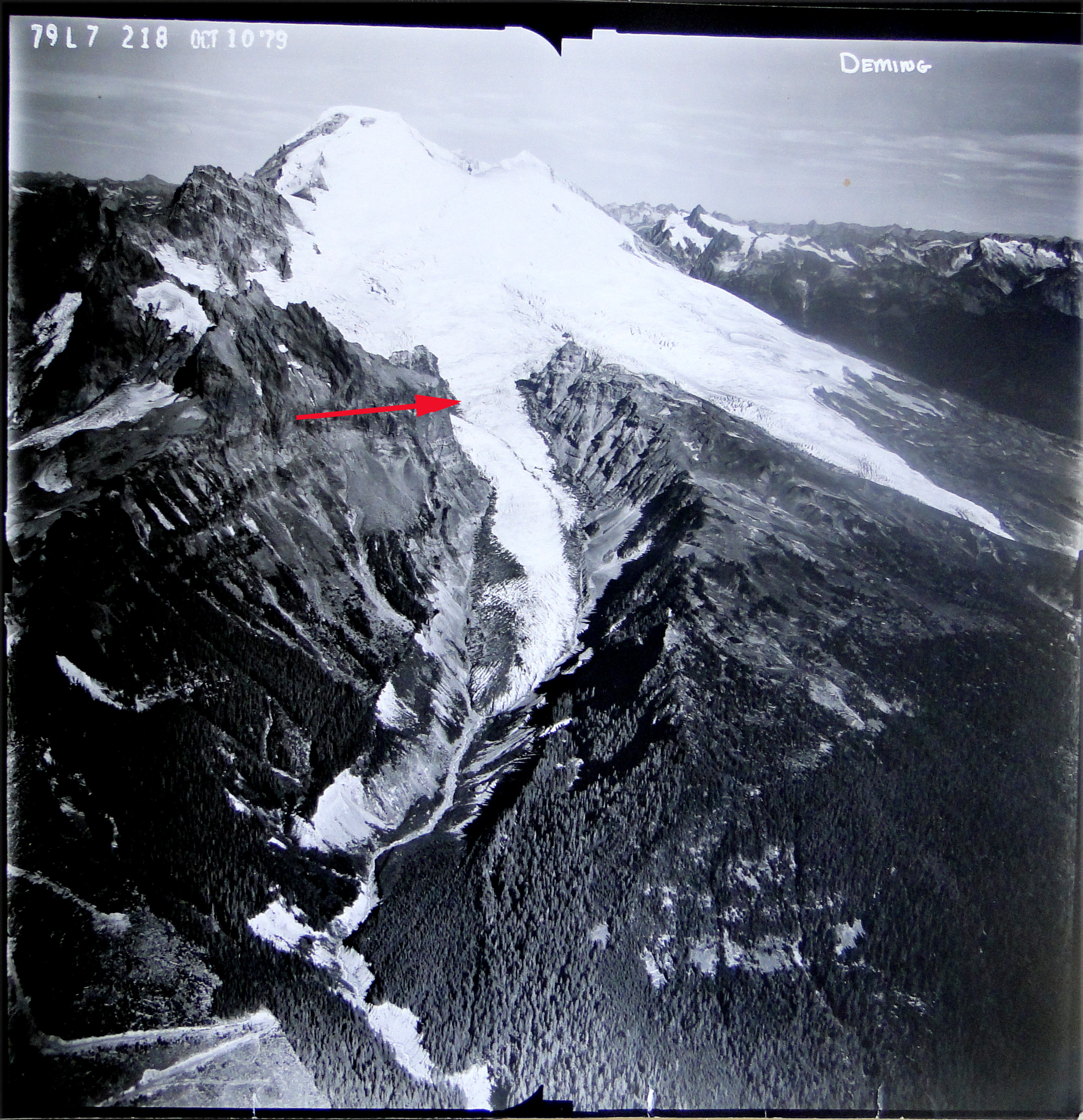
This is the first of two posts focusing on Deming Glacier and will focus on the Deming Glacier Icefall, the next on the Deming Glacier terminus. The glacier drains from the southwest side of the summit of Mount Baker a stratovolcano in the North Cascades of Washington, with a massive icefall feeding the lower valley terminus reach of the glacier.The icefall begins at 2200 meters and descends to 1600 meters. The glacier feeds the Middle Fork Nooksack River which provides some of the water supply for Bellingham, WA. I first observed the Deming Icefall from the terminus area of the glacier in 1987. This visit demonstrated that it is not safe to hike to the terminus of this glacier each year. In 1990 we began annual observation of Deming Glacier. Each summer we monitor the adjacent Easton Glacier in detail as the surrogate for Deming Glacier, which is dangerous and difficult to work on. Annual observation of the change in areal extent of the Deming Glacier with elevation combined with mass balance assessment on Easton Glacier provides an annual assessment of the meltwater provided by the glacier to the Nooksack River system. The glacier advanced from 1950-1980, and has retreated since 1980. The icefall transitions the glacier from the accumulation zone to the ablation (melt) zone at the bottom of the icefall. Above the icefall at 2400-3000 meters the average snow depth left at the end of the summer based on several thousand crevasse stratigraphy measurments is 2.75 meters. The icefall sweeps around a bedrock with an east and a west arm splitting above and rejoining below the knob. In particular the east arm has experienced significant reduction in width and velocity.The sequence below starts with an Austin Post photograph from 1979, that illustrates the east arm, the west arm is hidden. The east arm has the same width descending the step of the icefall. This is followed by the icefall in 1988, the red arrow indicates a rib that begins to extend across the east arm as the glacier thins.
The rib continues to extend across the east arm as noted from our observations of the glacier from an observation point adjacent to the icefall. Views from this location from 2003, 2005, 2007, 2009 and 2011 are shown in that order below. .
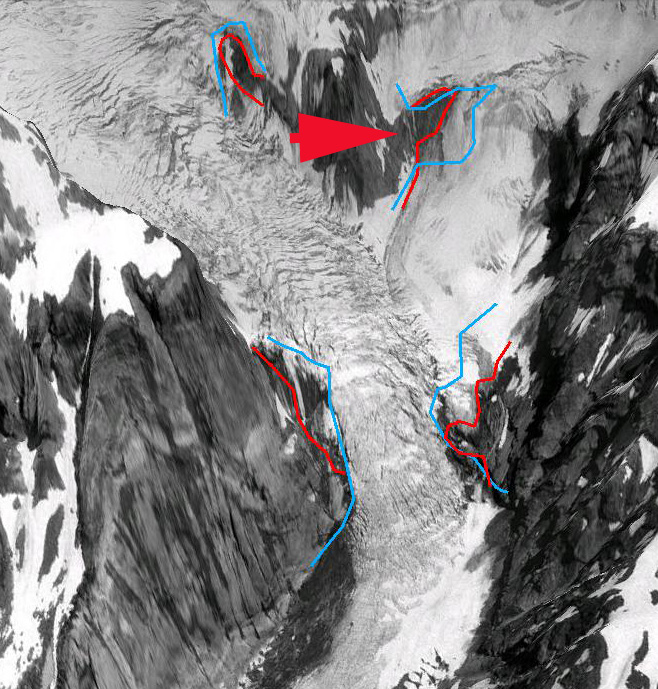
The next sequence examines the change in the icefall from Google Earth annotated imagery. The sequence begins with the 1984 map, the east arm is a nearly uniform 400 m in width. The sequence continues with 1993 and 2009. The red path is from 1993, and the blue path from 2009. In 1984 there is no bedrock rib, by 1993 it has begun to form but extends only 75 meters, by 2009 it extends 150 meters and by 2011 175 meters across the east arm. The width of the east arm has been reduced from 400 meters to 150 meters from 1984-2011. The sequence also indicates the lateral reduction in width after the two glaciers join at the base of the icefall from 1984 to 2009. In 1984 the glacier was 425 meters wide and in 2009 is 225 meters wide.