Mount Everest Region, Nepal glacier snow lines on Sentinel image from 11-12-2024. Mean elevation of snow lines is 5800 m.
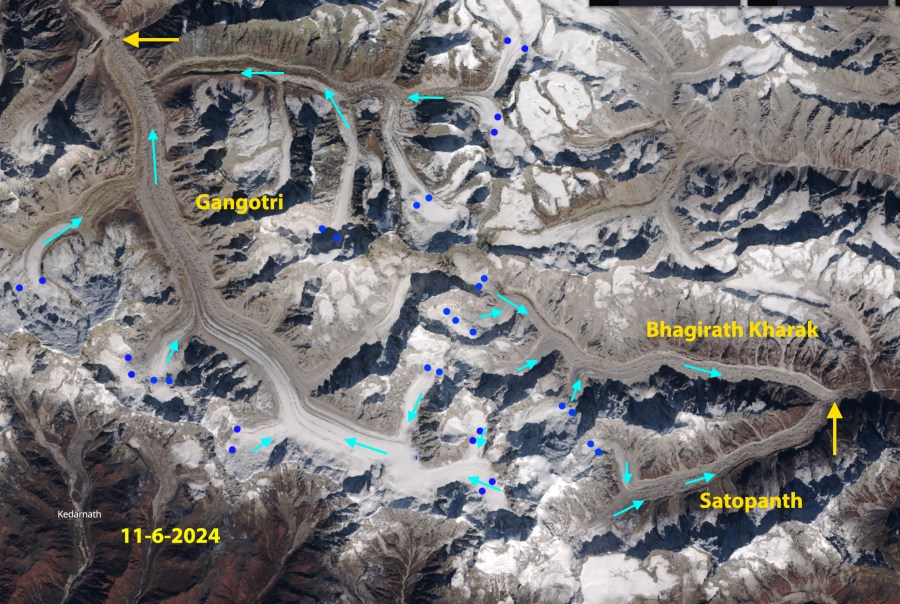
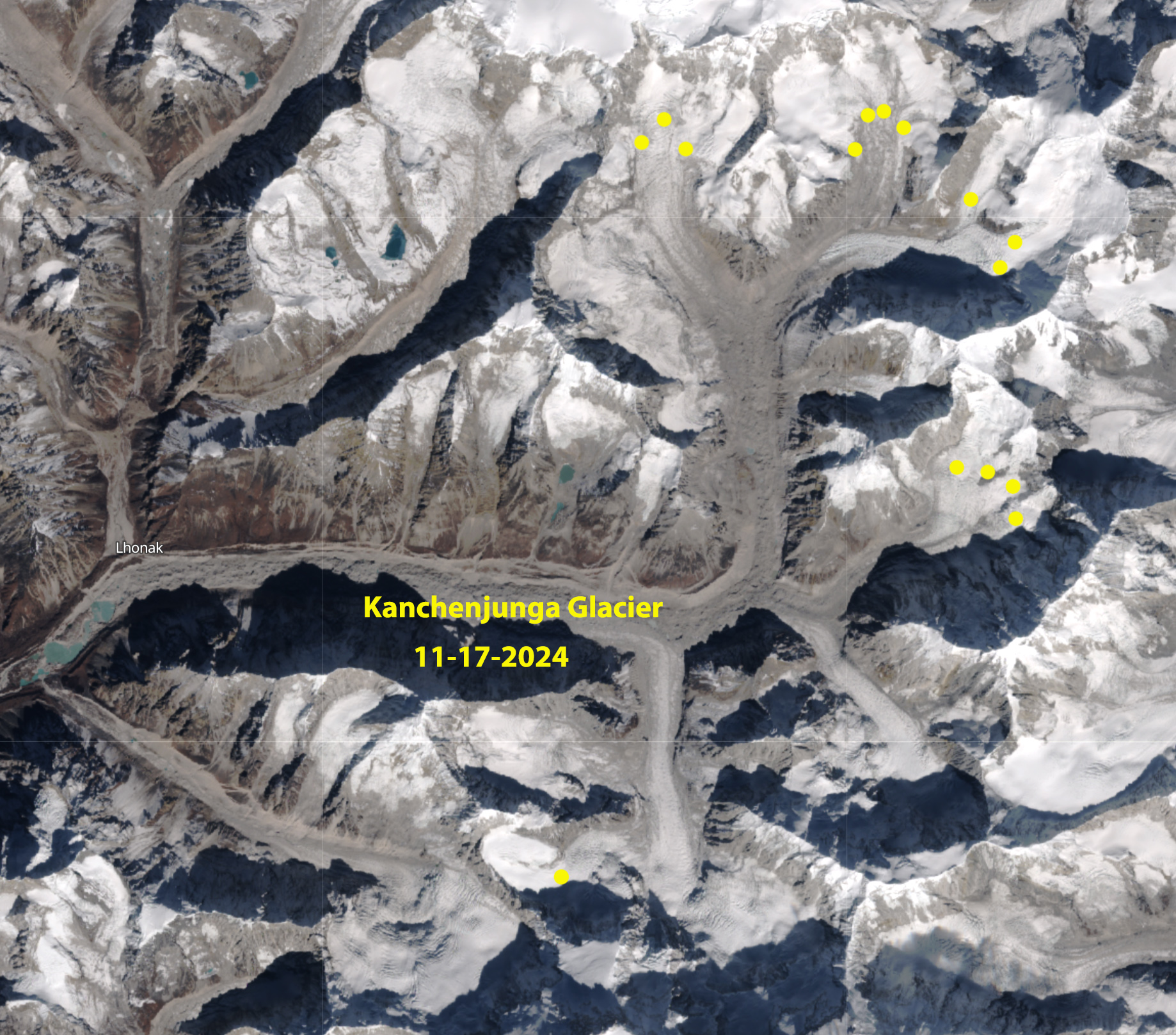
As the post-monsoon period progresses, glacier snow lines have been rising in the Himalaya. Will this be similar to last year and in 2020/21 when the snow line on many glaciers remained high right through much of the winter? Here we examine Sentinel 2 imagery from Kanchenjunga Glacier on the eastern border of Nepal to the Gangotri Glacier in Uttarakhand, India. In November snow lines are averaging from 5500 m to 6000 m (yellow dots are snowline). In each location there is clear upward shift of the snow line since the beginning of October, 2024.
The rising snow lines indicate significant ablation is occurring at least up to that point. There has been a trend in the last decade where ablation conditions are extending into the winter season most years (Pelto et al 2022). Will the winter 2024/25 follow this trend?.
Kanchenjunga Glacier with the November 17, 2024 snow line averaging 6000 m.Langtang Glacier, Nepal with the snow line on November, 17 2024 averaging 5500 m.Gangotri, Satopanth and Bhagirath Kharak Glacier snow line on Sentinel 2 image from 11-06-2024. Mean elevation is 5500 m.
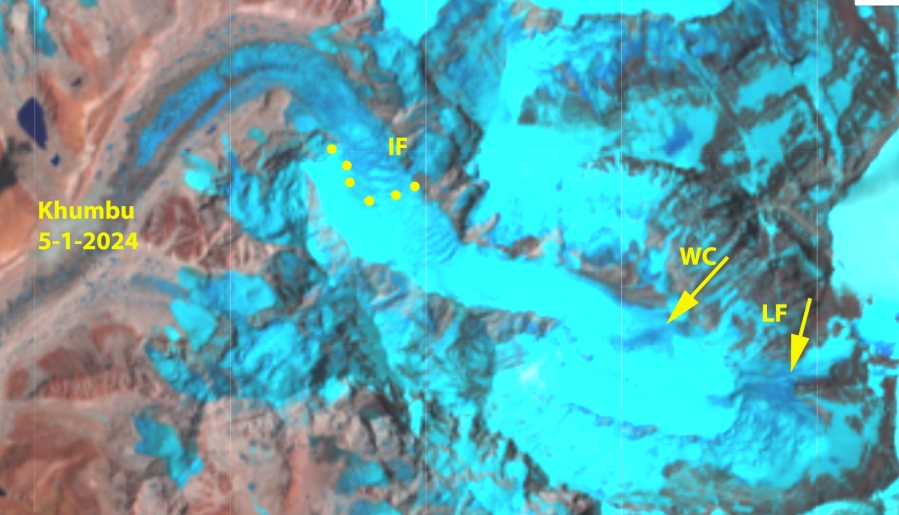
The snow line on Mount Everest Region glaciers on May 1,, 2024 indicated by yellow dots on the Landsat image. Note that Nangpa La and Nup La-two high passes (5800-5900 m) are both snow free. The average snow line is 6050 m.
This is a update to a previous post examining high snow lines through the winter on Mount Everest Region glaciers. Here we examine imagery from October 2023 through early May 2024 illustrating the rise in snow line into January and the continue high elevation into the pre-monsoon season. The persistent high snow line over the last six months, indicates a lack of snow accumulation during the winter season. This is a dry season, yet typically leads to extensive, though not particularly deep snow cover. There were a few smaller snow events, but the snow cover did not persist indicating that ablation has continued even above 6000 m on Mount Everest. The lack of snow leads to less infilling of crevasses on Khumbu Glacier, which are further opened by persistent ablation. On May 1 there is evident blue ice and firn areas in the Western Cwm, above the Khumbu Icefall and on the Lhotse Face above the Western Cwm at the head of the Khumbu Glacier. The relatively bare slopes above the Western Cwm also cannot generate as much avalanches that would then accumulate snow in that basin. These same slopes will yield more rock fall, with more exposed unburied rock.
In the Khumbu Icefall velocities indicates by NASA ITS LIVE are ~1m/day which leads to considerable crevasse development in the six months from November into May with very limited snow accumulation and evident ablation, image below. This season is different than the high snow lines i 2020/21 that resulted from extraordinary January heat wave. Snow cover did develop at the end of the winter/early spring (Pelto et al 2021).
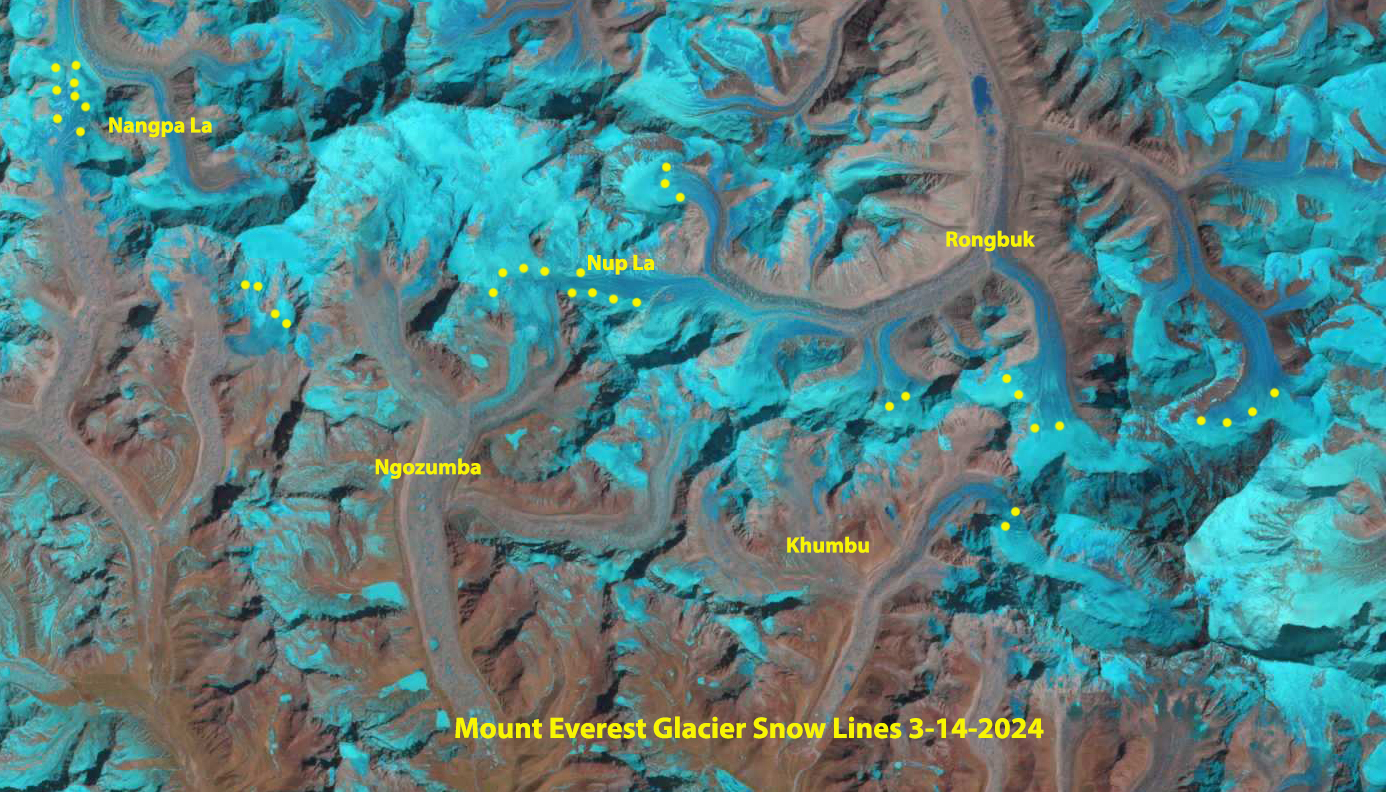
The snow line on Khumbu Glacier on May 1,, 2024 indicated by yellow dots on the Landsat image. Note that there are bare ice areas in the Western Cwm (WC) and on the Lhotse Face (LF).The snow line on Mount Everest Region glaciers on March 14, 2024 indicated by yellow dots on the Landsat image. Note that Nangpa La and Nup La-two high passes (5800-5900 m) are both snow free. The average snow line is 5950 m.
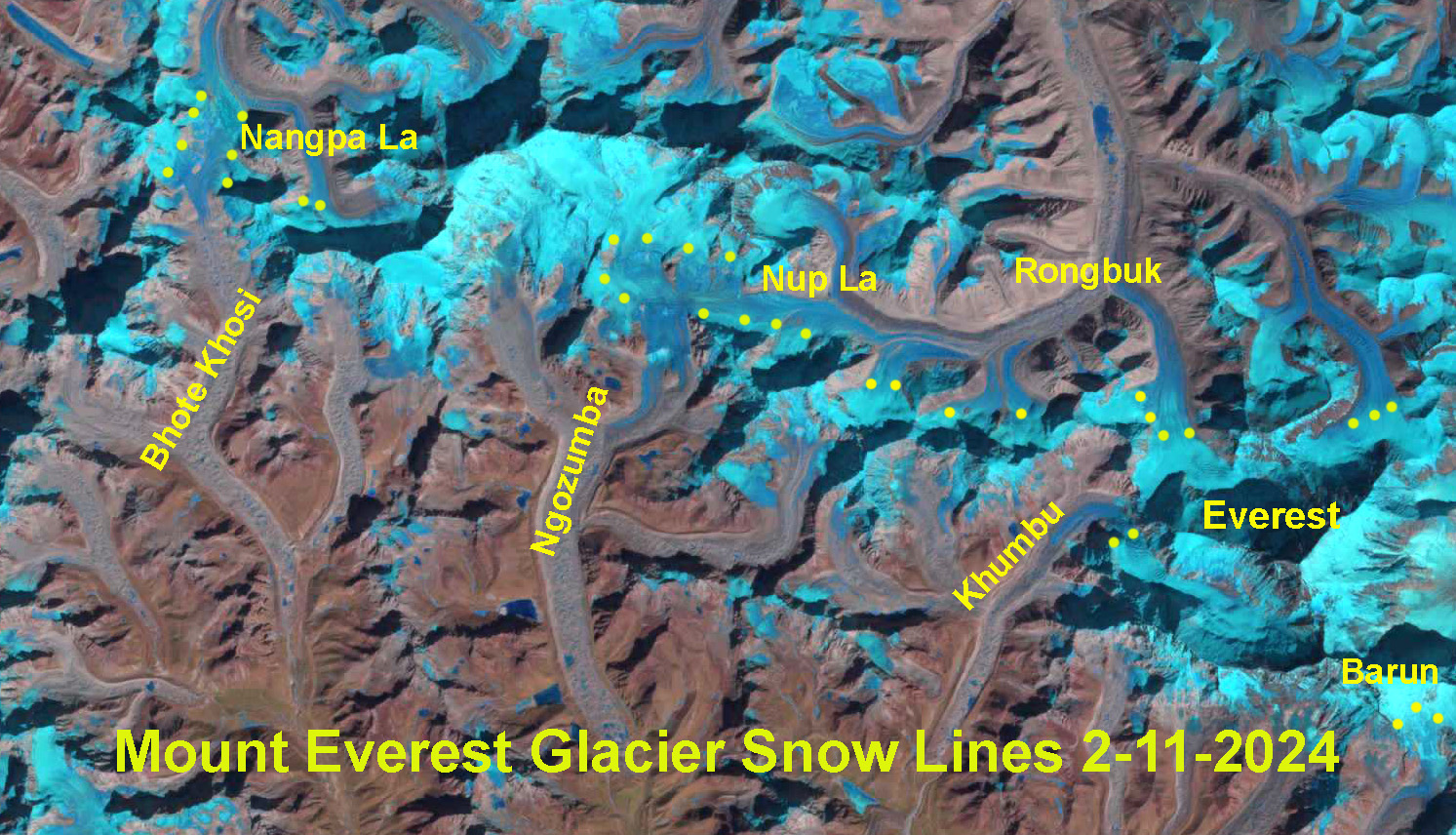
The snow line on Mount Everest Region glaciers on Feb. 11, 2024 indicated by yellow dots on the Landsat image. Note that Nangpa La and Nup La-two high passes (5800-5900 m) are both snow free. The average snow line is 6000 m.
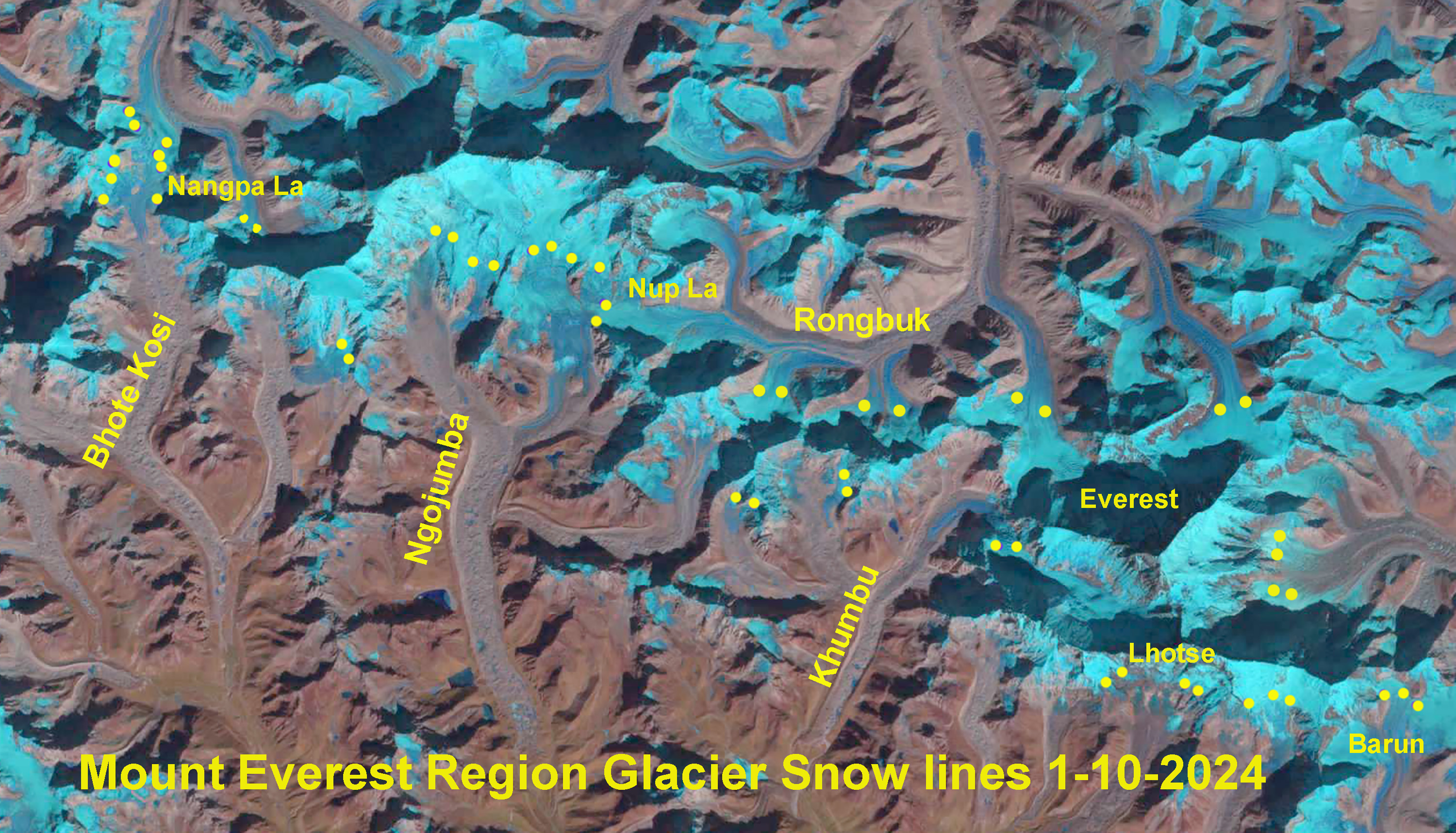
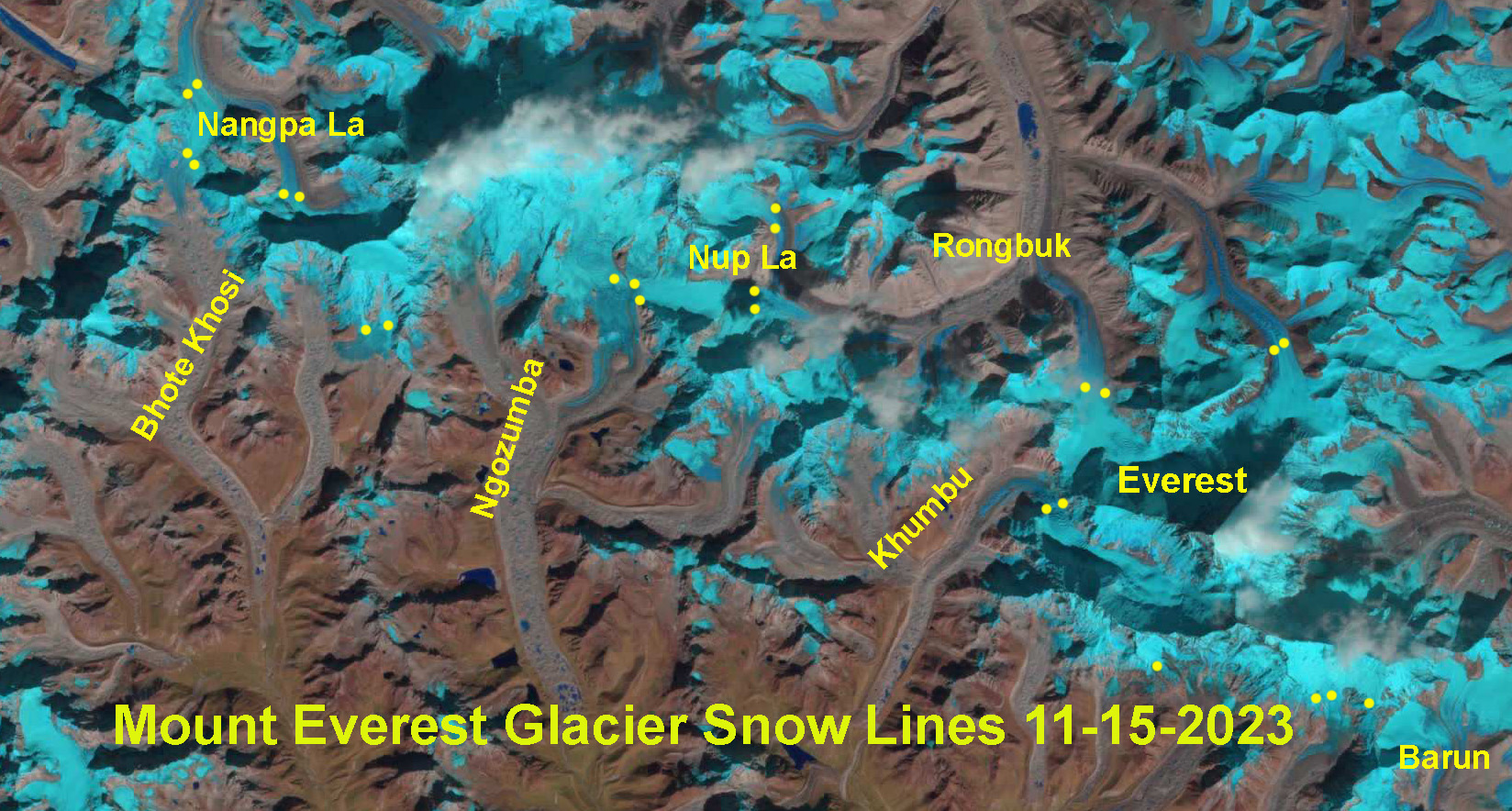
The snow line on Mount Everest Region glaciers on Jan. 10, 2024 indicated by yellow dots on the Landsat image. Note that Nangpa La and Nup La-two high passes are both snow free. The average snow line is 5950 mKhumbu Glacier on Feb. 11, 2024 in Landsat image illustrating snow line near top of icefall at 6000 m, yellow dots. There is some blue ice showing on north side of Western Cwm (WC), Lhotse face too shadowed to see well, but some blue ice evident.The snow line on Mount Everest Region glaciers on Nov. 15, 2023 indicated by yellow dots on the Landsat image. Note that Nangpa La and Nup La-two high passes are both snow covered. The average snow line is 5800 m.The snow line on Mount Everest Region glaciers on Oct. 30, 2023 indicated by yellow dots on the Landsat image. Note that Nangpa La and Nup La-two high passes are both snow covered. The average snow line is 5700 m.Khumbu Glacier Icefall velocity from NASA ITS LIVE. Green arrows indicate primary rangeEverest Base Camp Precipitation from the National Geographic Perpetual Planet station.









 From a Glaciers Perspective