

USGS Map of the four glacier from 1984, with none of the seven lakes existing.
In 1988 we mapped four glaciers arrayed around the Kololo Peaks just south of Glacier Peak; Honeycomb and White River feeding into Wenatchee Lake watershed, while Whitechuck and Suiatlle fed into the Suiattle River watershed. They had a combined area of 9.2 km². The glaciers had not developed a series of proglacial terminus lakes at that time. We visited each glacier and completed observations in 1995 and 2002 illustrated the formation of six proglacial lakes, with one more developing after that, Lake #7. Further details and image for Whitechuck Glacier . In 2022 the glaciers have retreated away from each of these lakes that had not even begun to form in 1988. The combined area of the four glaciers in 2022 is 5.6 km², a 40% decrease in 34 years.
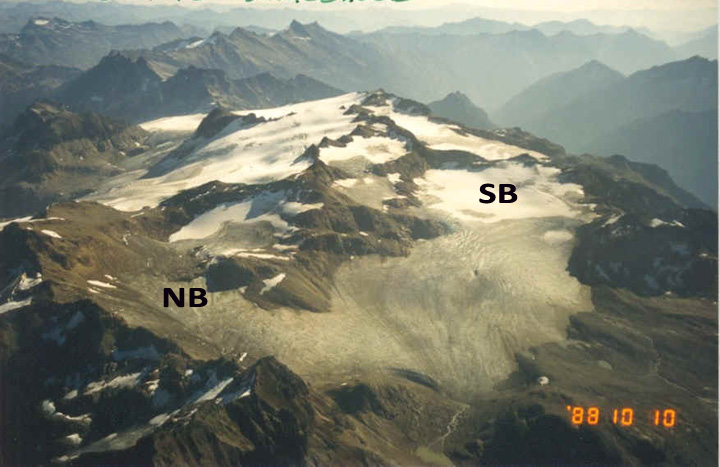
Whitechuck Glacier in 1988, with the North Branch and South Branch joined and terminating at Lake #5.

Whitechuck Glacier in 2002 with a detached glacier segment at Lake #5.

White River Glacier in 1988 with no lake yet formed at #3 or #4.
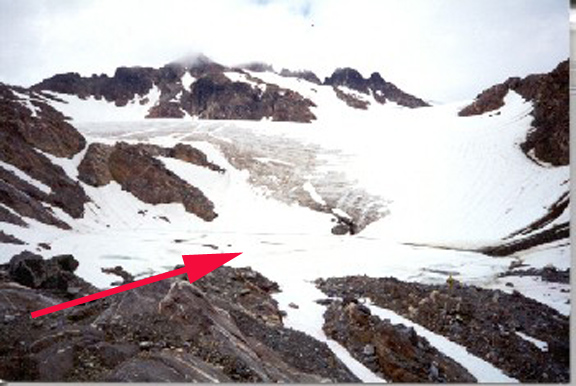
White River Glacier terminus with Lake #3 having formed, but still largely snowcovered in early August.

Honeycomb Glacier in 1995 with no lake #1 at the terminus yet.
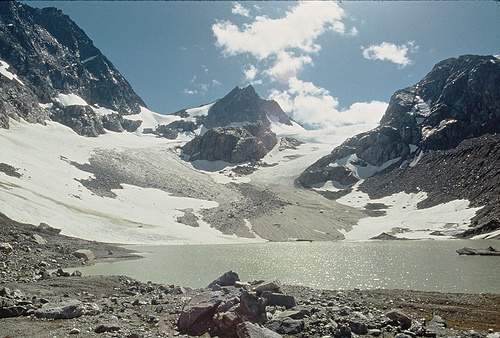
Honeycomb Glacier in 2002 still in contact with Lake #1.

Kololo Peak glaciers in Sept. 9 2022 Sentinel image. H=Honeycomb, S=Suiattle, WC=Whitechuck, WR=White River, purple dots are the snowline and Point 1-7 proglacial lakes that formed after 1988 and are no longer in constact with glacier.
In 2022 we had the most extensive melting we have observed after September 1, with active significant melt extending to October 19. The result is striking in Sentinel images from Sept. 7 and Oct. 19 indicating the reduction in snowcovered area, the percentage of a glacier covered by snow is its accumulation area ratio (AAR). On September 9 the AAR of these glaciers was 45% diminishing to 10% by October 19. With negligible retained snowpack on Whitechuck and White River Glacier. Since 1988 Honeycomb Glacier has retreated 950 m, White River Glacier 475 m, Whitechuck Glacier 950 m and Suiattle Glacier 450 m.

Kololo Peak glaciers in Oct. 19, 2022 Sentinel image. H=Honeycomb, S=Suiattle, WC=Whitechuck, WR=White River, purple dots are the snowline and Point 1-7 proglacial lakes that formed after 1988 and are no longer in constact with glacier.


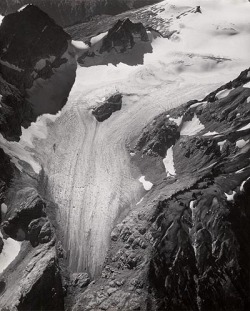
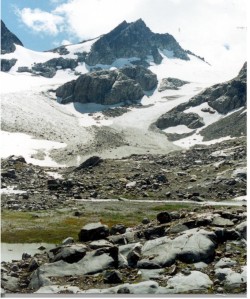
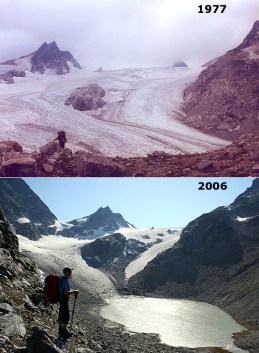
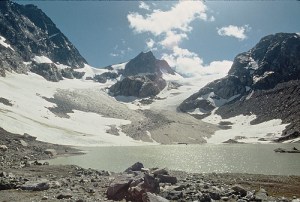
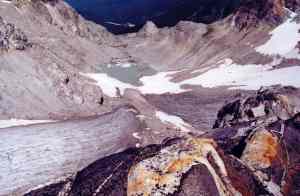
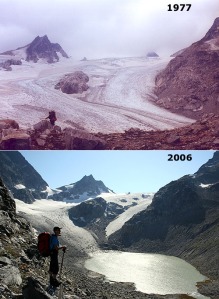 The terminus had retreated 400 m from the 1967 position to 1995. In 1987 a new lake began to form at the terminus of the glacier at 1680 m. The glacier is shown ending in this lake in 2002 from both the far end of the lake and the nunatak above the lake, the glacier had retreated 210 m since 1995. In 2006 the glacier retreated from the end of this lake. This is a shallow lake that may eventually be filled in by glacier sediments. The terminus is flat and stagnant ending at 1680 m in the lake. Thus, the rapid retreat will continue, the glacier is still not close to acheiving a post LIA equilibrium. Glacier retreat from 1940-1967 averaged 9 m/year. Retreat was minor between 1967 and 1979. The retreat rate since 1979 has been greater than 38 m/year, with a total retreat of 700 m. The nunatak in the middle of the glacier, which was beneath the ice in 1940 is now 90 m above the ice. The section of the glacier below the nunatak in 2002 is stagnant with no crevasses.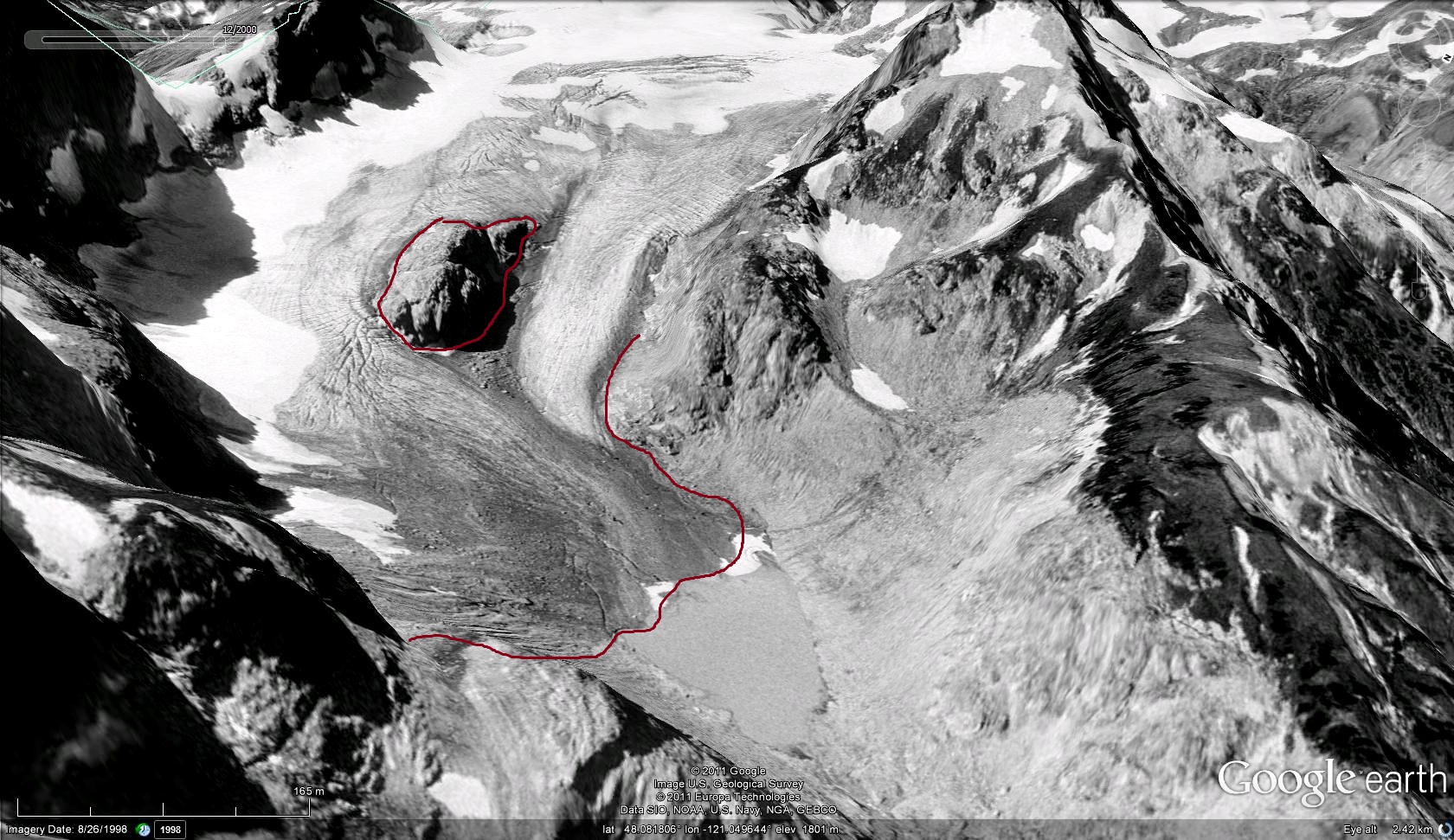

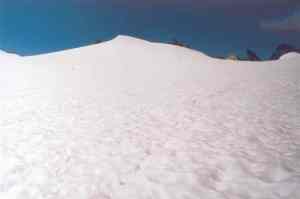
 From a Glaciers Perspective