
Grasshopper Glacier, Montana is in the Beartooth Range in Custer National Forest. The glacier occupies a north facing cirque at nearly 3300 m on Iceberg Peak (11,000 ft.). The name of the glacier is derived from the millions of grasshoppers that were discovered embedded in the ice in 1898 by Dr. James Kimball. He estimated their were thousand of tons of grasshoppers in the ice. Nearly a century later some of these grasshoppers were extracted from the glacier and using radiocarbon dating scientists the remains of these grasshoppers finding they had been trapped in the 1300s (Sutton et al, 1996). These grasshoppers either were downed by a sudden storm or were carried over the glacier by strong winds aloft, and then cold forced them onto the ice surface. The grasshoppers are an extinct type of Rocky Mountain grasshoppper Melanoplus spretus (Lockwood et al., 1992)

In 1940 the glacier was ~1.6 km. wide and on its northwest side terminated in a 15-m. cliff in a small lake. In 1966, see map below, glacier had an area of 0.42 km2, with a small lake present. The glacier lost 50% of its area and 90% of its volume between the Kimball visit in 1898 and Jane Ferrigno visiting in 1981 (Ferrigno, 1981). In 1981 the upper and lower sections of the glacier are still connecterd, with the bench between them not yet exposed.
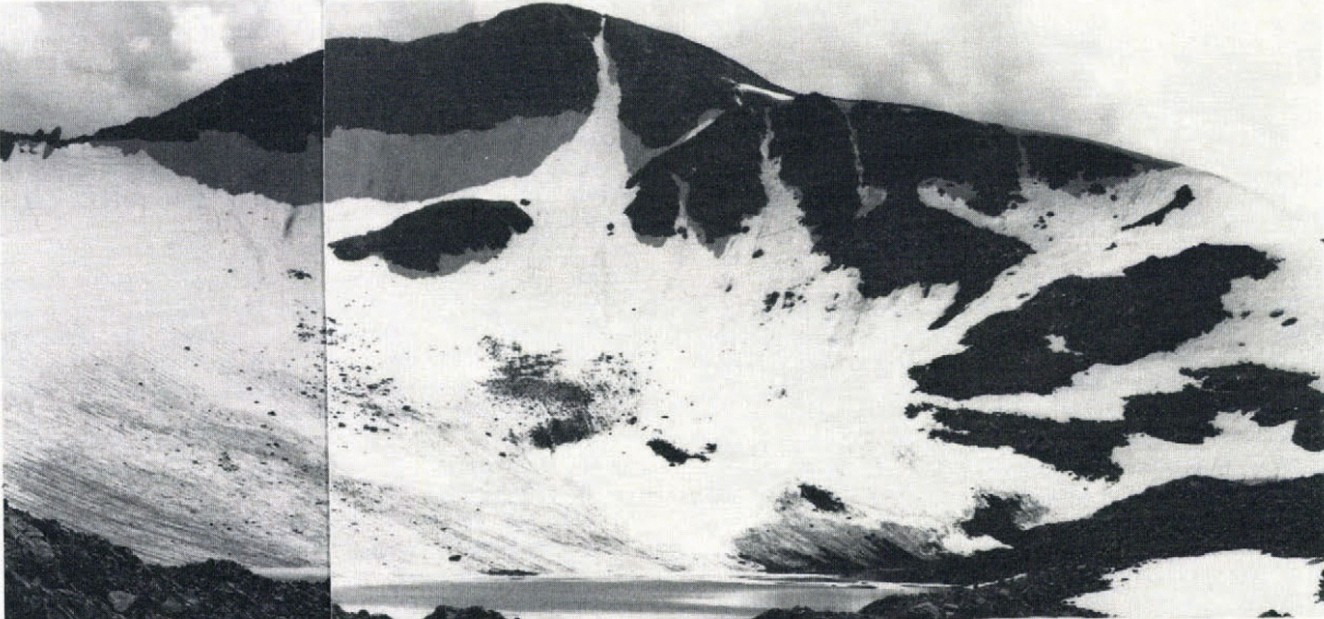
By 1994 the area had decline to 0.26 km2. The bench between the upper and lower section of the glacier is emerging and the lake has expanded to 0.08 km2.

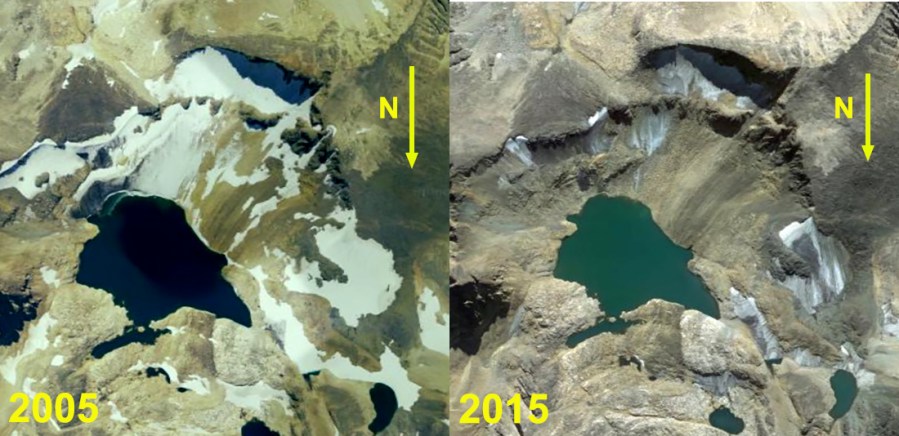
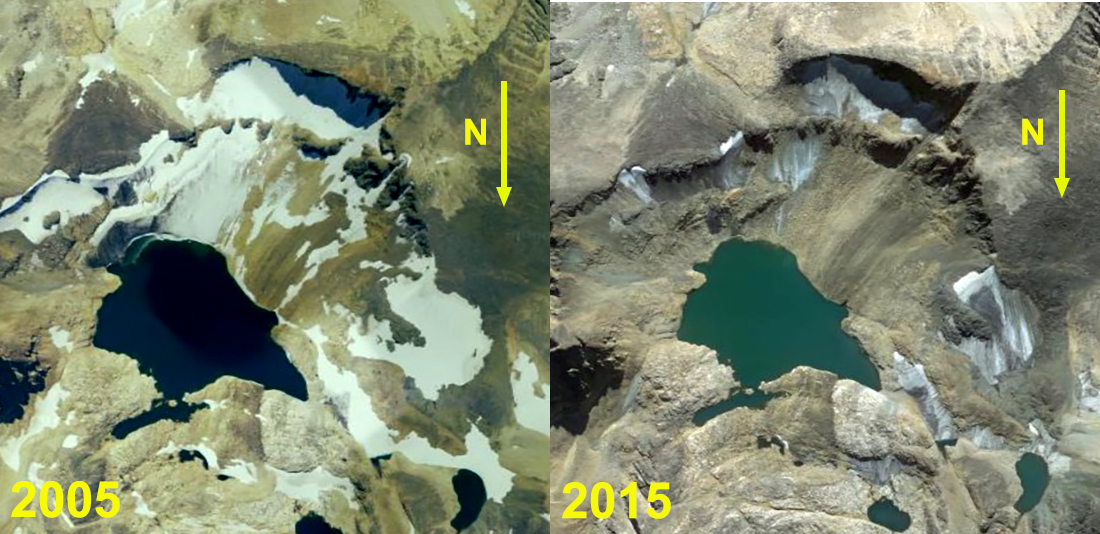
By 2005 the glacier has separated into a upper portion just below the peak and a narrow section extending to the lake. There is a single crevasse near the ice front. By 2005 this glacier has ceased to exist as an active glacier, there are a few remnant perennial snow and ice patches the largest with an area of 0.05 km2. In the majority of recent summers the glacier has lost all of its snowcover. Glacier survival is dependent on consistent accumulation retained on the glacier each summer, this glacier will not survive.
In 2015 the lower section no longer reaches the lake, and there are no longer any crevasses. The area of the upper section is 0.025 km2. The concave profile, limited area and lack of crevasses indicates this is no longer a glacier.

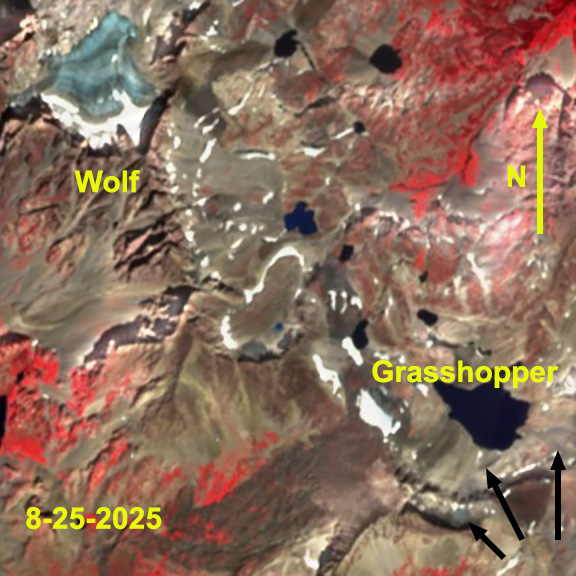
The glacier has continued its rapid recession and the further segmentation into small disconnected segments, heralds the end this glacier. We do have a gorgeous new alpine lake in its place. Notice the basin is still largely devoid of plant life, which is red in this false color image. The surface still has the color of newly exposed-deposited sediments. It is interesting that the glacier was named for a type of grasshopper that went extinct in the late 1800s in conjuction with the expansion of farming in the midwest, that disrupted their life cycle. Now the glacier is gone due to the warming climate from our increased production of carbon dioxide.
 From a Glaciers Perspective