
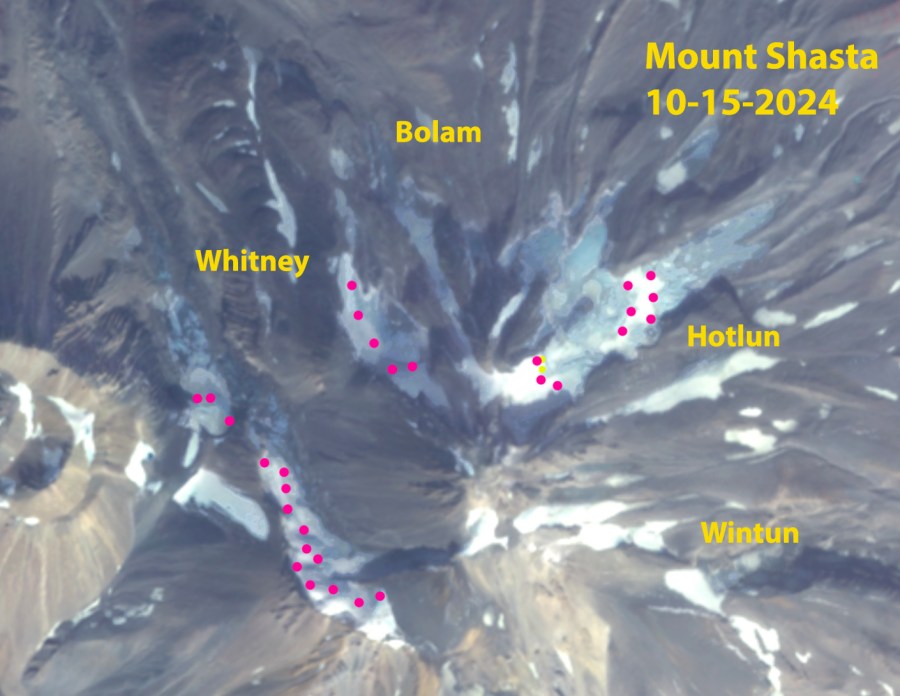

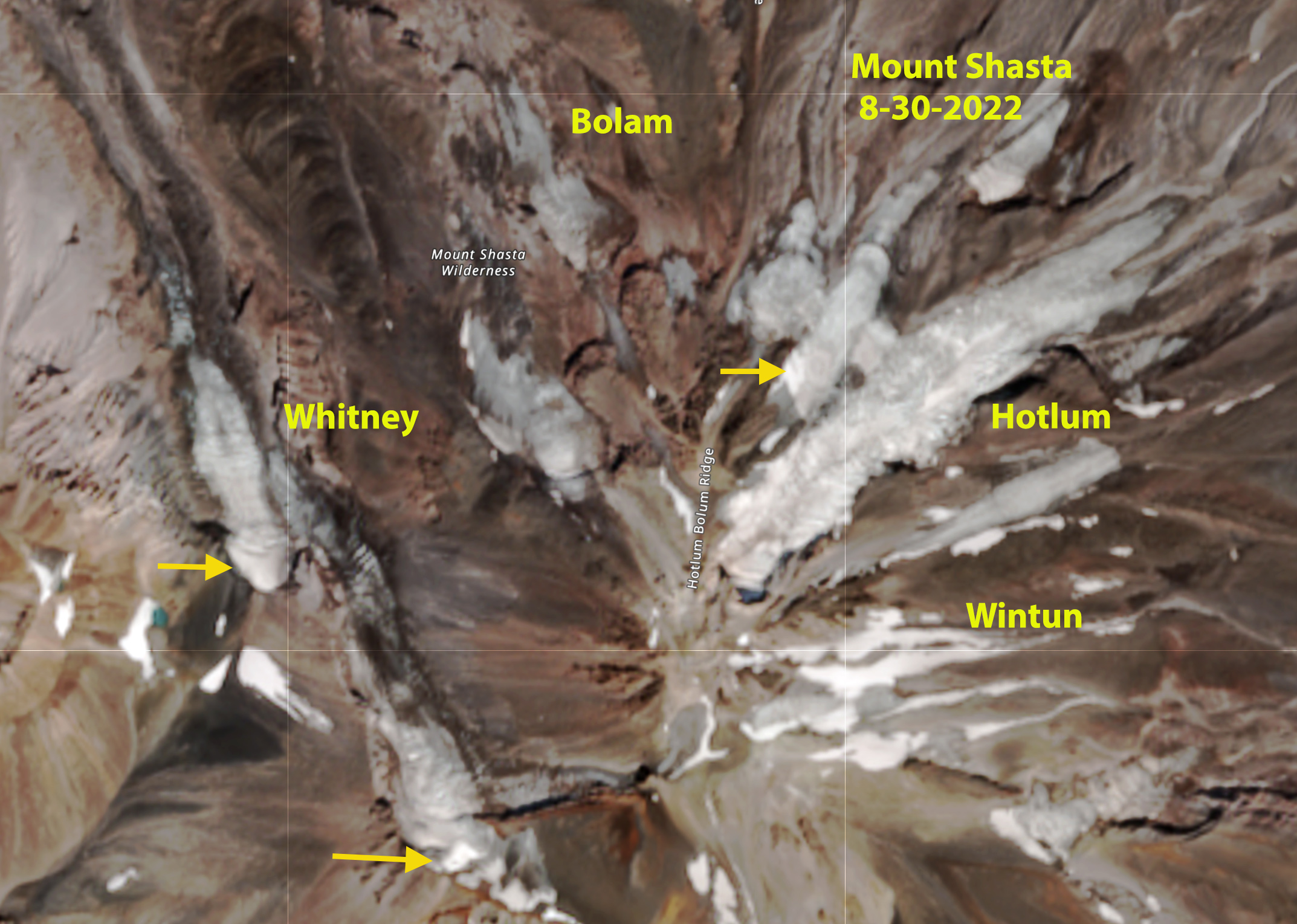
In 2021 and 2022 winters of below average snowfall , 4.50 m and 3.61 m at Snow Bowl, were followed by summers of persistent heat and several notable heat waves that left the glaciers of Mount Shasta nearly bare of snowcover, the resulting rapid volume loss and fragmentation of the glaciers was noted in detailed reports (Patel, 2021; Pelto, 2022). In 2021 less than 5% of the glaciers retained snowcover, and in 2022 less than 10% was retained.
In 2023 and 2024 a pair of winters with much above normal snowfall, 8.51 m and 8.43 m inches at Snow Bowl blanketed the mountain. How much of this snow has been retained by the glaciers as the 2024 melt season concludes.
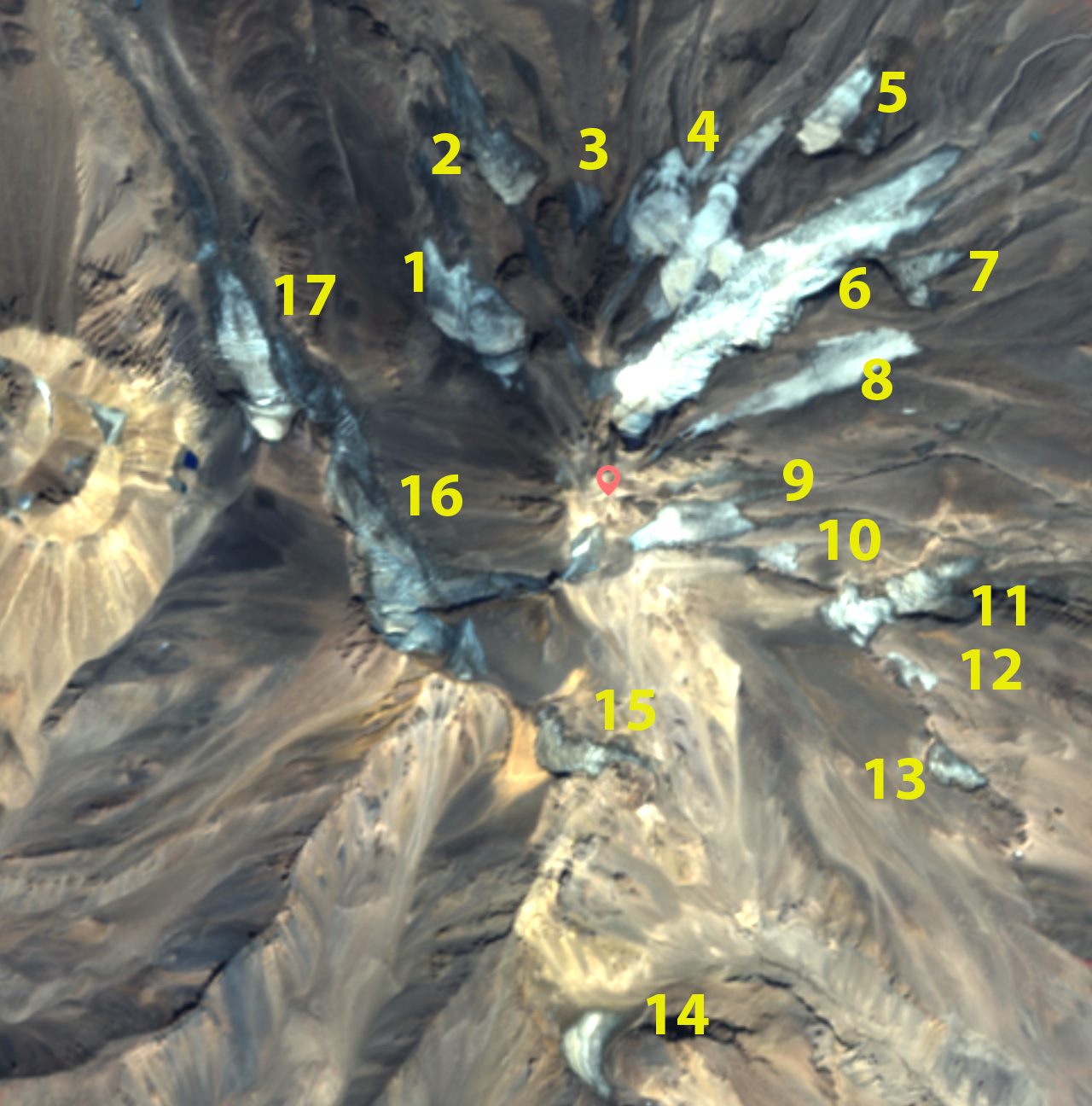
The summer of 2023 featured persisten warmth that led to ….In 2024 the melt season was again warm with the mean departure being 1.5-2.0 C in the Mount Shasta area. Regional Climate Center ACIS maps of the temperature anomaly for June-August provide a comparison of summer temperature for 2021-2024. Examining the remaining snowcover extent on Oct. 15, 2024 illustrates that

For Cascade range glaciers to maintain equilibrium they need 60% snowcover at the end of the melt season. Examining the remaining snowcover extent on Oct. 15, 2024 illustrates that the three primary glaciers Bolam, Hotlum and Whitney have 25% snowcover remaining. This indicates signficant loss of volume in 2024, though less than 2021 or 2022. This will drive continued thinning, retreat and loss of glaciers.
 From a Glaciers Perspective