
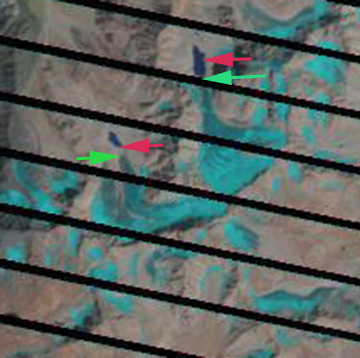
Tirich Mir is the highest mountain in the Hindu Kush and is in the northwestern corner of Pakistan. Here we examine Google Earth and Landsat imagery from two glaciers off the southwest ridge of Tirich Mir. The two glaciers are unnamed and are in the Dir Gol Valley, that starts in Akari, Pakistan and drains the southwest side of Tirich Mir, red arrows.  A 2000 Landsat image (top image) indicates both glaciers ending in small lakes. The arrows in all images are purple for the lack of snowcover even in the glacier accumulation zone, red for the 2000 terminus, yellow for the Google Earth terminus and green for the 2011 terminus. By 2008 the Google Earth imagery indicates that the eastern of the two has retreated 400 meters leading to a more than doubling of the lake size. For the western glacier, the glacier still maintains has just retreated from the lake margin. The lake is slightly larger than in 2000. There is no snowpack on either glacier in the Google Earth imagery or in the 2000 image even at 5000 meters. This indicates glaciers without persistent accumulation zones, which means they cannot survive (Pelto, 2010).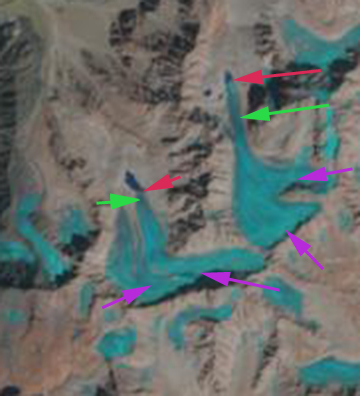
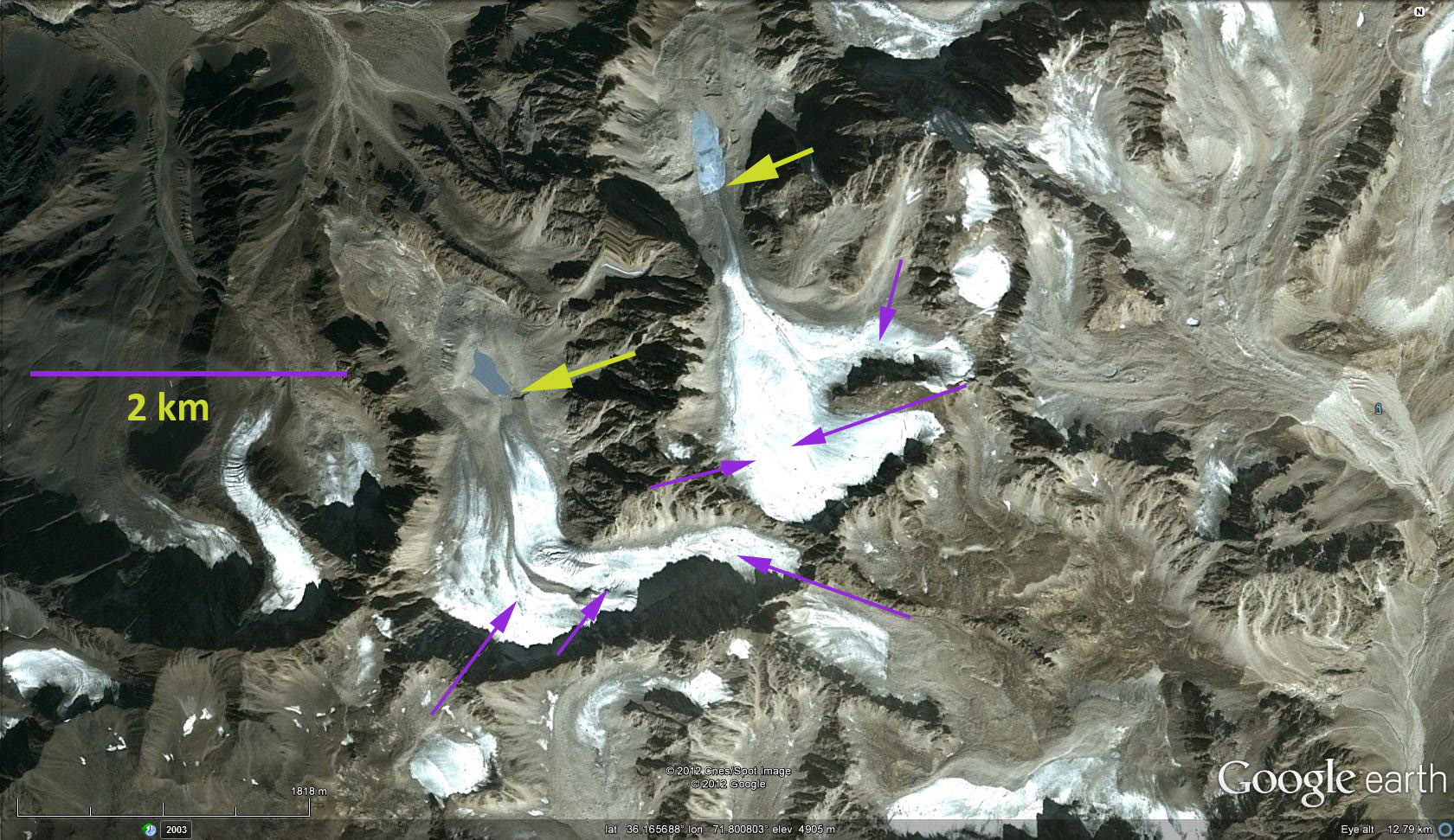
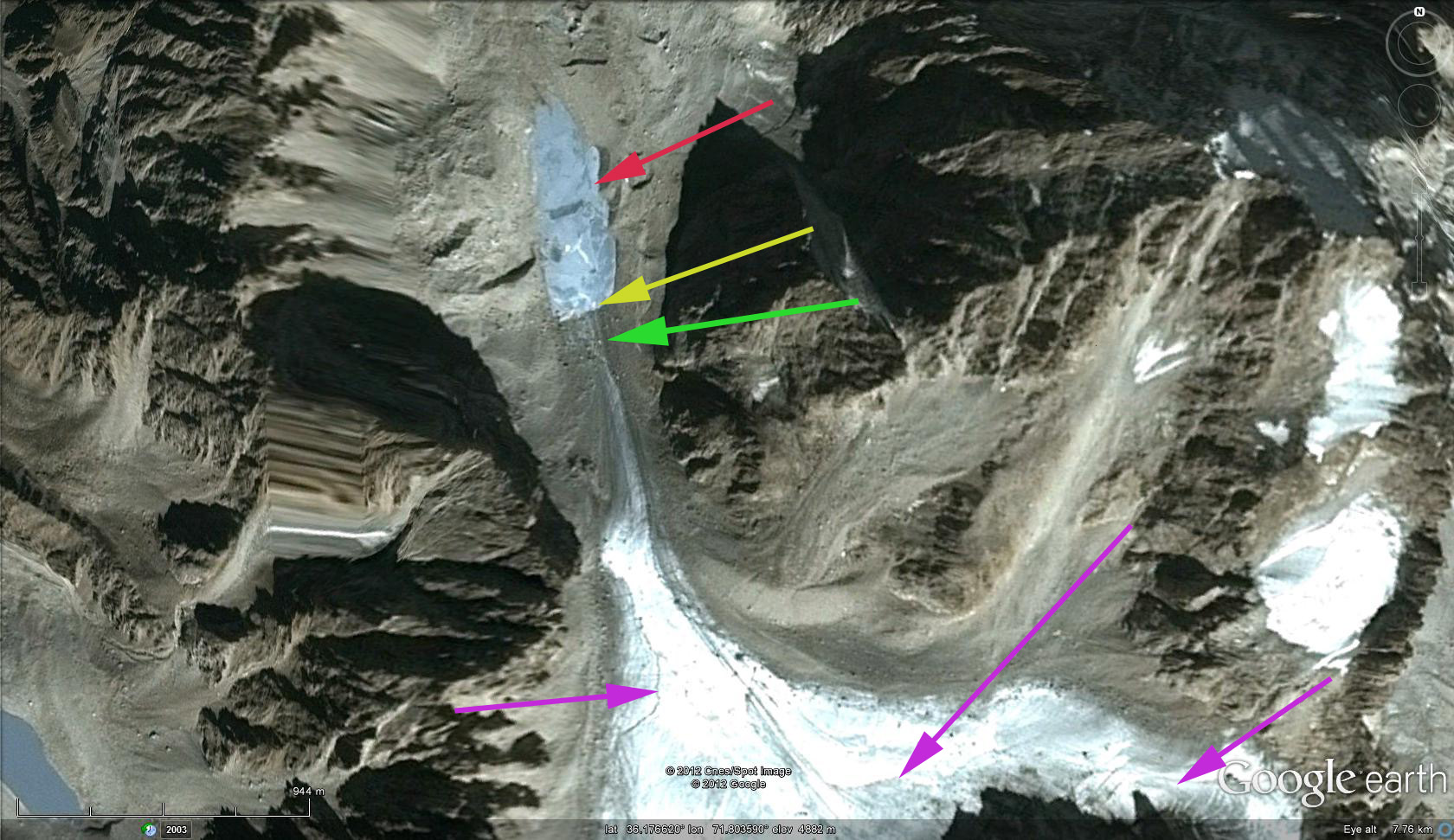
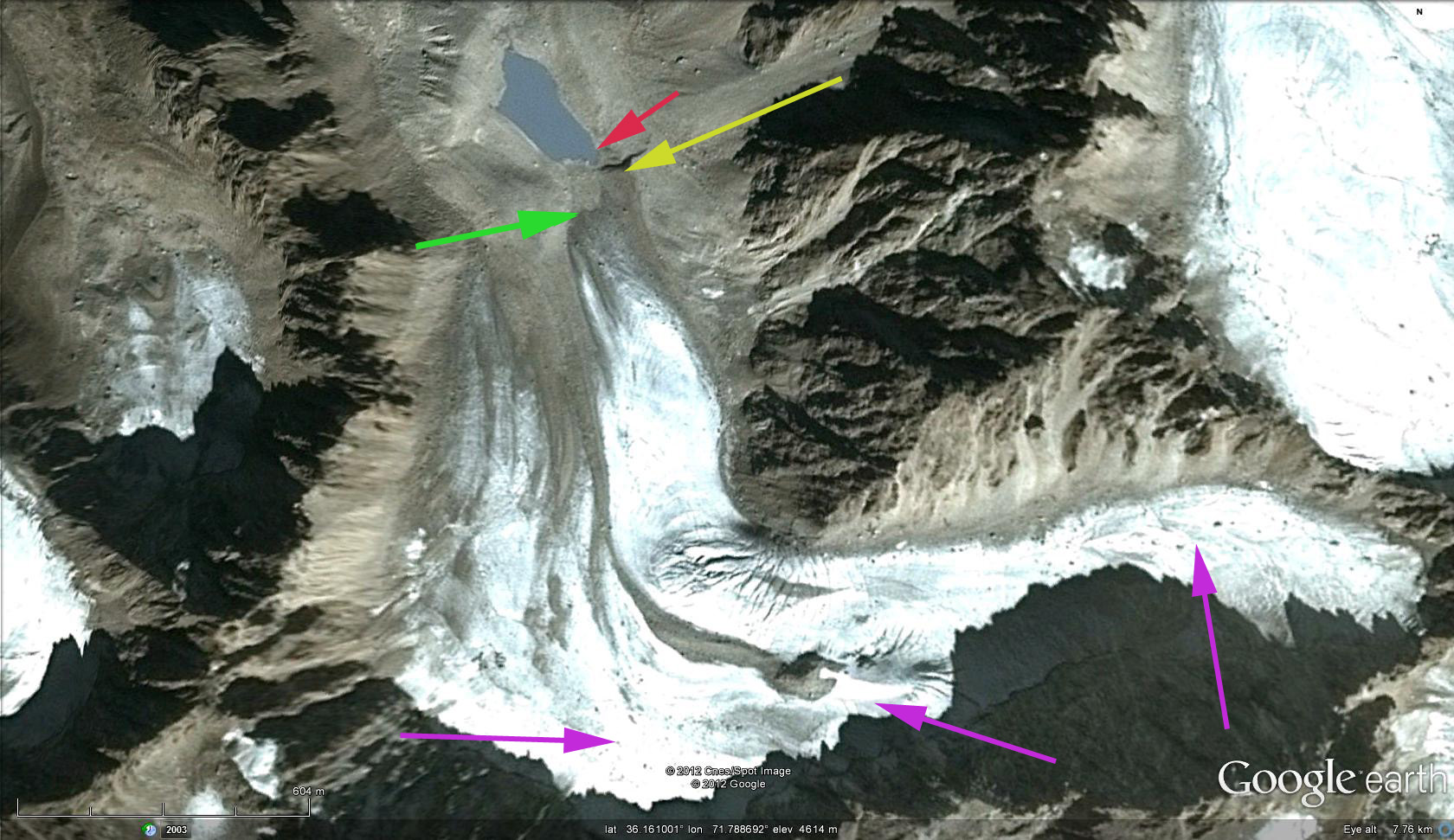 By 2010 and 2011, last two images. The eastern glacier has retreated an additional 100 meters and the lake is still expanding. The western glacier is no longer in contact with the lake, the terminus is now 150 m from the lake. The retreat from 2000-2011 of the eastern glacier has been 500 meters and 200 meters for the western glacier. The rretreat is similar to that of Godur Glacier in the Swat Valley. After 2000 76% of the glaciers in the region have been retretaing (Sarikaya et al, 2011). Around Tirich Mir glacier retreat had been relatively low up to this point. Most of the glacier in this region of the Hindu Kush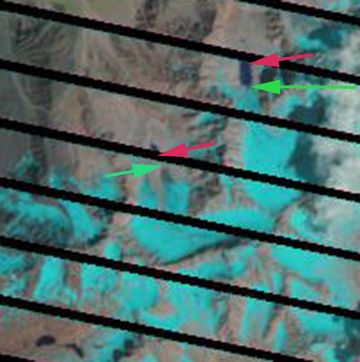
Tag: Pakistan glacier retreat
Godur Glacier, Pakistan Retreat and Separation
Godur Glacier drains into Godur Lake (Godar) in the Hindu Kush Mountains of Northwest Frontier Province, Pakistan and then into the Swat Valley and then Indus River. ICIMOD (2010) noted there were 233 glaciers with an area of 223 square kilometers in the Swat Valley region, this indicates numerous but generally small glaciers. ICIMOD (2010) also examines the changing climate conditions in the region, noting that the change in precipitation has been minor, while temperatures have risen markedly and the frequency of heat waves has increased (first image, from ICIMOD, 1960-2010). The main accumulation season for the glaciers in this area is in the winter season, with the summer monsoon playing a small role. In 1998 and 2000 the Godur Glacier terminus was a location where two tributaries joined, red arrows. By 2011 the retreat had led to separation of the two glaciers. The separation has increased in the divide between the glaciers, yellow arrow. the west margin of the glacier has also retreated, note the distance from the lake to the edge of the glacier in 1998 versus 2011, green arrow.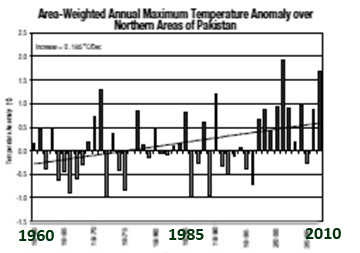
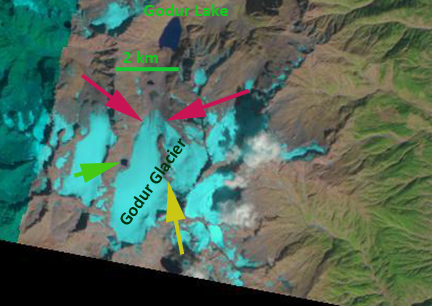
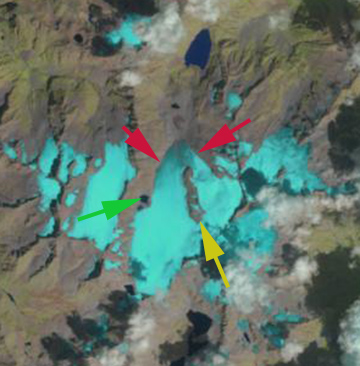
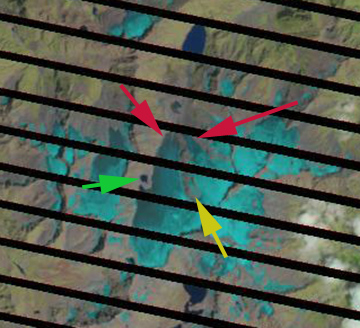
 The retreat of this glacier and the enhanced melting through the Hindu Kush will lead to changes in timing of runoff in the Indus River. The net annual runoff depends largely on precipitation, which has not shown a clear trend. However, during heat waves extensive melting can lead to high water levels in the Indus River, well long term retreat leads to decreased summer melt and runoff. The retreat here parallels that seen to the west in Afghanistan (Emend Valley glaciers) and to the west in the Himichal Pradesh (Malana Glacier).
 From a Glaciers Perspective