


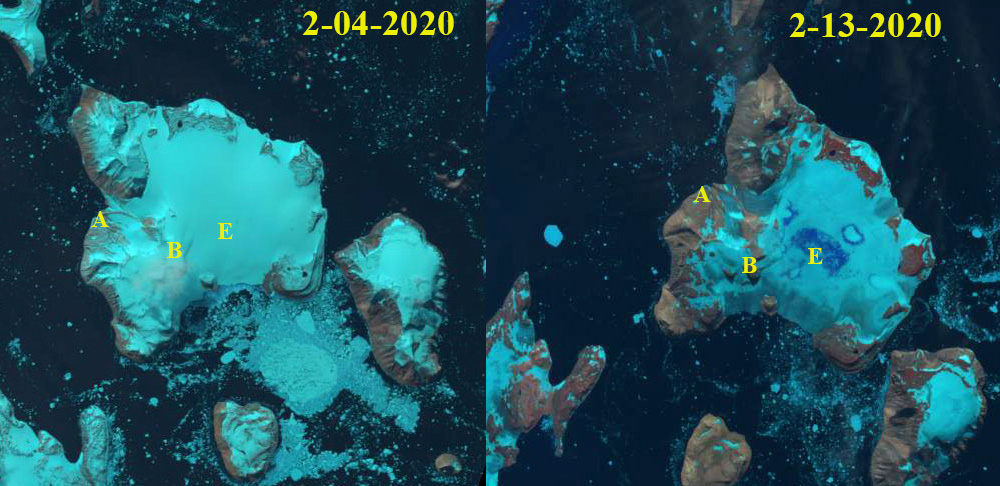
On February 27, 2024 Eagle Island had ~65% snowcover, by March 8, 2024 this had diminished to just 8% snowcover. This matches last year for the lowest observed snowcover of this ice cap. On February 19, 2023 Eagle Island Ice Cap, Antarctica has less than 10% snowcover. This is less snowcover than observed even after the period of record warm weather over the Antarctic Peninsula in February 2020. The repeat loss of snowcover has stripped the ice cap of firn exposing bare glacier ice that is darker and melt faster, enhancing melt losses. Temperature when the all time Antartica temperature record was set at Esperenza Base. Eagle Island Ice Cap (63.65 S 55.50W) is 40 km from Esperanza, with the summit of the ice cap is at 250-300 m and it has an area of 21 km².
In 2024 at Esparanze Base:
- The average temperature in February was 2.5 C.
- The high reached 12 C on Feb. 27.
- In March the temperature reached 9 C on March 4, 6, 7 and 8.
In 2020 we observed blue ice areas (BI) and saturated snow areas (SS) rapidly developed from a snow covered ice cap during the heat wave (NASA EO, 2020). The impact of short term melt events like this on an ice cap like this, is visible and significant for annual mass balance, but not large in terms of long term glacier mass balance (volume change) and area. That year also led to record melt and ponding on the George VI Ice Shelf (Banwell et al, 2021). In 2022 a similar patter of blue ice developed, but no saturated snow. In 2023 the loss of snowcover was nearly complete exposing a more extensive bare ice and firn surface area that melts more rapidly. This was the result not of a heat wave but of a consistenly warm summer.

In 2023 at Esparanze Base:
- November mean temperature 2.5 C above average
- December mean temperature 0.5 C above average
- January mean temperature 1.5 C above average
- February mean temperature 1 C above average
The rapid melt is also apparent on the ice cap on the west end of Vega Island, Antarctica.

 From a Glaciers Perspective