

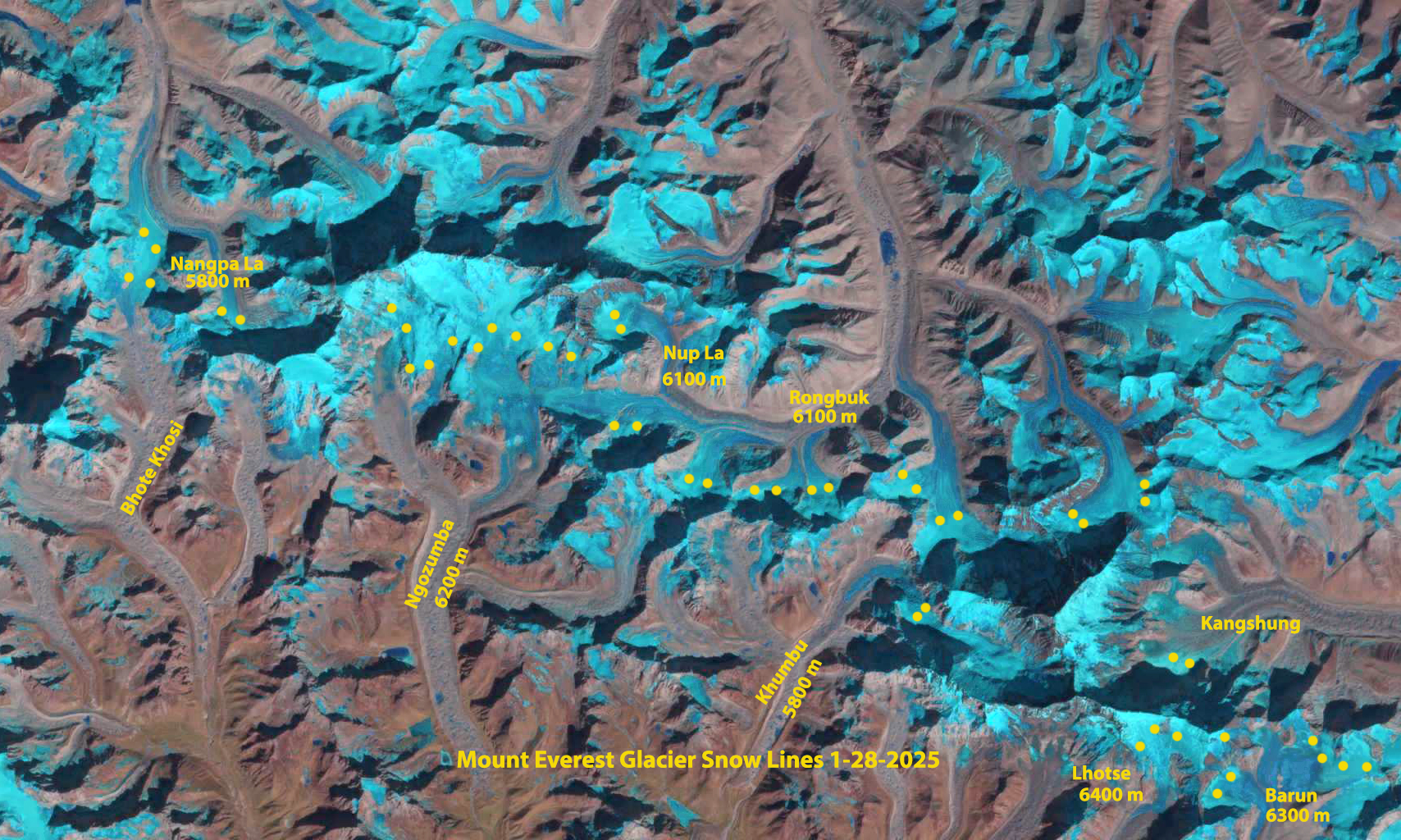
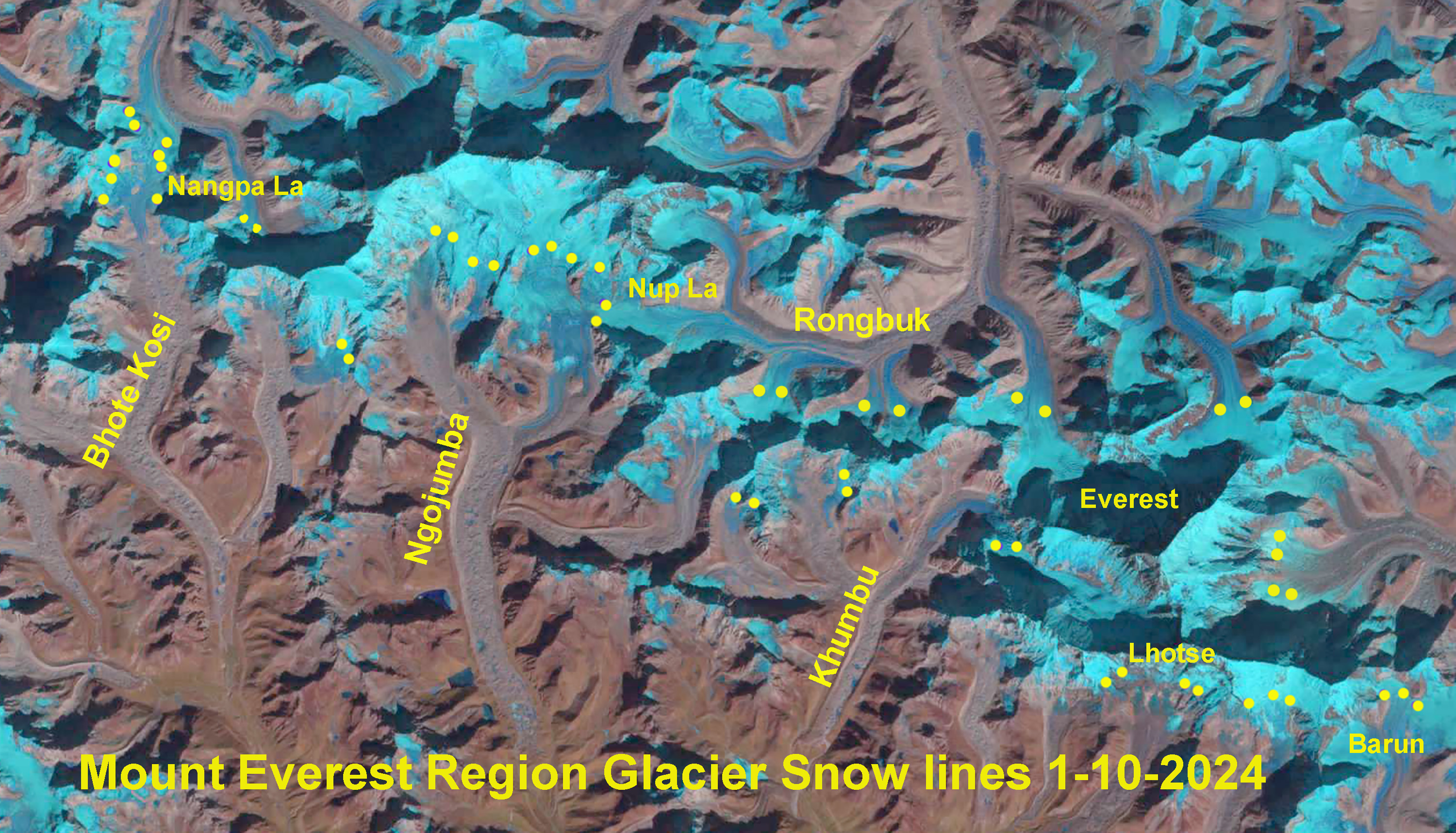
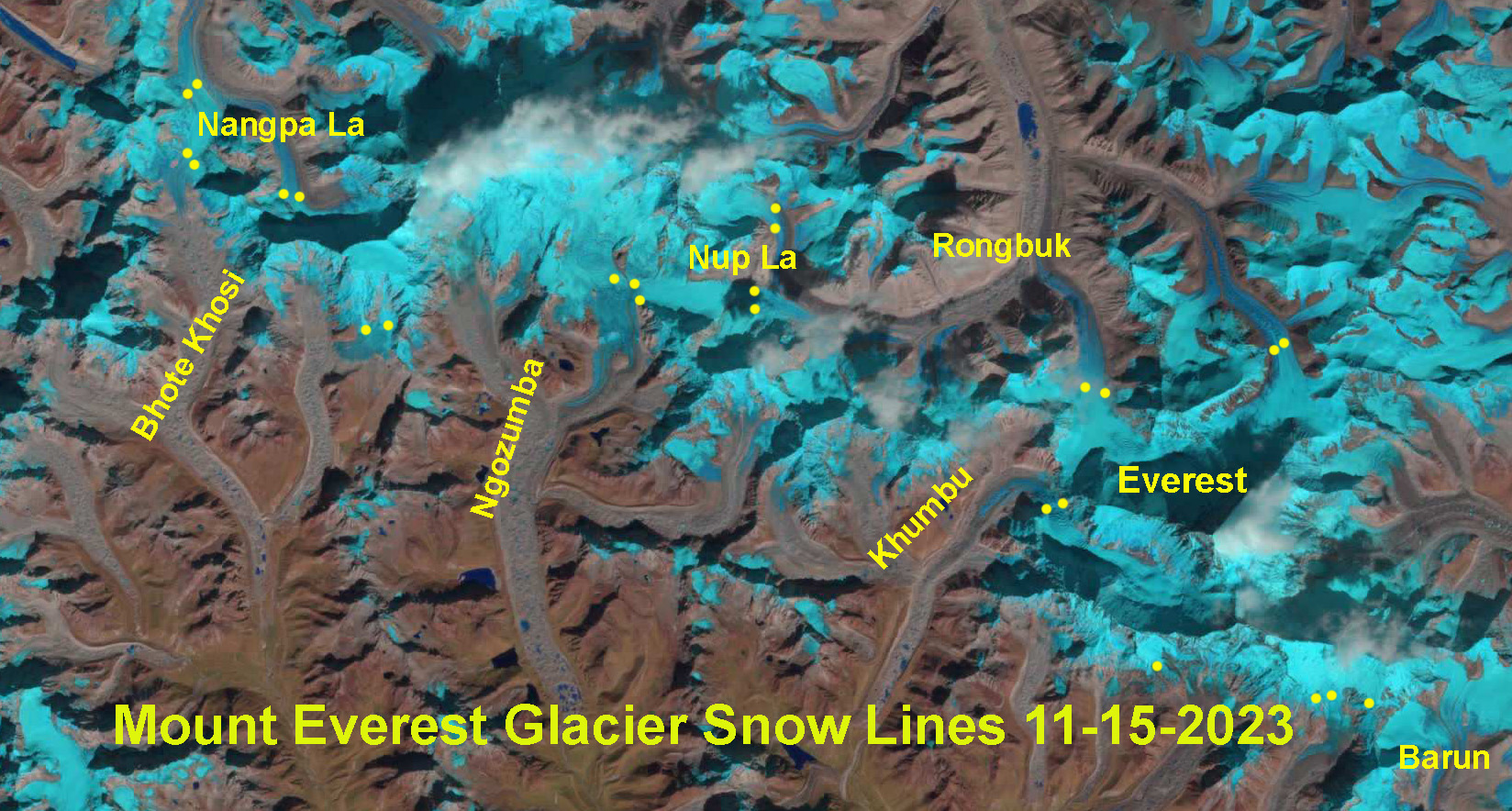
This is a update to a previous post examining persistent high snow lines through the winter on Mount Everest Region glaciers. Here we examine imagery from October 2023 through early January 2025 illustrating the rise in snow line through January in both 2024 and 2025. The persistent high snow line during winter indicate a lack of snow accumulation during the winter season. This is a dry season in the Himalayan region, yet typically an extensive snow cover develops, though not particularly deep. A combination of warmer and drier conditions have been more prevalent in recent winters including 2021, 2023, 2024 and 2025 (Kathmandu Post, 2025). These conditions are driving both reduced snow cover, higher elevation snow lines and increased forest fires (Nepali Times, 2025).
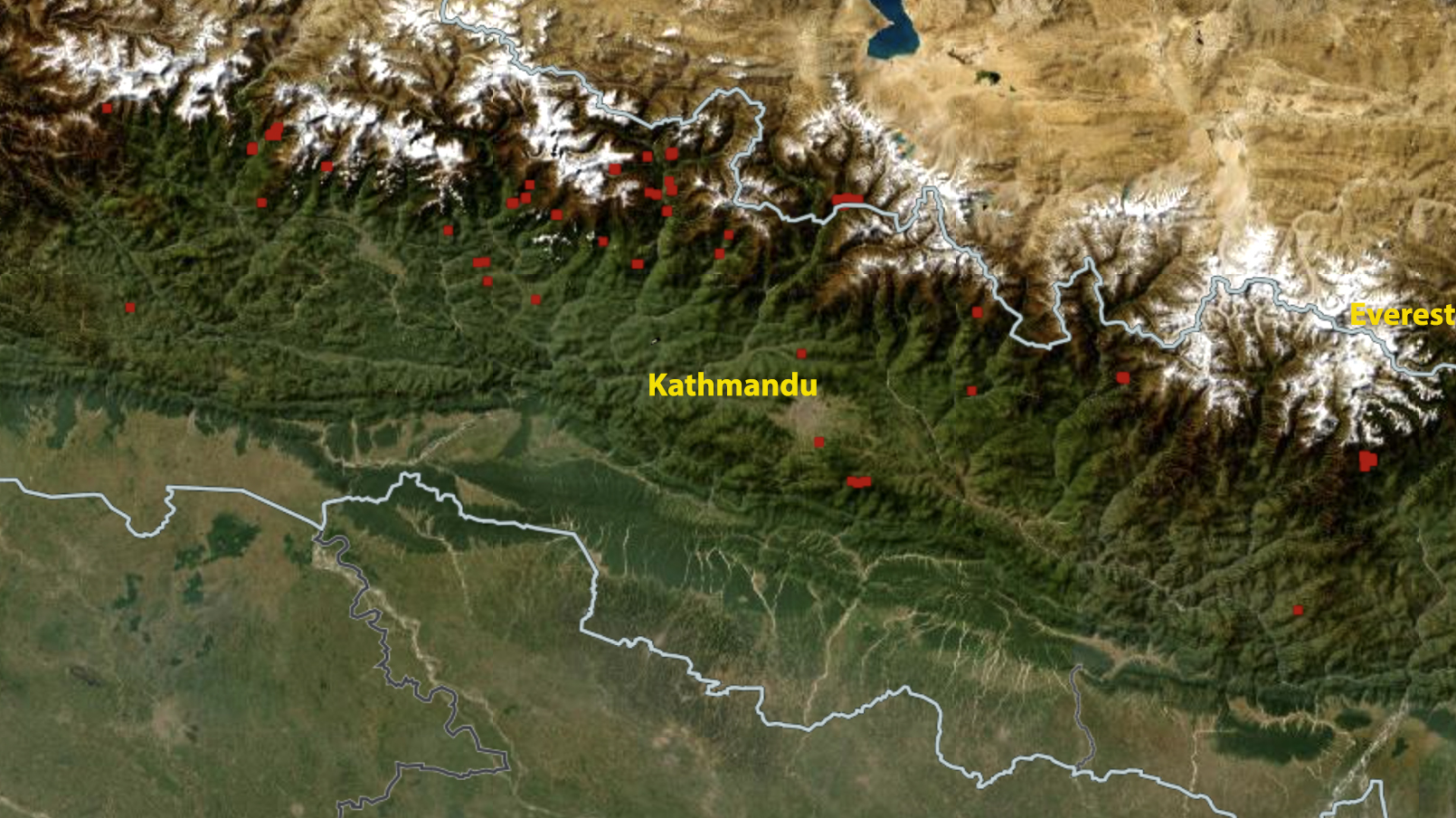
There have been a few small snow events early in each winter, but the snow cover does not persist indicating that ablation has continued even above 6000 m on Mount Everest. Snow cover loss during winter at these altitudes is primarily the result of sublimation , with losses observed up to 2.5 mm per day (Tenzing et al 2023).
The 2024 winter season was different than the high snow lines in 2020/21 that resulted from extraordinary January heat wave, as there was not a noteworthy heat wave (Pelto et al 2021). Instead a lack of any significant precpipitation was critical with less than 25 mm of precipitation at Everest Base Camp from Jan.1-March 31, 2024 and above normal temperatures for significant periods. The high glacier snow lines persisted into the monsoon season of 2024. The post-monsoon season in 2024 was warm and wet, leading to above average snow line elevations in November 2024.
In December 2024, Nepal was 20-25% of normal with drier conditions in the east. This accompanied above average temperatures, though not as high as in December 2023, leading to extreme drought in several provinces including Koshi Province (Nepal DHM). January, 2025 has continued to be dry, with consistently warm conditions. This has enabled high glacier snow lines to persist and rise from early December into early February, 2025.
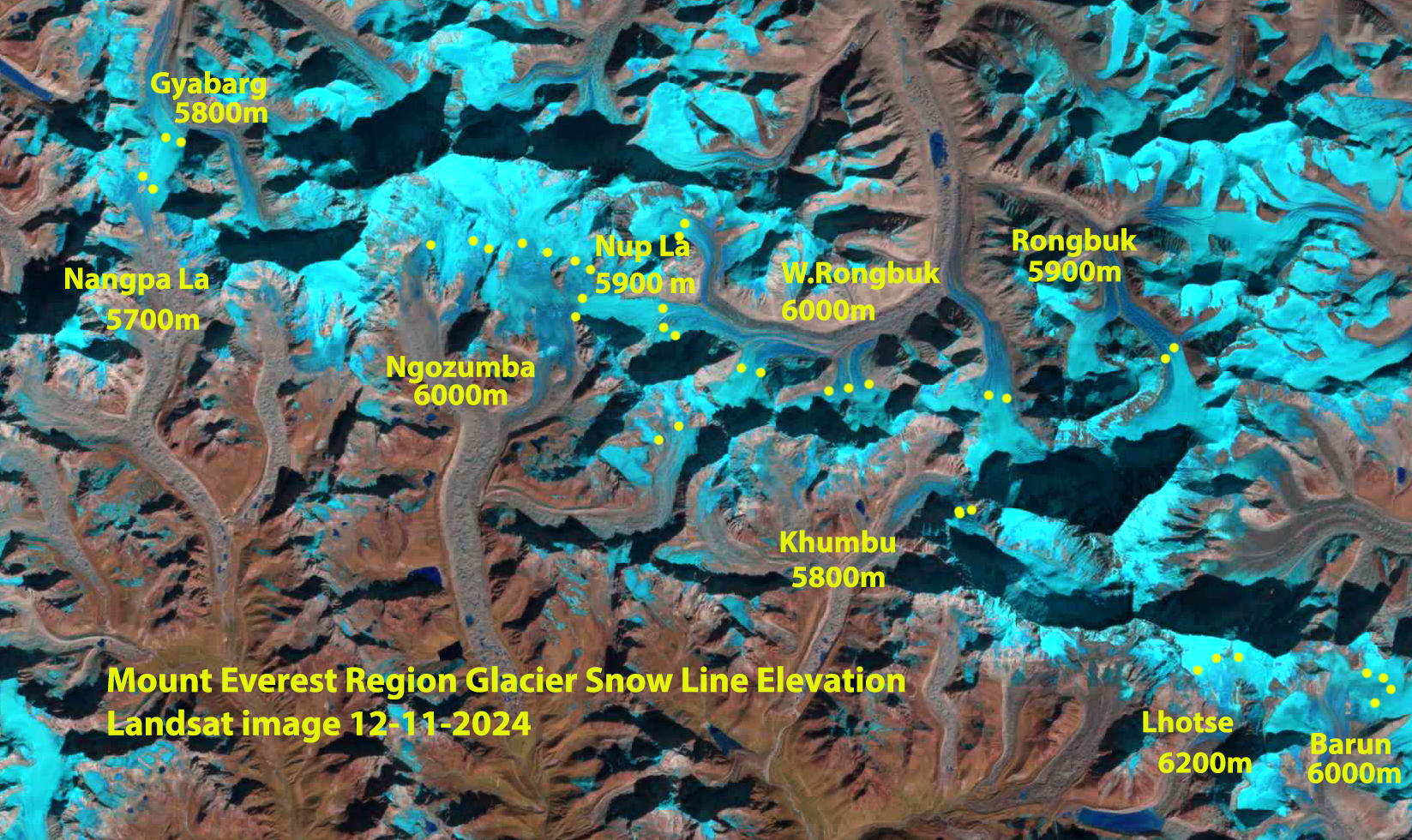
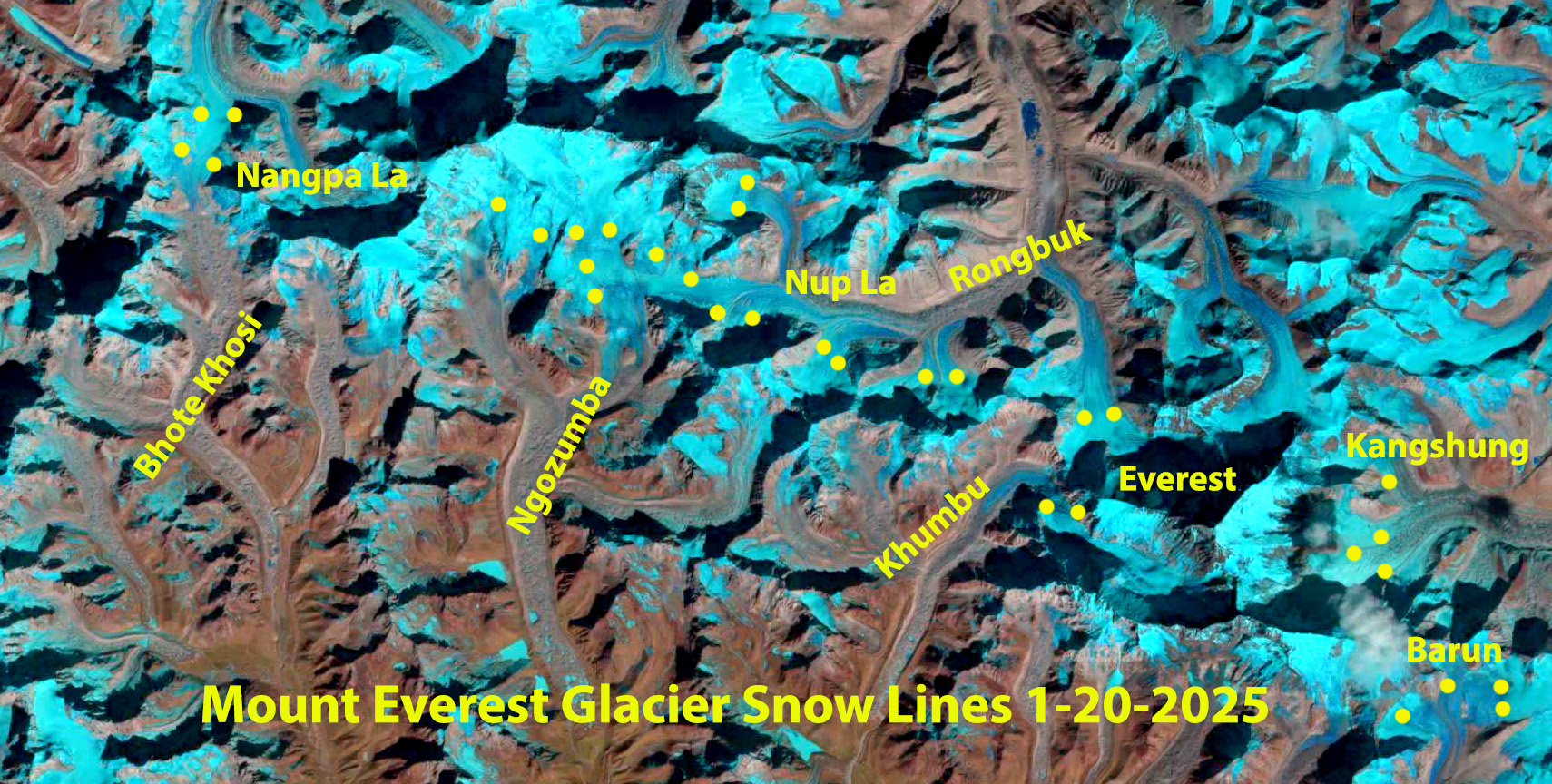

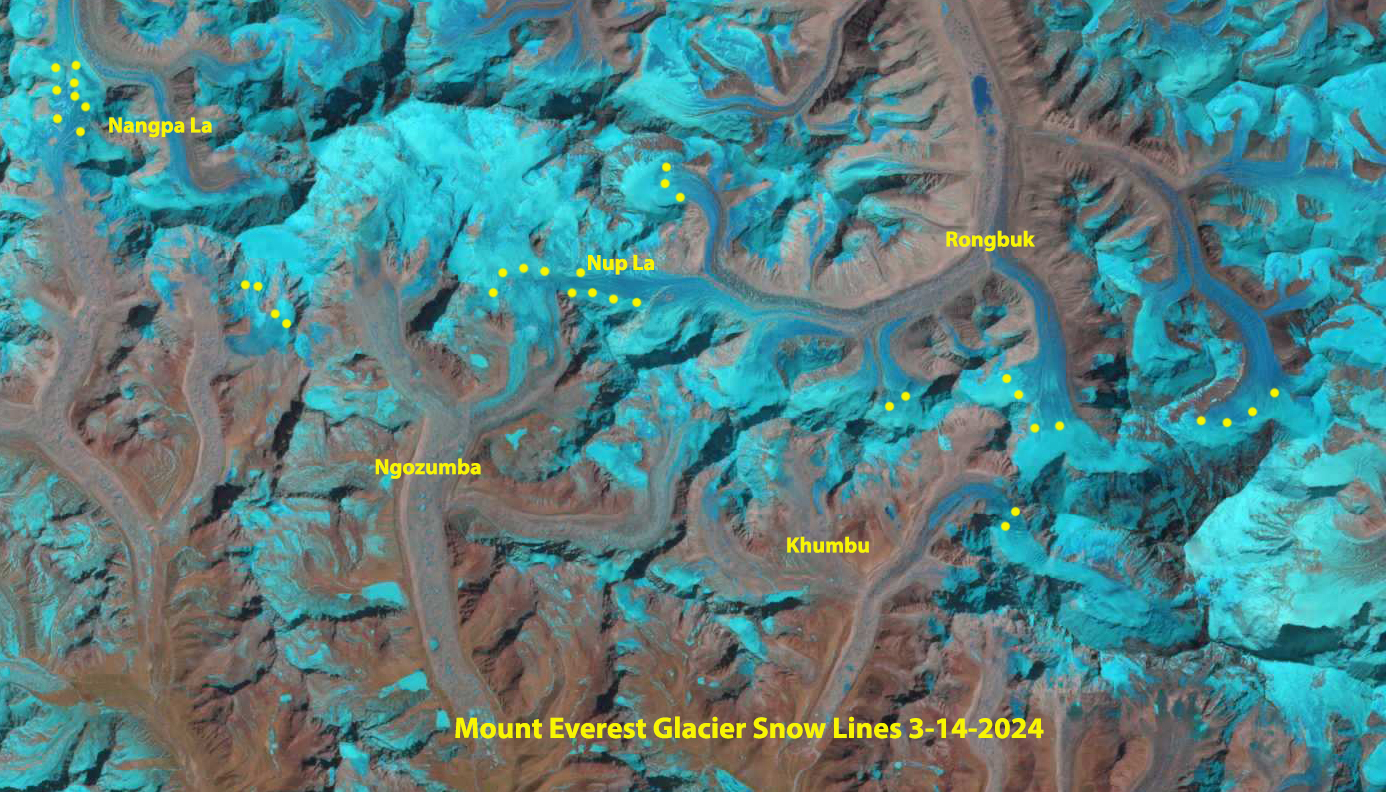
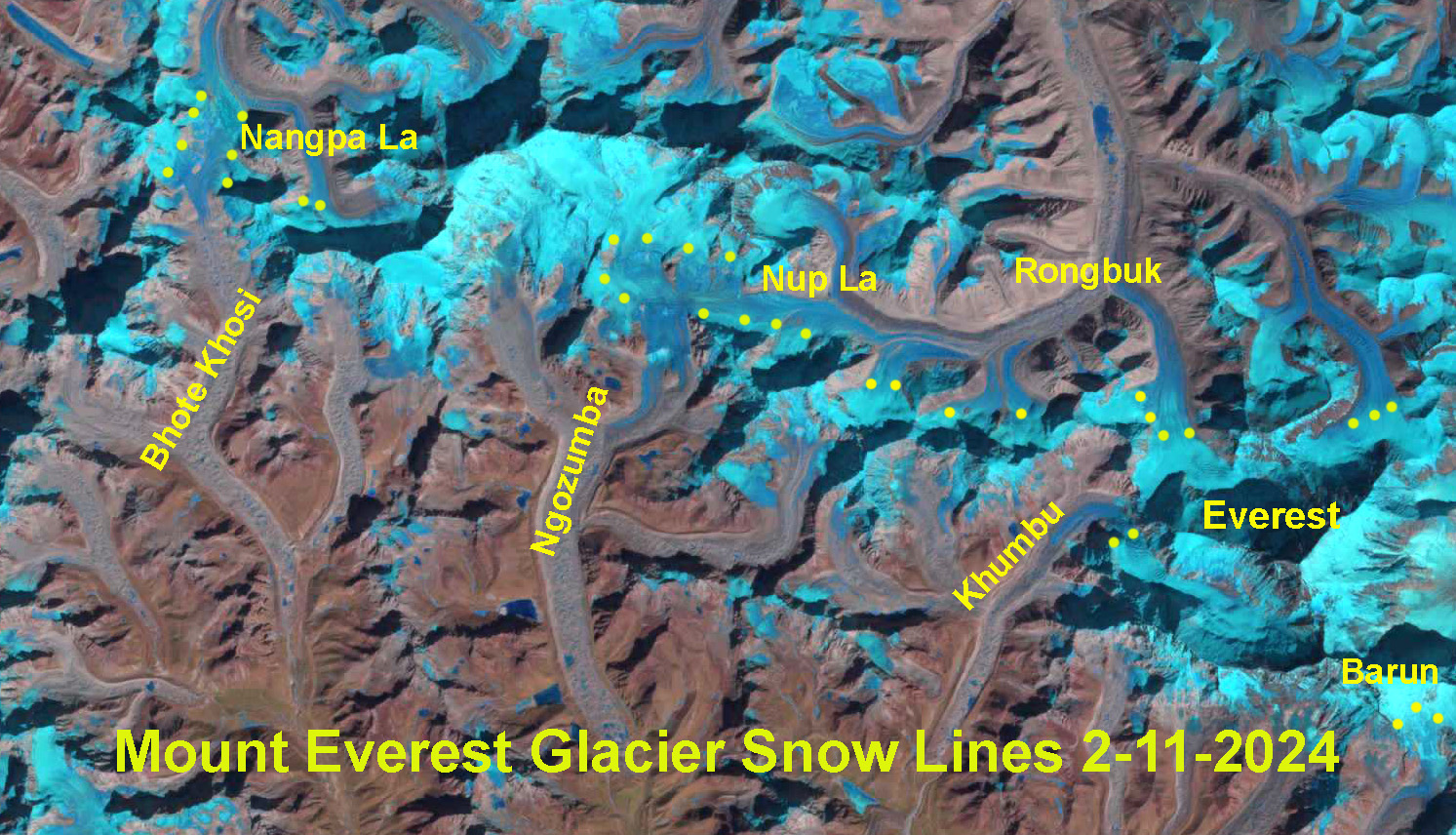
The snow line on Mount Everest Region glaciers on Feb. 11, 2024 indicated by yellow dots on the Landsat image. Note that Nangpa La and Nup La-two high passes (5800-5900 m) are both snow free. The average snow line is 6000 m.

 From a Glaciers Perspective