
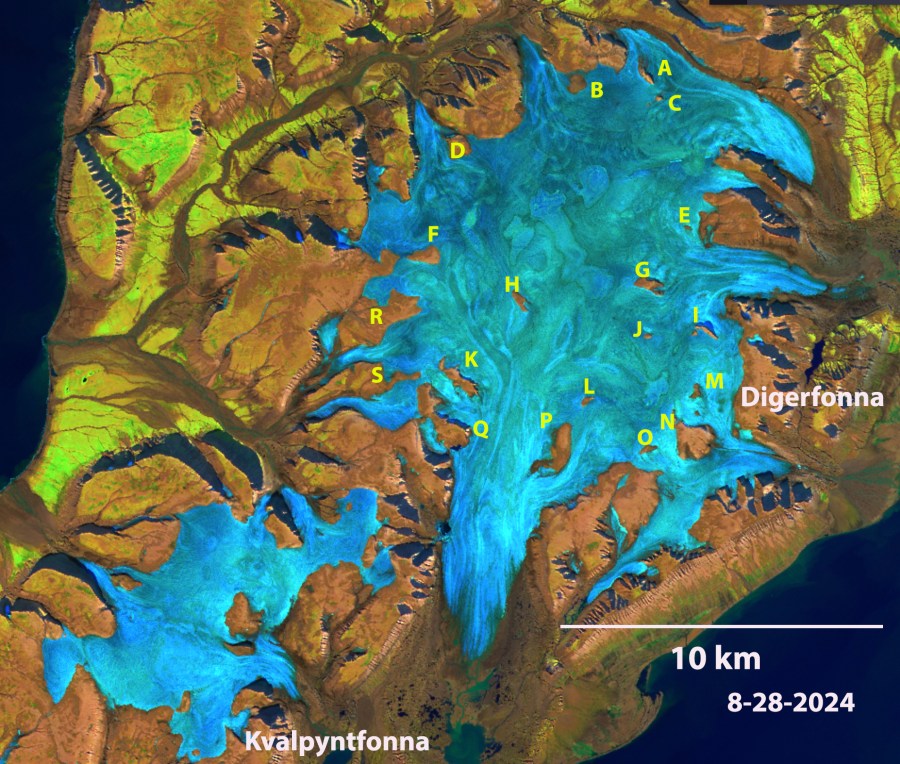

Digerfonna is the second largest ice cap on Svalbard’s Edgeøya Island at ~200 km2. Svalbard ice caps such as Digerfonna have low maximum elevations 450-550 m in this case. Noel et al (2020) explain that for Svalbard glaciers summer melt consistently exceeds winter snowfall and their survival depends on refreezing a considerable fraction of surface melt in the firn layer covering their accumulation zones. Recent high melt summers have reduced the area of firn cover significantly reducing the ability to refreeze and enhancing melt from darker bare ice surfaces.
Longyearben had its warmest August on record in 2024, indicative of Svalbard as a whole. This led to all snowcover being lost from Digerfonna by early August. This allows continued firn loss that also was observed in 2022 and 2023. On Aug. 28, 2024 the extent of firn is ~10 km2.
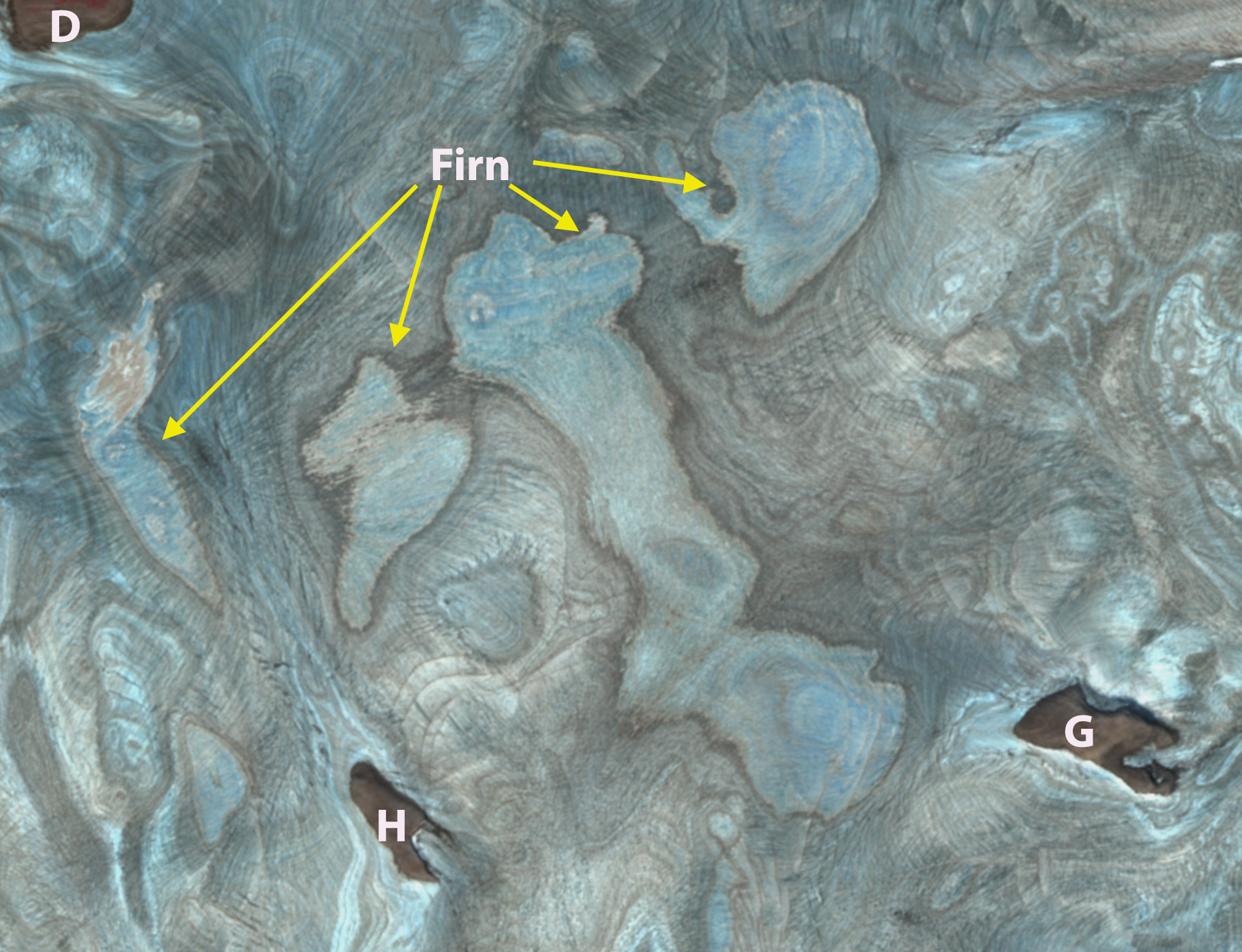
The firn loss and thinning even at the highest elevations is evident by expansion of bedrock areas near the crest of the ice cap. Note comparsion to six year ago.

 From a Glaciers Perspective