


Trollheimen region with less than 10% snowcover remaining in this Landsat image from 8-11-2024, violet dots indicate retained snowcover. N=Nansenbreen, B=Borenbreen, C=Charlesbreen, V=Vestgotabreen, Hu=Hydrografbreen, E=Eidenbreen, V=Venerbreen, Vs=Vetterbreen, H=Harrietbreen and Es=Esmarkbreen.
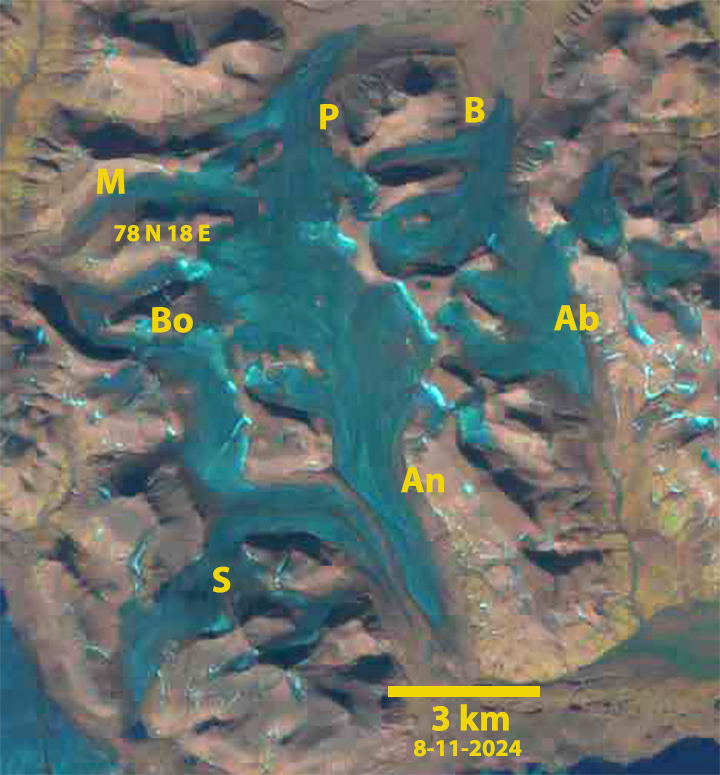
Svalbard has experienced a warm July and August in 2024. Landsat images reveal the extent of snowcover loss on Svalbard glaciers. This follows on 2022 which had been the warmest summer on record in Svalbard and led to many snow free glaciers (Pelto, 2022). This record was exceeded in summer 2023 (Copernicus Climate Change Service, 2024). Here we look at Landsat images in August illustrating the widespread nature of the extensive glacier snow cover loss. This adds to the glaciers reviewed earlier this month (Pelto, 2024).
For the glaciers of Spitsbergen to maintain .equilibrium requires 50% of the glacier needs to be snowcovered at the end of summer. By mid-August with a month left of summer melt, the area is below 10% on every glacier noted above. How much more melt will occur. The net result will be extensive mass loss once again (NASA EO, 2024).
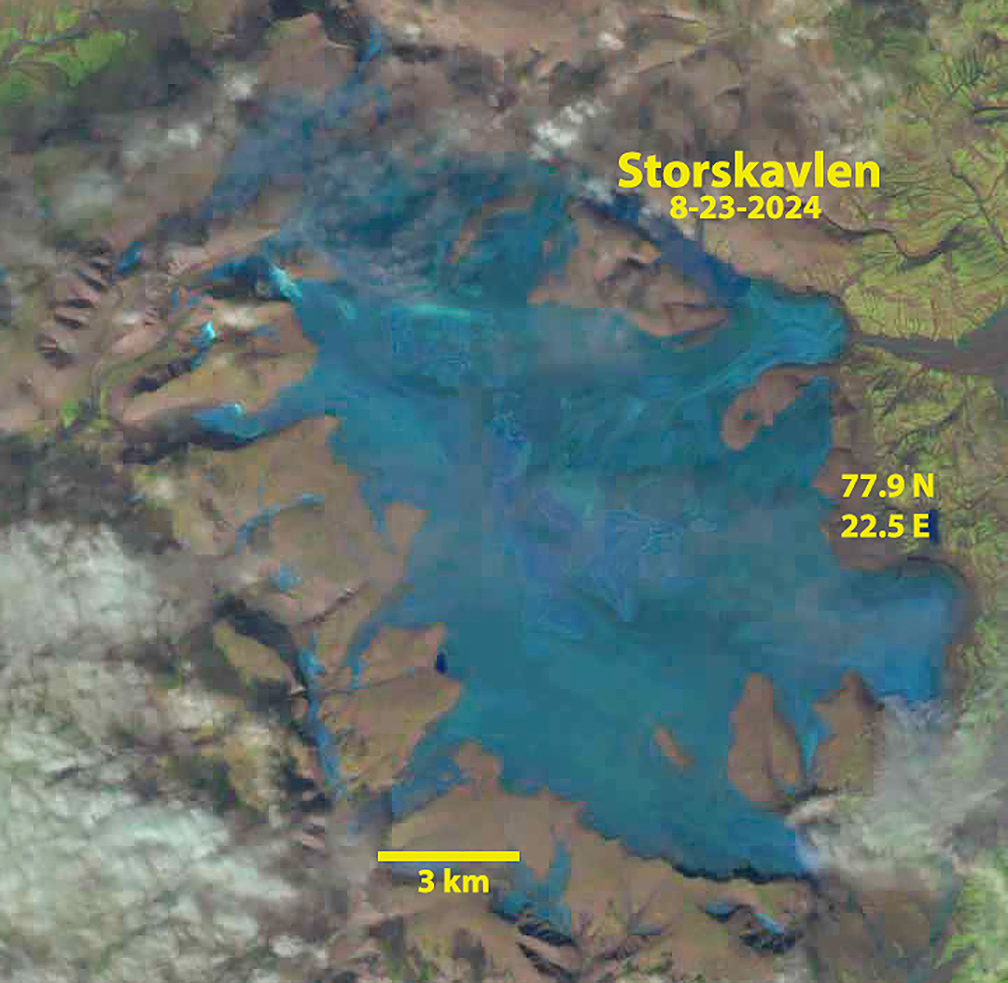
Storskavlen Ice Cap on Edgeoya is snowfree on 8-23-2024 in this Landsat image. Thinning ice is leading to expanded bedrock areas amidst the ice.
 From a Glaciers Perspective