J Glacier Retreat-Impending Loss, Wyoming

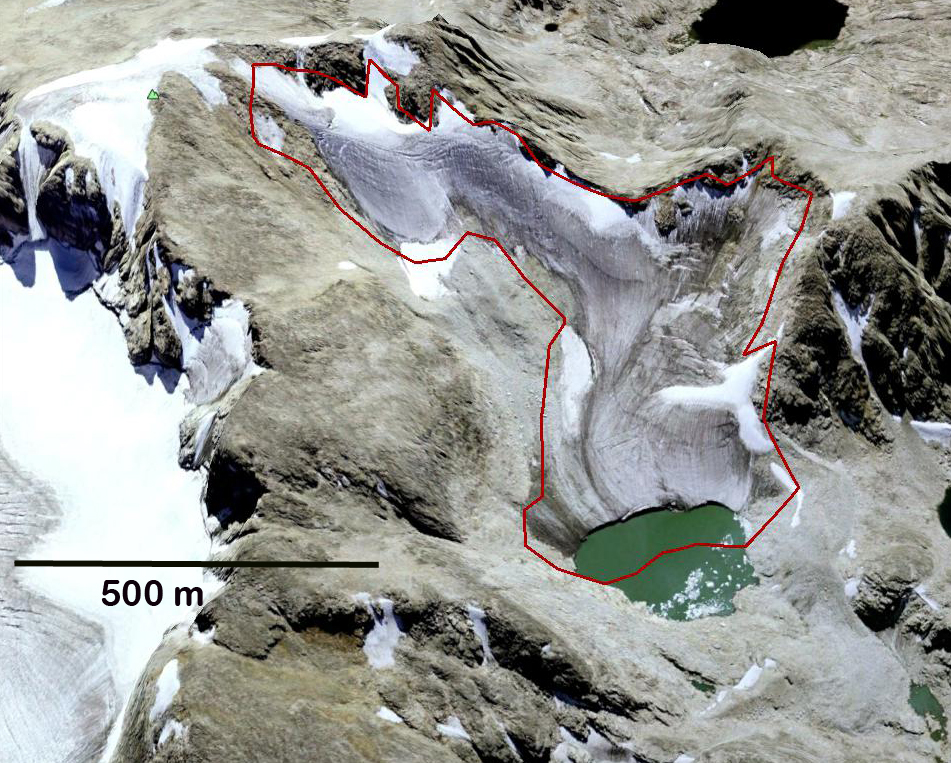
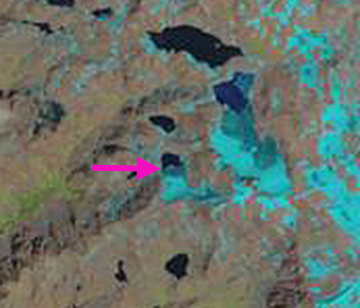
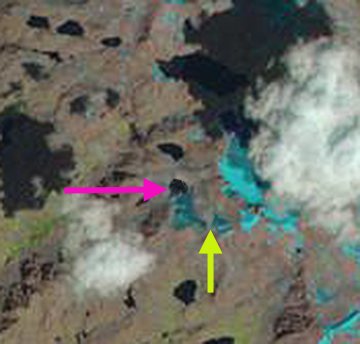
J Glacier is a small Glacier on the northwest side of Klondike Peak in the Wind River Range of Wyoming. In this post we examine changes in this glacier from 1994-2013 using Landsat Imagery and from 2013 and Google Earth imagery from 1994, 2006 and 2009. In 1966 the glacier ended on the far side of the lake basin and no lake was present. The retreat from 1966-1995 was 60 m a rate of 2 m per year. By 1994 a lake had formed at the terminus, the 1994 margin of the glacier is indicated with a burgundy line on each Google Earth image. The main terminus of the glacier retreated 100 m from 1994 to 2009, a rate of 6.6 m/year. More importantly the image from 2006 indicates a significant retreat and rock exposure on the upper portion of the glacier on the west side, pink arrow. In 2009 the glacier terminus is beginning to recede out of the lake as seen by emerging shoreline rock near the glacier center. In 2013 a July and August Landsat images indicate the extent of snowpack loss that occurred in just one month, leaving the glacier without any snowcover by late August. The terminus is indicated with a pink arrow, any change since 2009 cannot be discerned on this image. The complete snowpack loss has led to glacier ice melt and separation of the upper eastern corner of the glacier from the rest of the glacier, yellow arrow. The loss of area and exposure of rock on both the upper west and upper east side of the glacier indicate the lack of an accumulation zone. This indicates a glacier that cannot survive as noted by Pelto (2010). This is the same forecast as for nearby Minor Glacier and Grasshopper Glacier, whereas the neighboring Sourdough Glacier has fared a bit better. j glacier map
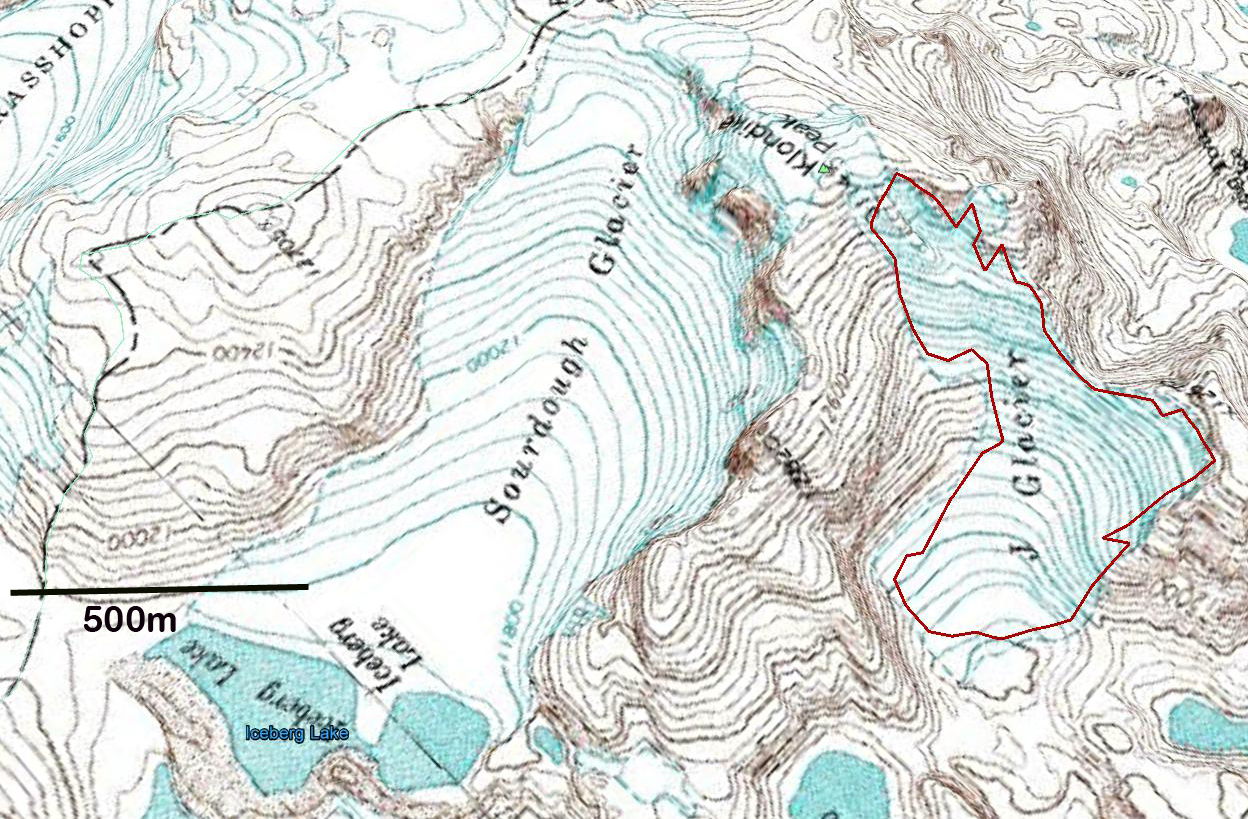
USGS Map of J glacier and Sourdough Glacier, from 1966 aerial photography.

J glacier 1994
1994 Google Earth image

j glacier 2006
2006 Google Earth Image

J glacier 2009
2009 Google Earth image

j glacier 7-2013
July 2013 Landsat Image

j glacier 8-2013
August 2013 Landsat image

Knife Point Glacier Retreat (Dissappearing), Wind River Range, Wyoming

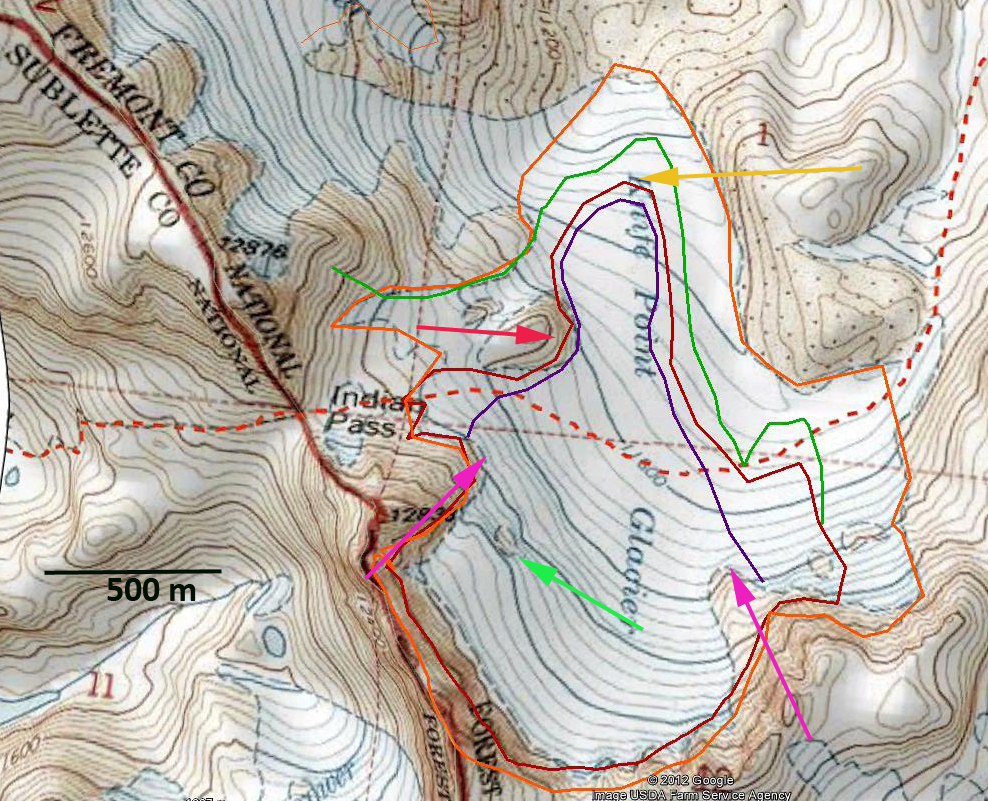
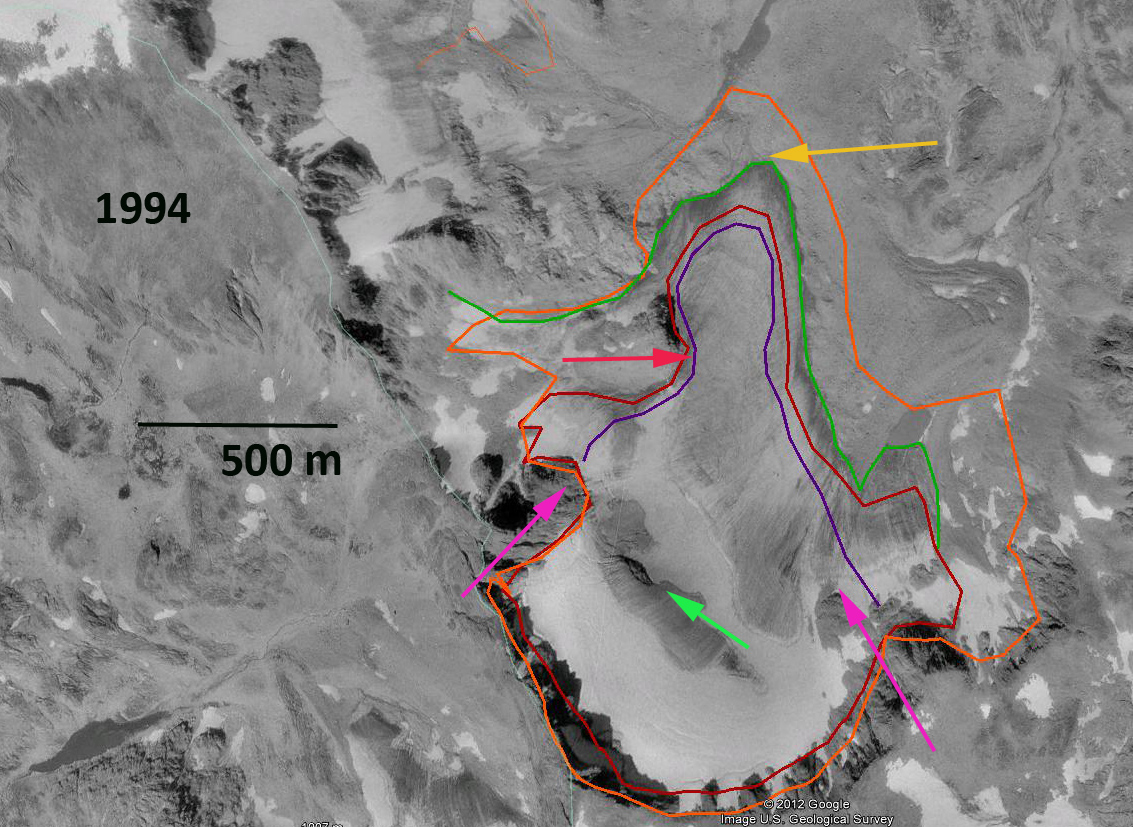
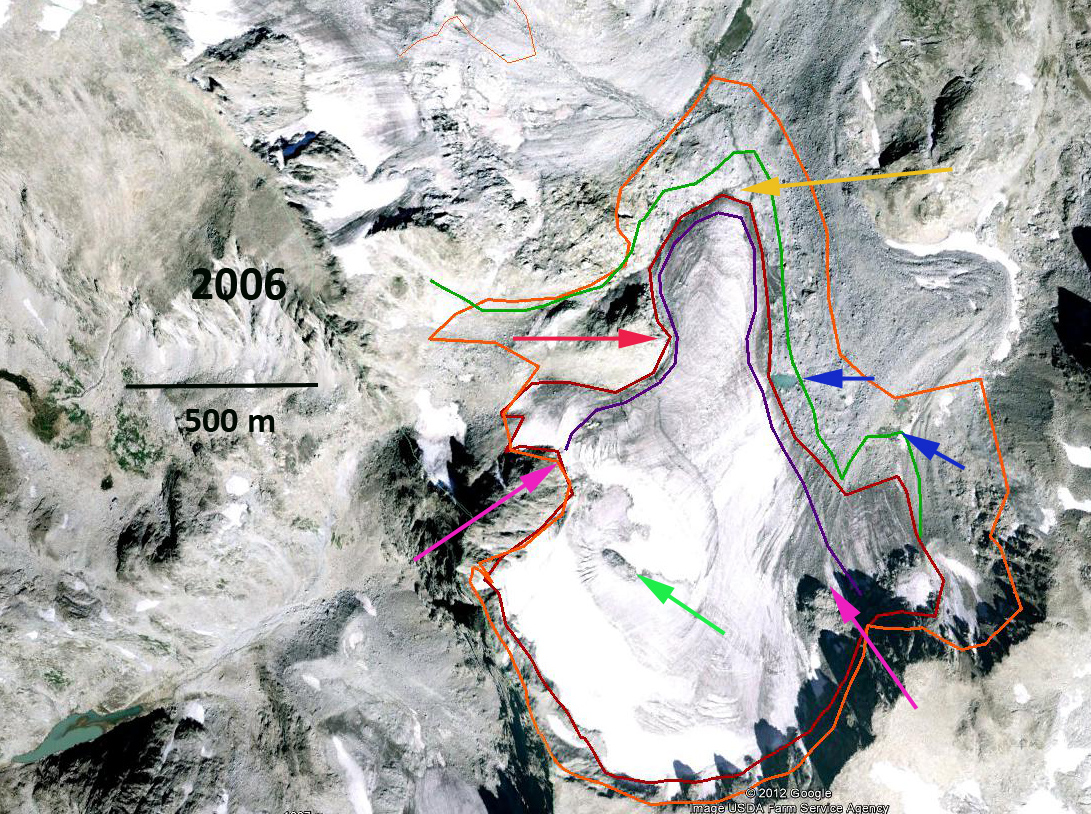
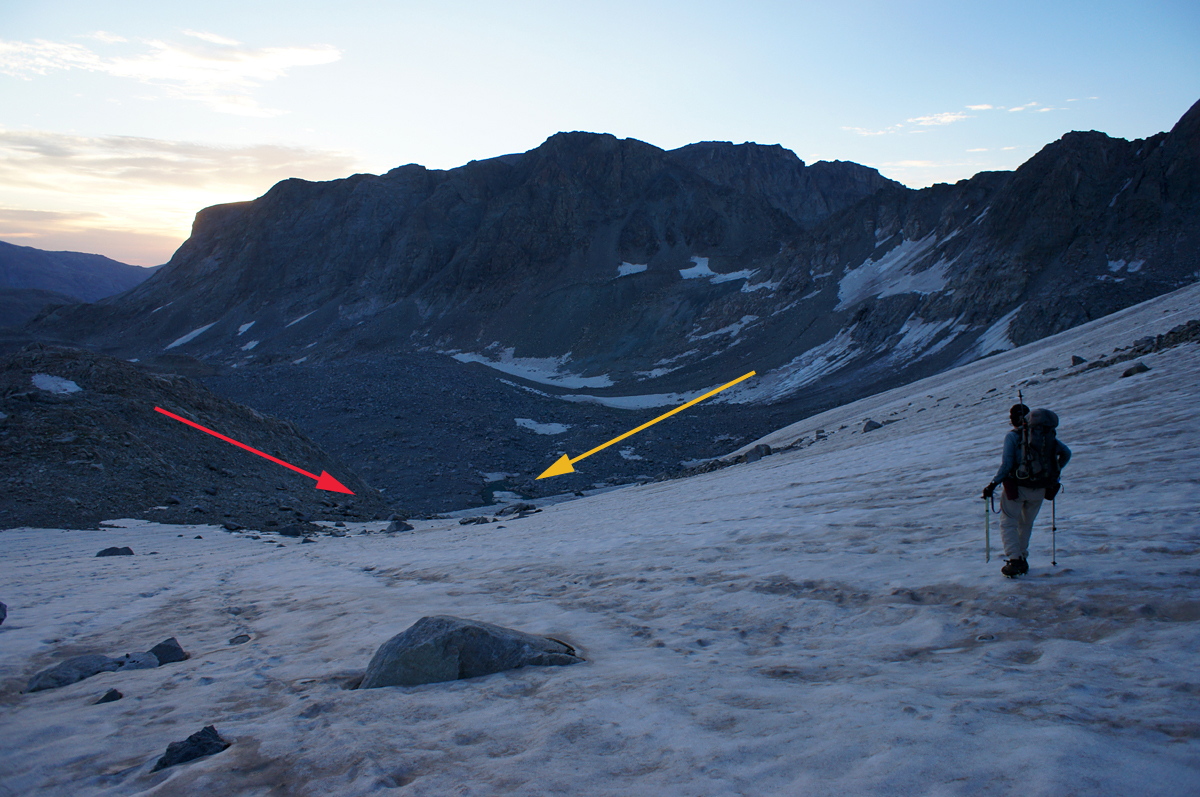
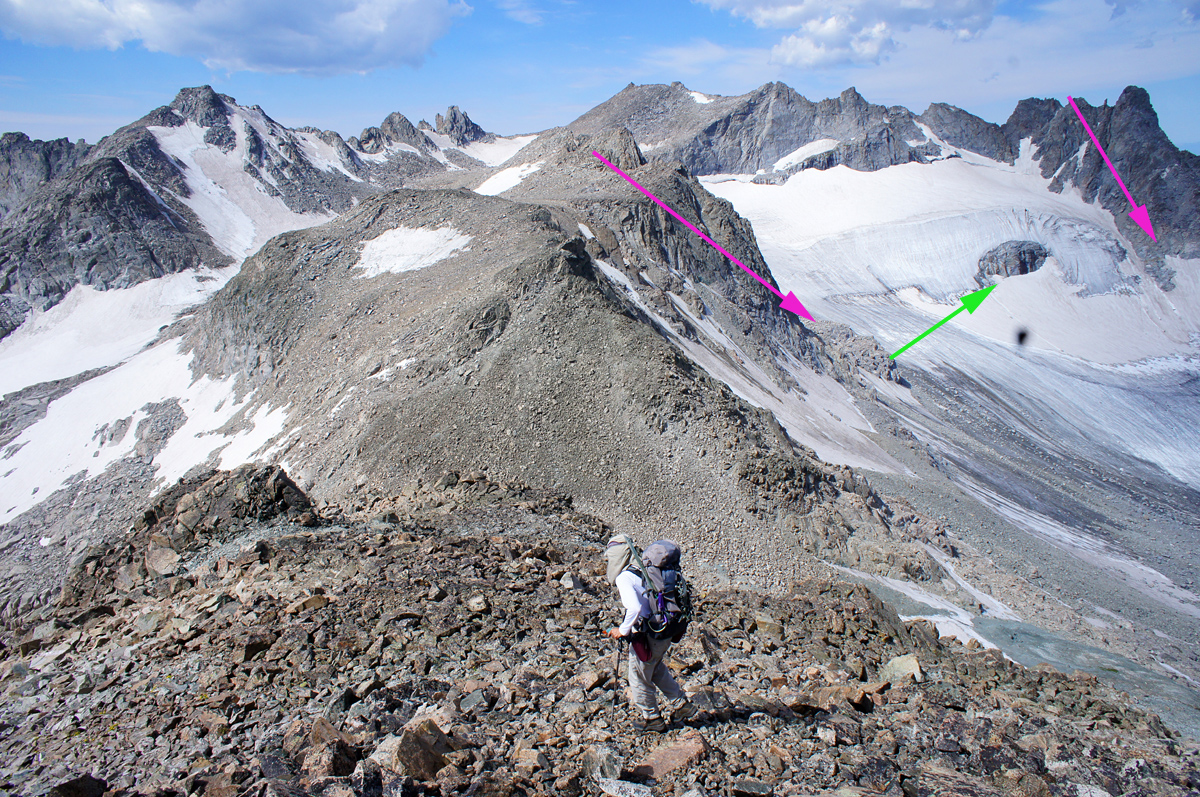
The Wind River Range is host to 40 glaciers that all have retreated significantly over the last 25 years and 45 years. Of the 15 glaciers observed in detail, nine will not survive current climate (Pelto, 2008). This is based on the lack of a persistent and consistent accumulation zone essential for glacier survival (Pelto, 2010). Thompson et al (2011) quantified the loss in area, of the 44 glaciers was estimated to be 45.9 km2 in 1966 and 28.6 km2 in 2006, a decrease of 38%. Here we examine Knife Point Glacier using Google Earth images from 1994, 2006, 2012 Landsat imagery and some 2012 photographs. The magnificent photographs are from Sarah T, who during the course of an impressive 2012 climbing season, climbed Knife Point. A comparison of its extent from 1966 USGS map, 1994 USGS aerial photography and 2006 satellite image in Google Earth indicate the retreat. The 1966 glacier boundary is outlined in orange, 1994 boundary in green, 2006 boundary in red and 2012 boundary in purple. The arrows in each image point to the same location. The yellow arrow to the 2006 terminus, green arrow to the upper glacier rock outcrop, magenta arrow to the prominent ridges now marking either side of the glacier, and the red arrow the bedrock knob that is now just above the terminus. In 1966 the glacier was connected to the Bull Lake Glacier to its northwest. By 1994 the glaciers were separated and a small lake had formed at the eastern terminus. By 2006 the eastern lake had largely filled in with sediment and another small lake had formed and the eastern side of the glacier had retreated more than the terminus. By 2012 the glacier shape had become confined to the central basin at the top with a narrowing glacier terminus tongue. The glacier area has declined from 1.5 km2 in 1966 to 0.8 km2 in 2012, a 46% loss in area. The main terminus has retreated 360 meters from 1966-2012. The width of the glacier on the east side has declined by 300 m. At the green arrow a small bedrock knob has expanded from 1966-2012. This is in the middle of the accumulation zone and indicates the lack of persistent and consistent snowcover. There is almost no snowcover left in the 9/27/2012 image of Knife Point Glacier.

The images from Sarah T, are from late July and despite there being two months left in the summer season the glacier has lost most of its snowcover. The lack of crevassing despite the slope indicates the thin inactive nature of the glacier.
The response of this glacier to climate parallels that of Lower Fremont Glacier, Minor Glacier and Sourdough Glacier.