
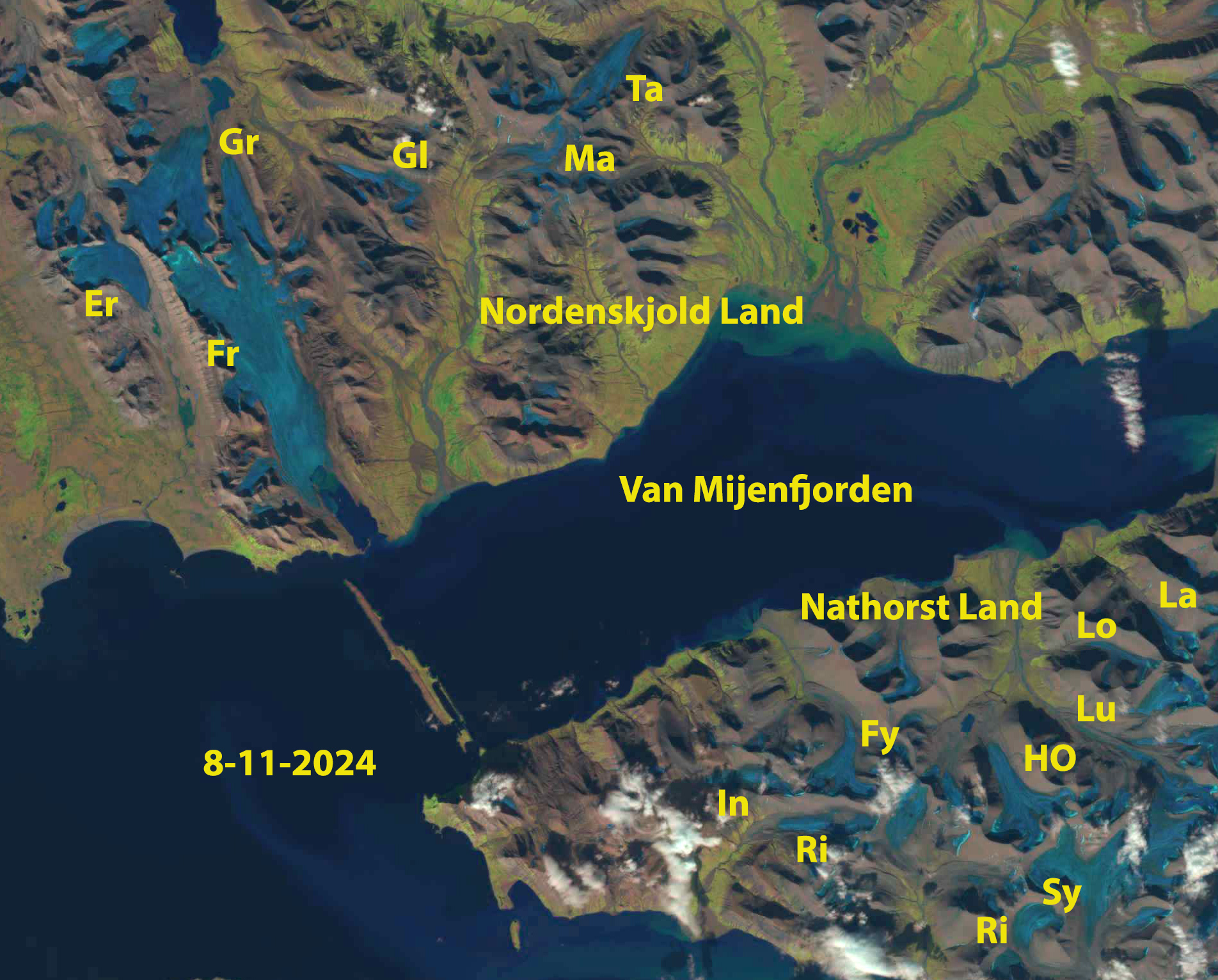
All the glaciers labelled in the Nathorst Land and Nordenskjold Land region of Svalbard are snow free on 8-11-2024 in this Landsat image. Er=Erdmannbreen, Fr=Fridtjovbreen, Gr=Gronfjorden, Ta=Taviebreen, Ma=Marstranderbreen, Gl=Gleditschfonna in Nordenskjold. HO=Hoegh Omdalbreen, Sn=Snokubreen, Fy=Frysjabreen, In=Instebreen, Ri=Richterbreen, Ri=Ringerbreen, La=Langlibreen, Lo=Loyndebreen, Lu=Lundbreen, Sy=Sysselmannbreen in Nathorst Land.
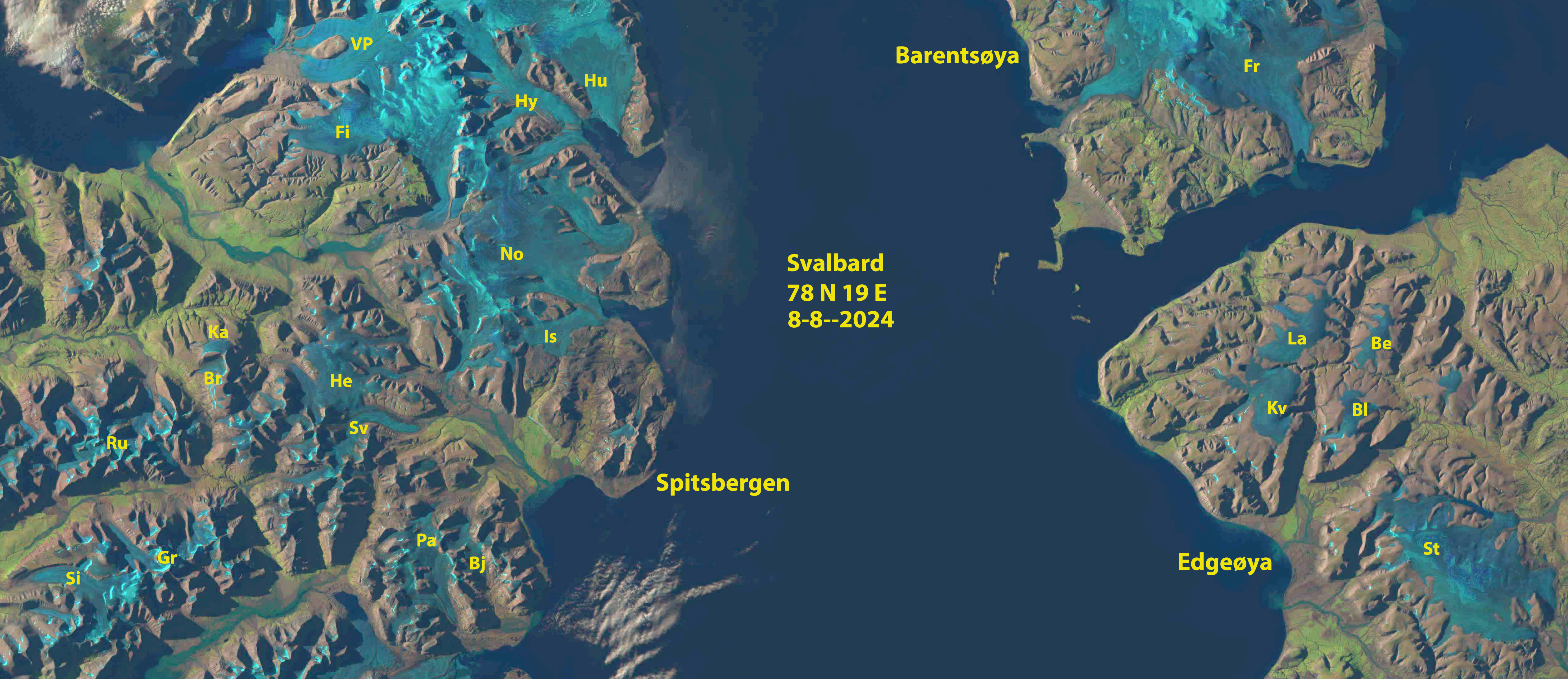
Warm temperatures across Svalbard in July and early August has resulted in many glaciers losing all of their snowcover. The result will be enhanced and significant thinning of these glaciers. This follows on 2022 which was the warmest summer on record in Svalbard and led to many snow free glaciers (Pelto, 2022). This record was exceeded in summer 2023 (Copernicus Climate Change Service, 2024). Here we look at Landsat images and Sentinel images across several islands from late July and early August illustrating the widespread nature of the extensive glacier snow cover loss.
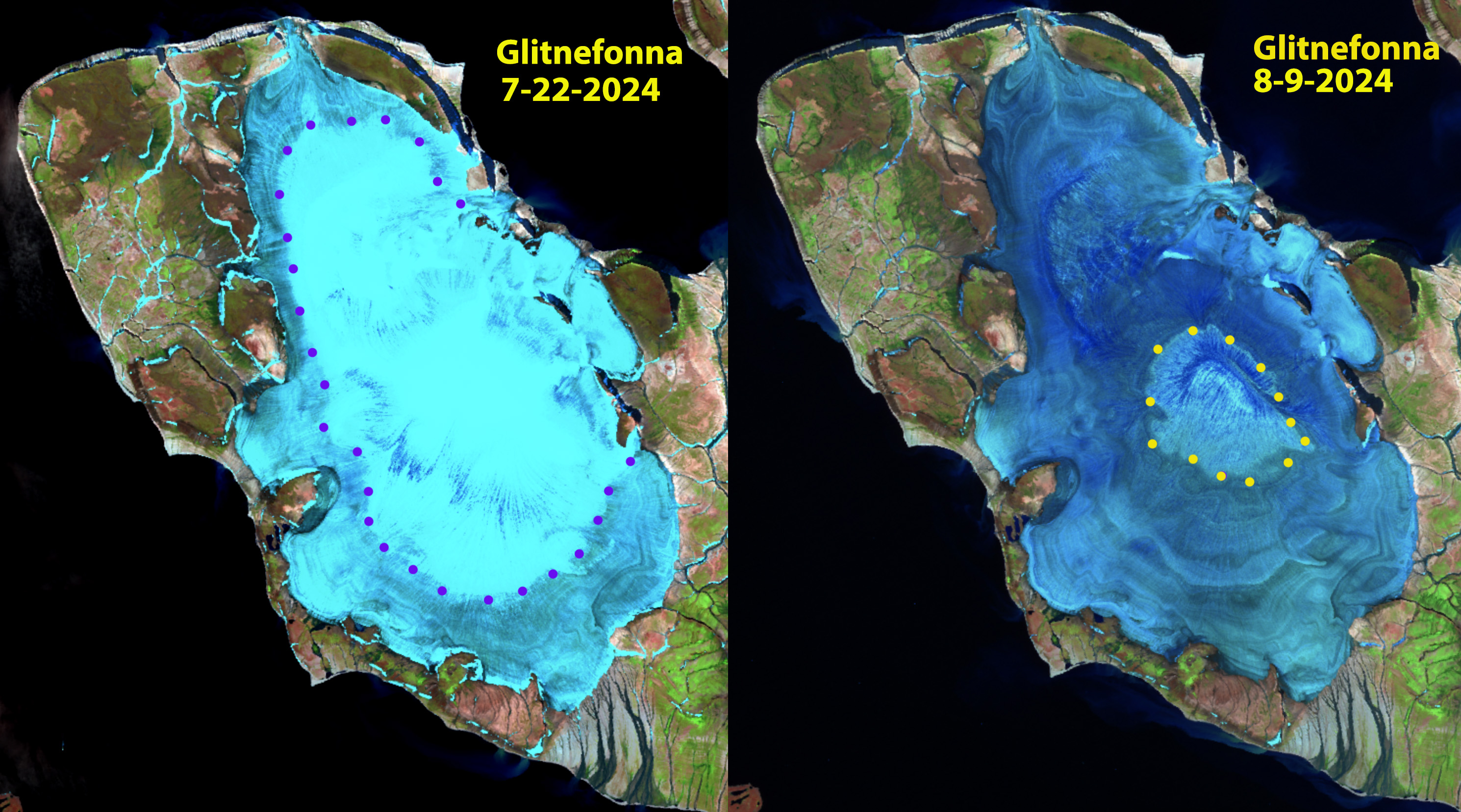
For ice caps such as Glitnefonna, Langjokulen (La), Kvitisen (Kv), Bergfonna (Be), Blaisen (Bl) and Storskavlen (St), because of their low top elevation and relatively flat slopes their ability to survive is dependent on much of meltwater generated on the higher plateau areas being refreezing within the firn instead of escaping the glacier (Noel et al 2020). In 2020 the snowcover was lost and the firn thickness diminished. In August 2022 the snowcover again was lost and there was little evident firn that could lead to refreezing of meltwater. In August 2024 snowcover loss has again occurred.
For the glaciers of Spitsbergen to maintain .equilibrium requires 50% of the glacier needs to be snowcovered at the end of summer. By early August with a month left of summer melt, the area is below 10% on every glacier noted above. How much more melt will occur. The net result will be extensive mass loss once again (NASA EO, 2024).

 From a Glaciers Perspective
Pingback: Svalbard’s Snow Free Glaciers 2024 – From a Glaciers Perspective