Smith Glacier Thining, Rifting, Retreat, Antarctica

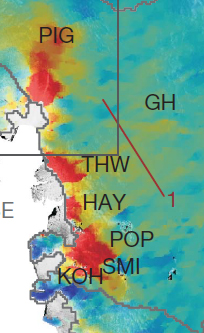
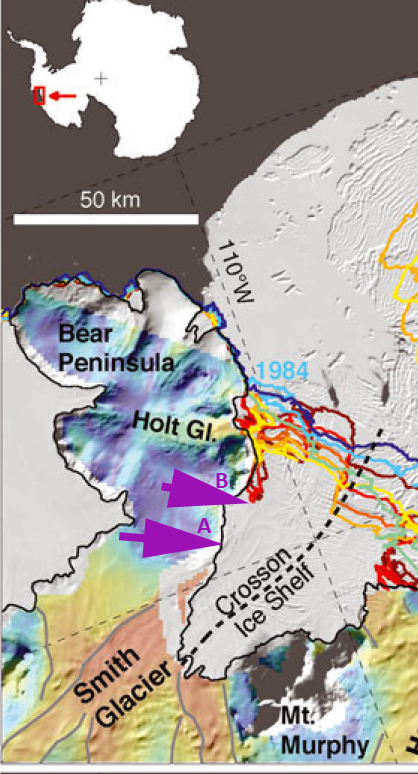
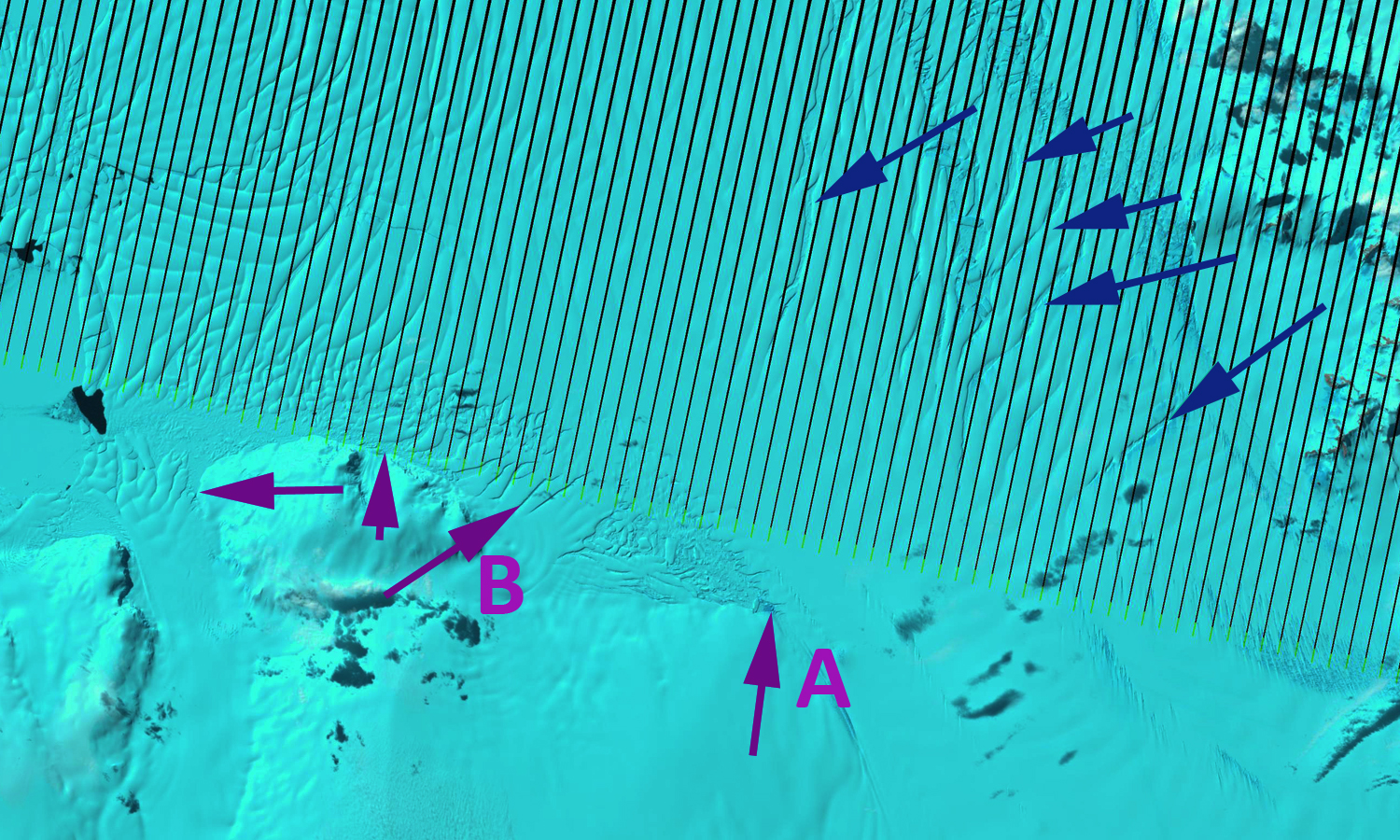
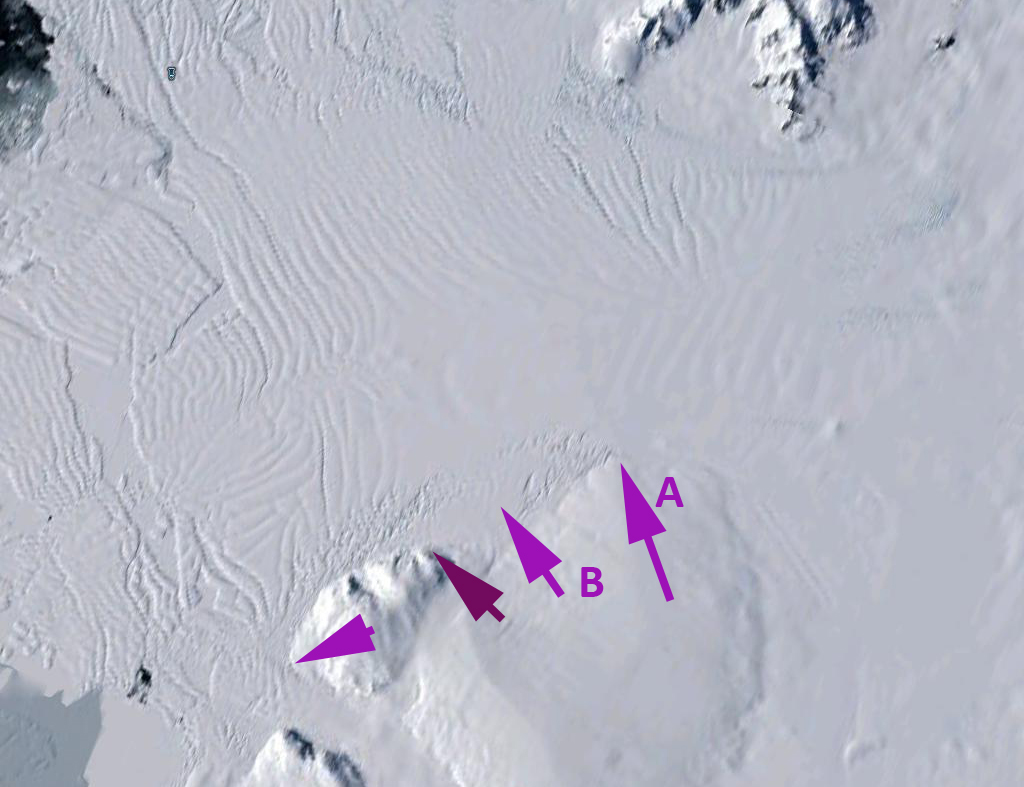
Smith Glacier, West Antarctica is two glaciers to the west of Pine Island Glacier flowing into the Crosson Ice Shelf in the Amundsen Sea. Pine Island Glacier (PIG) has been the focus of more extensive study because of its size and its identification as the weak underbelly of the West Antarctic Ice Sheet. Two recent papers have focused on changes on glaciers in the region. Pritchard et al (2009) identified thinning over almost all of Smith Glacier, thinning near the grounding line and on the floating ice shelf has been 9 m/year from 2003-2007, somewhat more than PIG, top image. Smith Glaciers floating section the Crosson ice Shelf northwestern margin is buttressed by the Bear Peninsula. Since 1984 MacGregor et al, (2012) identified increased rifting and detachment from the peninsula. The peninsula has been a pinning point, detachment can lead to destabilization of the ice shelf. They further identified a 24 km retreat of the terminus since 1990 and a reduced area of attachment and increased rifting near Mount Murphy. The terminus position change is seen in the second image below. The light blue color is 1984 and the red colors are the 2007 and 2011 terminus position, In this post we look at the detachment from the Bear Peninsula. Like on PIG Smith Glacier has accelerated by 500 m/year, nearly doubling its velocity. The loss of buttressing and reduced size of the ice shelf reduces back forces that would allow acceleration. Point A marks the location where attachment is in 2011, Point B marks an area of attachment between the Crosson ice Shelf and the Bear Peninsula in 1999 (top image below) and 2002 (second image). By 2011 (bottom two images) this area around B is not attached and also has expanded rifting.
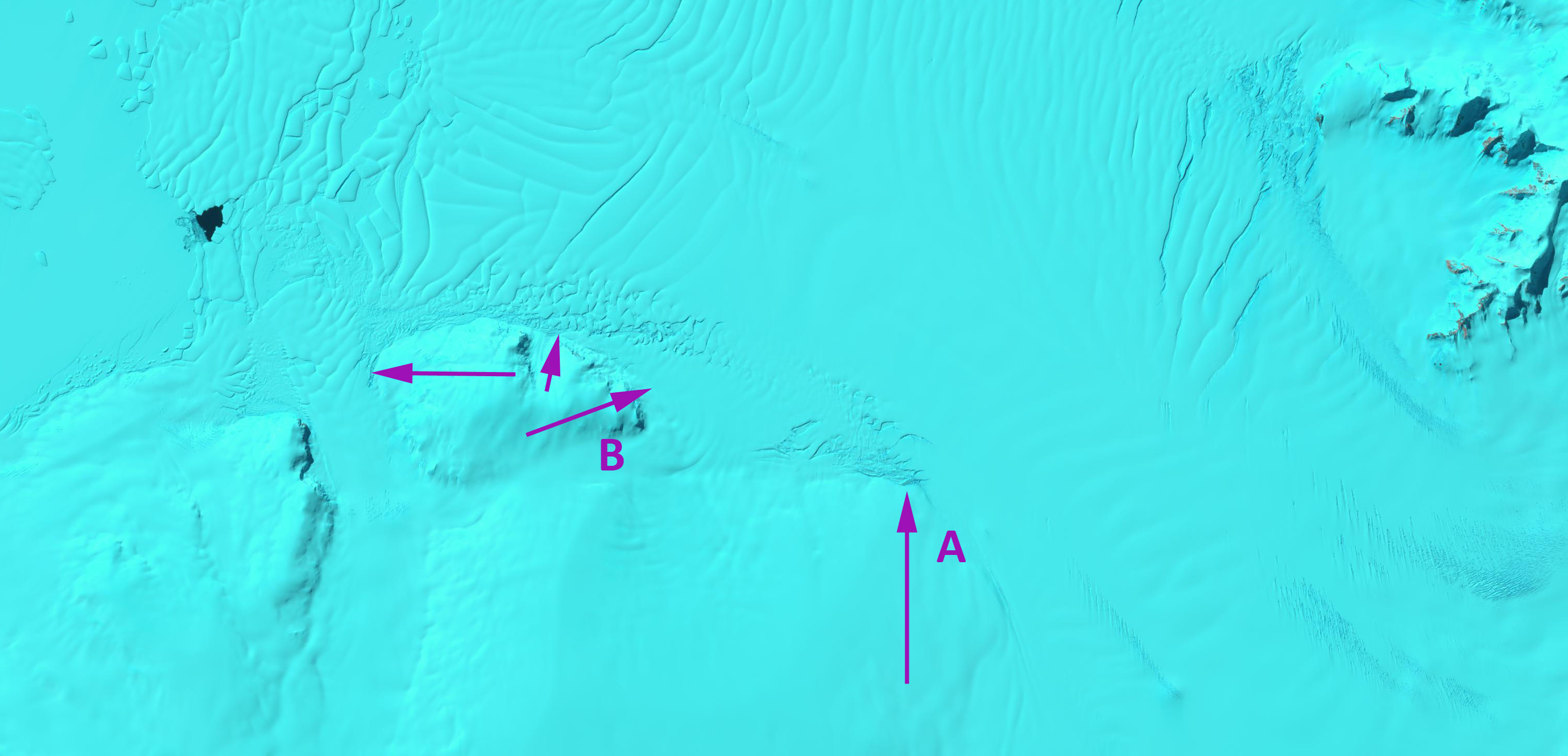
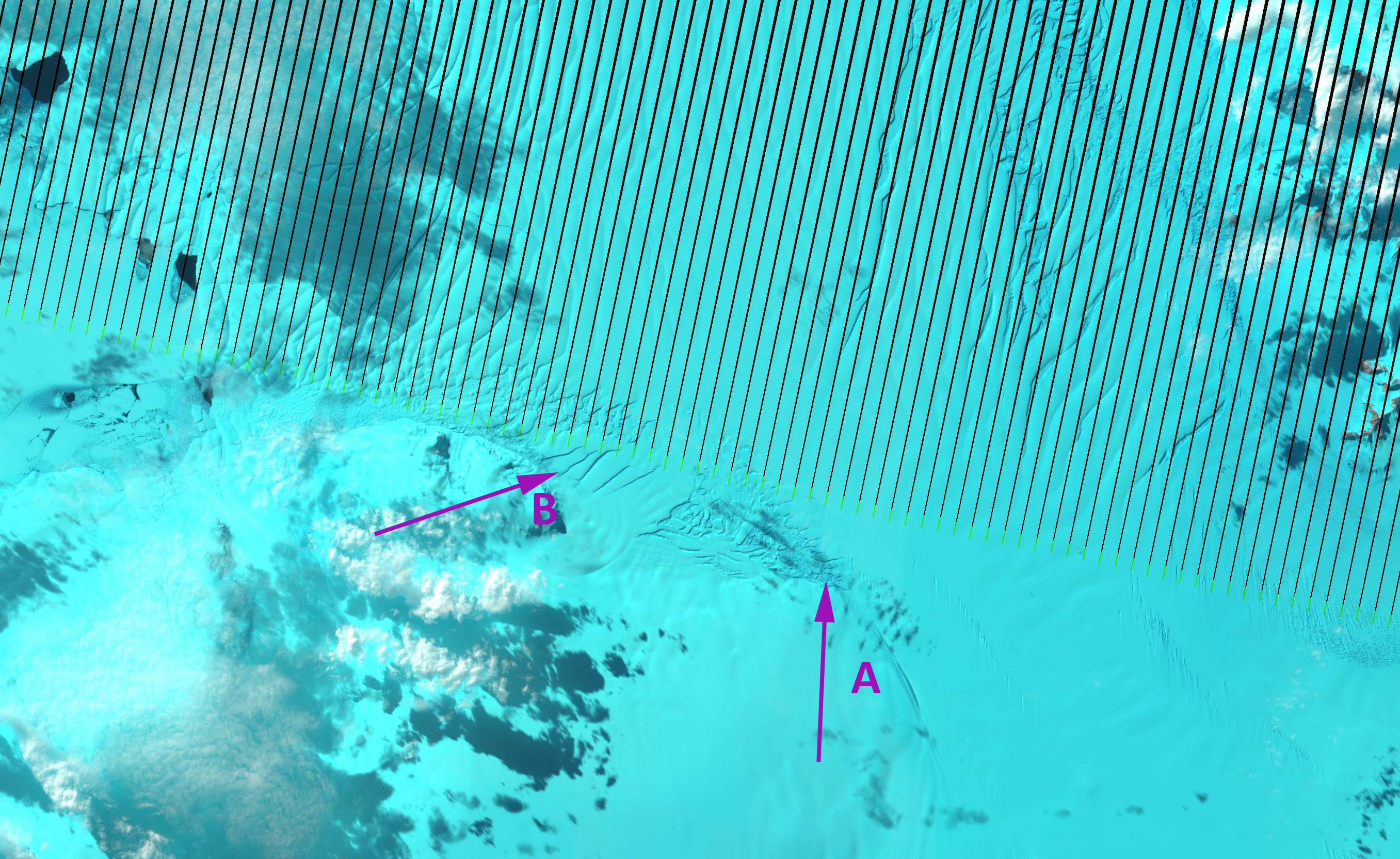
The entire Crosson Ice Shelf is threatened by rifting near Mount Murphy (blue arrows above and green arrows below) that were noted by MacGregror et al (2012). The rifting has expanded in number and extent from 2011 above to 1999 below. The entire ice shelf with acceleration shows considerable rifting, which combined with thinning has been a recipe for destabilization and breakup of ice shelves on the Antarctic Peninsula, such as at Wilkins Glacier, Fleming Glacier and Prospect Glacier. The thinning has been noted as widespread around most of Anarctic Ice Shelves in a paper this week from Pritchard et al (2012). This paper from an international team from British Antarctic Survey, Utrecht University, Scripps Institution of Oceanography and Earth & Space Research has identified the losses are principally the result of increased basal melting from intrusion at depth of warm water. In the Smith Glacier area there is no significant surface melting, so basal melting must be the source.

Romanzof Glacier Retreat. Brooks Range, Alaska

In the Romanzof Mts. Brooks Range, Alaska McCall Glacier and Okpilak Glacier have been the main focus of research. These glaciers are much smaller than glaciers in southern Alaska, as the region has much more limited amounts of snowfall. The University of Alaska-Fairbanks have focused on McCall Glacier average rate of thinning increased between 1956–93 and 1993–2002, averaging 0.4 m/year for the entire period. The primary region of thinning was the lower third of the glacier below 1700 meters (Nolan et al, 2005). The glacier had retreated 800 meters from the Little Ice Age moraine by 2000 (Nolan et al, 2005). The Equilibrium Line Altitude has risen from 2050 in the 1970’s to 2250 m recently, leading to continued and more rapid losses in ice volume (Delcourt et al, 2009). Okpilak Glacier had retreated 2 km from its Little Ice Age moraine by 2006.

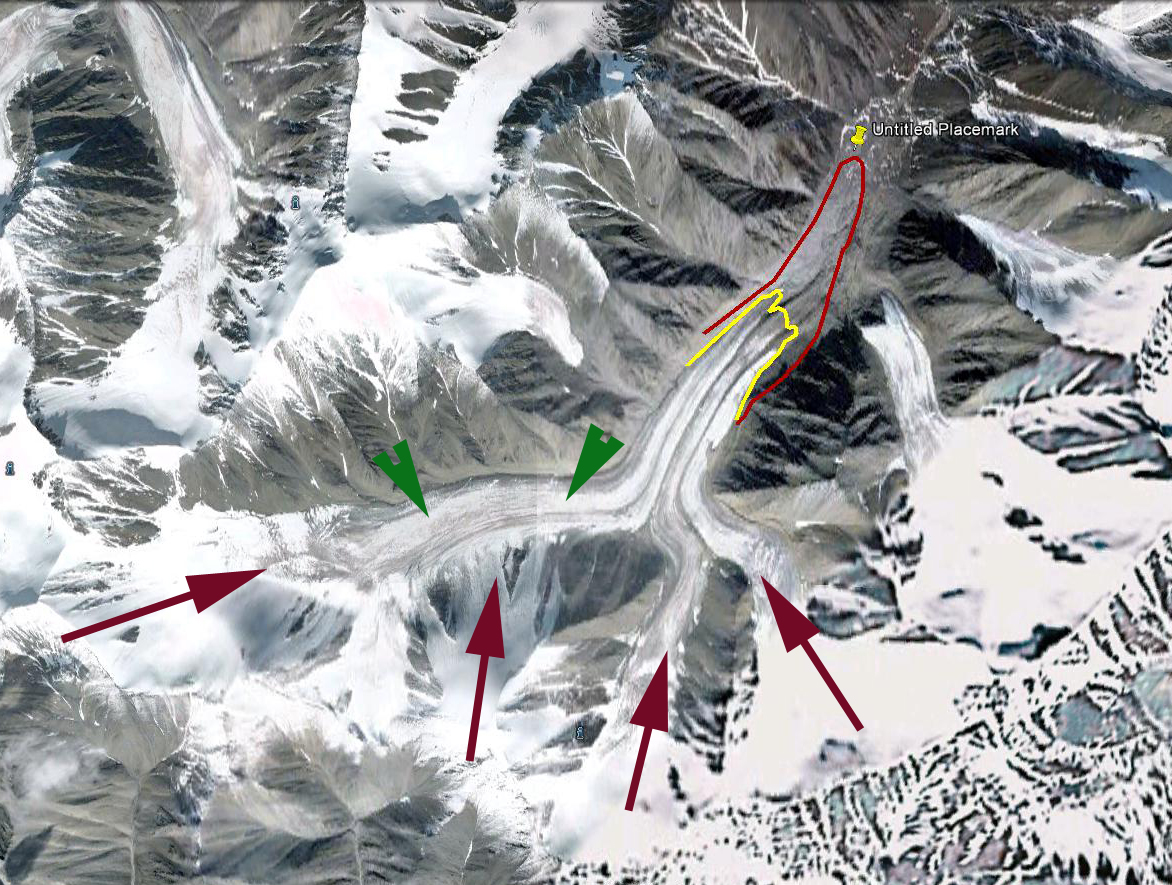
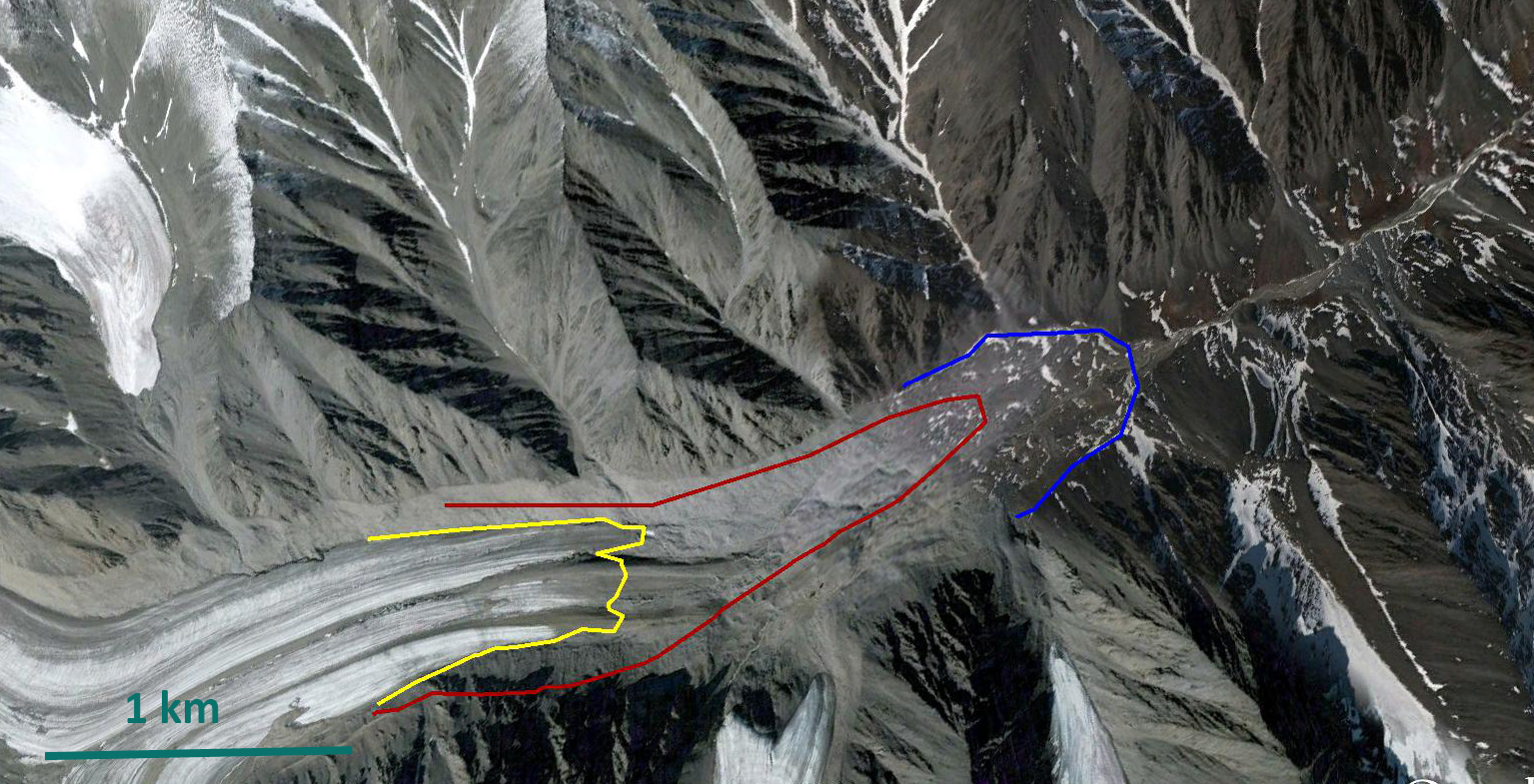
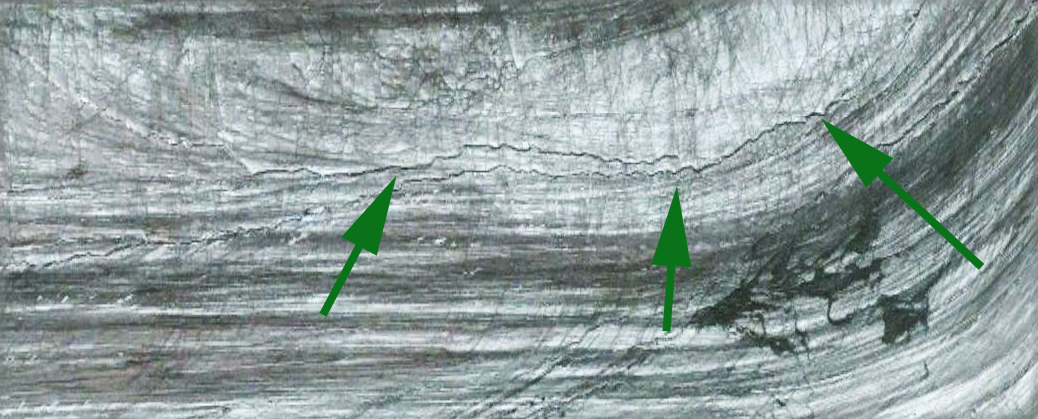
In this post we examine the Romanzof Glacier. The first image indicates the various tributaries feeding into the main valley glacier, burgundy arrows, the reach of well developed stream channels, green arrows. The red line is the map terminus and the yellow line the 2009 terminus. The map is the USGS topographic map from 1956 aerial photographs This glacier has retreated 1300 meters from its 1956 mapped position and 1900 meters from its Little Ice Age moraine, blue line in first image below. The glacier remains 5 km long, having lost 25% of its length in the last 50 years. The rate of ice loss like on McCall Glacier has accelerated. A view of the middle of the ablation zone indicates some well developed stream channels, green arrows. Channels like this take multiple years to form and indicate limited glacier velocity. Closer to the terminus the stream channels are even larger, green arrows. The streams have matured developing meanders, this tends to occur only where the surface is stagnant. This indicates the lower 1200-1500 meters of the glacier is stagnant and melting away quickly. In addition there are some ridges of ice cored moraine indicating that the bare ice is melting faster than the ice under the moraine debris, violet arrows. The bluish arrows indicate where the subglacial streams have emerged from beneath the ice indicating the terminus.

Nizkiy and Glazova Glacier Retreat Novaya Zemlya

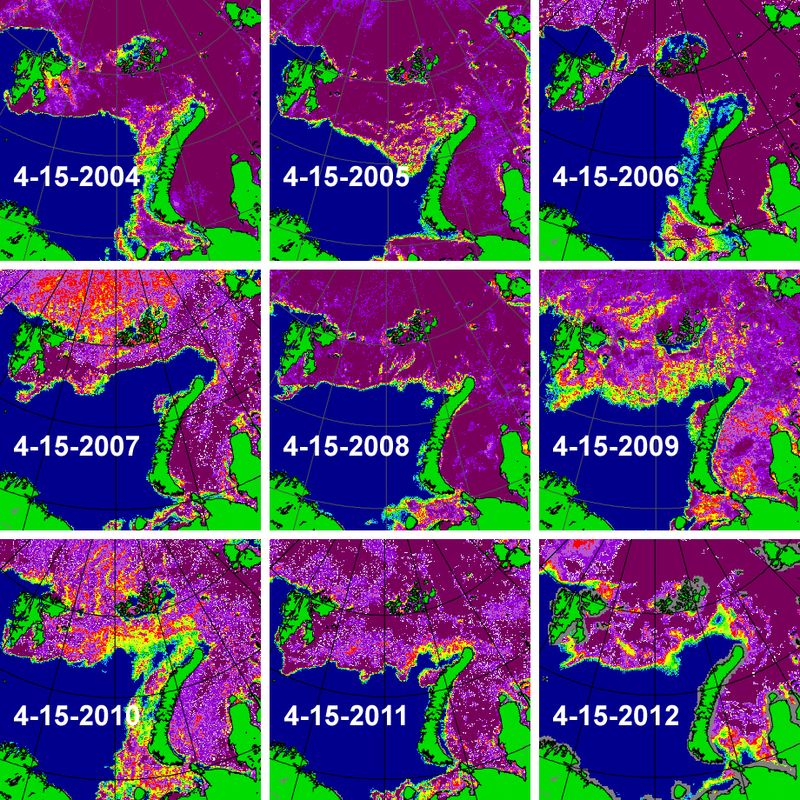
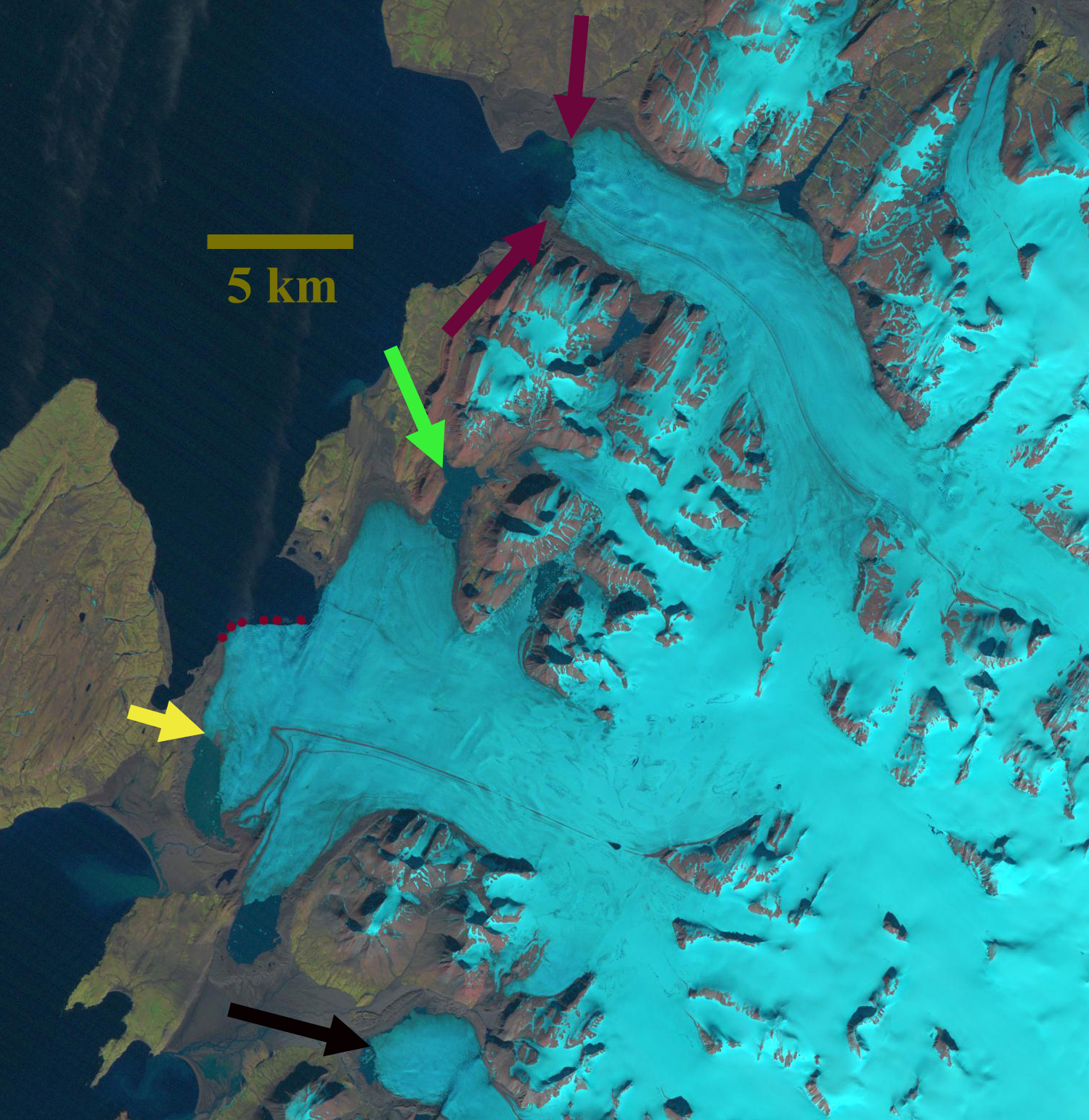
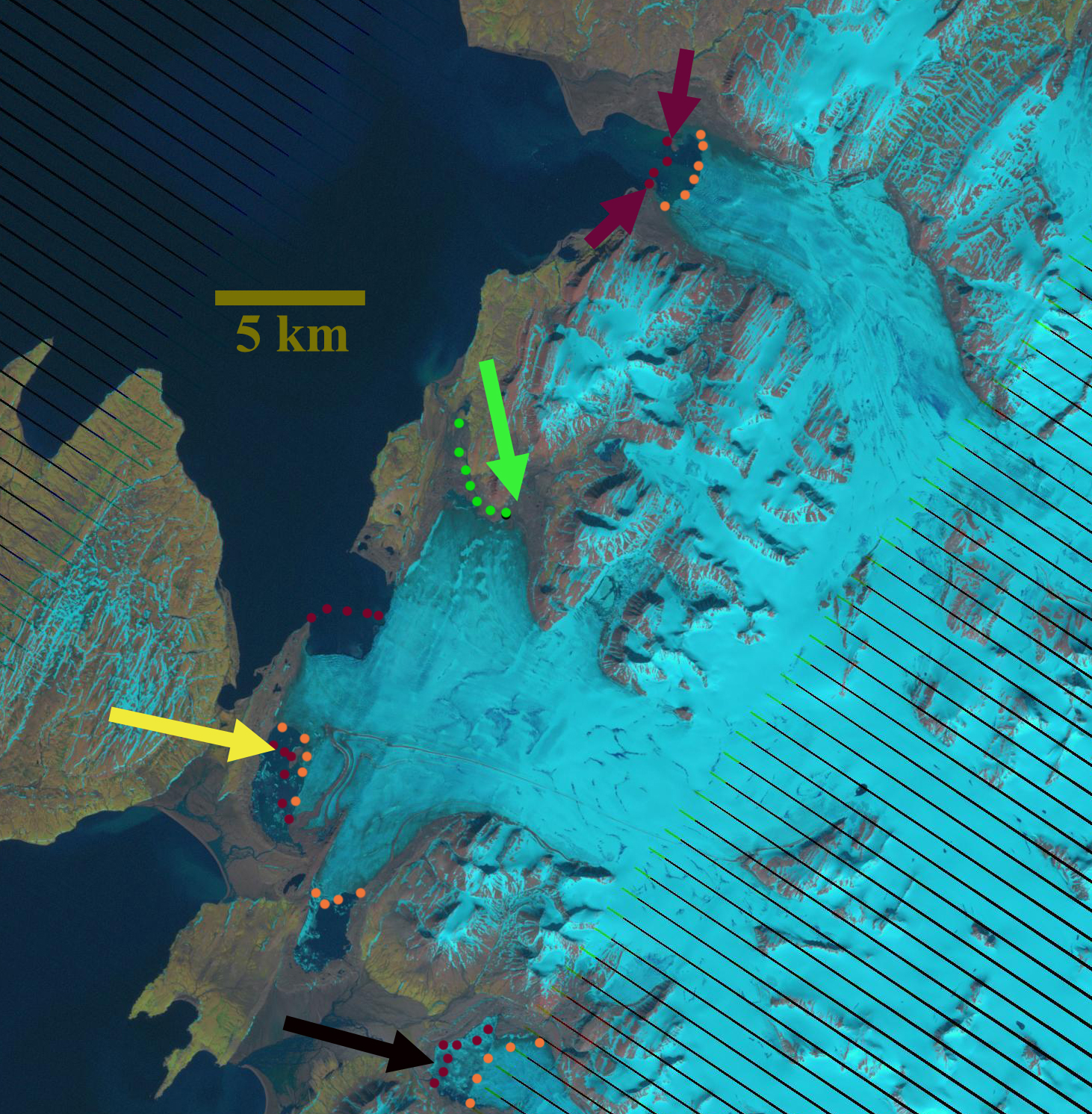
The glaciers of northern Novaya Zemlya, Russia are truly generally out of sight out of mine. There remoteness and lack of importance as a water resource being the key reasons. A recent study by LEGOS (Laboratoire D’Eetudes en Geophysicque et Oceanographie Spatiales) in France highlights the changes of these glaciers from 1990-2000. It seems particularly important to pay attention to these glaciers due to the recent changes in sea ice cover that have left a much longer duration of open water around the island particularly to the west in the Barents Sea. This has been beautifully illustrated in a post at Arctic Sea Ice Blog this week. . Here we focus on two glaciers, Nitzky and Glasova on the west coast of the island that LEGOS identified as losing 1.2 and 1.4 square kilometers in area from 1990-2000 LEGOS (Alexei Kouarev, Frédérique Rémy and Benoit Legresy) a. Here we compare a Landsat image from 1988 and 2009. The northern glacier of the two is Glazova, the burgundy arrows and dots indicate the terminus in 1988. In the 2009 image the terminus is orange dots. Glazova Glacier has retreated 1500 meters. The Nizkiy Glacier has several termini in lakes and one in the Barents Sea. Along the northern margin inland of the terminus in 1988 the green arrow indicates a proglacial lake, trapped by the glacier. In 2009 the lake has drained, green arrow and the green dots indicate the path by which the lake drained. Marginal retreat of 500 meters opened up a passage for drainage. The main terminus juts north out beyond the end of a peninsula, by 2009 the terminus has retreated 1000-1500 meters enough to leave this terminus exposed, note the burgundy dots on both images. The middle terminus ends in a proglacial lake and in 1988 the terminus largely envelops an island, yellow arrow. By 2009 the glacier has exposed almost all of this island a 1000 meter retreat. The southernmost terminus shown is indicated by a black arrow. In 1988 the piedmont lobe of this glacier almost completely fills the lake basin. In 2009 the lake basin is half exposed by glacier retreat, this is a 1500 meter retreat. The very map of the region is changing. Below is the 1988 and then 2009 image. After we will zoom in and further discuss the changes on Nizkiy Glacier. .
The yellow arrow indicates the new island forming in the proglacial lake, burgundy arrow indicates the peninsula that the main marine terminus extended beyond in 1988 and the green arrow indicates the edge of the valley through which the formerly trapped lake could drain. It will likely be quite soon when the proglacial lake with the island joins with the Barents Sea. This region has quite limited Landsat imagery making it hard to determine how much retreat occurred in 2011. The last image is a MODIS image from 8/31/2011, where the burgundy arrow indicates the peninsula at the end of Nizkiy Glacier. This retreat fits the pattern of retreat and changes in geography from retreat further NE in Novaya Zemlya at Roze and Sredniy Glacier and elsewhere on the northwest coast, Krivosheina Glacier.

Alemania Glacier Retreat, Lago Martinic expansion-contraction, Chile

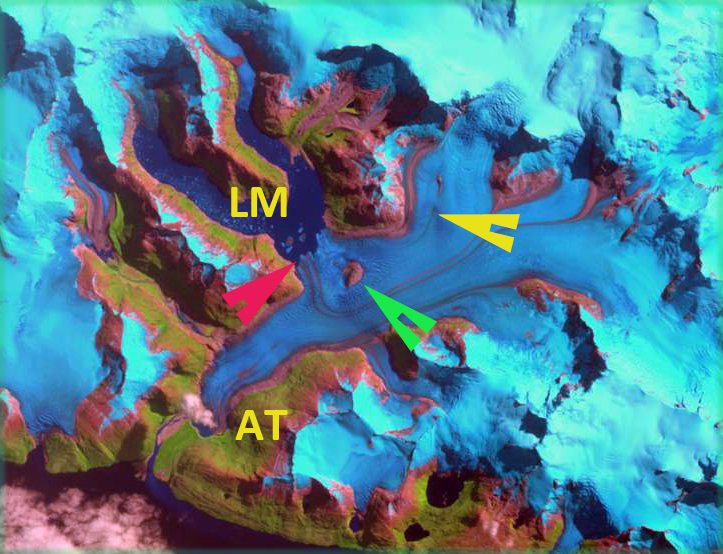
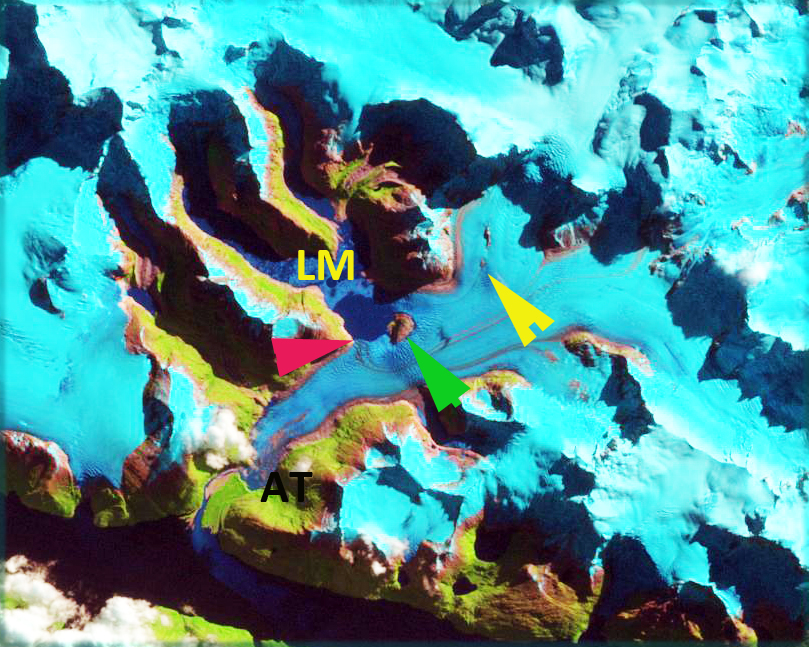
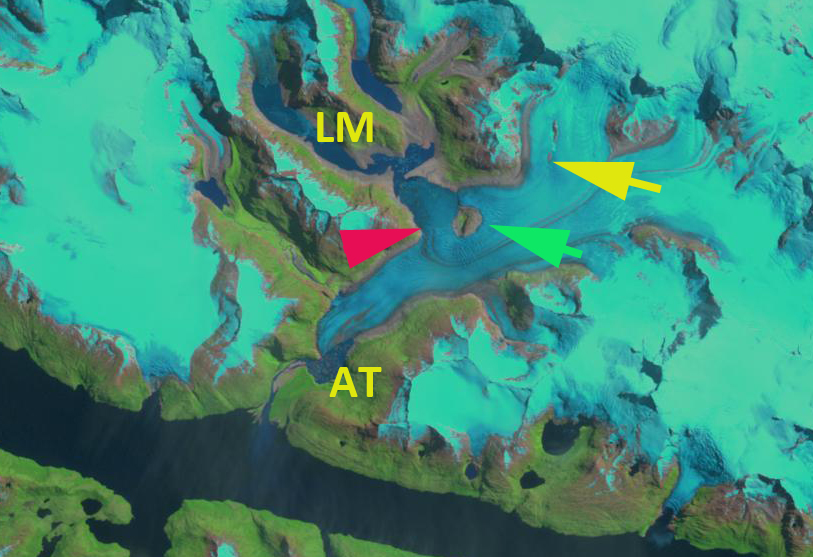
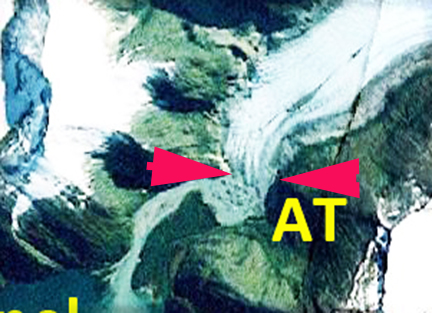
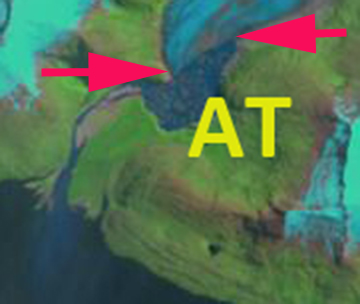
The Cordillera Darwin in Tierra Del Fuego Chile is a remote area. GLIMS (Glacier Land Ice Monitoring from Space) which has an inventory of glaciers showing at least size and boundaries, has nothing for this region in 2012. The USGS in their publication on South American glaciers just notes the lack of satellite imagery for assessing these remote glaciers. Chile is currently undertaking an inventory of these glaciers. The Alemania Glacier (Roncagli) is the focus of this post, the glacier can be seen from the Beagle Channel. The focus is not main terminus, but the terminus that ends in Lago Martinic (LM). In Google Earth imagery imagery this lake is trapped by the Alemania Glacier. There are two smaller glacier draining into the west end of the lake and Alemania’s secondary terminus ends in the lake. The red arrow points to the terminus, the green arrow to a nunatak near the Lago Martinic terminus and the yellow arrow to a developing nunatak upglacier, AT indicates the main terminus of the Alemania Glacier. The next three images are all from Landsat and indicate some spectacular changes from 2000 top image, 2008 middle image and 2011 bottom image. From 2000 to 2008 the Lago Martinic terminus of the glacier retreat 1300 meters, reaching the nunatak by 2008, this represents a significant expansion of the lake. In 2011 the terminus has retreated little but the lake has drained to an extent exposing the pink areas of the former lake bottom. In the future this maybe a lake that periodically fills in the Austral Spring and drains later in the Austral summer. The main terminus of the Alemania Glacier also exhibits a notably developing lake at the terminus compared to 2000, more on this below. The upglacier nunatak, yellow arrow, has also become more exposed indicating glacier thinning. A closeup of the main terminus of the Alemania indicates a 500 meter retreat of the east side of the glacier from the 2000 GE imagery to the 2011 Landsat imagery. The lake at the terminus has become significant, this should speed retreat in the near future. Though further south than the large Patagonia Icefields the glacier changes mirror those of the main icefields, Colonia, Tyndall, Gualas that are being intensively investigated by the Chilean Laboratorio de Glaciologia

Cook Ice Cap Northern Outlet (Aggasiz Glacier) Retreat, new lake born Kerguelen Island

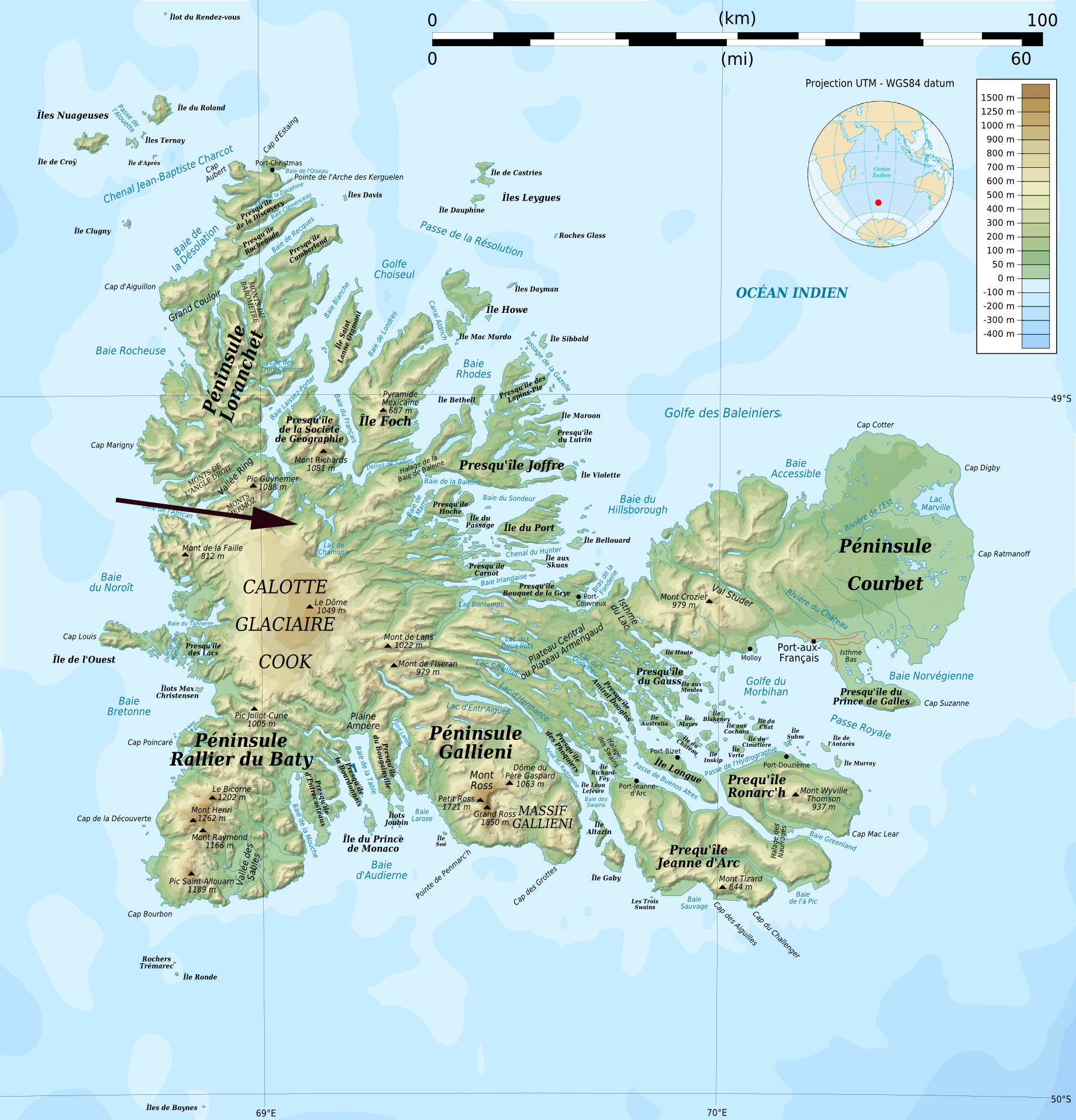
Kerguelen Island sits alone at the edge of the furious fifties in the southern Indian Ocean. The island features numerous glaciers, the largest being the Cook Ice Cap at 400 square kilometers. A comparison of aerial images from 1963 and 2001 by Berthier et al (2009) indicated the ice cap had lost 21 % of its area in the 38 year period. Le Bris et al (2008) in a related part of the aforementioned study noted that the retreat accelerated after 1970 and again after 2003, with thinning of 5 meters/year on Ampere Glacier and retreat of 75 m/year on Explorer Glacier on the east side of the ice cap. In this post we focus on the largest outlet glacier flowing north from the ice cap, Agassiz Glacier. A comparison of Google Earth (top), 2001 (middle) and 2011 (bottom) Landsat images indicate a significant retreat and formation of a new lake that is not evident in maps or Google Earth imagery. The red arrows point to the glacier tongue and in the 2011 image the black arrow indicates the new lake. Agassiz Glacier has lost its field hockey stick shaped hook and has retreated 2 km in just 10 years, the rate of 200 m/year is quite high even by Cook Ice Cap standards. The glacier is calving into the lake which can accelerate retreat. The terminus does not appear to be at a stable point, with a wide calving front in comparatively deep water. The retreat of this glacier fits the retreat of other glaciers on islands in the Southern Ocean, Arago Glacier, Stephenson Glacier, Neumayer and Ross Hindle

Careser Glacier Breaking Up, Italy

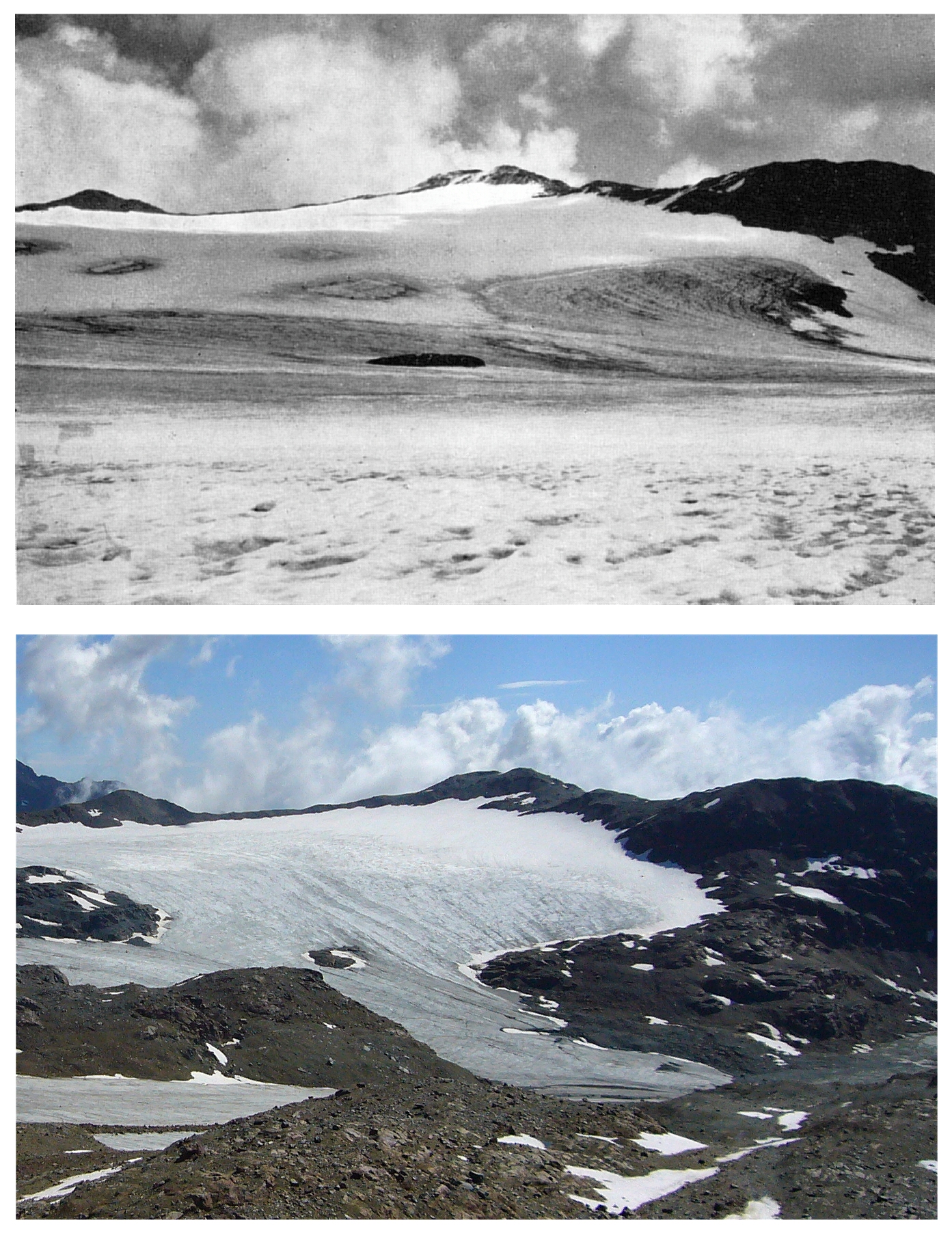
The last year with a significant positive balance on the glacier was 1977, in the majority of years since 1980 the glacier has had no accumulation zone, which equates to an accumulation area ratio of zero (Carturan and Seppi, 2007). This translates to a glacier with no income of snow, but still plenty of losses via melting, which means the glacier cannot survive, and of course will drive the retreat (Pelto, 2010). Luca Carturan, University of Padova, provides both a chart of mass balance and a comparison of the glacier from 1967 to 2009, red bars indicate negative mass balance. The glacier has the longest mass balance record of any Italian glacier and the data is submitted annually to the World Glacier Monitoring Service. Carturan et al (2012) examine the mass balance distribution in more detail, in their Figure 2 the glacier is separated from its most western appendage (W), but the center part (C) is still connected to the main section (M) of the glacier, red dots are the around glacier watershed. . The images below are a series of Landsat images from 1999, 2003, 2009 and 2011. The red arrows indicate two narrow ice connections that were intact between the west-center-main part of glacier in 1999 and 2003. By 2009 the west section is not connected, and by 2011 the center connection is also gone. The deeper blue color of the glacier indicates a lack of snowcover, snowcover can be seen on the glaciers north of the ridge above the Careser Glacier. Careser Glacier fits the pattern of thinning, lack of accumulation zone and separation as seen at Presena Glacier, Dosde Glacier and Cavagnoli Glacier

Valdez Glacier Retreat, Alaska

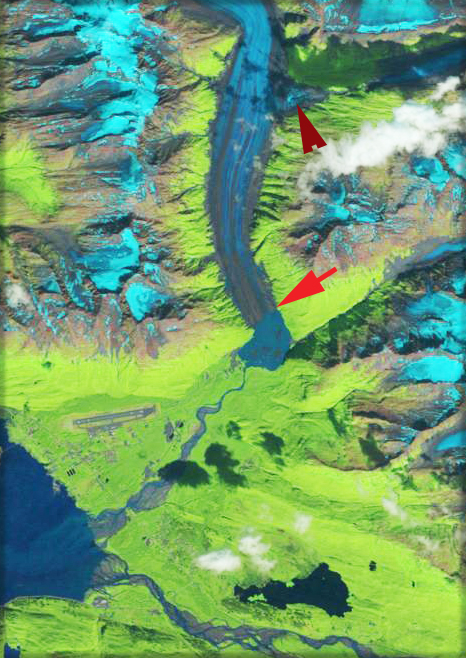
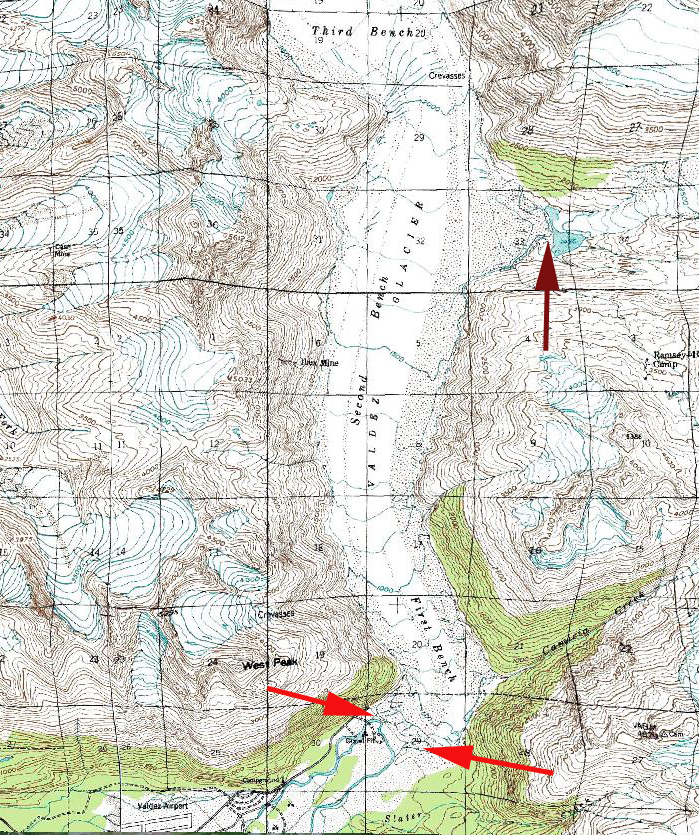
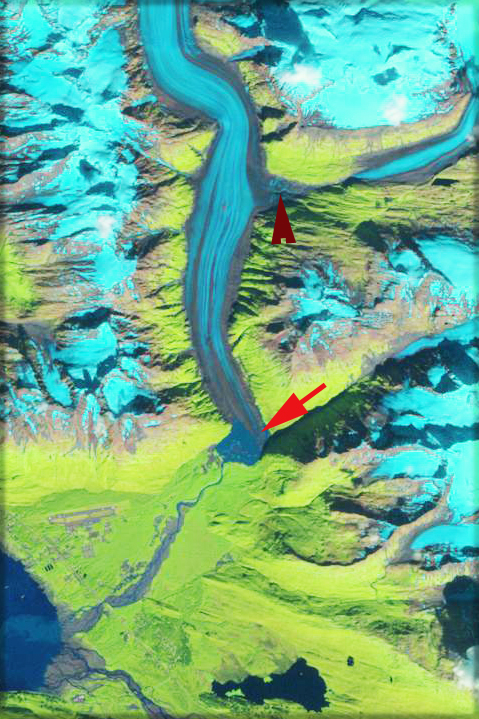
In the early 20th century Valdez Glacier descended onto a glacial outwash plain that the city of Valdez, Alaska is built upon. Today the glacier has retreated into a mountain valley and is calving into an expanding lake. David Arnold in the Double Exposure project documenting climate change photographically has a pair of images from 1938 and 2007 of the glacier. This post examines Landsat and Ikonos images from 1987, 2001, 2005, 2007 and 2011 to document this retreat. The 1948 map of the glacier indicates no lake at the terminus of the glacier, and the braided glacier emanating from the end of the glacier still building the outwash plain, note airport just sw of terminus on plain. The terminus on each image is indicated in light red. Seven kilometers upglacier of the terminus is a secondary terminus in a side valley. In the 1948 map this terminus also joins the glacier descending the same valley, dark red arrow. With time both glacier termini retreat. By 1987 Landsat imagery indicates the development of a lake at the terminus and that the outwash plain is stabilizing, as indicated by complete vegetation development. By 2001 the west side of the lake is 1.5 from north to south, the east side still extends to the southern shore of the lake. By 2005 the eastern side of the terminus has collapsed and the terminus has retreated 1500 meters from the lakes southern shore. In 2007 Google Earth imagery the lakes is 1700 meters wide, and by 2011 the lake is 2 kilometers from north to south. The images below in order are Landsat 1987, Landsat 2001. Ikonos 2001, Ikonos 2005. Google Earth 2007 and Landsat 2011. >. In the 2007 image the orange line is the map terminus and the red line is the 2007 terminus indicating a retreat of 1800 meters.
The upper terminus dark red arrow is separated by three kilometers from the glacier descending the valley and now barely enters this side valley. This indicates upglacier thinning that will lead to continued retreat. Valdez Glacier is retreating mostly due to surface melt and thinning and to a lesser extent calving. The lake is not as deep nor the calving as rapid as other area glaciers Yakutat Glacier, Melbern Glacier and Grand Plateau Glacier

Norðurjökull outlet of Langjökull Retreat Iceland

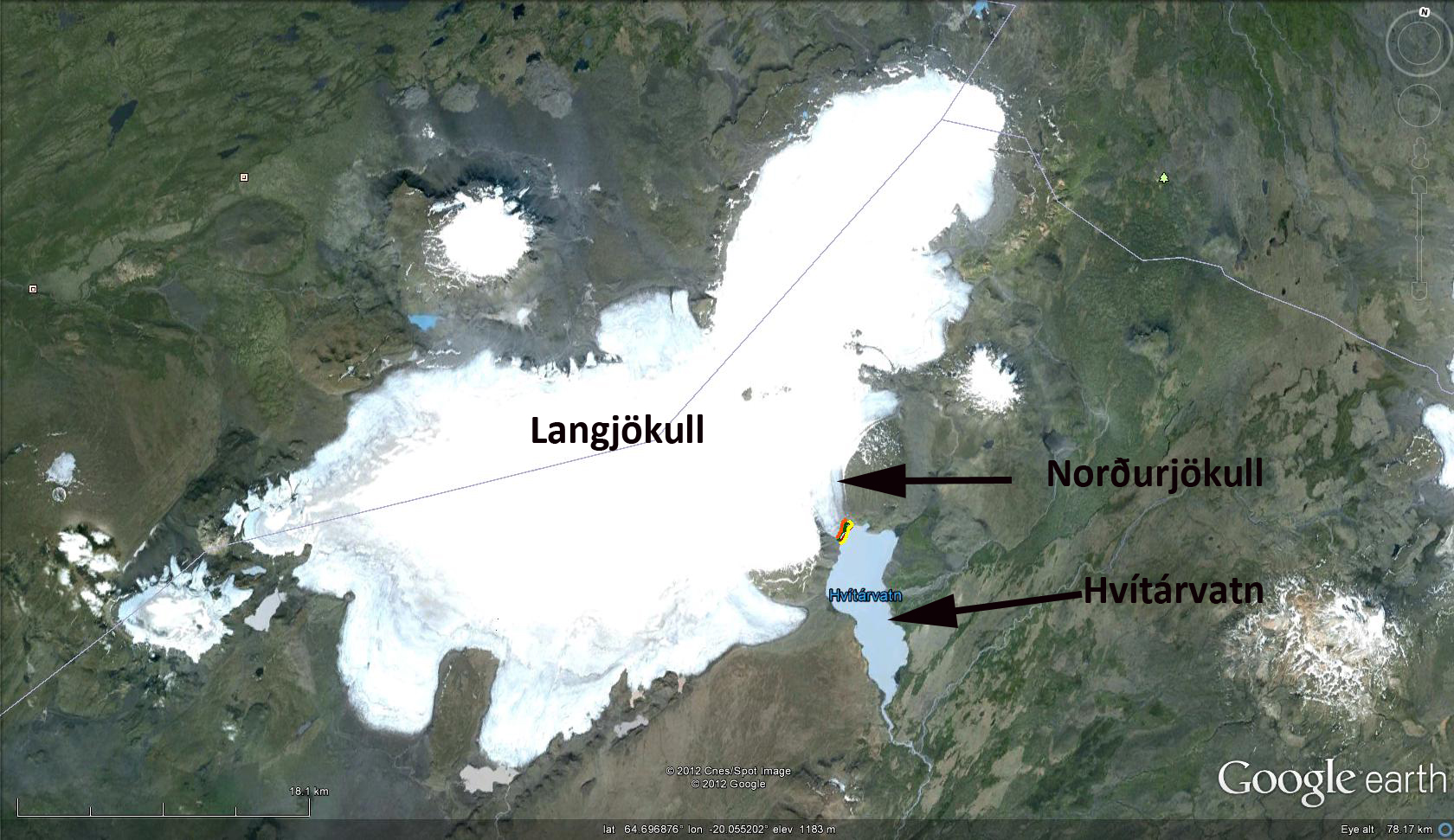
Langjökull is the second largest icecap in Iceland with an area of 920 square kilometers (Jóhannesson (2009). One of the main outlet glaciers of Langjökull is the Norðurjökull which still reaches Hvítárvatn. Hvítárvatn is a large lake that recieves 70% of its inflow from Langjökull (Flowers et al, 2007). The lake has a maximum depth of 84 m and a surface area of 30 square kilometers. Glaciers in Iceland have begun a ubiquitous retreat since 1995, such as Tungnaarjökull and , Kötlujökull. Figure below is from Jóhannesson (2009). On Langjökull terminus fluctuations are not regularly observed and reported to the World Glacier Monitoring Service (WGMS). The mass balance of Langjökull has been reported to the since 1997, the glacier has lost 16 meters of water equivalent since 1997 (WGMS). This is 8-10% of the volume of the ice cap, and represent the loss of over 1 cubic kilometer of water equivalent per year from the glacier (Guðmundsson et al, 2008). In modelling studies this led Björnsson et al (2006) to project the loss of Langjökull in just over a century. Pope et al (2011) observed that Langjökull has lost an area of 3.4  2.5 km2 yr-1 over the decade.

Here we examine the changes in Norðurjökull from Landsat imagery in 1984, 1994, 2006 and 2009 and Google Earth imagery from 2005. The images are shown in chronologic order below. From 1984 (red line) to 1994 (yellow line) there was a minor advance of less than 100 meters and the glacier front in the lake remained 1.4 km wide. From 1994 to 2005/2006 (green line) the glacier retreated 350 meters, and by 2009 the retreat had reached 450 meters (orange line). This represents a retreat of 30 meters/year. In 2009 the glacier front has narrowed where it meets the lake to 600 meters.

Petain Glacier Retreat, Alberta

Petain Glacier’s meltwater feeds Petain Creek and then Upper Elk Lake in . The glacier like the vast majority in Alberta has been losing area and volume during its retreat.
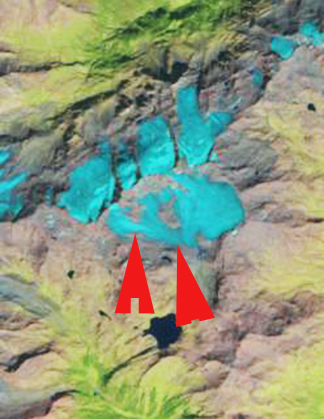
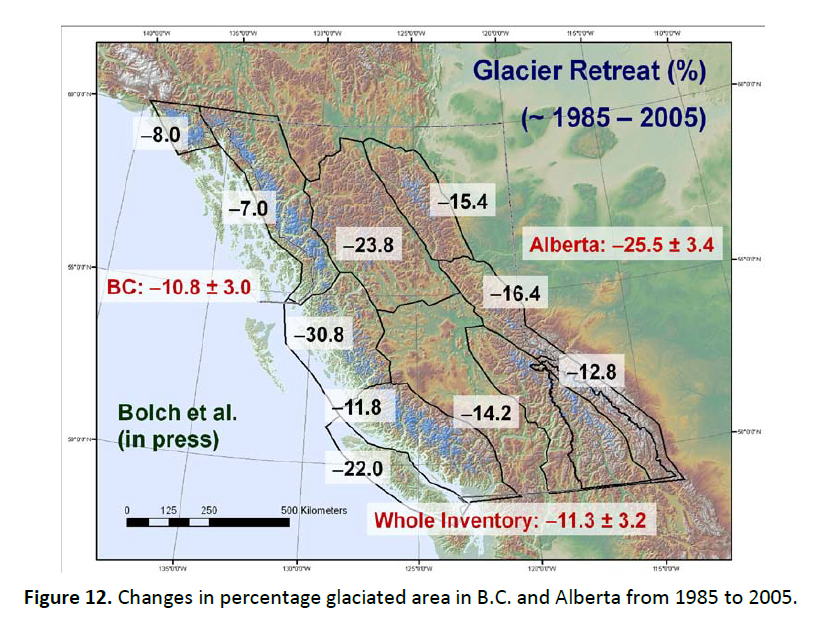
Bolch et al (2010) noted that the glaciers in western Canada had on average lost 11% of their area from 1985 to 2005, 16% on the east slope of the continental divide in the Rocky Mountains of Alberta. As the glaciers retreat their meltwater that is primarily yielded in late summer when other sources are at a minimum is declining. It is anticipated that during this century glacier contributions to streamflow in Alberta will decline from 1.1 km3 a−1 in the early 2000s to 0.1 km3 a−1 by the end of this century Marshall et al (2011). Petain Glacier has a well defined moraine established during the Little Ice Age, green line. Retreat is examined by comparison of Google earth Imagery in 2005 and 2010 and Landsat imagery from 1994 and 2009. By 1994 the glacier had retreated 850 meters from the Little Ice Age moraine, and 900 meters by 2005 (orange line) and 930 meters by 2009. .
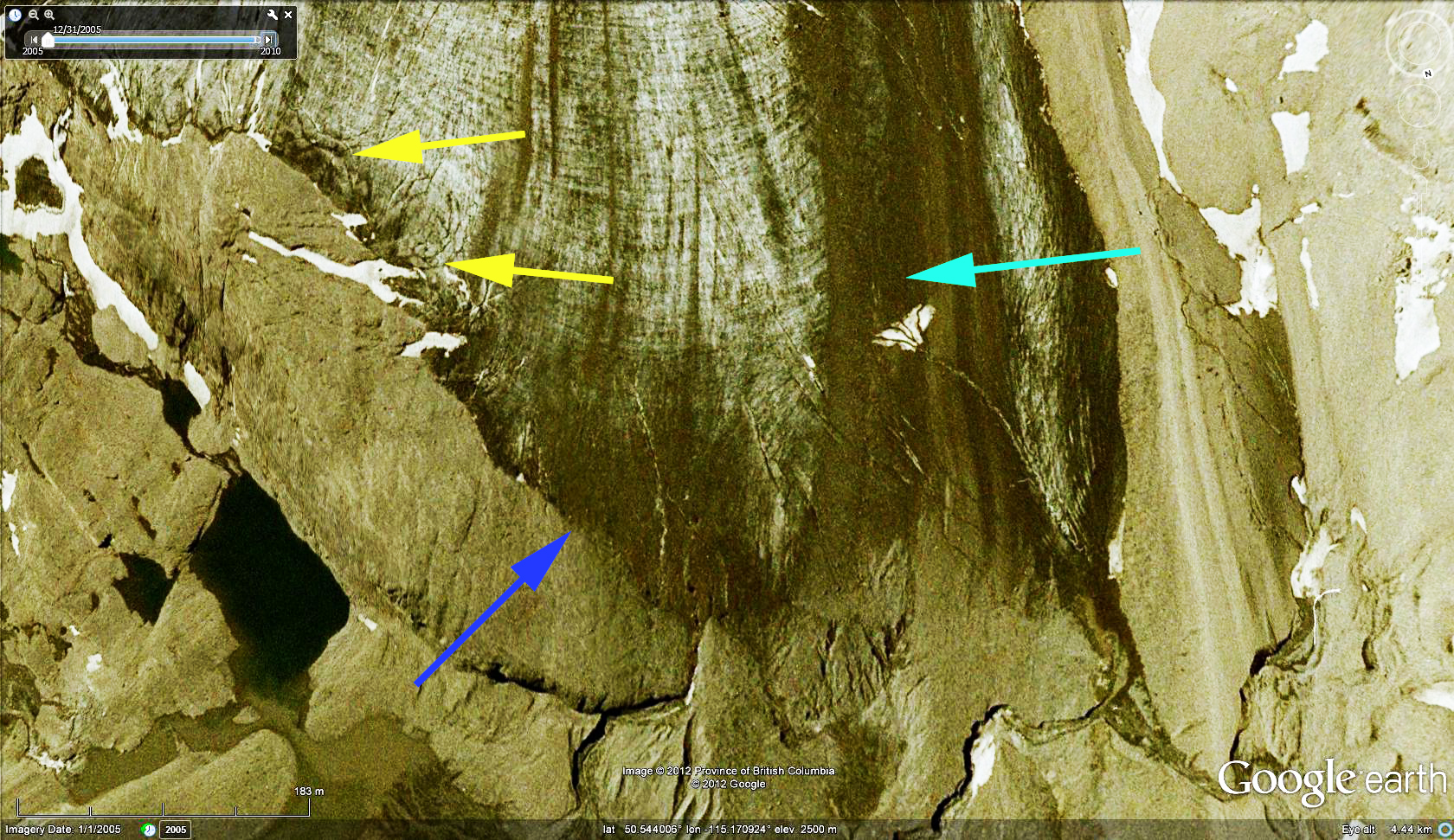
The retreat rate has been 4 meters/year recently. The retreat will continue as the blue arrows indicate locations where the glacier is thinning and exposing new areas of rock upglacier of the terminus. The red arrows indicate small lakes beyond the glacier terminus. The 2005 and 2010 images from Google Earth are tilted and indicate a 30 m retreat in the 5 years. In the image of the terminus below the blue arrow indicates the terminus the yellow arrows collapse features near the terminus indicating stagnation, the light green arrow indicates the thin debris covered area with surface stream channels again indicating stagnant conditions and retreat that will continue.

Epiq Sermia retreat, Greenland

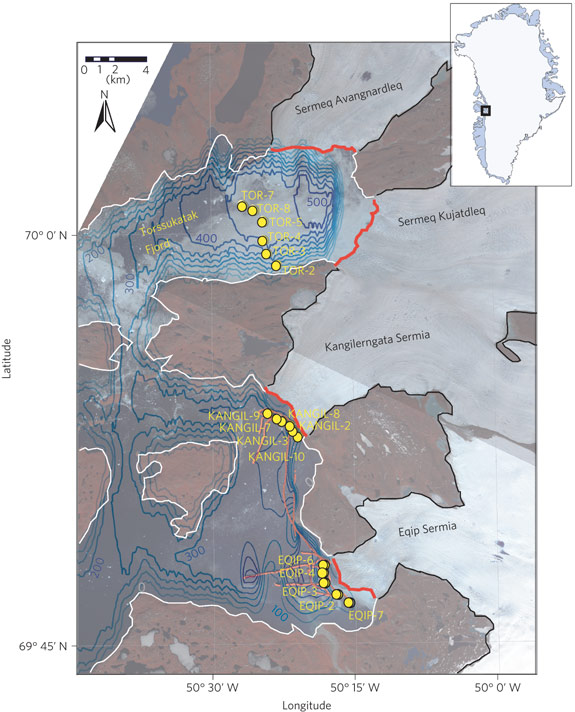
Epiq Sermia is an outlet glacier of northwest Greenland, 70 km north of Jakobshavn Glacier. Epiq Sermia discharges 2-3% of the ice volume that Jakobshavn discharges. The glacier was observed to have had a small retreat in the first half of the 20th century and a minor advance in the 1960’s. Currently it is undergoing a more rapid retreat. This outlet glacier behaves as other Greenland marine terminating outlet glaciers, thinning at the terminus induced by greater basal and surface melting, triggers thinning which reduces basal friction and allows for acceleration and retreat. The glacier and its neighbor Kangilergnata Sermia have attracted recent research Rignot et al (2010) examined melting beneath the terminus tongue of both glaciers. They found rates of submarine melting 100 times larger than surface melt rates, but comparable to rates of iceberg discharge. Rignot et al (2010-PR) identified melt along the submerged bottom of Kangilergnata and Epiq Sermia where it comes into contact with warm ocean waters, which melts the glacier bottom, thinning the ice, shifting its grounding line, increasing its flotation, which leads to retreat. Figure 1 from Rignot et al (2010) indicates that water depths at the calving front are between 200-300 m deep, not that deep for the ice thickness observed..

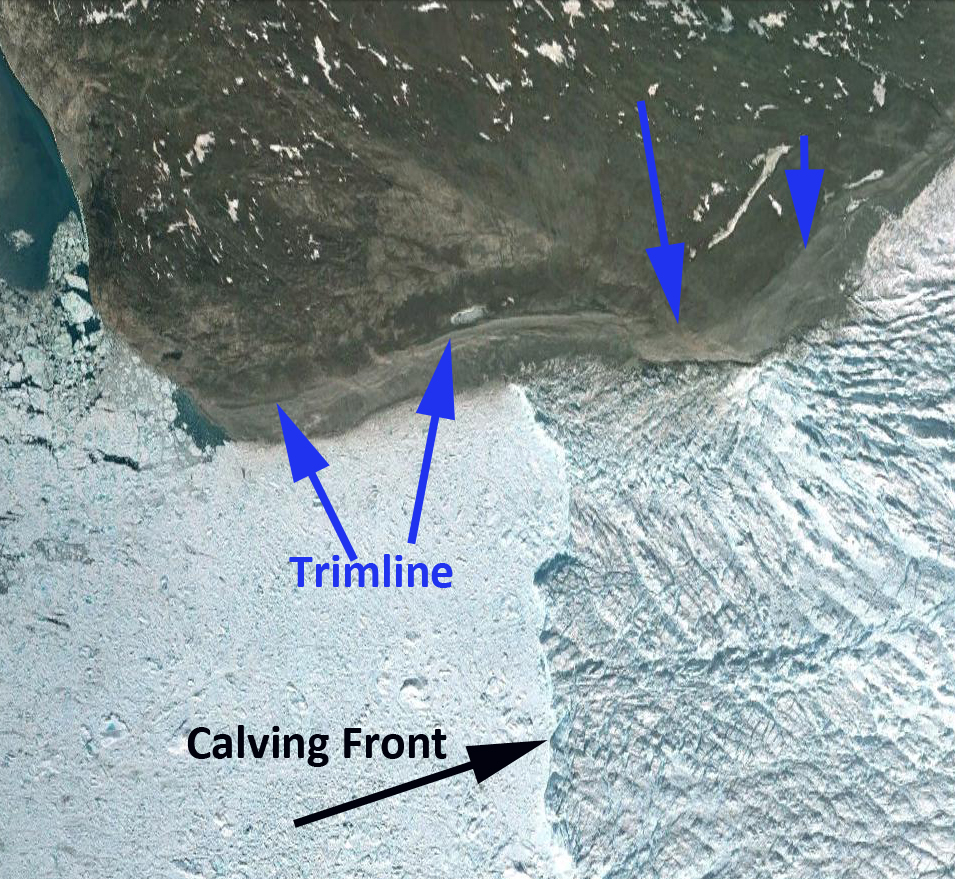
A comparison of a 2001 and 2011 Landsat image overlain on Google Earth imagery identifies recent changes. The image comparison indicate average retreat of 1.1 kilometers over the 10 years for Epiq Sermia and 2.5 km for Kangilergnata Sermia, the yellow line is the 2001 margin and red line the 2011 margin. Thinning of Epiq Sermia is also apparent in the retreat upglacier from the terminus with the trimline being exposed and retreat at the secondary terminus into the lake. Retreat of the Epiq Sermia and Kangilergnata Sermia mirror that of other outlet glaciers, Howat and Eddy (2011) found that from 1964-2010 64% were retreating and from 2000-2010 98% of the outlet glaciers in NW Greenland were retreating. The also noted the average retreat rate rose from 20 m/year to 125 m/year, Howat and Eddy (2011). Specific examples of Umiamako Glacier, Upernavik Glacier and Kong Oscar Glacier.
Arhuey Glacier Retreat, Peru

The Cordillera Blanca, Peru has the greatest concentration of glaciers of any region in the tropics. Glacier mass balance losses and glacier area losses in this range have been large since 1990 (Rivera,INRENA) Laguna Arhueycocha is proglacial lake dammed by a glacier end moraine emplaced by the Arhuey Glacier (AG) during the Little Ice Age. The glacier currently terminates in this lake. Moraine dammed lakes can be a hazard as they expand since the moraine material that comprises the dam is relatively unstable. The glacier still filled the lake basin in 1963 photographs. By 1991 the lake was 500 meters long (Reynolds Geoscience, 2003) . In a 1999 Landsat image the lake is 750 meters long, by 2002 IKONOS imagery the lake and 2003 Google Earth imagery indicates a lake that is 1050 meters long, and finally in 2011 Landsat imagery the lake is 1200 meters long. The 2003 Google Earth image has the terminus position in red for 1991, purple 2002 and green 2011 indicated. The red arrow points to the artificial outlet channel. The 700 meter retreat since 1999 leaves only a tiny bit of the glacier in contact with the lake, and it appears the lake will not extend much further.
To relieve the threat of an expanding glacier lake breaking its dam, a (Reynolds Geoscience, 2003) 122 meter long channelthat is 12 meter deep was completed through the moraine to limit the surface elevation rise of the lake. The terminus in the 360 degree shot in Google Earth a snapshot of which is seen below, indicates the width of the glacier at the terminus is small and the terminus is quite steep, which given the thin nature of the ice, indicates a steep slope under the glacier, not a continuation of the lake basin.. The retreat of this glacier parallels the retreat of other nearby glaciers Llaca Glacier and Artesonraju Glacier

Himalaya Glacier Index

Himalaya-Pamir-Hindu Kush-Tien Shan-Quilian-Karakoram Range Glacier Change

Below is a list of individual glaciers in the Himalaya and high mountains of Central Asia that illustrate what is happening glacier by glacier. In addition to the individual sample glaciers we tie the individual glaciers to the large scale changes of approximately 10,000 glaciers that have been examined in repeat satellite image inventories. In the high mountains of Central Asia detailed glacier mapping inventories, from GLIMS: (Global Land Ice Measurements from Space), ICIMOD (International Centre for Integrated Mountain Development), ISRO ( Indian Space Research Organisation) and Chinese National Committee for International Association of Cryospheric Science (IACS) of thousands of glaciers have indicated increased strong thinning and area loss since 1990 throughout the region except the Karokoram. The inventories rely on repeat imagery from ASTER, Corona, Landsat, IKONOS and SPOT imagery. It is simply not possible to make observations
on this number of glaciers in the field.

Reqiang Glacier, Tibet———-Ngozumpa Glacier, Nepal
Samudra Tupa, India———-Zemu Glacier, Sikkim
Theri Kang Glacier, Bhutan———-Zemestan Glacier, Afghanistan
Khumbu Glacier, Nepal———-Imja Glacier, Nepal
Gangotri Glacier, India———–Milam Glacier, India
Satopanth Glacier, India———-Kali Gandaki Headwaters, Nepal
Menlung Glacier, Tibet———-Boshula Glaciers, Tibet
Urumquihe Glacier, Tibet———-Sara Umaga Glacier, India
Dzhungharia Alatau, Kazakhstan———-Petrov Glacier,Kyrgyzstan
West Barun Glacier, Nepal—–Malana Glacier, India
Warwan Basin, India—–North Lhonak Glacier, Sikkim
Changsang Glacier, Sikkim——Emend River Headwaters, Afghanistan
Yajun Peak Glacier, Afghanistan—–Godur Glaicer, Pakistan
Tirich Mir, Pakistan—–Longbasba Glacier, Tibet
Lumding Glacier, Tibet—-Rongbuk Glacier, Tibet
Matsang Tsanpo Glacier, Tibet——-Sepu Kangri, China
Jiongla Glacier, Tibet—-Bode Zanbo Headwaters, Tibet
Zayul Chu Headwaters, TibetHkakabo Razi, Myanmar.
Jaonli Glacier, India
In the Russian Altai mapping of 126 glaciers indicate a 19.7 % reduction in glacier area 1952-2004, with a sharp increase after 1997 (Shahgedanova et al., 2010). In Garhwal Himalaya, India, of 58 glaciers examined from 1990-2006 area loss was 6% (Bhambri et al, 2011). They also noted the number of glaciers increased from 69 (1968) to 75 (2006) due to the disintegration of ice bodies. Examination of 466 glaciers in the Chenab, Parbati and Baspa Basin, India found a 21% decline in glacier area from 1962 to 2004 (Kulkarni, 2007). Glacier fragmentation was also observed in this study, which for some fragments represents a loss of the accumulation area, which means the glacier will not survive (Pelto, 2010). The India glacier inventory (ISRO, 2010) identified glacier area losses and frontal change on 2190 glaciers and found an area loss rate of 3.3% per decade and 76% of glaciers retreating. In the Nepal Himalaya area loss of 3808 glaciers from 1963-2009 is nearly 20% (Bajracharya et al., 2011). The Langtang sub-basin is a small northeast-southwest elongated basin, tributary of Trishuli River north of Kathmandu and bordered with China to the north. The basin contained 192 km2 of glacier area in 1977, 171 km2 in 1988, 152 km2 in 2000 and 142 km2 in 2009. In 32 years from 1977 to 2009 the glacier area declined by 26% (Bajracharya et al., 2011). In the Khumbu region, Nepal volume losses increased from an average of 320 mm/yr 1962-2002 to 790 mm/yr from 2002-2007, including area losses at the highest elevation on the glaciers (Bolch et al., 2011). The high elevation loss is also noted in Tibet on Naimona’nyi Glacier which has not retained accumulation even at 6000 meters. This indicates a lack of high altitude snow-ice gain (Kehrwald et al, 2008). The Dudh Koshi basin is the largest glacierized basin in Nepal. It has 278 glaciers of which 40, amounting to 70% of the area, are valley-type. Almost all the glaciers are retreating at rates of 10–59 m/year and the rate has accelerated after 2001 (Bajracharya and Mool, 2009). In the Tien Shan Range over 1700 glaciers were examined from 1970-2000 glacier area decreased by 13%, from 2000-2007 glacier area shrank by 4% a faster rate than from 1970-2000 (Narama et al, 2010).

An inventory of 308 glaciers in the Nam Co Basin, Tibet, noted an increased loss of area for the 2001-2009 period, 6% area loss (Bolch et al., 2010). Zhou et al (2009) looking at the Nianchu River basin southern Tibet found a 5% area loss. 1990-2005. Cao et al, (2010) completed an inventory of 244 glaciers in Lenglongling Range of Eastern Qilian Mountains from 1972 to 2007 and found a 23.5% loss in glacier area. The highest rate of 1% per year of area loss was identified from 2000 to 2007. In the Pumqu Basin, Tibet an inventory of 999 glacier from the 1974 & 1983 to 2001 indicated the loss of 9% of the glacier area and 10% of the glaciers disappeared (Jin et al, 2005).

Pan et al (2011) looking at the Gongga Mountains, China found a 11.3% area loss from 1966-2009. In the Wakhan Corridor, Pamir Range, Afghanistan 30 glaciers were examined over a 27 year period, 1976-2003, indicating that 28 of the glacier retreated with an average retreat of 294 m, just over 10 meters/yr (Haritashya, et al., 2009). The Karokoram is the one range where a mix of expansion and retreat is seen. The anomalous expansions are confined to the highest relief glaciers and appeared suddenly and sporadically (Hewitt, 2005). After decades of decline, glaciers in the highest parts of the central Karakoram expanded, advanced, and thickened in the late 1990s. Many of the largest glaciers in the Karakoram are still retreating including the Baltoro, Panmah and Biafo Glacier, albeit slowly (Hewitt, 2011).

A new means of assessing glacier volume is GRACE, which cannot look at specific changes of individual glaciers or watersheds. In the high mountains of Central Asia GRACE imagery found mass losses of -264 mm/a for the 2003-2009 period (Matsuo and Heki, 2010). This result is in relative agreement with the other satellite image assessments, but is at odds with the recent global assessment from GRACE, that estimated Himalayan glacier losses at 10% of that found in the aforementioned examples for volume loss for the 2003-2010 period (Jacobs et al, 2012). At this point the detailed glacier by glacier inventories inventories of thousands of glaciers are better validated and illustrate the widespread significant loss in glacier area and volume, though not all glaciers are retreating.
This page will continue to be updated as new inventory data is published and new individual glaciers are examined herein. Yao et al (2012) in an examination of Tibetan glaciers observed substantial losses of 7090 glaciers.