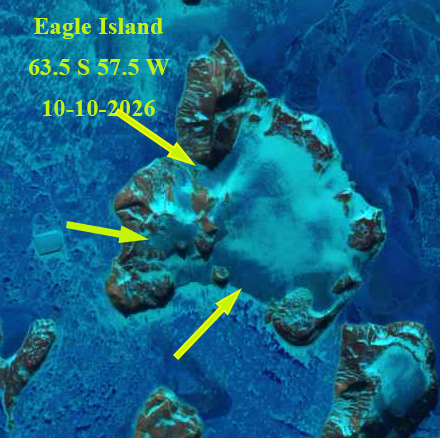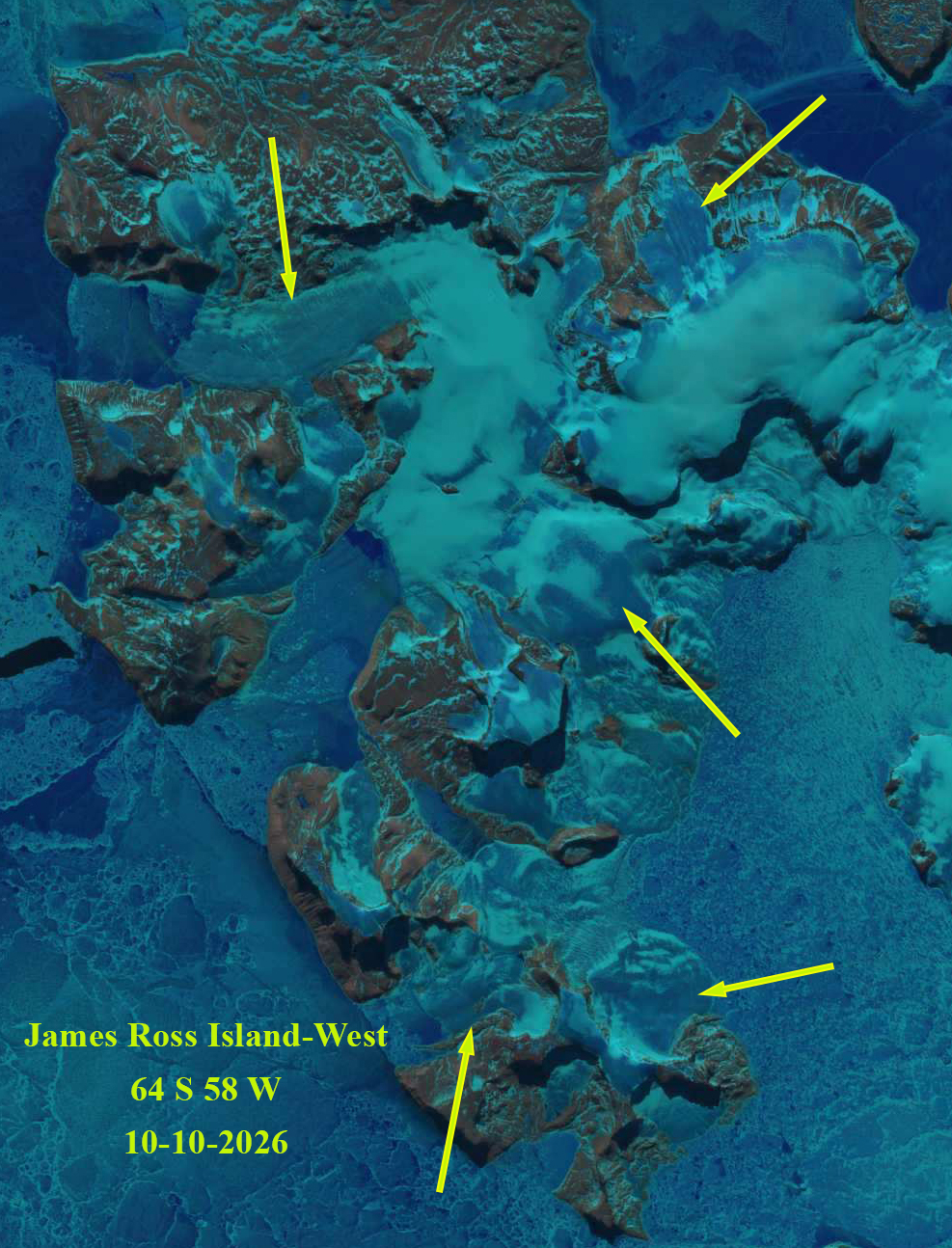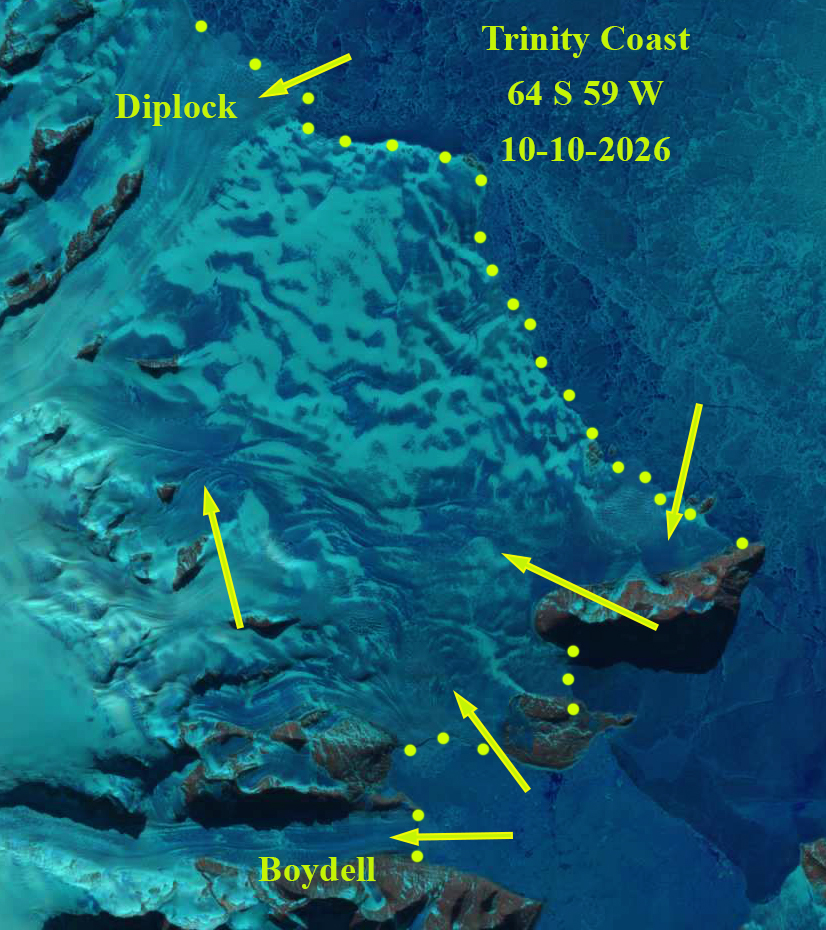
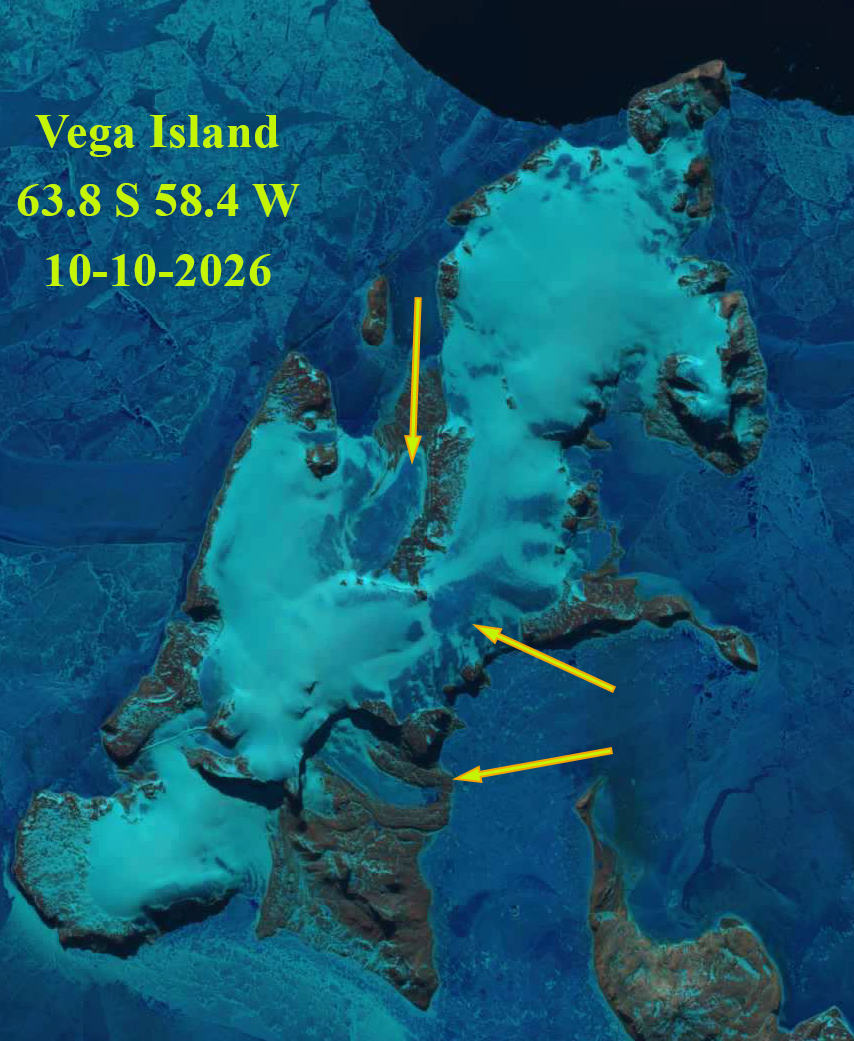
The melt season has is not yet underway, yet significant bare ice areas are evident on glaciers on the east side of the Antarctic Peninsula and adjacent islands. The winter season from May-August featured above average temperatures each month, particularly in June, while September was near normal. The bare ice surfaces seen on this Oct. 10, 2026 Landsat image are not an indicator of melt during winter, but of limited new snow accumulation further reduced by sublimation and wind scouring. The winter season was no treat for these glaciers.
As the melt season begins if the bare ice surfaces persist melt will be enhanced due to greater solar radiation being absorbed and reduced long wave radiation being emitted. Even a thin cover of new snow cover from a spring storm would be helpful in the short run.