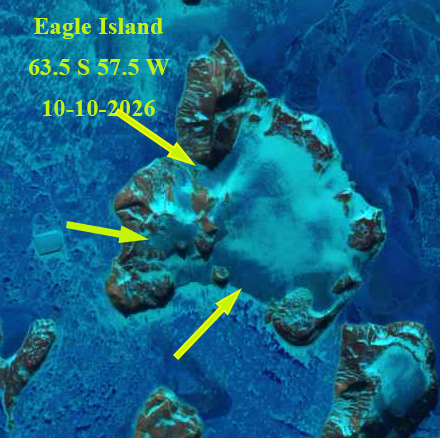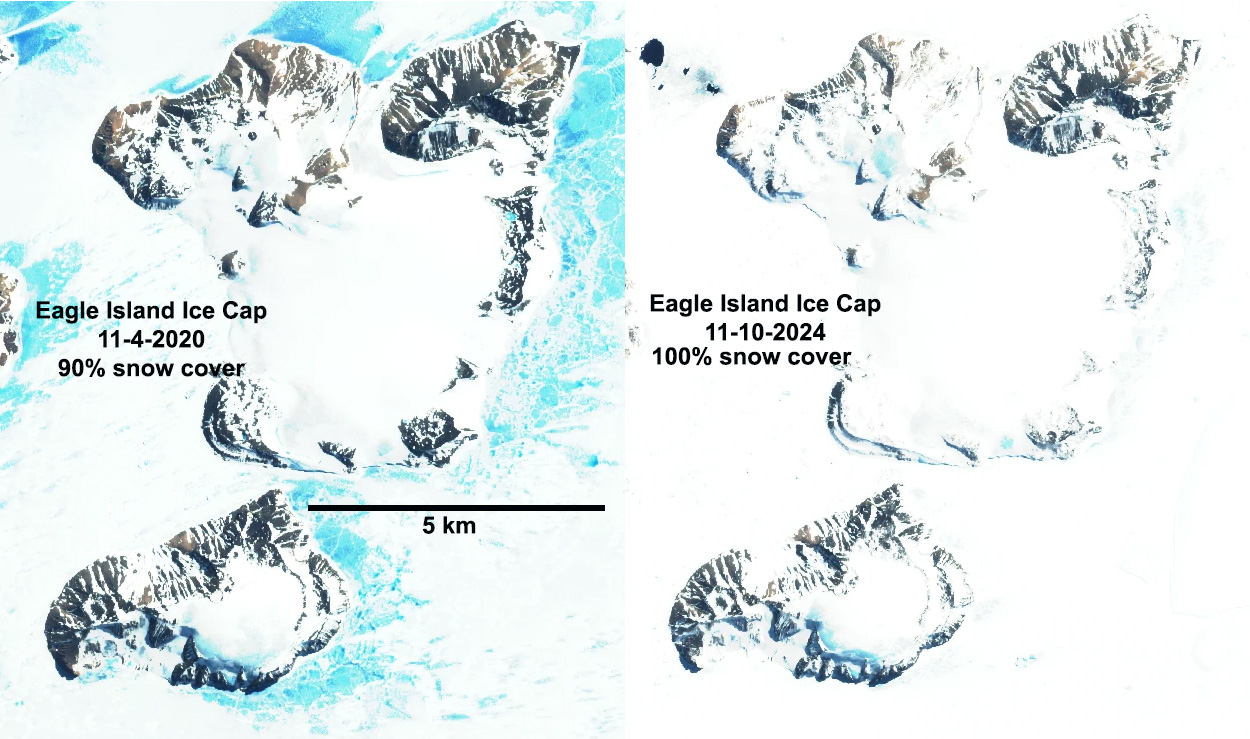
The lack of snow cover on glaciers and ice caps on the east side of the Antarctic Peninsula is strking as the melt season begins (NASA, 2026). I had focussed on the glaciers of Eagle Island, Vega Island and Trinity Coast based on Landsat images from October 10, 2026 (Pelto, 2026). The bare ice surfaces seen on Eagle Island are not an indicator of melt during winter, but of limited new snow accumulation further reduced by sublimation and wind scouring. The region did experience several heat notable heat waves in May and June of 2026, with temperature anomalies of +4Co around Eagle Island for these months (Zhai et al, 2026).
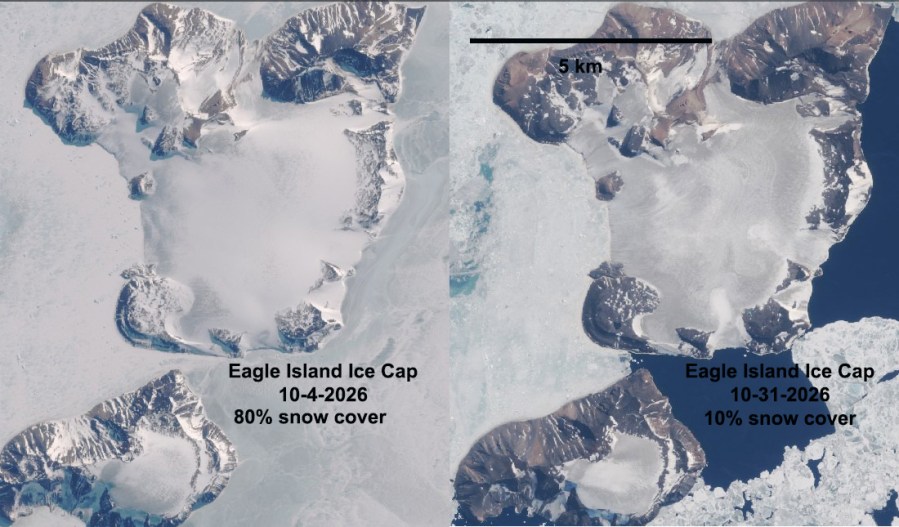
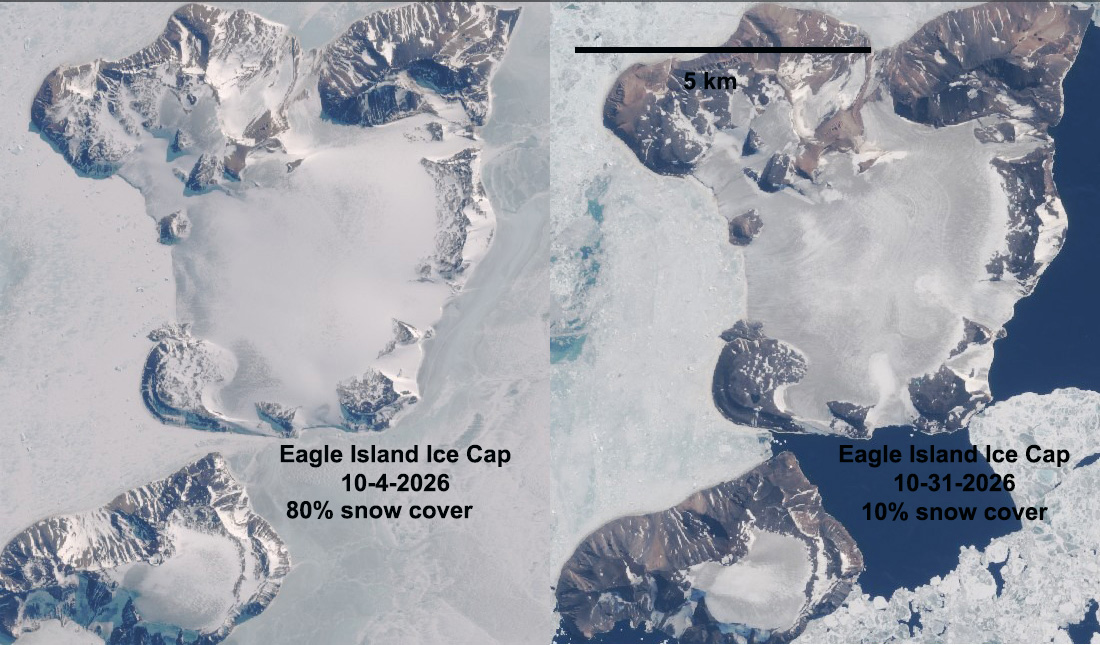
By the end of October the snow cover loss was even more striking, with the Eagle Island Ice Cap going from nearly 100% snow cover on October 4th to less than 10% snowcover by October 31st. Almost all precipitation in this region falls as snow, which means the ice cap will likely be snow covered by snow storms during the course of the melt season, however, this thin snow cover from a single snow event will also be easily lost to sublimation, melting and wind scouring. The ice cap is poised to lose area this melt season as areas of rock amidst the ice cap will expand as they absorb solar radiation event at temperatures close to or below freezing.