Mammoth Glacier, Wyoming Ongoing Retreat


mammoth compare

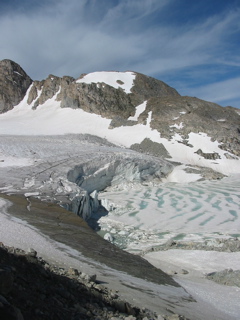
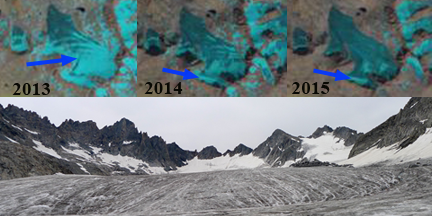
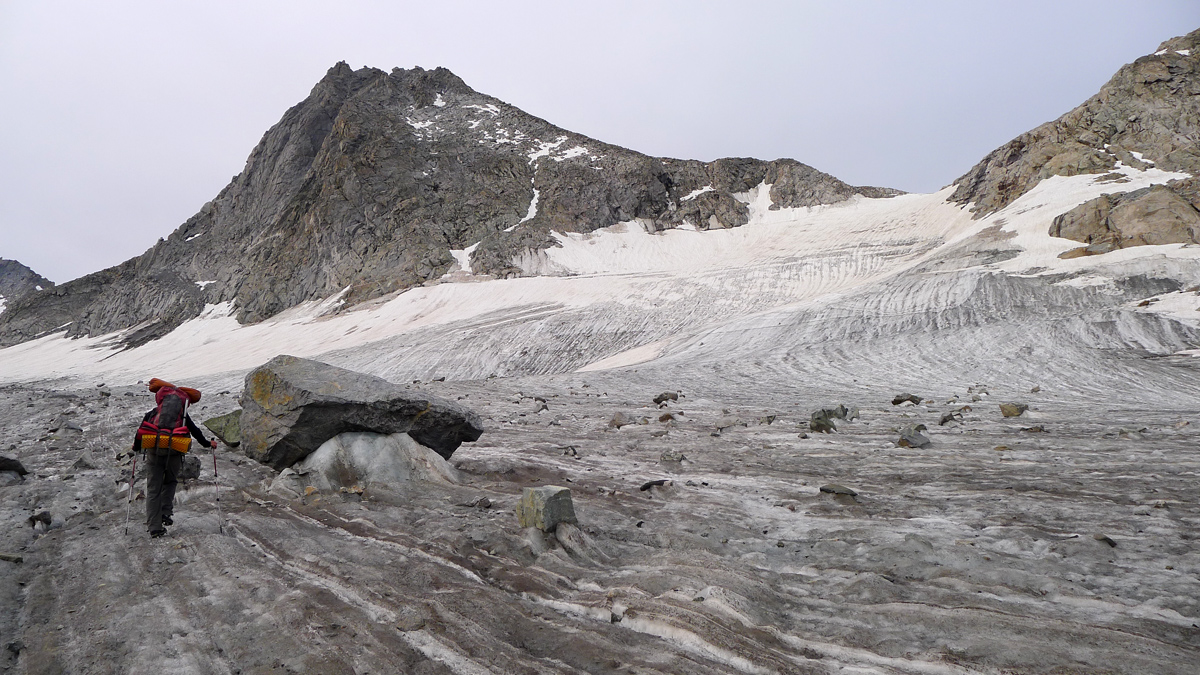
At top Landsat images from September 2013, 2014 and 2015 of Mammoth Glacier.  The blue arrow indicates retained snowcover. A 2013 images of Mammoth Glacier from Sarah Meiser, note low slope and lack of crevassing above

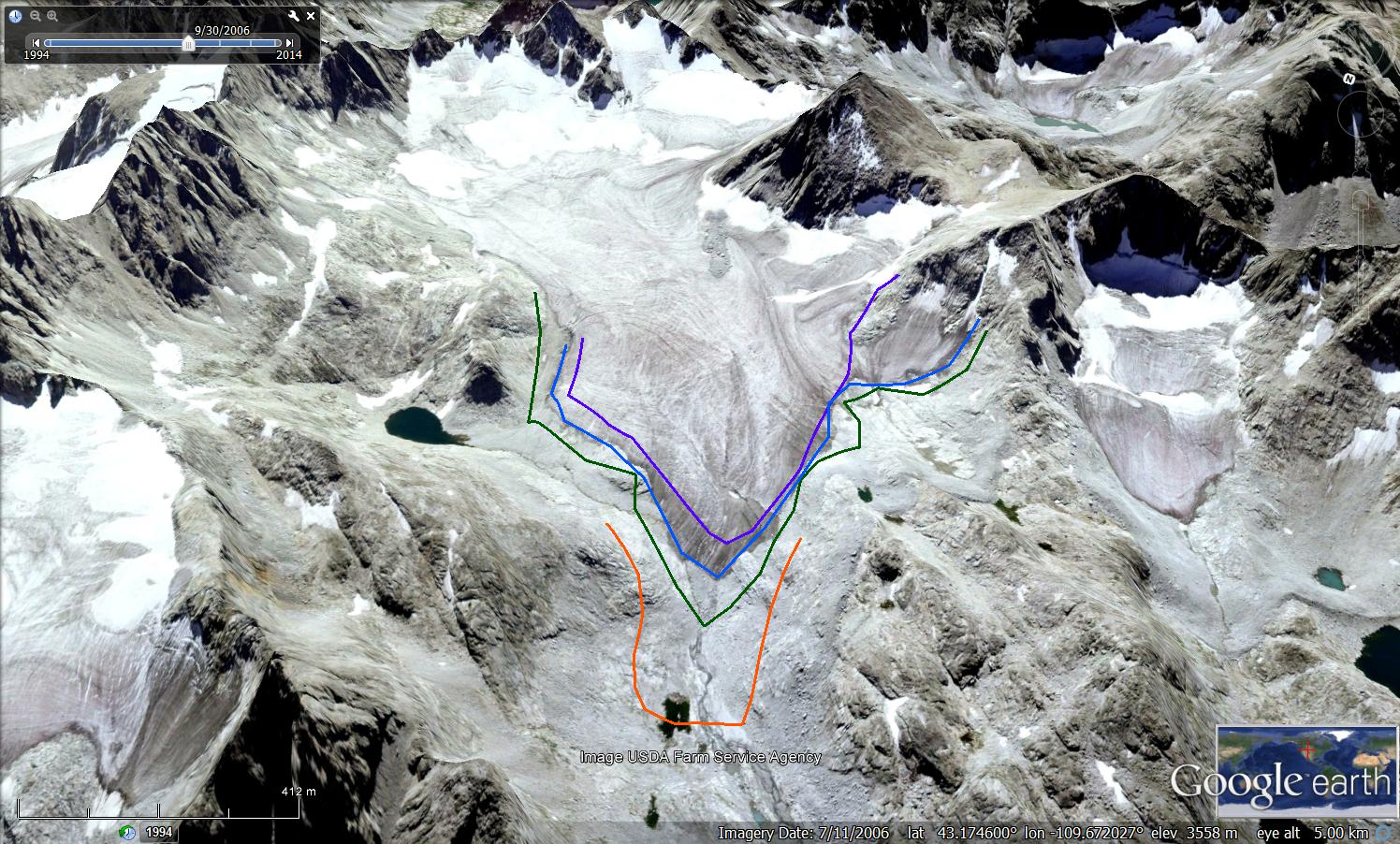
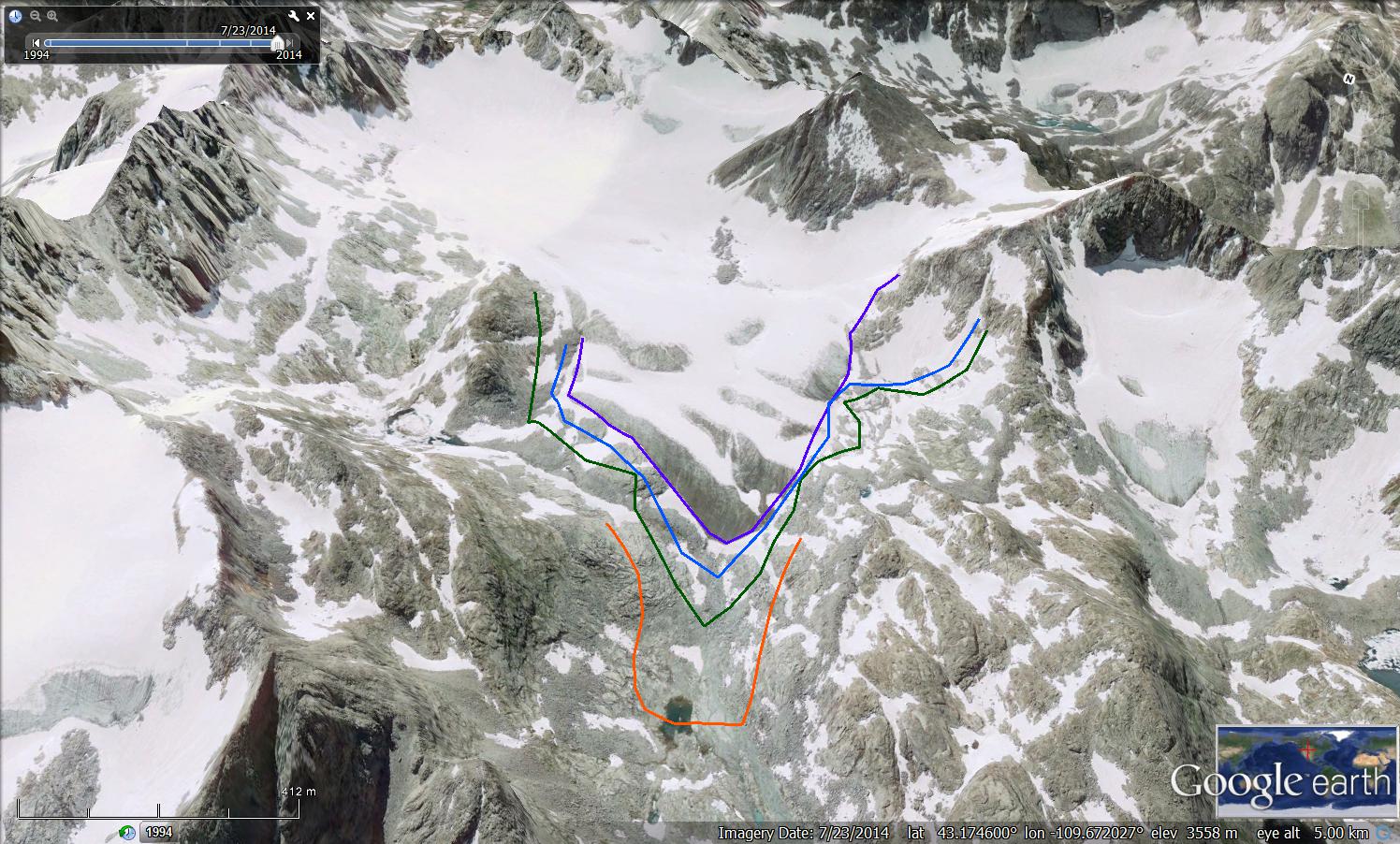
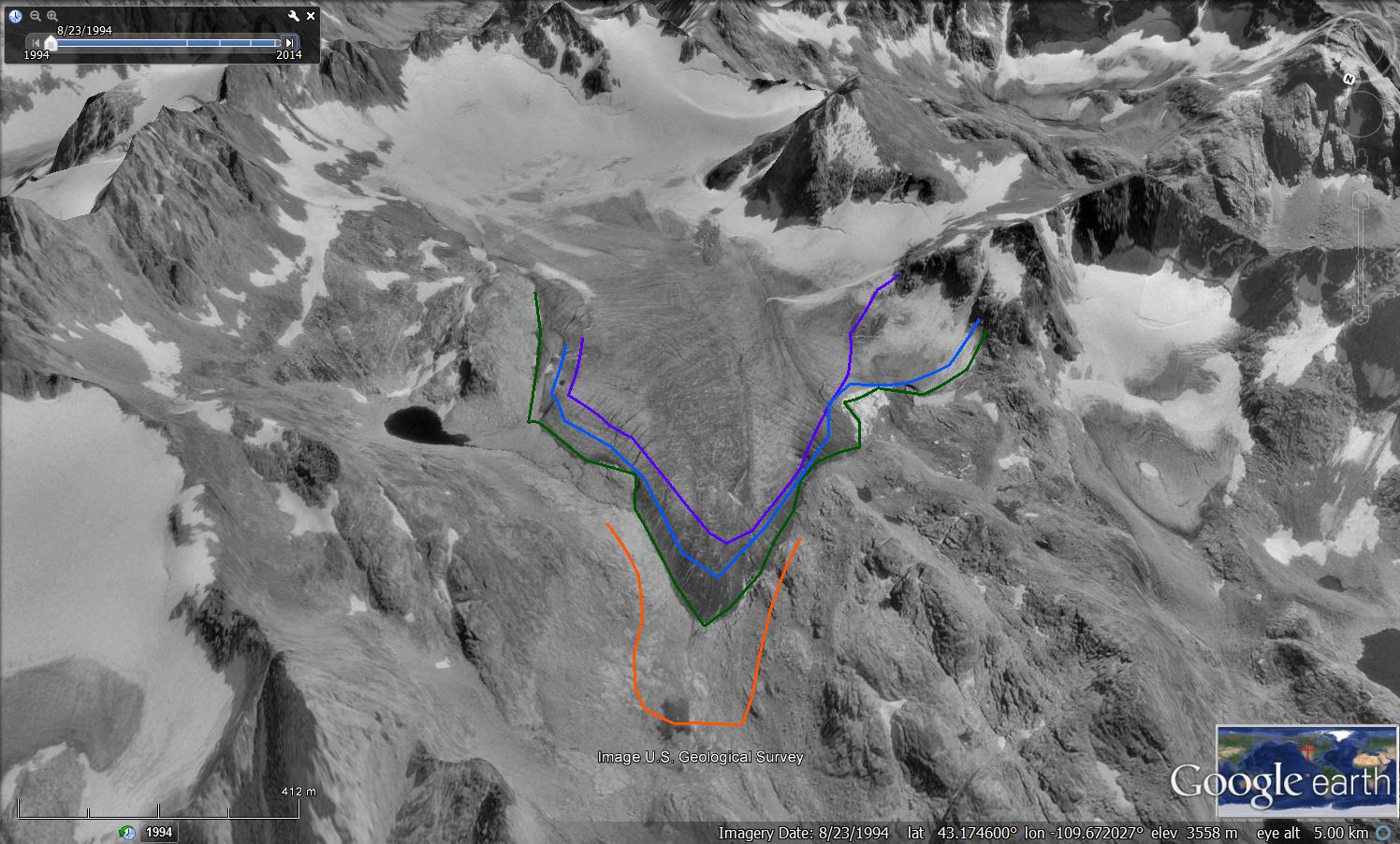
Mammoth Glacier is in the Wind River Range of Wyoming.  The ongoing retreat is leading to a glacier that does not warrant the name mammoth for size, but soon it will for obsolescence.The long and low sloped glacier is the largest west of the Continental Divide in the range. The glacier is at the headwaters of the Green River  and Green River Lakes. The glacier had an area of 4 square kilometers in 1952, 2.1 square kilometers in 2007 and 1.8 square kilometers in 2015.  The Landsat sequence above from 2013, 2014 and 2015 illustrates the problem, insufficient retained snowcover to approach equilibrium, that is also evident in 2006 shown below. The setting is better illustrated with images from Sarah Meiser who I think has the best collection of recent images of Wind River Glaciers. A glacier like Mammoth with limited avalanching needs more than 50% retained snowcover at the end of the summer (accumulation area ratio) to be in equilibrium.  In 2013 with three weeks left in the melt season, the accumulation area ratio (AAR) is slightly below 50%, note Sarah Meisel image below.  In 2014 the AAR is 25 % and in 2015 the AAR is 5-8%.  These periods of sustained bare ice exposure lead to area loss and thinning.  A comparison of Google Earth images illustrate the area loss. In each image the orange line is the 1966 map position, green line 1994 margin, blue line 2006 margin and purple line 2014 margin.  The loss in area at the margin is evident as is the loss on the western side between 2006 and 2014.  Retreat has been 200 m from 1966 to 1994, 95 m from 1994-2006 and 95 m from 2006 to 2014. Area loss after the poor snowcover in 2015 will continue and the glacier will not long be considered mammoth in size.  Pelto (2010) examined glaciers in the Wind River Range and found two-thirds could not survive current climate as they did not have a persistent accumulation zone, including Mammoth Glacier and Sacagawea Glacier. Thompson et al (2011) noted a 38% loss in area of the 44 Wind River Range glaciers from 1966-2006. Maloof et al (2014) noted an even larger drop in volume of 63% of the same glaciers from 1966-2012.
 

mammoth rocks

 Sarah Meiser image illustrating how close to the top of the glacier the bare ice extends.  This fact indicates that all of the firn had been lost, thus the area shown has not been a recent accumulation area. 
mammoth 1994a

1994 Google Earth Image

mammoth 2006a

2006 Google Earth Image

mammoth 2014

2014 Google Earth image


Sourdough Glacier Retreat, Wind River Range, Wyoming

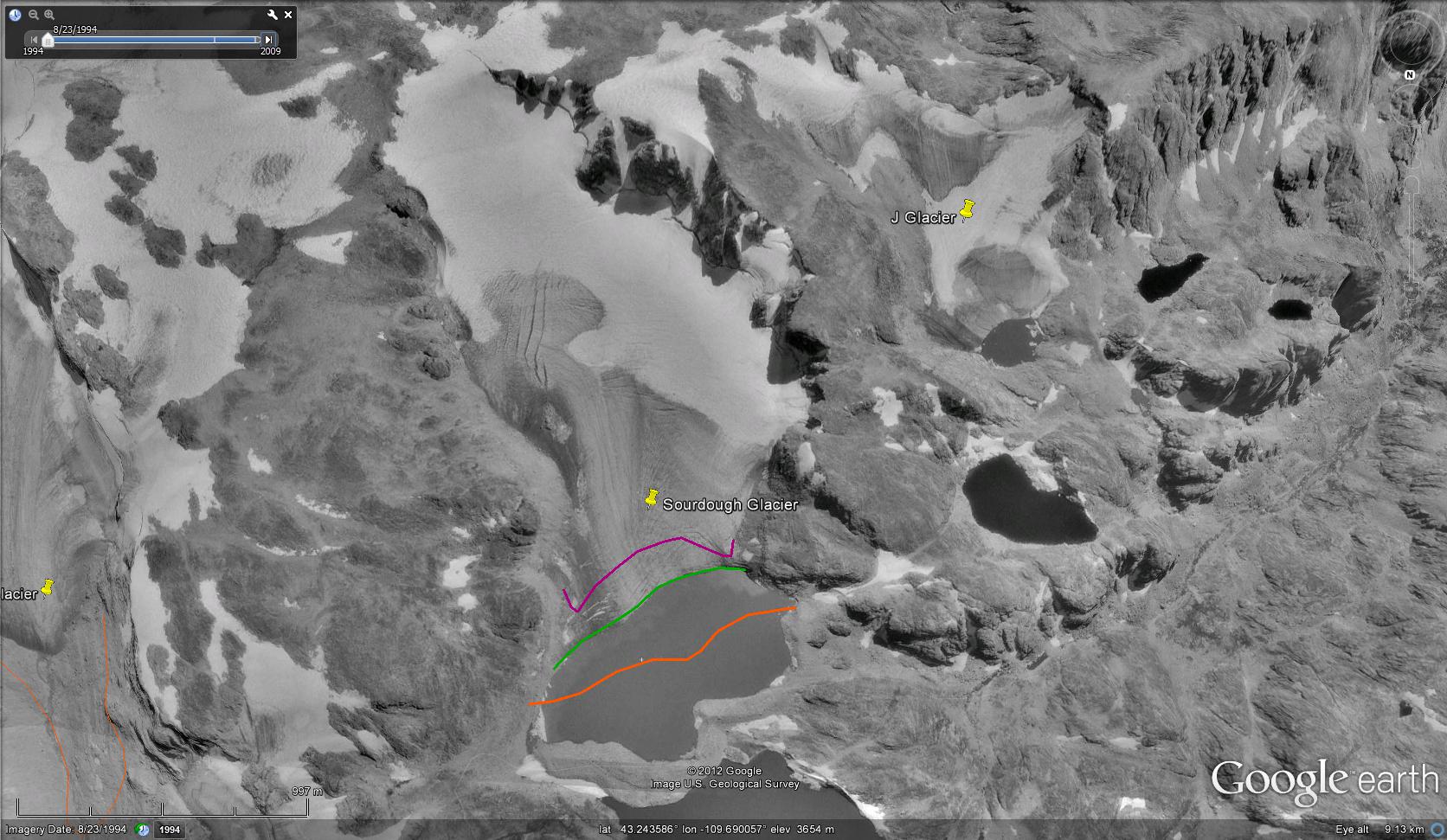
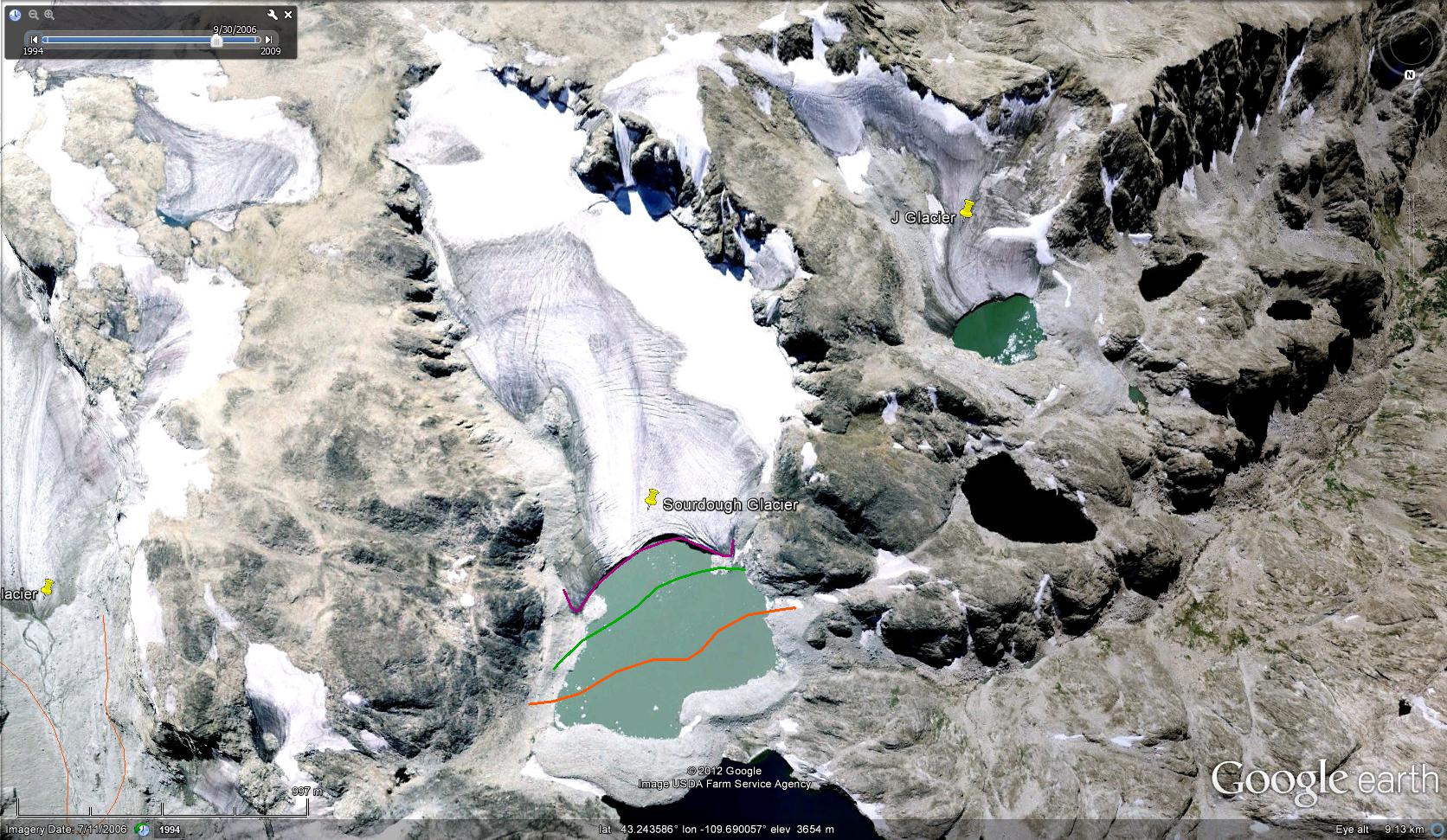
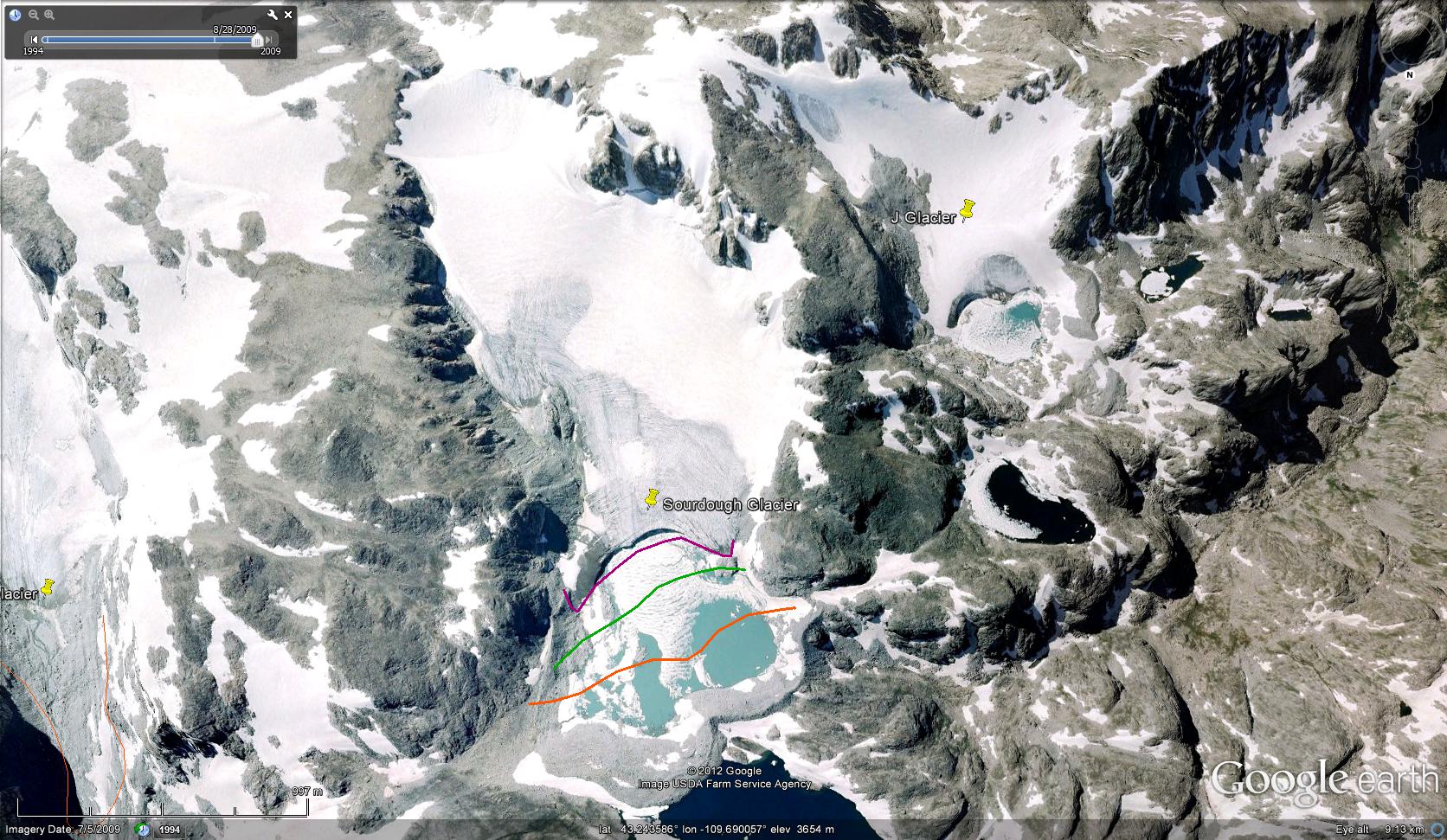
Sourdough Glacier descends the north side of Klondike Peak in the Wind River Range of Wyoming. Thompson et al (2011) identified the loss in area of Wind River Glaciers from 1966 to 2006. The total surface area of the 44 glaciers was estimated to be 45.9 km2 in 1966 and 28:6 km2 in 2006, a decrease of 42%. The retreat has varied from substantial on Minor and Grasshopper Glacier to limited on Upper Fremont Glacier. For Sourdough Glacier the 1966 USGS map of the area based indicates the glacier ending in a small lake, orange line in images. We use 1994, 2006 and 2009 images in Google Earth to examine the glacier changes. By 1994 (green line) the glacier had retreated 160 meters and the lake nearly doubled in size. By 2006 (magenta line) retreat from 1966 was 280 meters with a more pronounced calving face developing. In 2009 the calving face remains and the glacier had retreated another 20 meters overall, 40 meters in the glacier center. The increased height of the calving face suggests the lake is deeper than at the 1994 terminus position and that the lake will continue to expand with further retreat. The calving front and slope of the glacier is similar to Lyman Glacier. The retreat from 1966-2006 is a 20% reduction in overall glacier length. If a glacier lacks a persistent accumulation zone it will not survive (Pelto, 2010). The key indicator of a glacier without a consistent accumulation zone if retreat of the upper margin of the glacier and emergence of rock outcrops on the upper glacier. There are some limited changes of this nature on Sourdough Glacier, but most of the change has been at the terminus. The forecast for survival of Sourdough Glacier is not as clear cut as on Minor and Grasshopper Glacier. The crevasses indicate the glacier is still actively moving.

Lower Fremont Glacier, Wyoming Disappearing

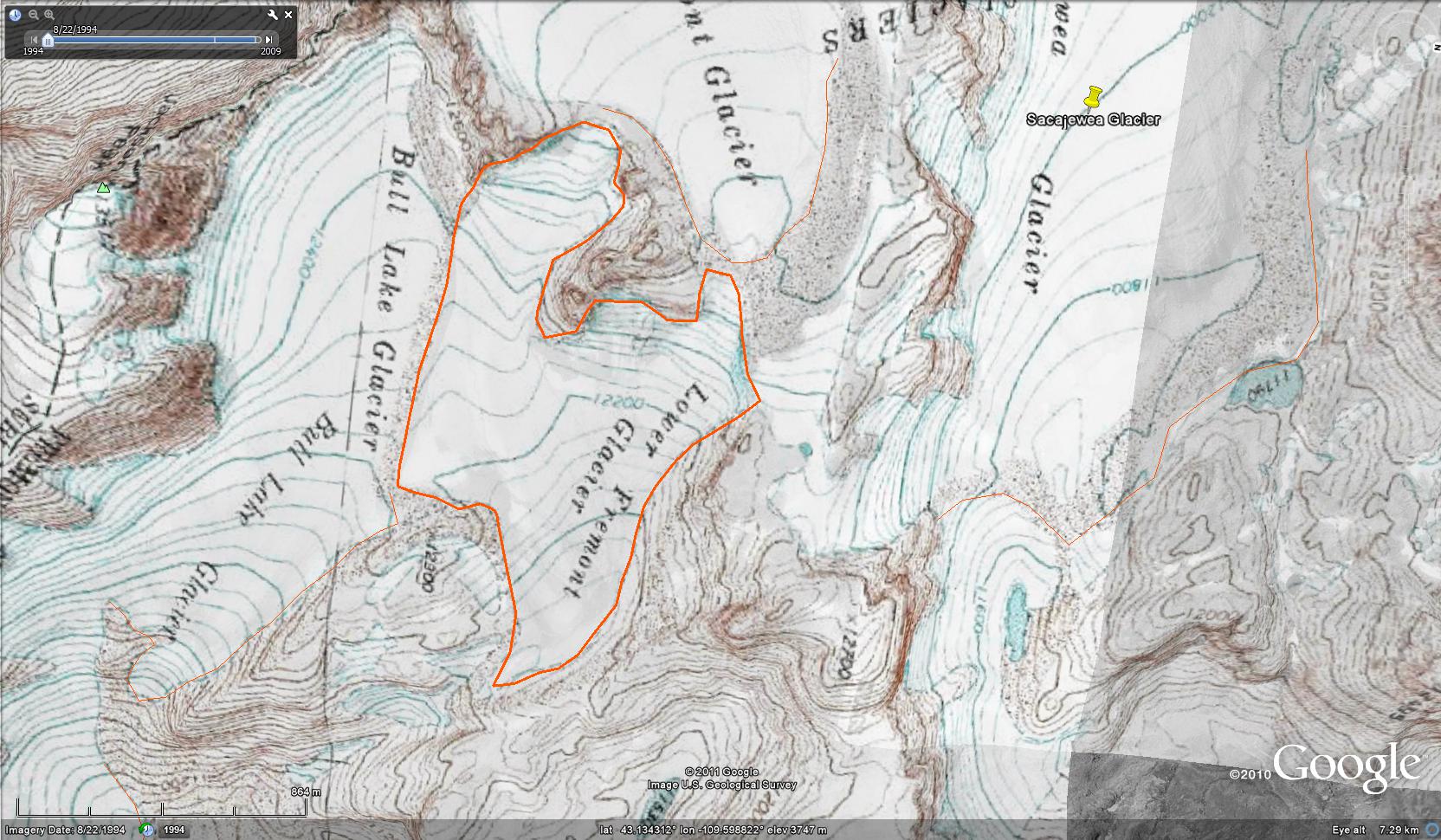
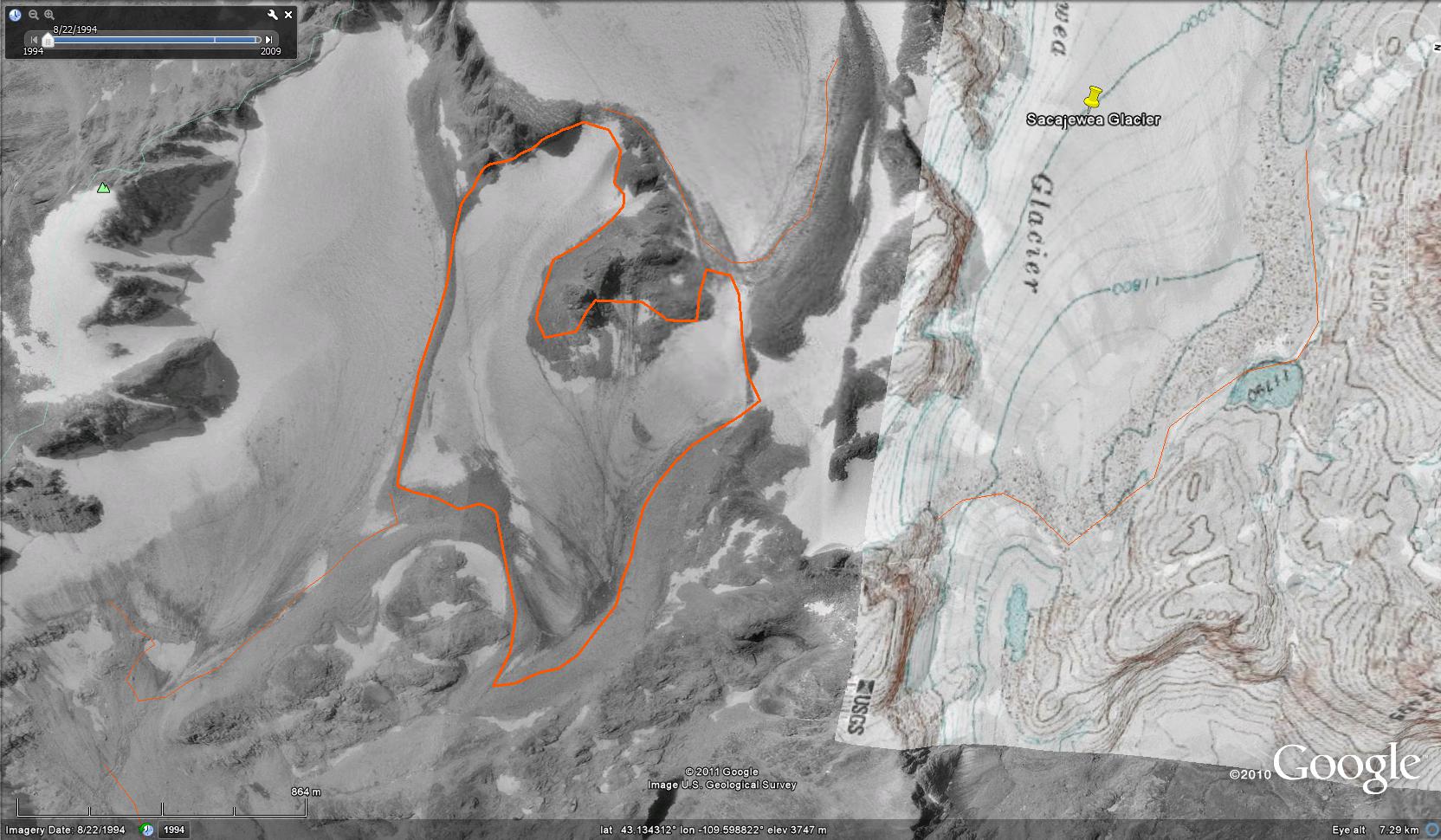
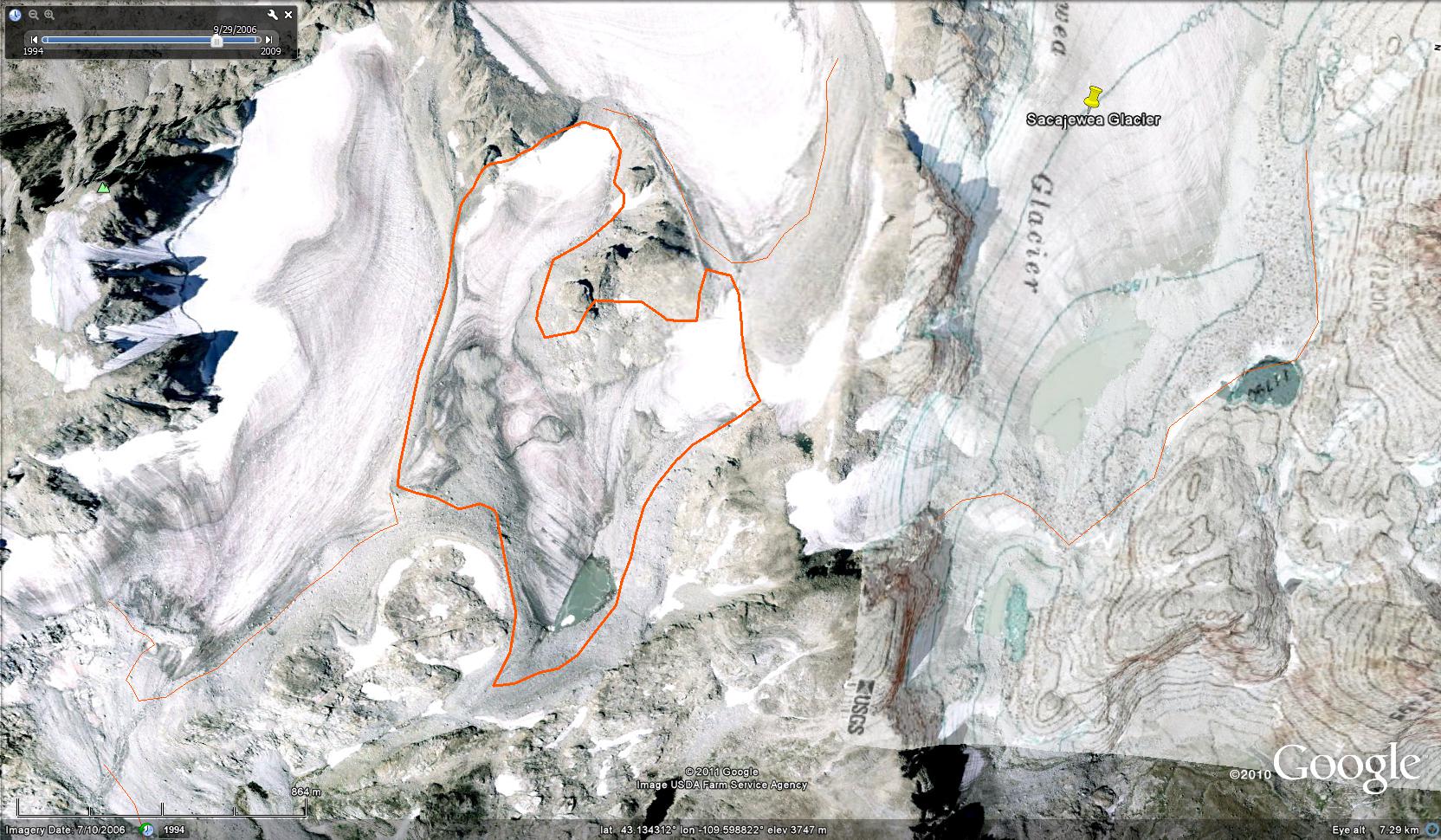
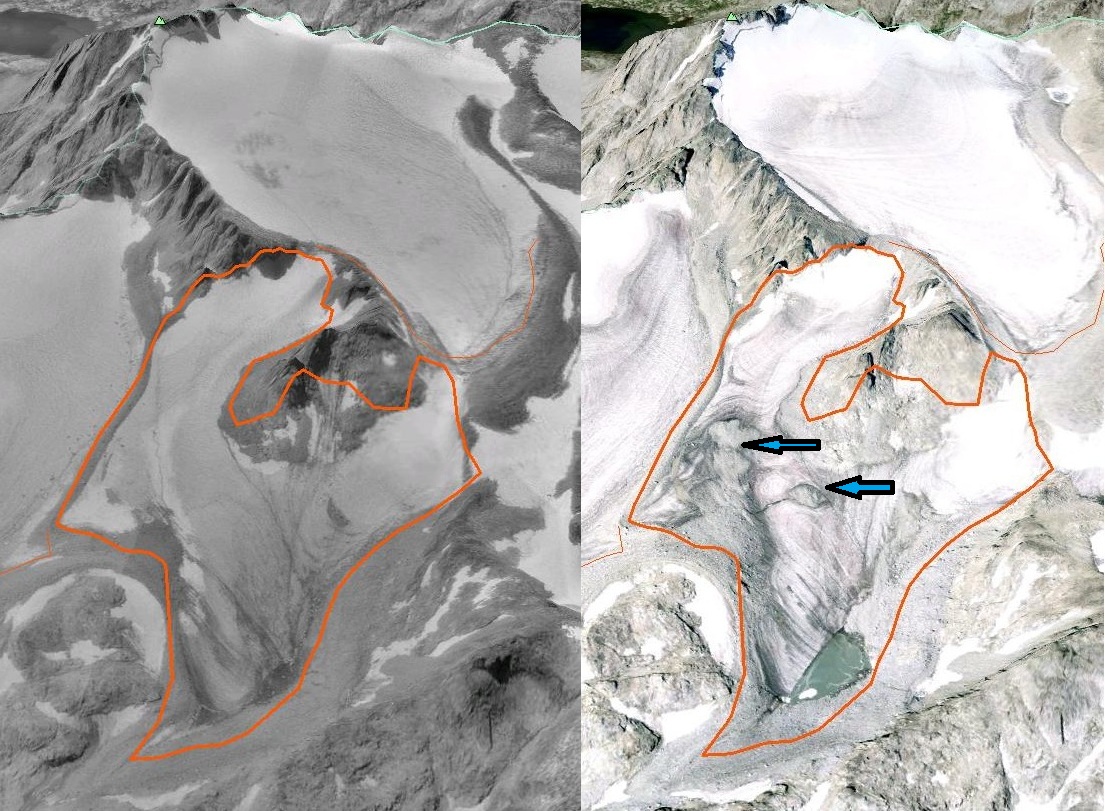
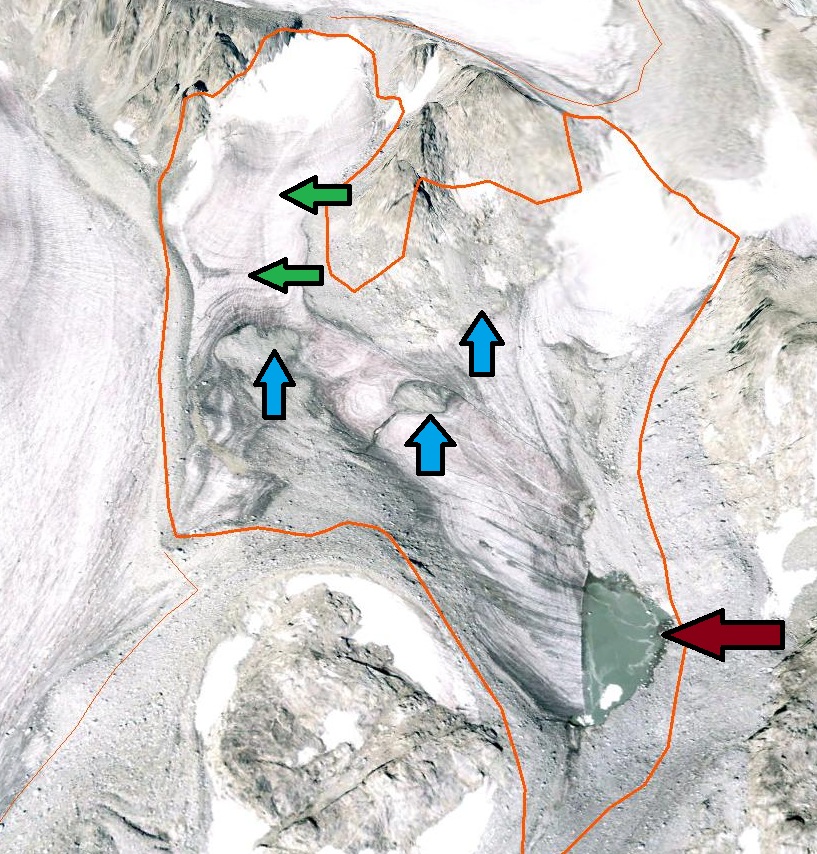
The Wind River Range is host to 40 glaciers that all have retreated significantly over the last 25 years and 45 years. Of the 15 glaciers observed in detail, nine will not survive current climate (Pelto, 2008). The Lower Fremont is one of the glaciers that will not survive. A comparison of its extent from 1966 USGS map, 1994 USGS aerial photography and 2006 satellite image in Google Earth indicate the retreat. The 1966 glacier boundary is outlined in orange. . The glacier has lost 23 % of its area and the terminus has 130 retreated meters. A new lake has formed since 1994 at the terminus, and new outcrops of rock have emerged, as noted in the combined 1994-2006 image below.The key changes that indicate the glacier is not going to survive are the outcrops of rock that have emerged in the upper portion of this glacier, blue arrows. The new lake is indicated by the red arrow. The green arrows indicate the numerous firn layers exposed at the surface. Both the exposure of firn layers and the emergence of bedrock and rock through the glacier indicates the lack of a consistent and persistent accumulation zone. This indicates the glacier will not survive ((Pelto, 2010 and Pelto, 2011).