

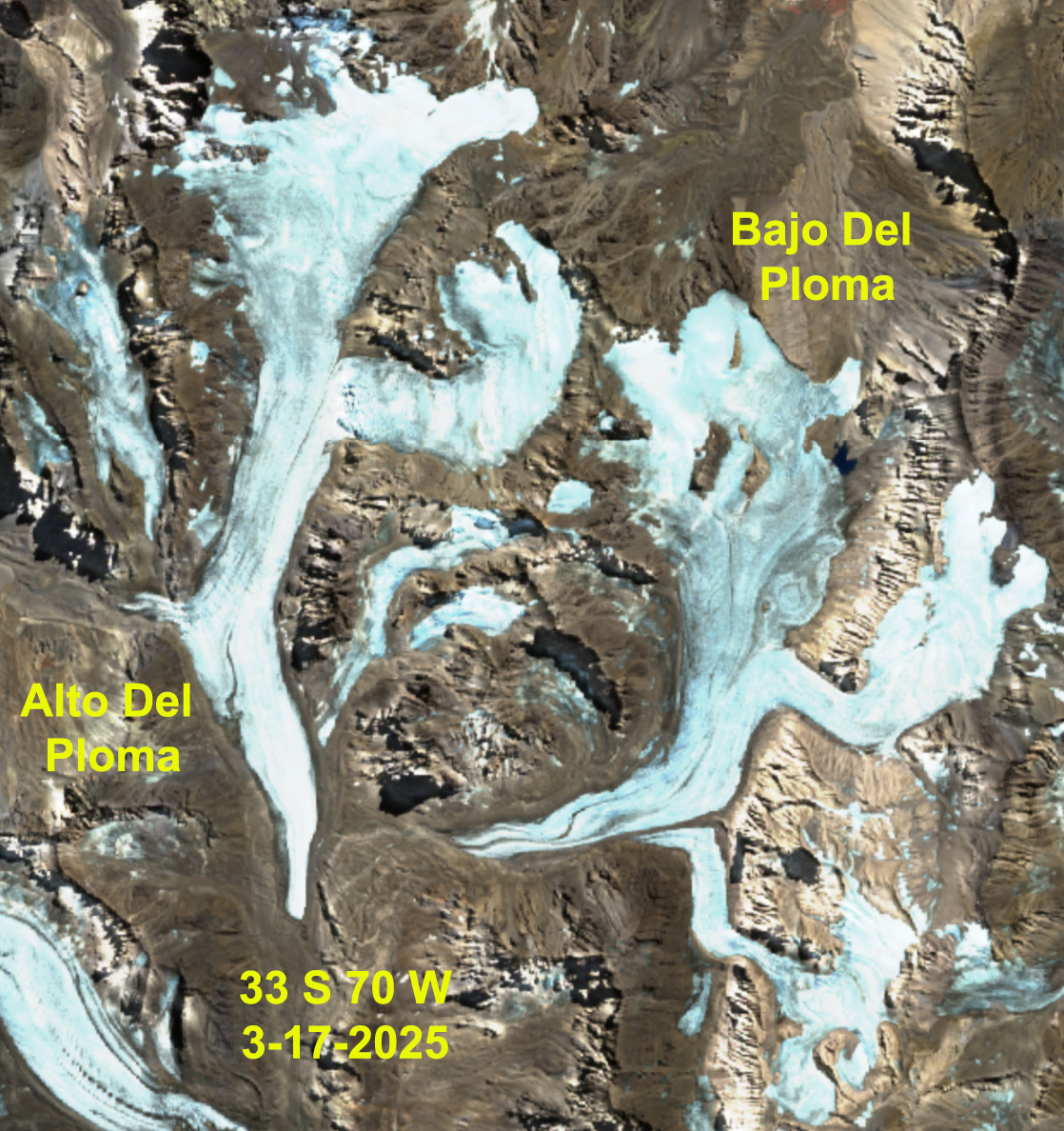
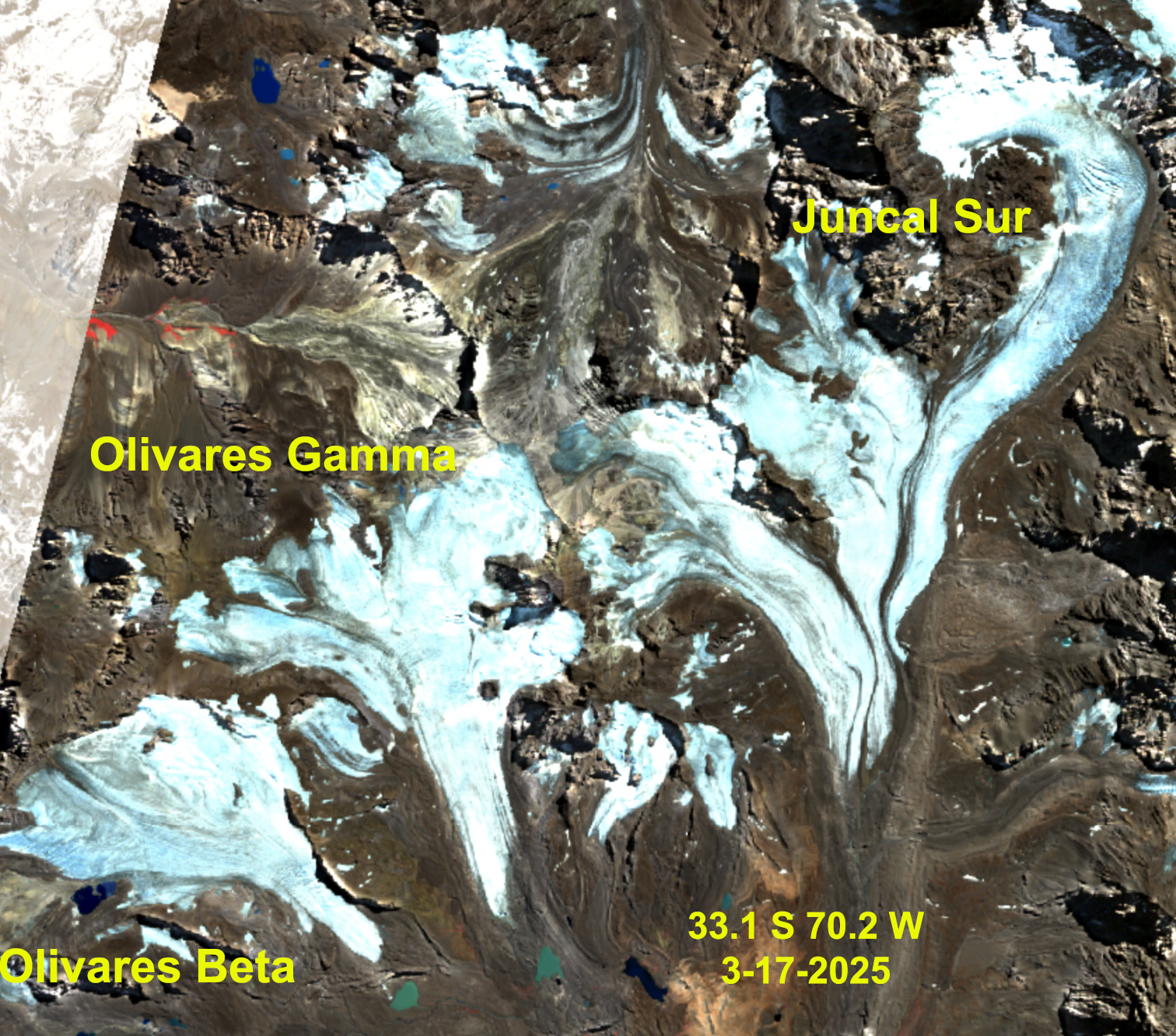
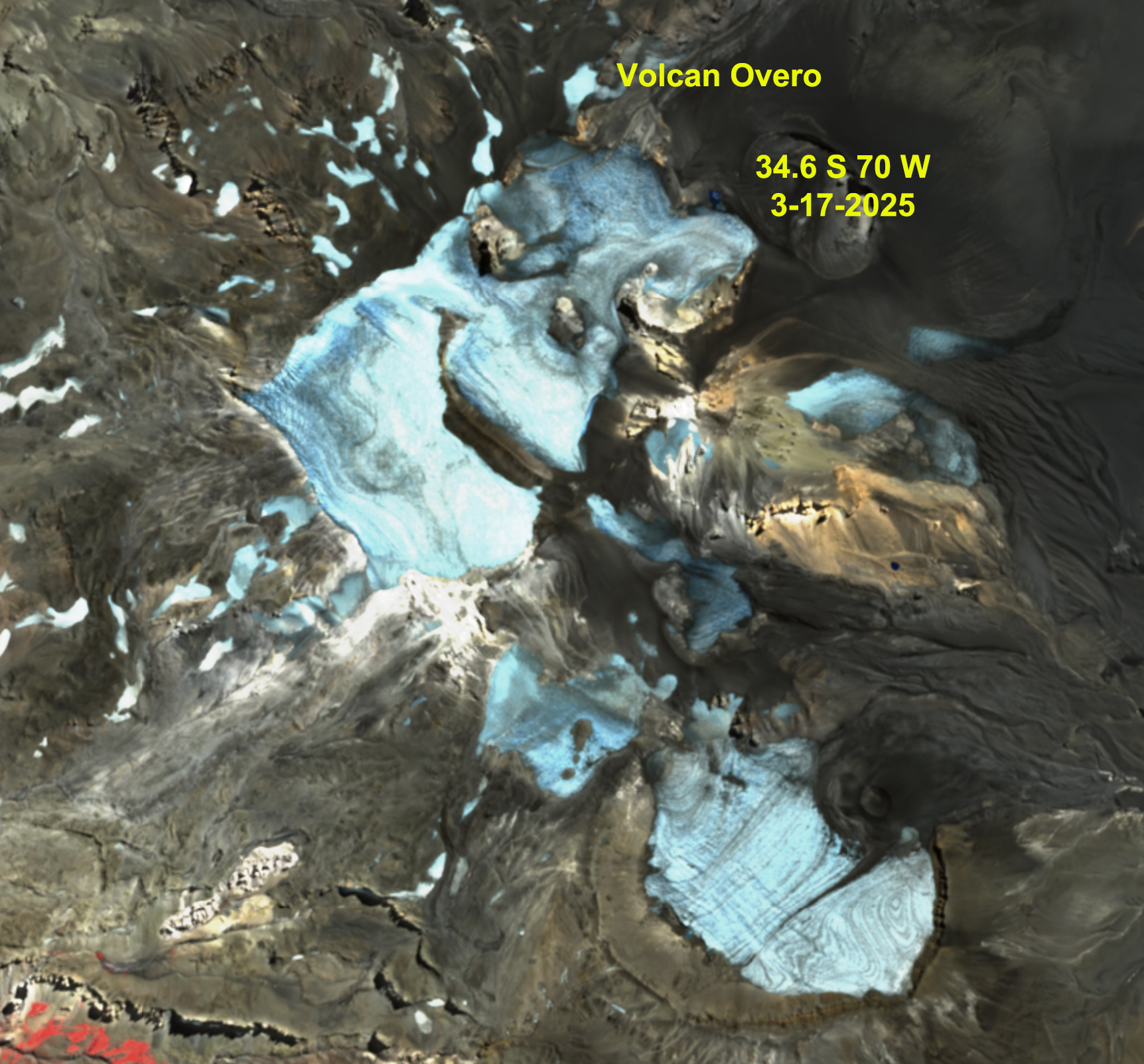
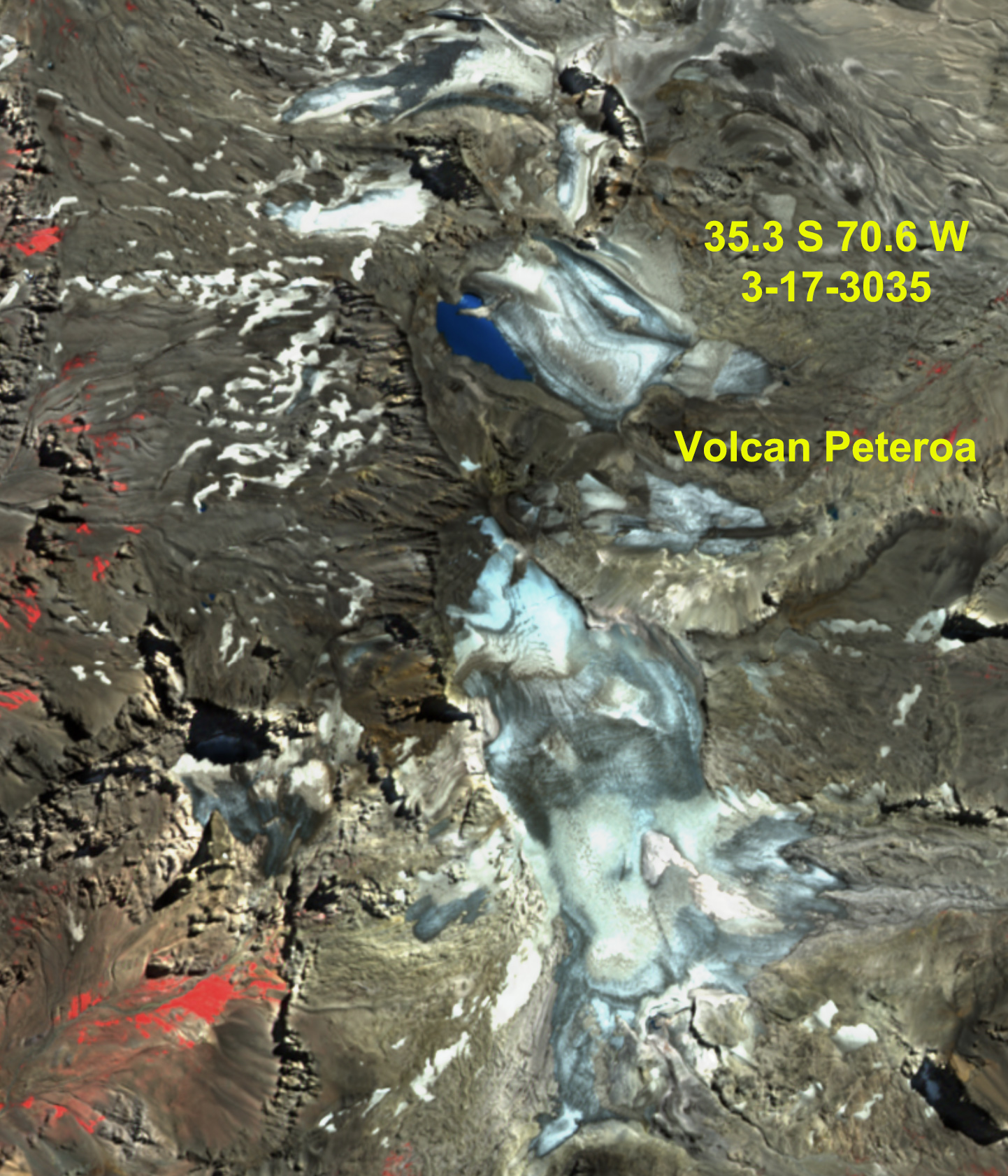
For an alpine glacier to thrive it must remain 50-60% snowcovered throughout the year, even at the end of the summer. To survive it must have consistent significant snowcover at the end of summer, indicative of a persistent accumulation zone (Pelto, 2010). In the Central Andes of Argentina and Chile I have chronicled the near total loss of snowpack, leading to dirty/dark snowcover free glaciers. in 2022 and 2023 (Pelto, 2023). In 2025 this pattern is again apparent. From north of Santiago at Olivares Glaciers and Alta/Baja de Plomo Glacier to east of Santiago at Volcan Overo adn Fiero Glacier to south of the Santiago region at Cobre Glacier and Volcan Peteroa we see glaciers in mid-March with less than 10% snowcover remaining. This is indicative that the 2024/25 mass balance period for the Central Andes will be one of significant loss.


 From a Glaciers Perspective