Colonia Glacier, Chile Retreat and Periodic Lake Outbursts


colonia-compare-1024x495

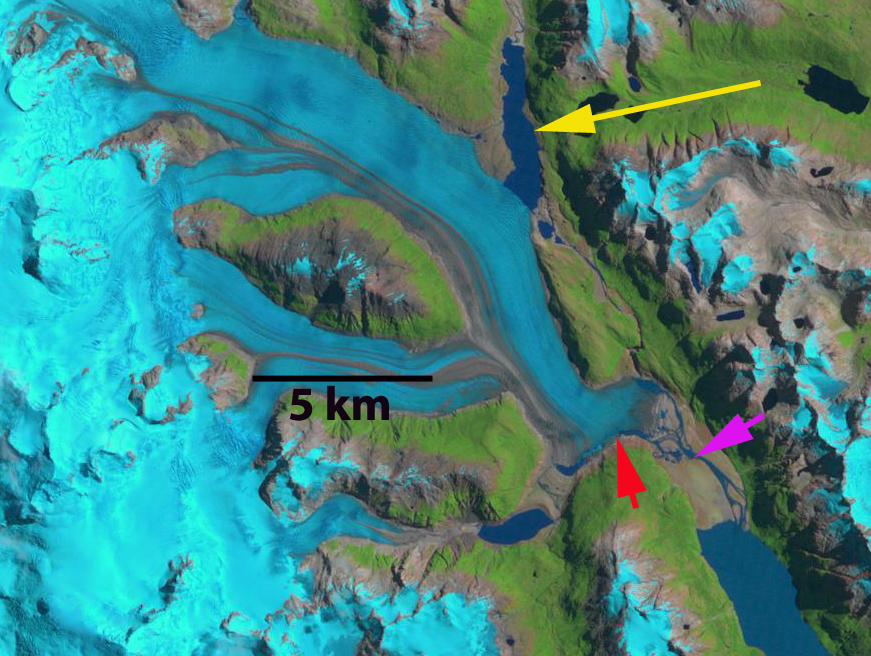
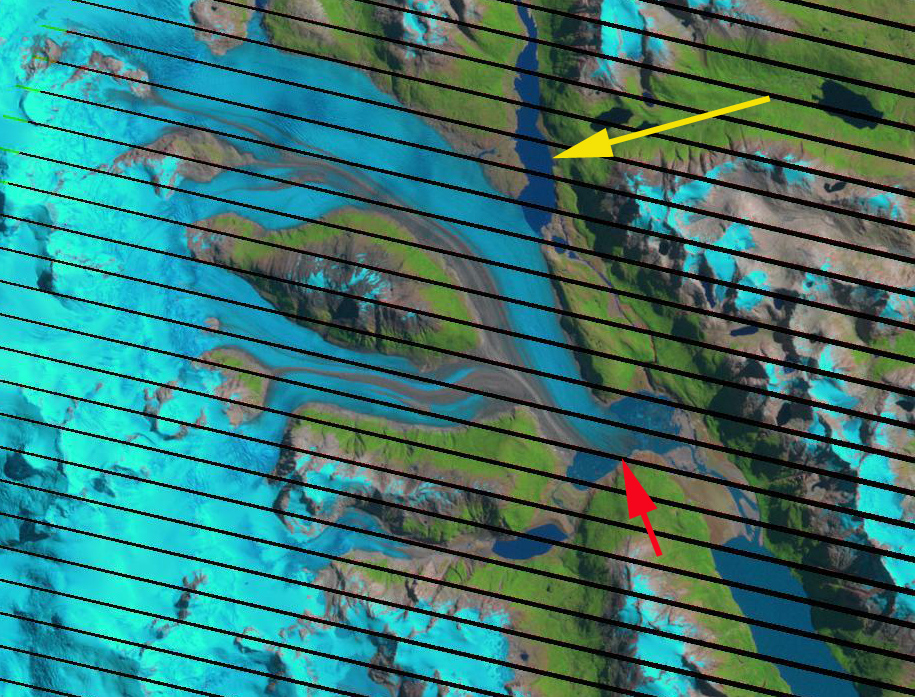
Comparison of 1987 and 2015 Landsat images indicating retreat from red arrows to yellow arrows of 2.5 km and development of a new lake at the terminus. orange arrow indicates glacier dammed lake that fills and empties periodically. 

Colonia Glacier drains east from the Northern Patagonia Icefield feeding the Baker River, Chile. It is the largest glacier draining east from the NPI.  A comparison of the 1987  and 2015 images indicate a 2.5 km retreat of the glacier front, development of a large lake and areas of thinning well upglacier at the purple arrows. The recent substantial retreat of Colonia Glacier like Glacier Nef just to its north is posing new hazards. The glacier is unusual in the number of lakes that are adjacent to or feed into the adjacent glacier dammed or proglacial lakes. In the image below Lake A=Arco Lake, Lake B=East Terminal Lake, Lake C=Cachet 1 , Lake D= West terminal Lake, Lake E=Colonia Lake and Lake F=Cachet 2. In the case of Baker River the outburst floods are a threat to the planned hydropower developments as documented by Dusaillant and others (2009).  Hidroaysen Project proposed 5 dams on the Baker and Pascua River generating 2750 MW of power that after initial permit approval in 2011Chile’s Committee of Ministers overturned the environmental permits in 2015.

Slide1

Google Earth image from 2005.

The glaciers recent retreat and glacier lake outburst floods have been closely monitored by the Laboratorio de Glaciología in Valdivia, Chile.  Aniya and others (1999) observed that Colonia Glacier began a rapid retreat after 1985 from 1997-2005 that has further accelerated, with a general frontal retreat of 2 km. Rivera and others (2007) observed that the Colonia Glacier had lost 9.1 square kilometers of area from 1979-2001, which is 3% of the total glacier area and thinned 1.1 m per year in the ablation zone.

Image from Laboratorio de Glaciologia, frontal change 1944-2005.

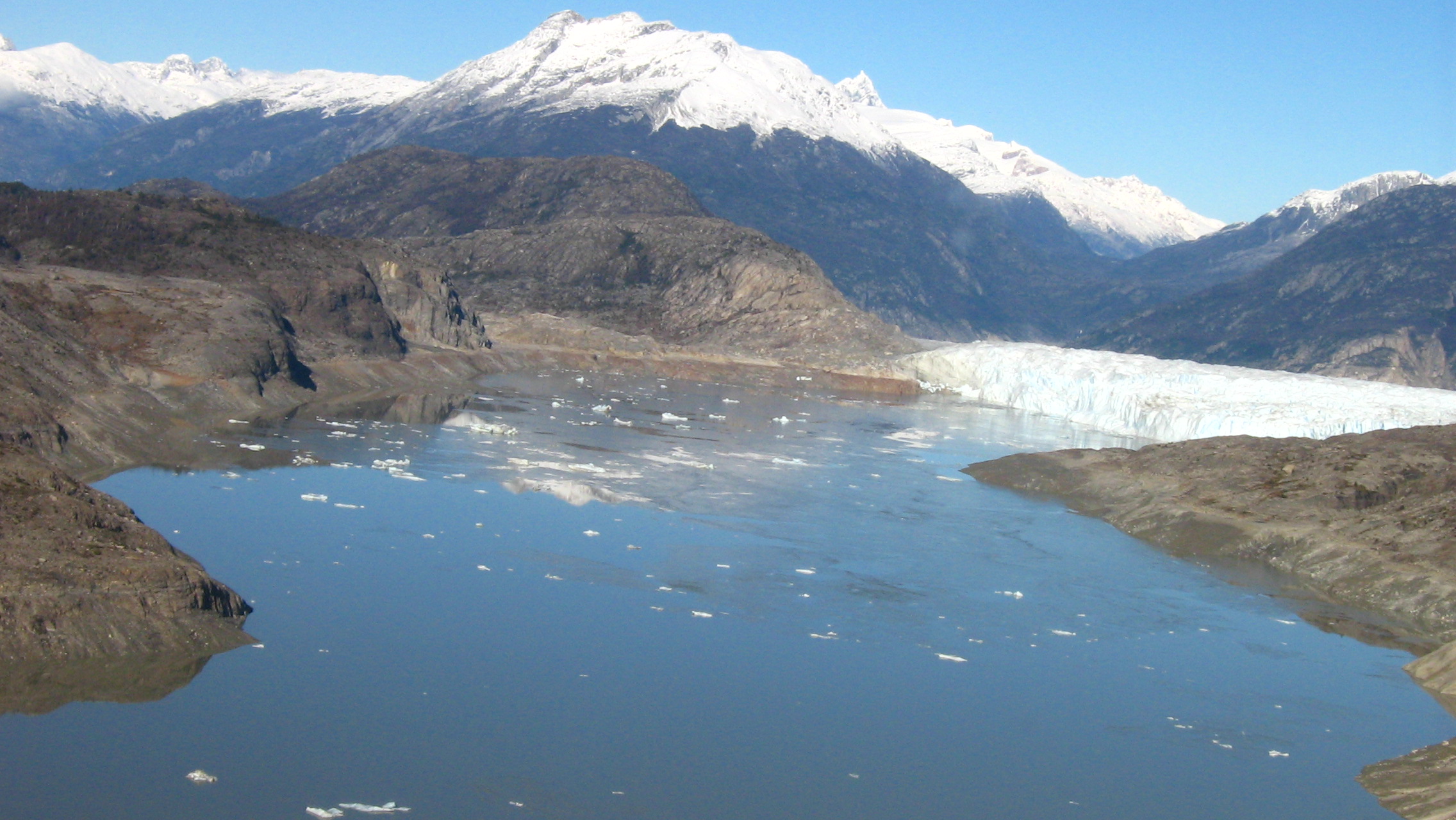
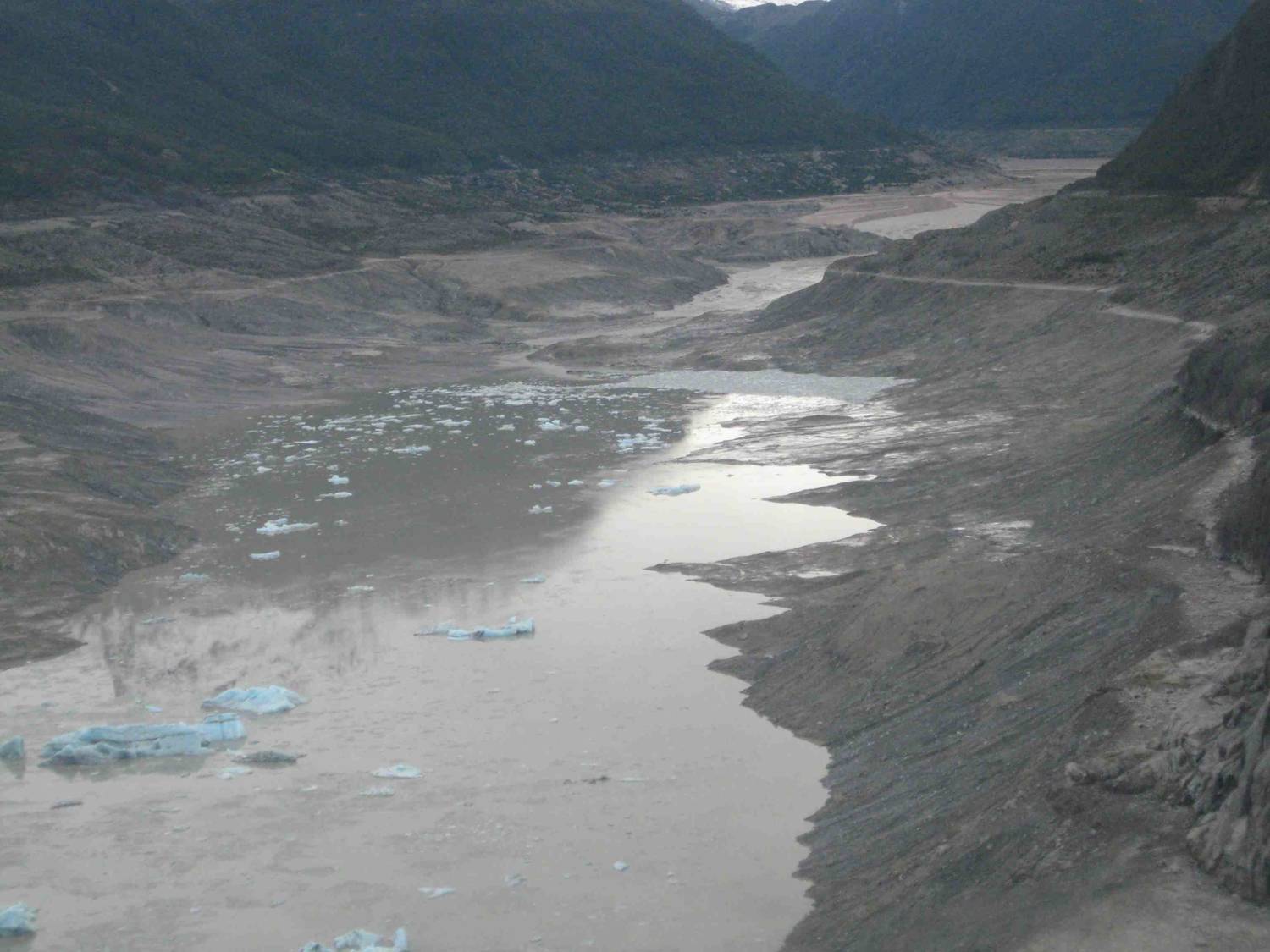
The Laboratorio de Glaciologia’s observed in the spring of 2008 Baker River suddenly tripled in size, in less than 48 hours, roads, bridges, and farms were severely damaged. Lake Cachet 2 had vanished the 5 square kilometer glacial lake had emptied 200 million cubic meters of water in just a matter of hours. This lake drained beneath the glacier after sufficient water had filled the lake to buoy part of the glacier and subglacial conduits had begun to develop. Since Cachet 2 emptied in April 2008, the lake has emptied at least six more times October, December 2008, March and September 2009, March 2010, and early 2013 with peak flows released of 3000 cubic meters per second. Below are images of Cachet 2 full iand empty in 2008 from Laboratorio de Glaciologia’s. Also a  comparison of before and after drainage in Landsat images from Sept. 2012 and Feb. 2013.

cachet 2 empty

Cachhet Lake full looking toward Colonia Dam 2008

Cachet Lake after emptying looking upvalley away from Colonia Glacier 2008. 

colonia outburst 2013

Cachet lake full in Sept. 2012 and emptied in Feb. 2013 Landsat images.

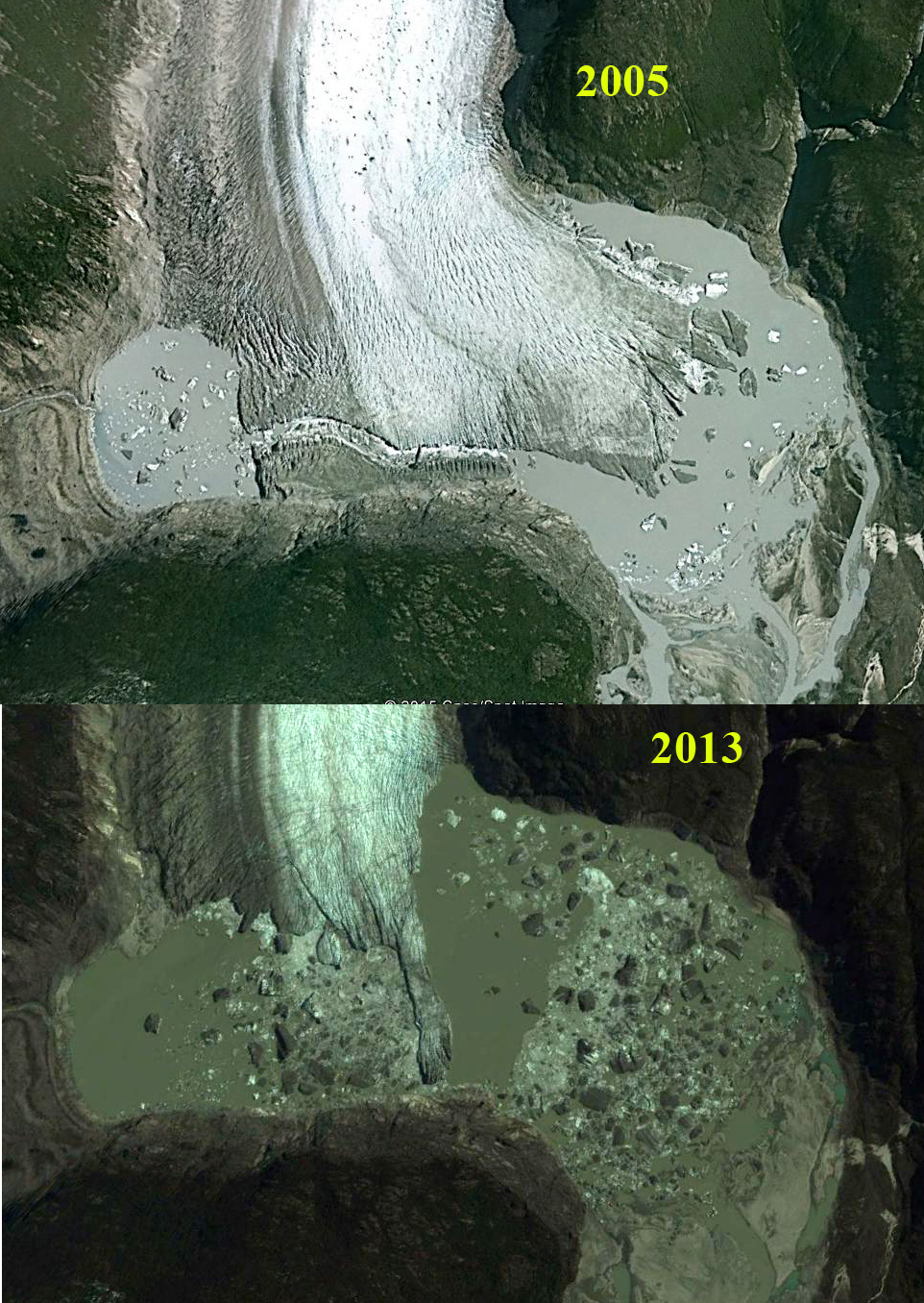
The two lakes at the terminus of the glacier did not exist in 1979, the western most terminus lake drained into the easternmost terminus lake (D) via a sub-glacial tunnel after formation in the late 1980’s until 2005 when a channel was cut right through the glacier terminus. Retreat of the glacier terminus first led to significant lake development in 2001.  This is evident in the image below, there is still glacier ice on both sides of this drainage channel.  By 2015 the lakes have merged into a single large proglacial lake at the terminus that is 3.2 km wide.The development and demise of glacier dammed lakes and the resultant problem of glacier lake outburst floods is not rare today, Imja Glacier, and Tulsequah Glacier are other examples.

Lake expansion at the end of the Colonia Glacier from 2005 to 2013, Google Earth images. 
colonia terminus lake

Lake Cachet 2 Jökulhlaup Colonia Glacier, Chile

Colonia Glacier drains east from the Northern Patagonia Icefield feeding the Rio Colonia and then Baker River, Chile. A Feb 8th 2013 Landsat image caught the impacts of a jökulhlaup in progress, glacier lake outburst flood. This post examines the filling and emptying of Cachet Lake 2 and its impacts and the continued retreat of Colonia Glacier. The glacier is unusual in the number of lakes that are adjacent to or feed into the adjacent glacier dammed or proglacial lakes. In the image below Lake A=Arco Lake, Lake B=East Terminal Lake, Lake C=Cachet, Lake D= West terminal Lake, Lake E=Colonia Lake and Lake F=Cachet 2. colonia geThe glaciers recent retreat has been closely monitored by the Laboratorio de Glaciología in Valdivia, Chile. Aniya and others (1999)observed that Colonia Glacier began a rapid retreat after 1985, with a comparison of a RADARSAT image from 1997 and a Landsat 1987 image indicating a retreat of 400 m. From 1997-2005 the retreat has further accelerated, with a general frontal retreat of 2.5 km. The retreat has continued to 2013 as examined below.

In the spring of 2008 Baker River suddenly tripled in size, in less than 48 hours, roads, bridges, and farms were severely damaged. Lake Cachet 2 had vanished the 5 square kilometer glacial lake had emptied 200 million cubic meters of water in just a matter of hours. This lake drained beneath the glacier after sufficient water had filled the lake to buoy part of the glacier and subglacial conduits had begun to develop. Since Cachet 2 emptied in April 2008, the lake has emptied thirteen times, with the Feb 7-8 release in 2013 the most recent. In 2008 the General Directorate of Water (DGA) setup a station to monitor the water level and telemeters this information, so that any outburst can be quickly identified. The two pictures below are of the Lago Cachet 2 basin filled and empty cachet 2 fullcachet 2 empty
In this case notification came from Fabian Espinoza at the DGA.
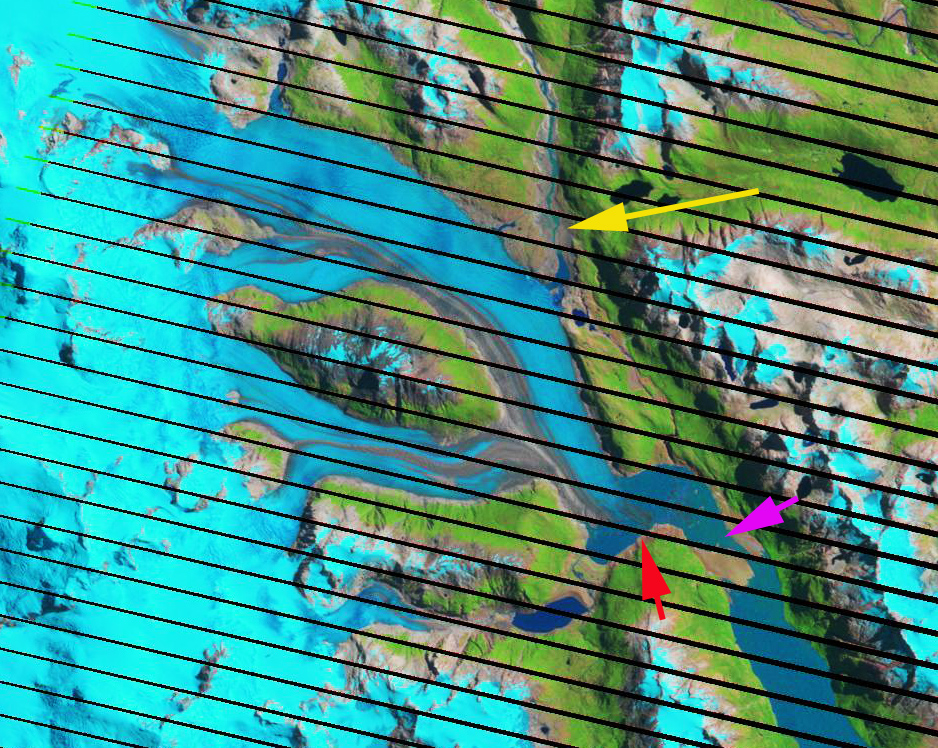
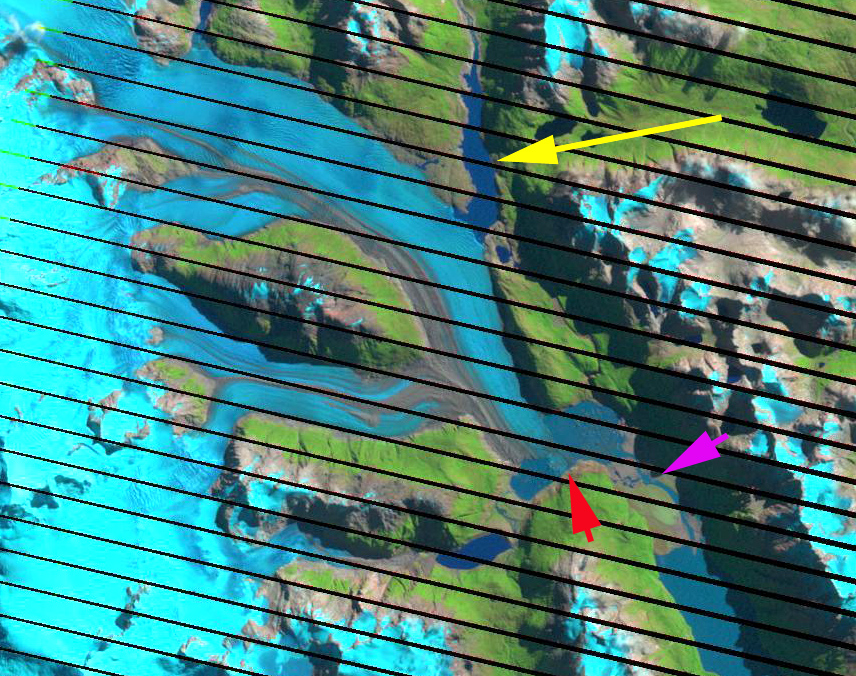
Below is a sequence of images from Sept. 17, 2012 when the lake is full, then on Feb. 8, 2013 just as the lake is finishing draining and then on March 28, 2013 after the lake has mostly refilled. The yellow arrow indicate Lago Cachet 2, the red arrow where the terminus has its last connection to a peninsula between the two proglacial terminus lakes and the purple arrow to the outwash plain between the proglacial terminus lake and Lake Colonia. In the Sept. 2012 image the east terminus lake has its normal water level and the outwash plain is 3 km long between the lakes. On Feb. 8th the water level in both Colonia Lake and the east and west terminus lake have been raised and most of the outwash plain is flooded. Even Colonia Lake has risen considerably, notice the southeastern edge of the outwash plain flooded by the outburst. By March 28, 2013 Lago Cachet is mostly filled again and the outwash plain is normal. The terminus connection to the red arrow peninsula has declined in width from 1 km in 2012 to less than 500 m by March 2013. The Feb. 2013 image indicates that the high water level in the terminus lakes partially submerged the terminus. colonia glacier sept 2012
Sept. 17 Landsat

colonia glacier feb 2013
Feb. 8 Landsat

colonia Glacier april 2013
March 28, Landsat

The terminus of the glacier continues to retreat and its area in the proglacial terminus lake basin contract. Below is a sequence of images from 1999, 2003, 2005, 2011 and 2013. In 1999 the terminus lakes barely exists. By 2004 the lakes have a combined area of 1.4 square kilometers. In the Google Earth image from 2005 this has expanded to 2.3 square kilometers. By 2012 the terminus lakes have expanded to an area of 4.0 square kilometers, and the glacier terminus has lost the same area. The connection to the red arrow peninsula will be lost very soon, which should lead to further terminus tongue breakup. This is much like the breakup observed at Glaciar Steffen and Glaciar Gualas colonia glacier 1999

colonia glacier 2004

colonia ge

colonia 2011

colonia Glacier april 2013