Since 1984 we have measured glacier mass balance on North Cascade glaciers every year. Mass balance is the difference between accumulation (income) and melt (expenses). The accumulation season typicallys ends around May 1. In 2026 it ended on April 19.
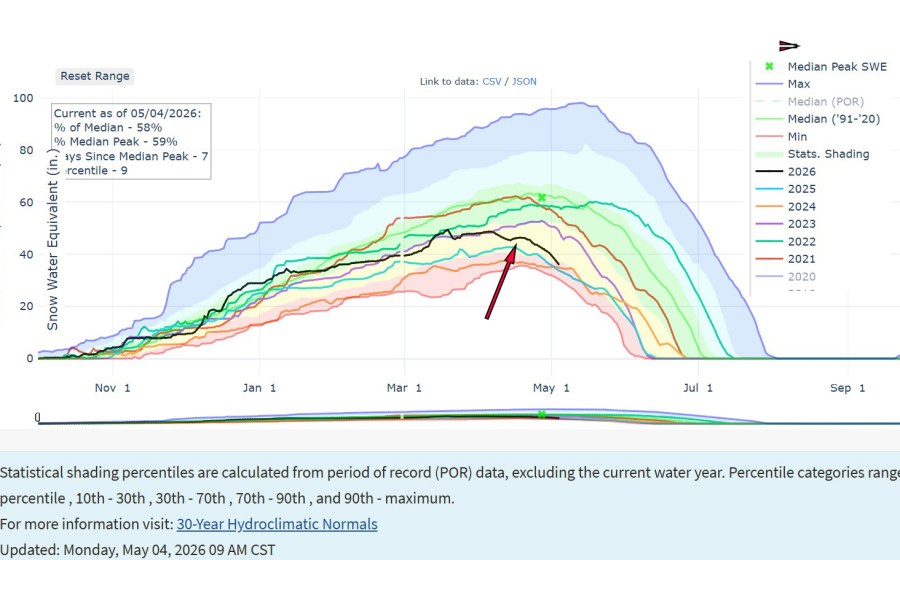
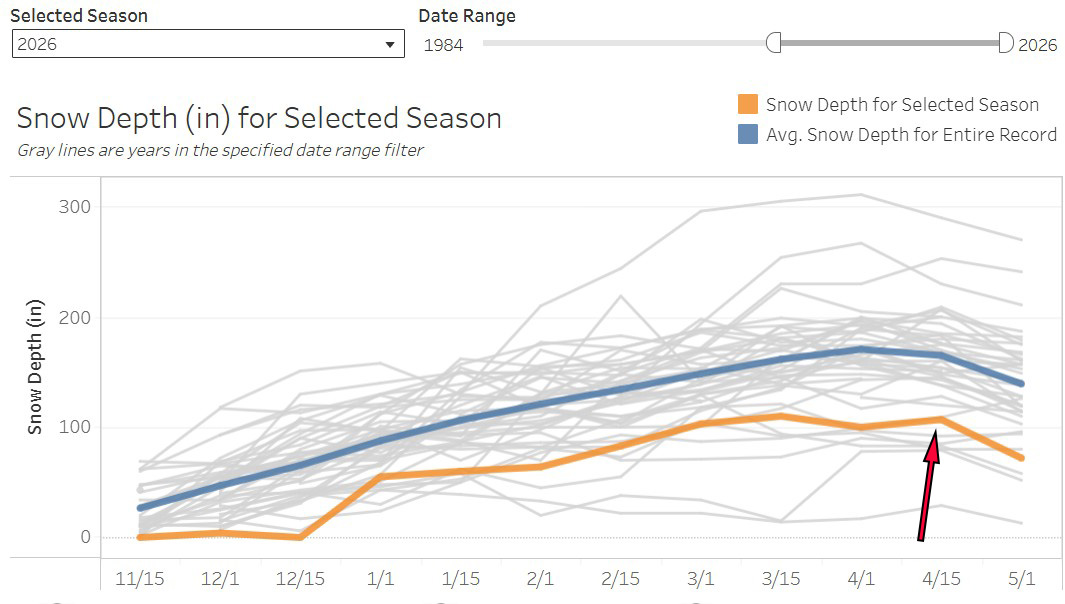
In early December snowpack was average above 1500 m (5000 feet) and limited below. The region was then impacted by a historic atmospheric river from Dec. 8-12. that led to flooding and landslides closing I-90 and Highway 2. Snowpack was completely lost at most locations below 1500 m including the Mount Baker station in Heather Meadows (1285 m). Above 1500 m at Lyman Lake (1825 m) SWE increased by 15 cm, which was 50% of the 30 cm of precipitation that fell in this period. The last half of December snow depth increased from 0 to 1.5 m at Heather Meadows. Snowpack built to 1.2 m w.e. at Lyman Lake by March 15, and then hovered around this peak until mid-April. At Heather Meadows snowpack depth peaked at 2.8 m on March 15th and was at 2.7 m on April 15th. This April 15th represented the maximum snowpack for elevations at 1500 m and above. The snowpack was less than 50% of normal below 1800 m. Above 2000 m warm wet winter events did deliver snowfall that was rain below and the situation is likely better. Working with Snowgoat Skimo as they prepare for the Kulshan Randoneee has noted snowpack of over 6 m at the 2000 m level.
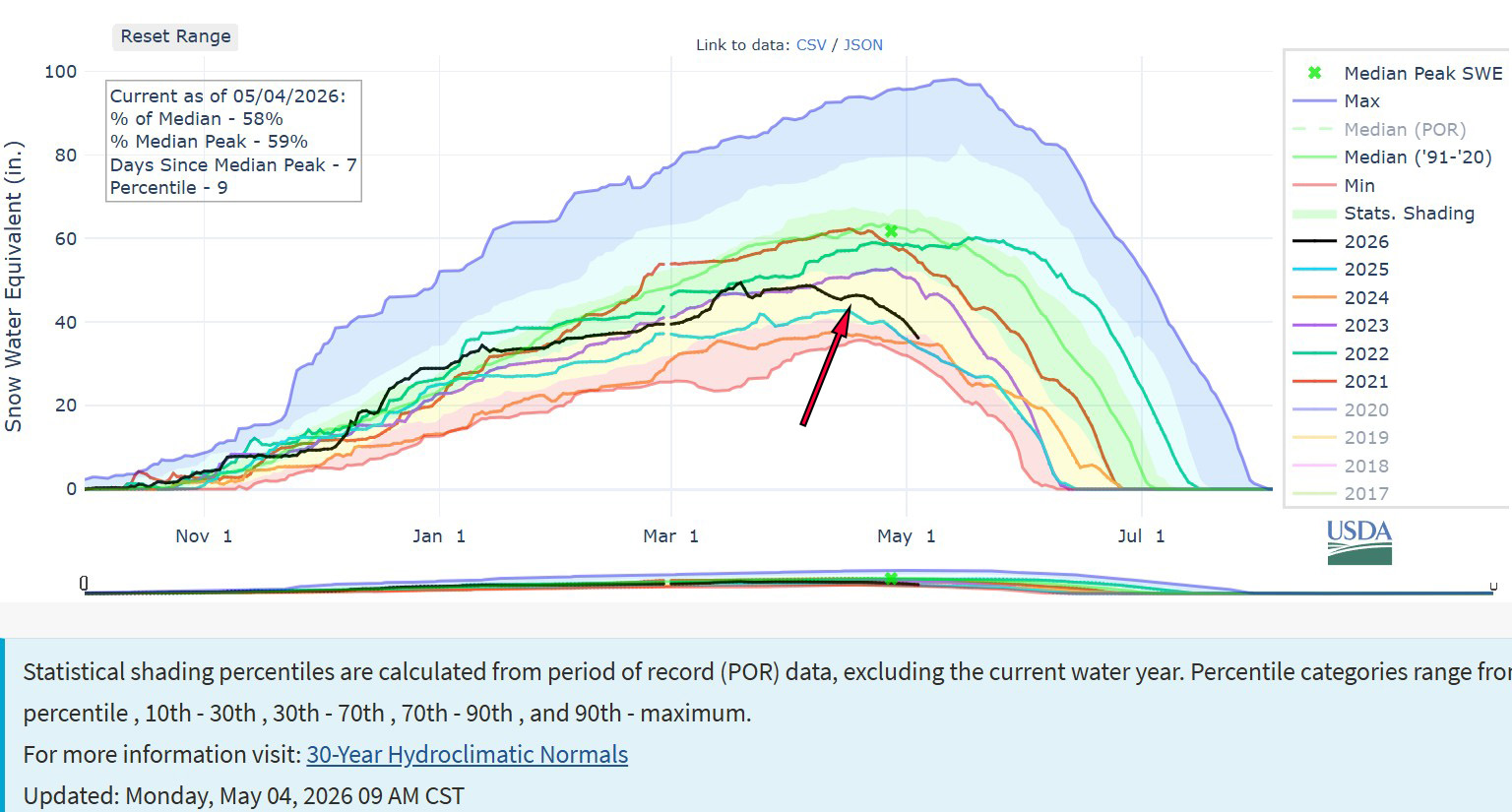
The transition to melt season was rapid with a particularly warm period from April 26-May 4 has led to rapid melt off of snowpack. At Lyman Lake a third of the snowpack was lost by May 8th. At Heather Meadow 50% of snowpack depth was lost by May 8th.
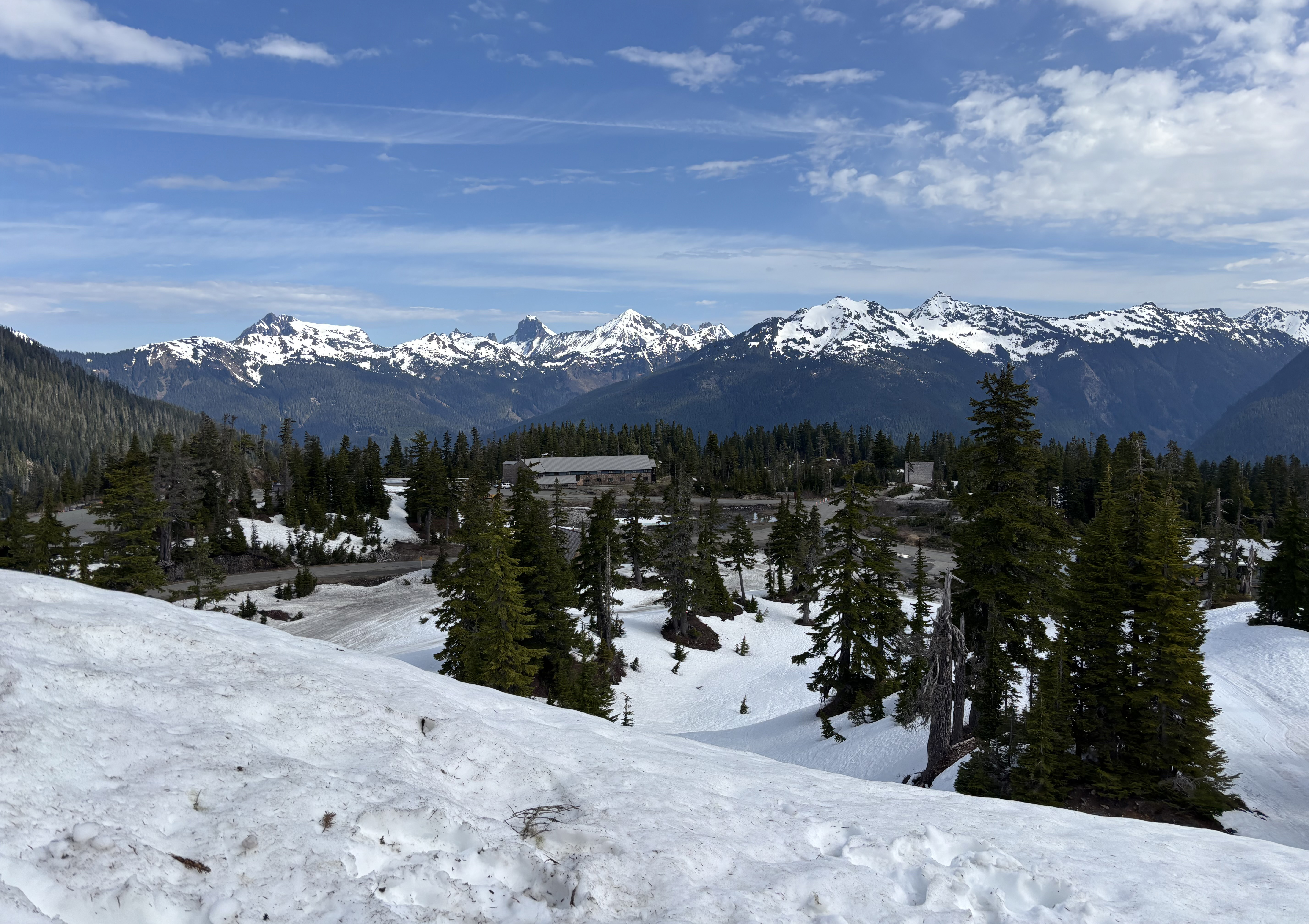
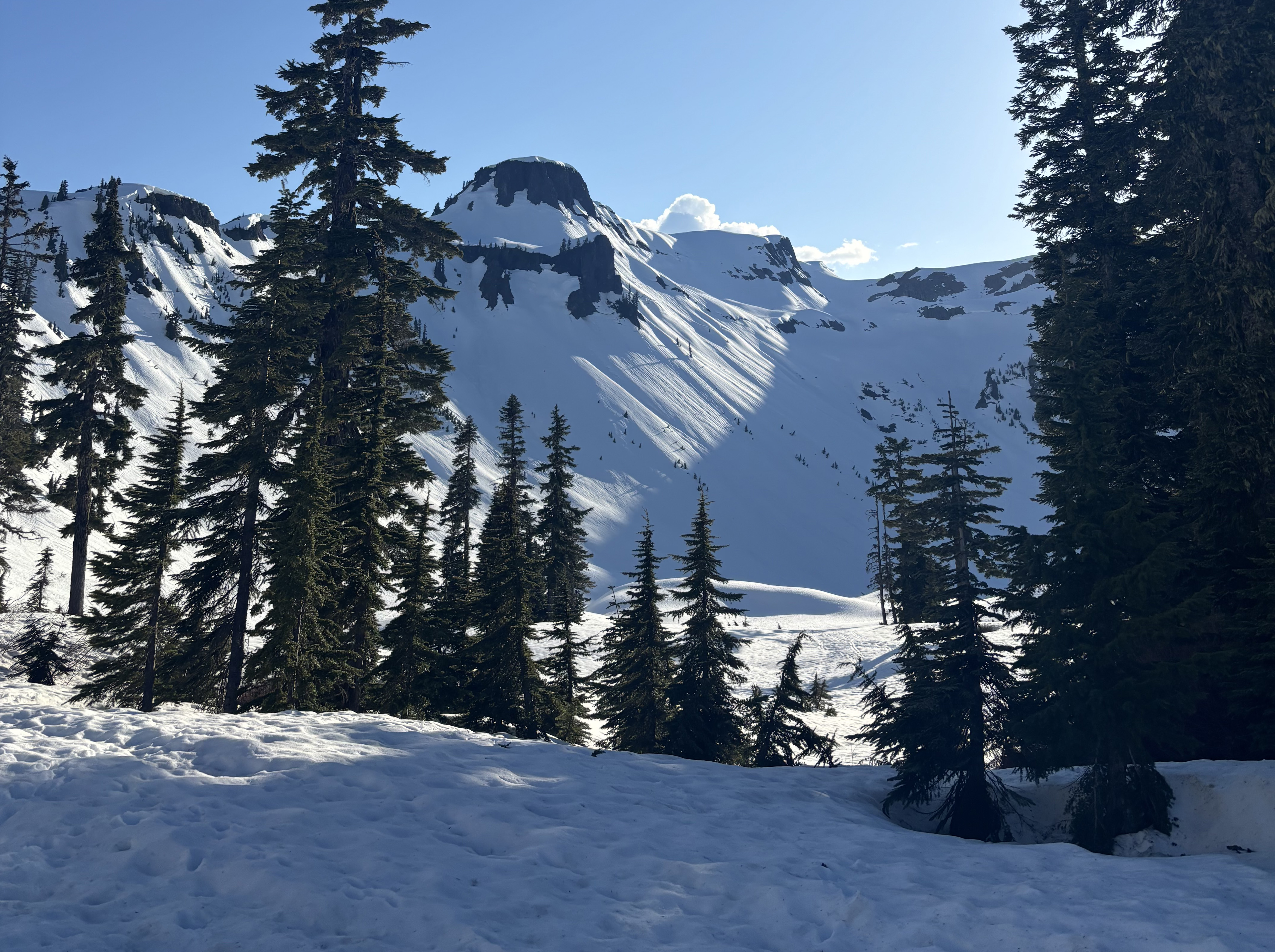
View toward lower Heather Meadows and Baker ski area-snowline above 1200 m on 5-2-26.-where the snowpack is already thin. (Jill Pelto photo)
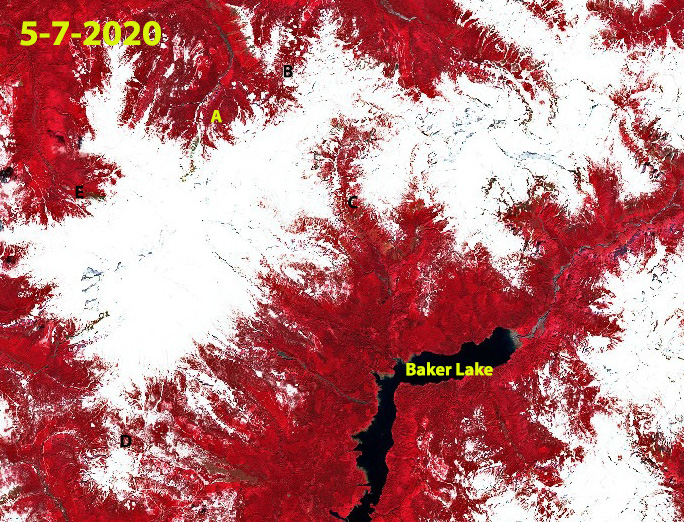
Sentinel Image from 5-7-2020 a normal snow year-snow line 850 m.
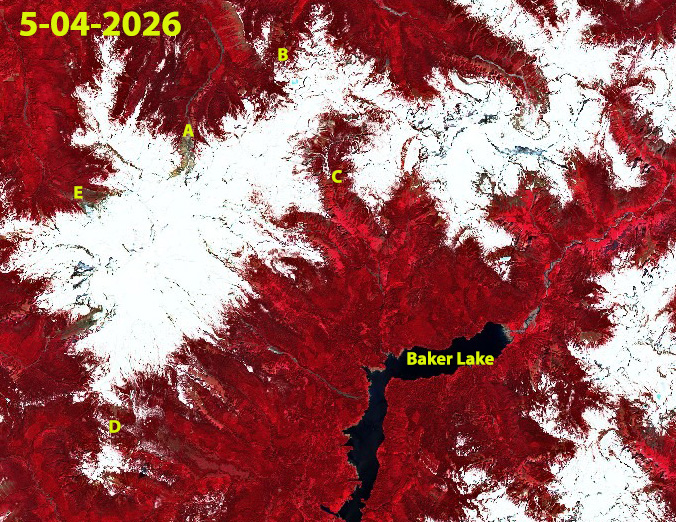
Sentinel image from 5-4-2026 illustrating regional snow line at 1200 m. The limited winter snowpack indicates that in 2026 we have a low accumulation/income for glaciers and melt/expenses already underway. Coleman Glacier terminus (E) is already exposed ice the first week in May. We will be in the field this summer to measure the details. We are expecting more bare ice and rockfall during our work.
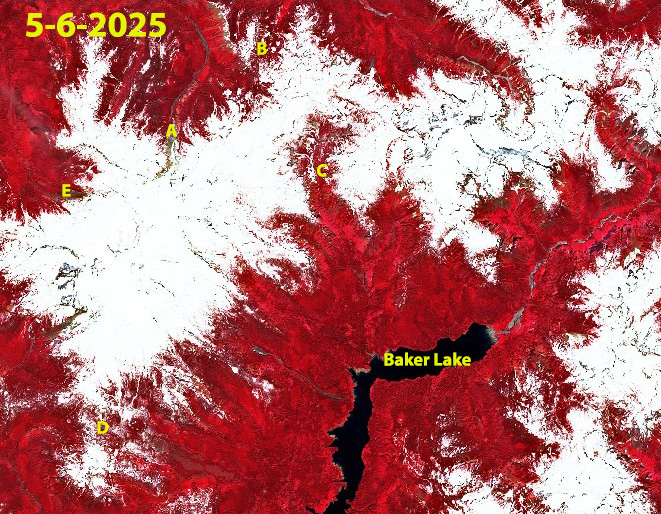
Sentinel image from 5-6-2025 snow cover- snow line 975 m.
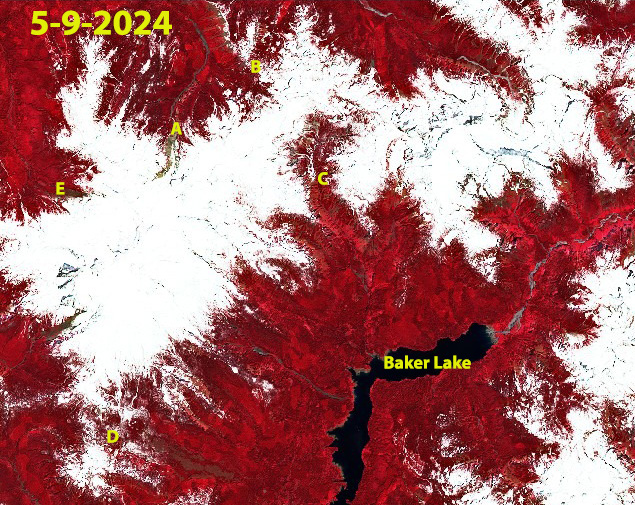
Sentinel image from 5-9-2024 with snow line at 975 m.
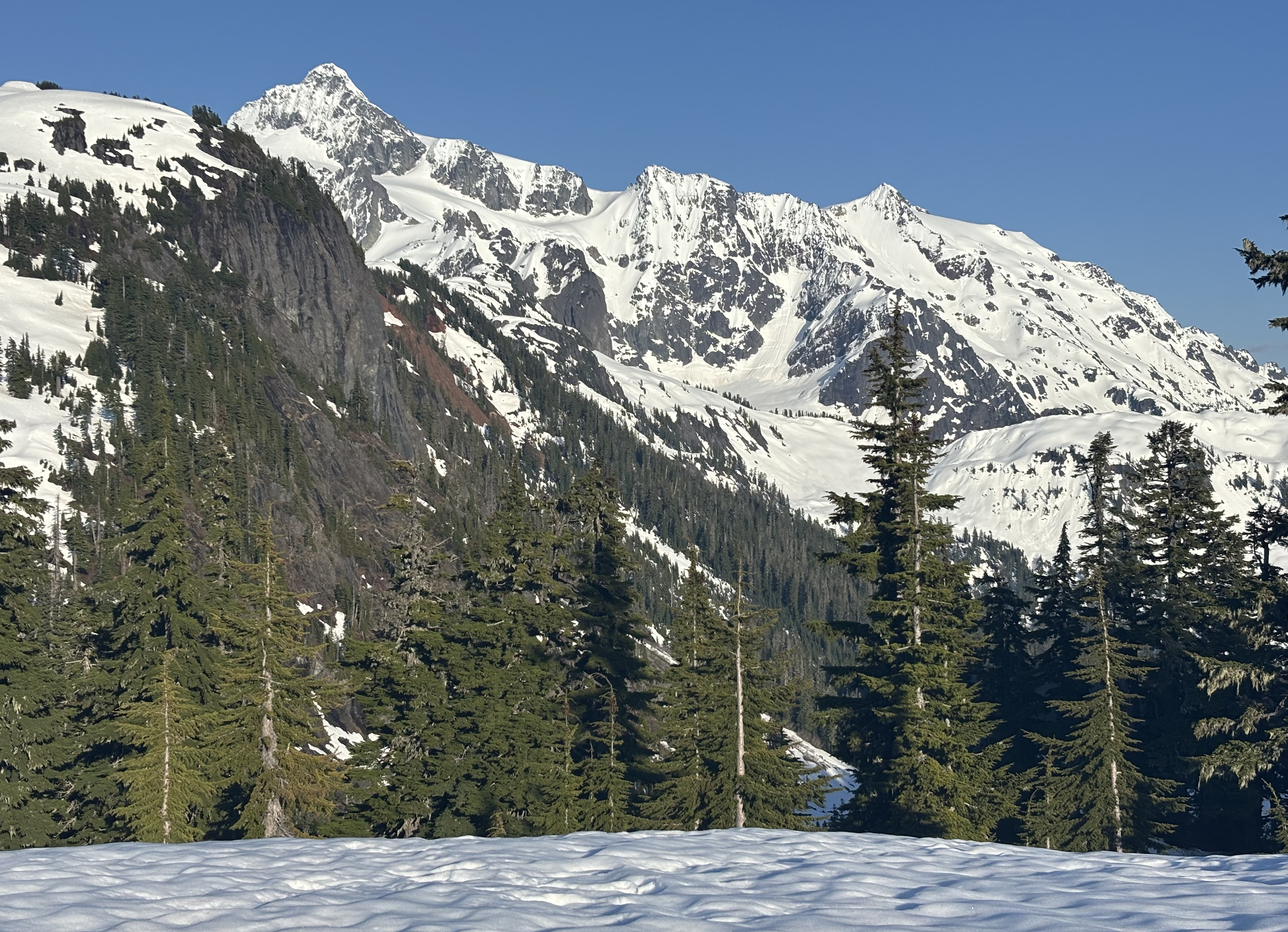
Looking from Austin Pass across to Shuskan on 5-3-26 (Jill Pelto photo)
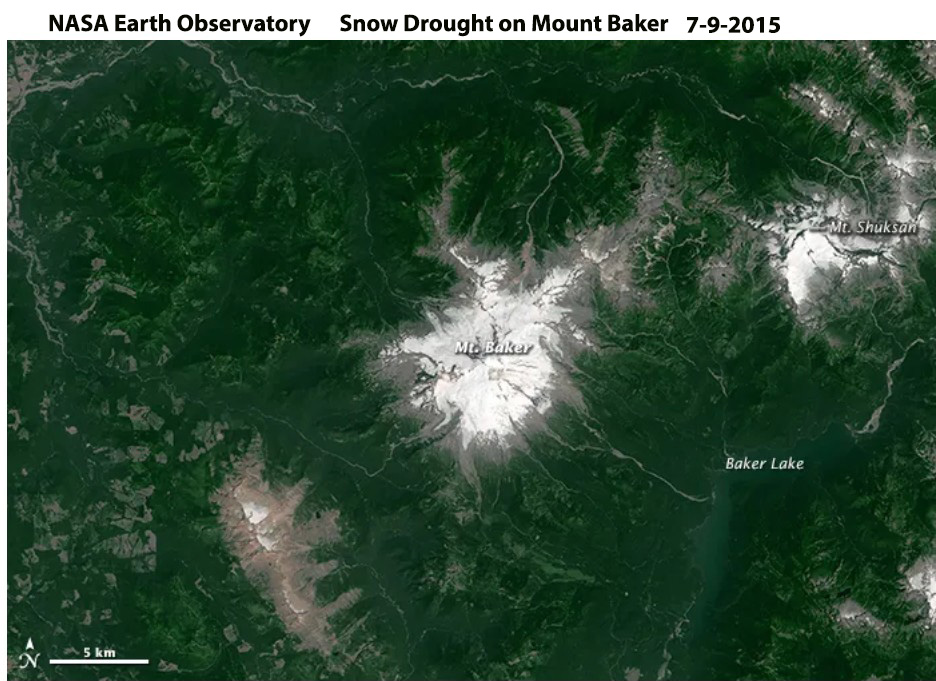
The outlook is poor for glaciers and snowpack in the Pacific Northwest in 2026. How this measures up with the snow drought of 2015 that we reported on in a project with NASA will be important to observe.