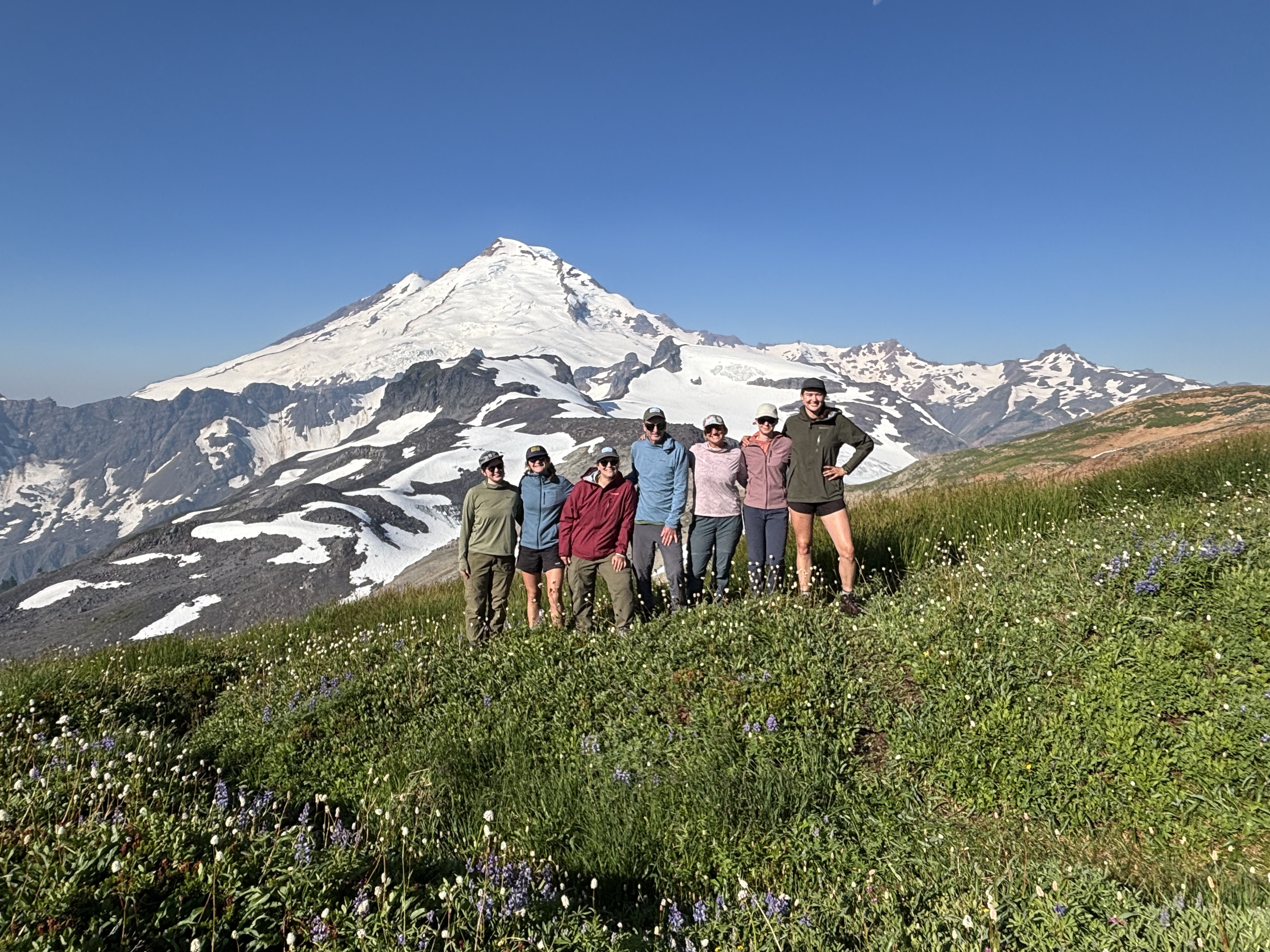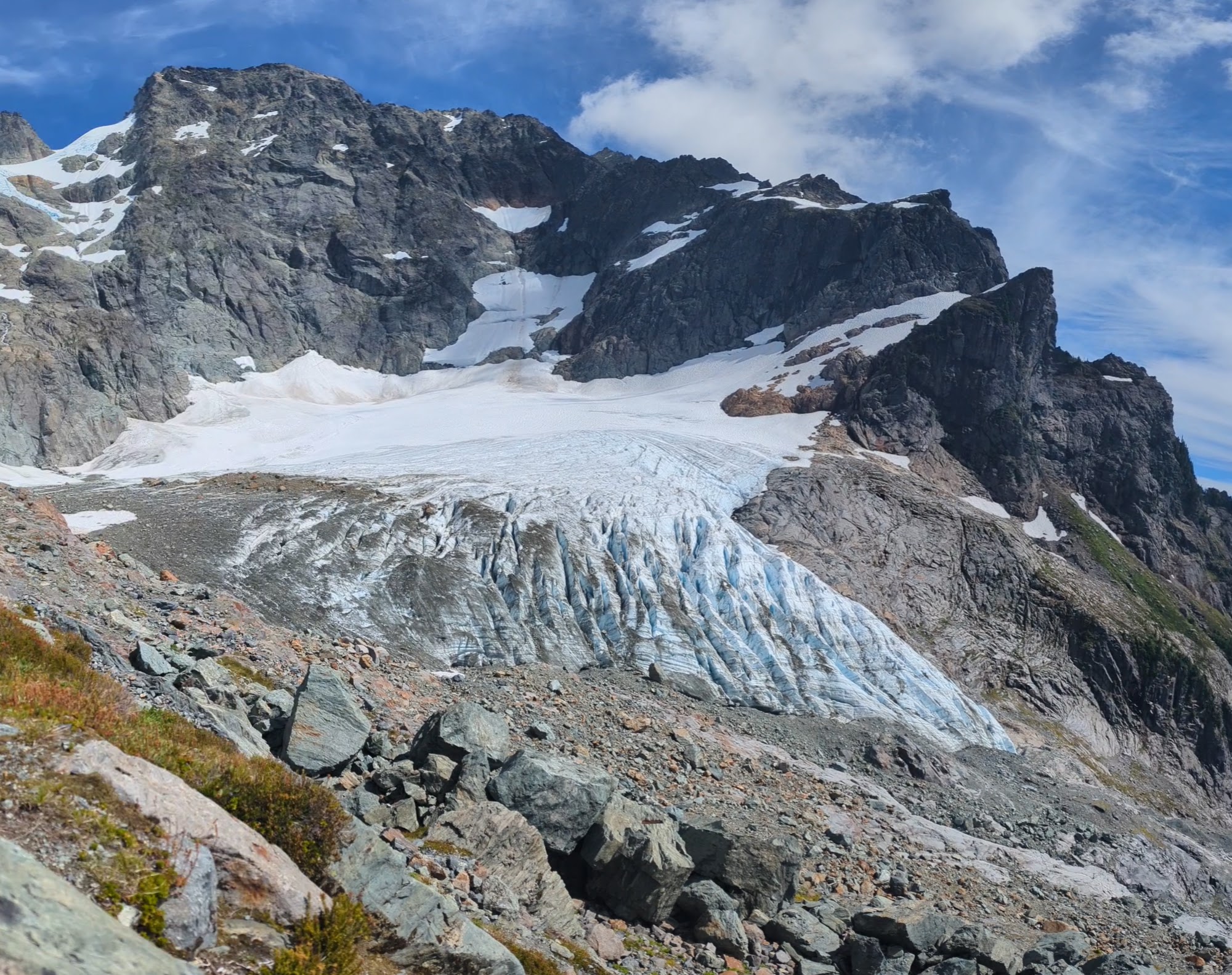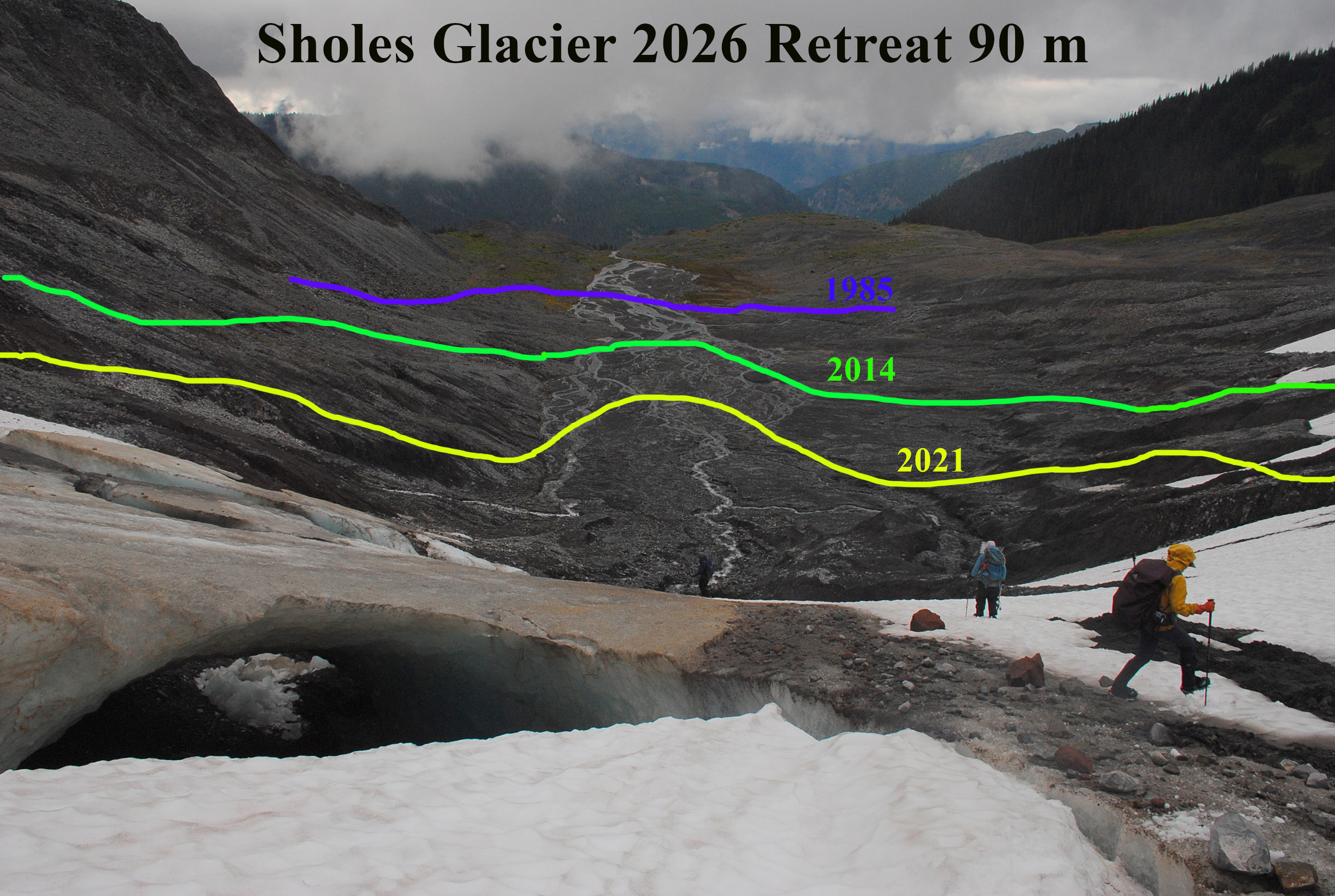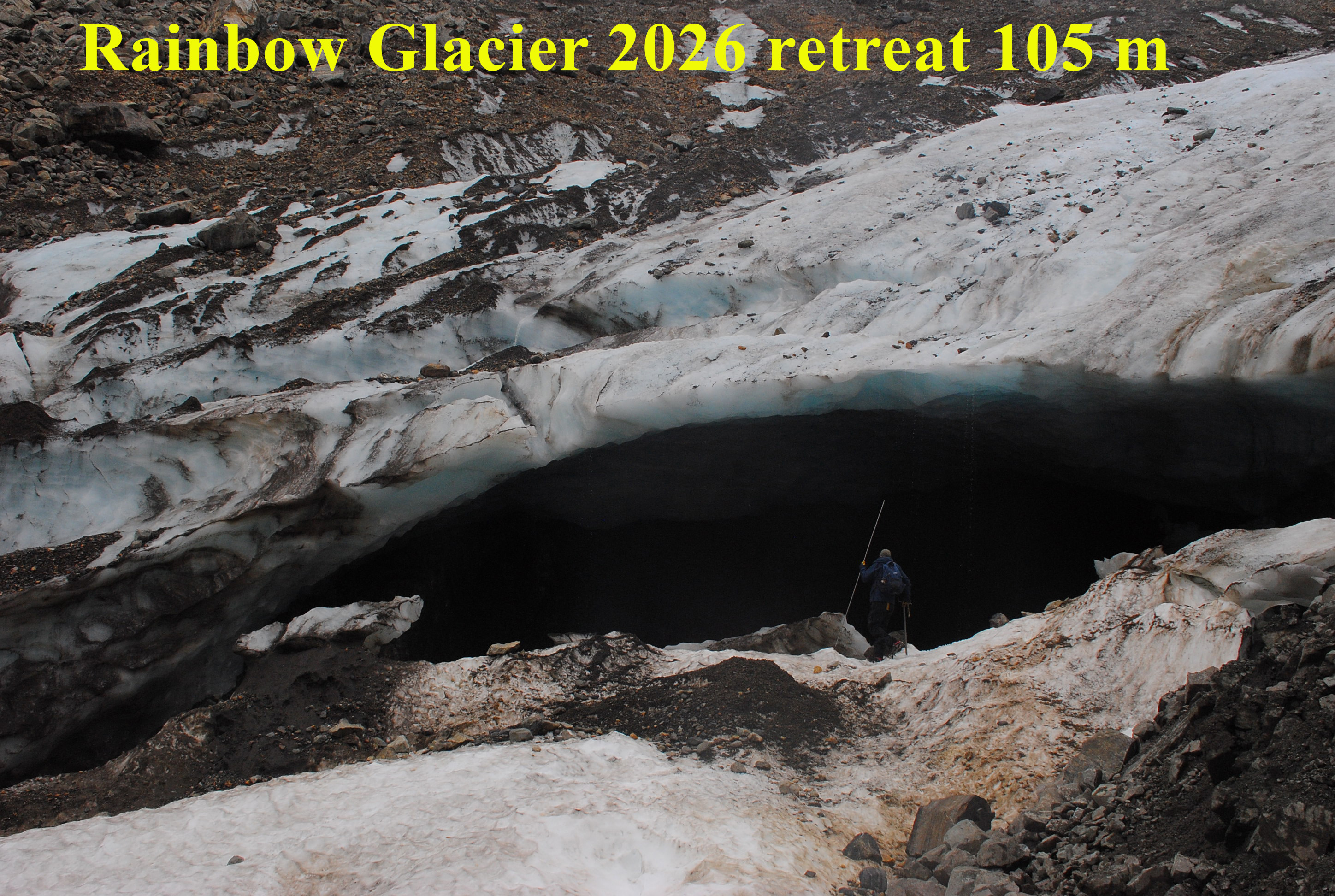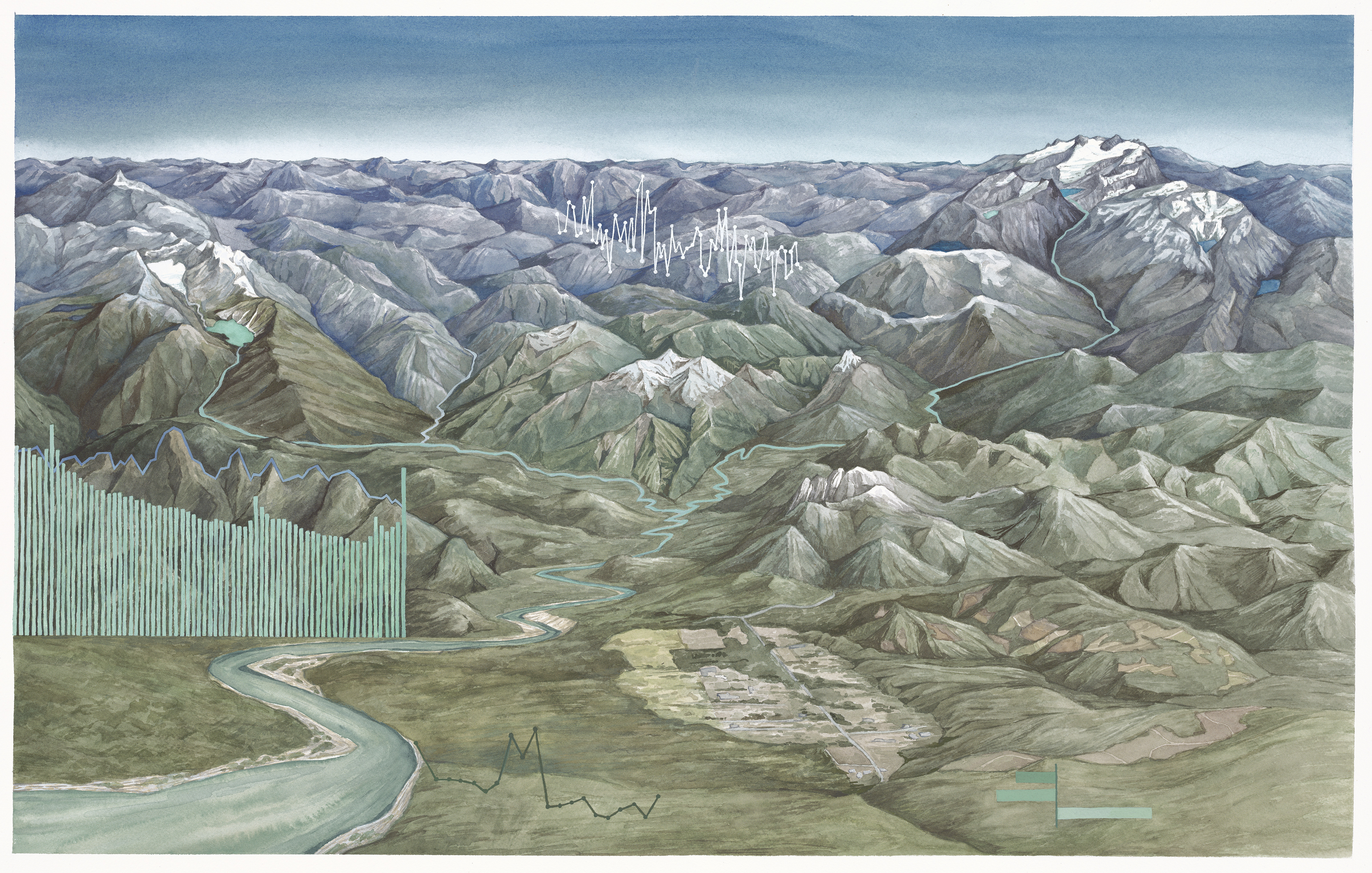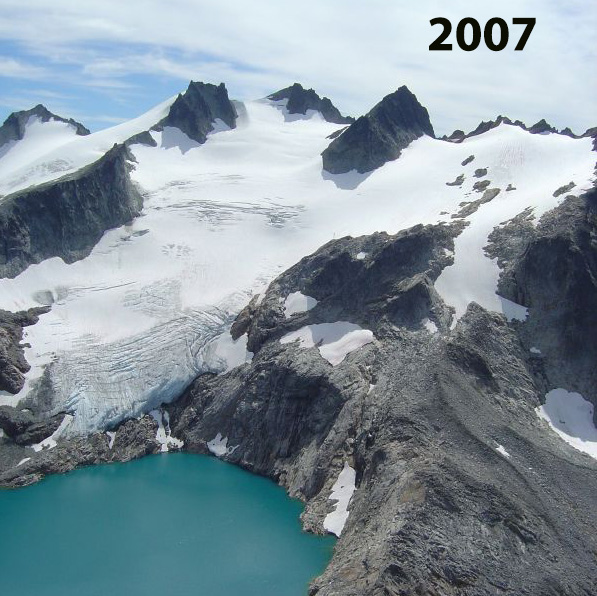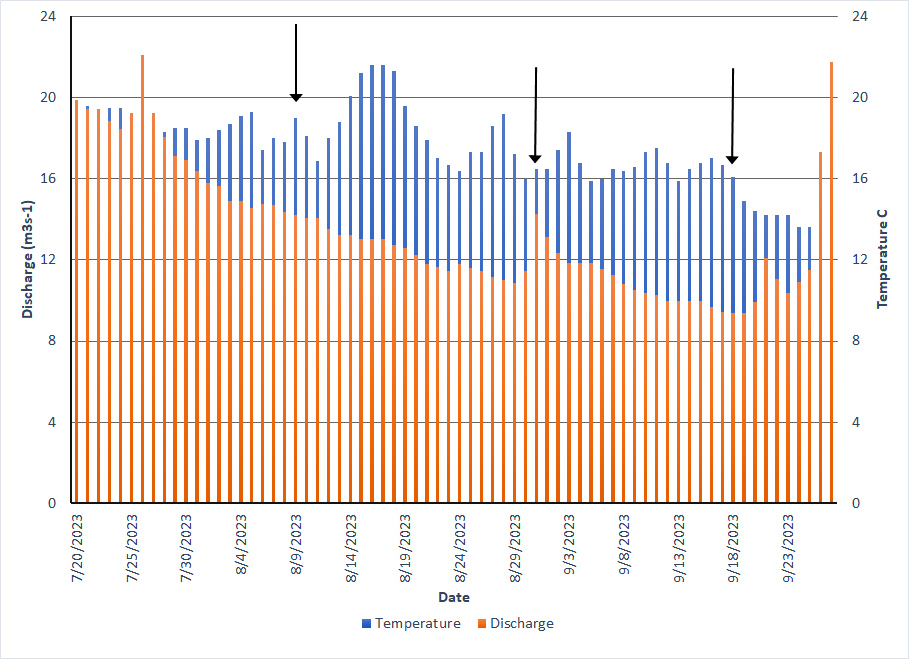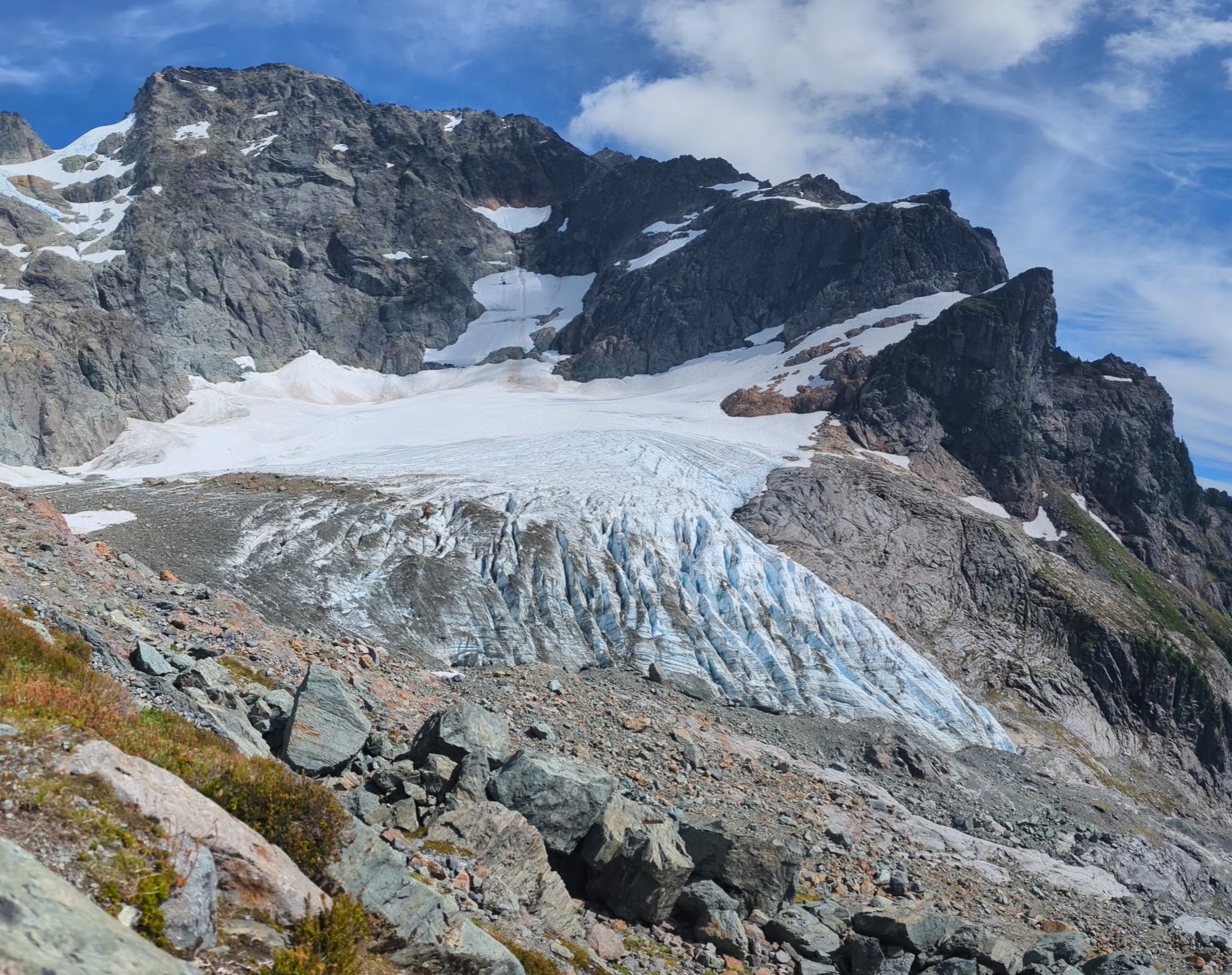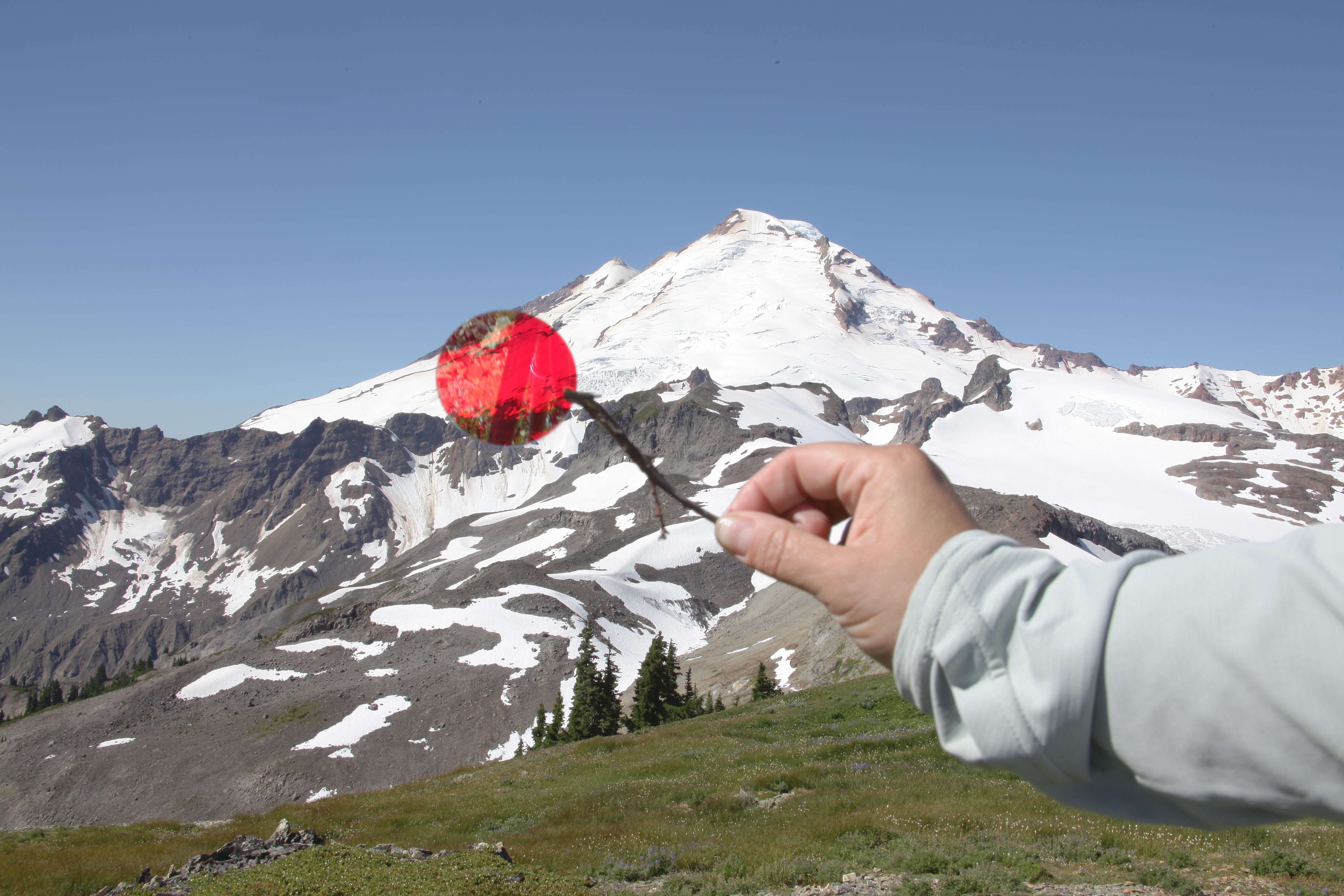
March 21, 2026 was World Day for Glaciers, telling this story is an ongoing four decades long project for us. The North Cascade Glacier Climate Project began in 1984 to identify the response of Washington’s North Cascade glaciers to climate change. The 2026 field season will mark our 43rd year of observations.
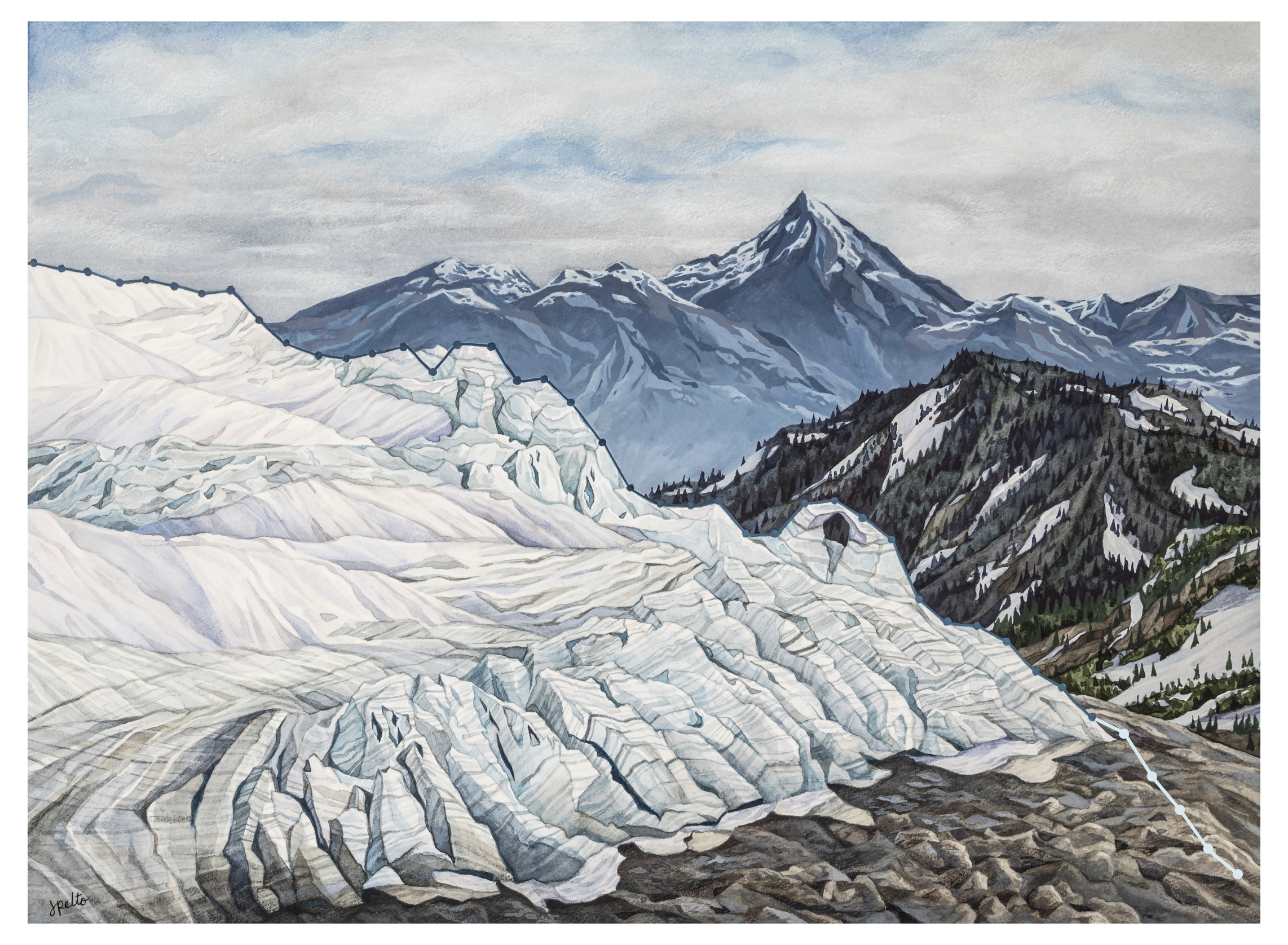
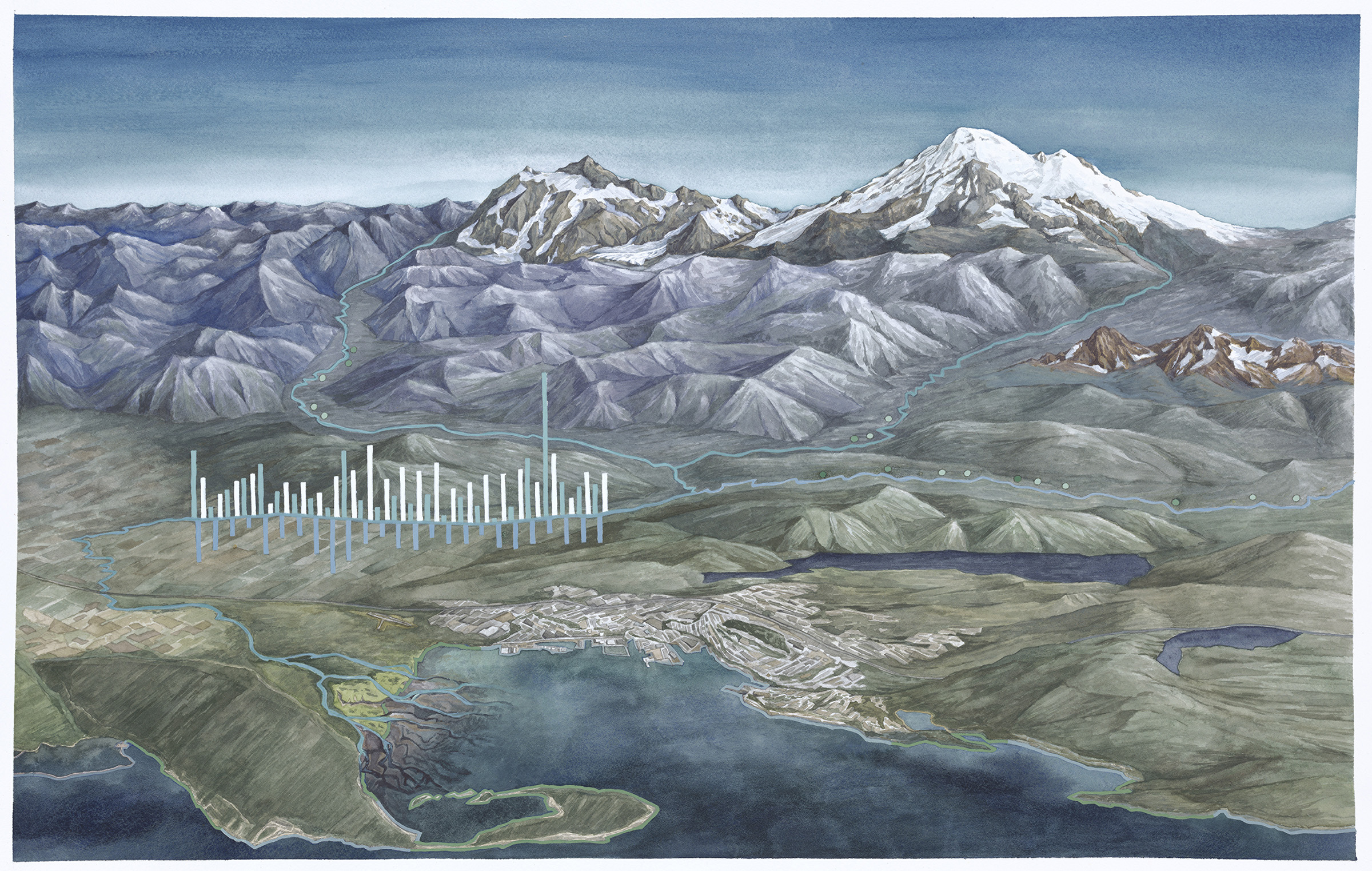
I co-direct the project as the science director, with Jill Pelto as the art director. We strive to create a diverse and collaborative portfolio of impactful observations connecting people to science through art and data publication. Our theory of change is that art has the power to inspire people by including the emotional context behind the science research. We seek collaborators who are passionate about contributing to and sharing this work. Here we reflect on some of the stories we have shared in the last 12 months that chronicle the rapidly melting reality of glaciers.
In April, 2025 the “Shaped by Ice” exhibit coordinated by Jill Pelto opened at the Slip Gallery in Seattle. This featured work from nine artists, eight of whom had been in the field with us and was the focus of a Seattle Magazine article.
In May we worked with Protect Our Winters to explore what the loss of glaciers, “Beyond the Ice” means for specific regions.
In June, High Country News focused on the use of art to preserve the legacy of glaciers, given the glaciers themselves are not being preserved.
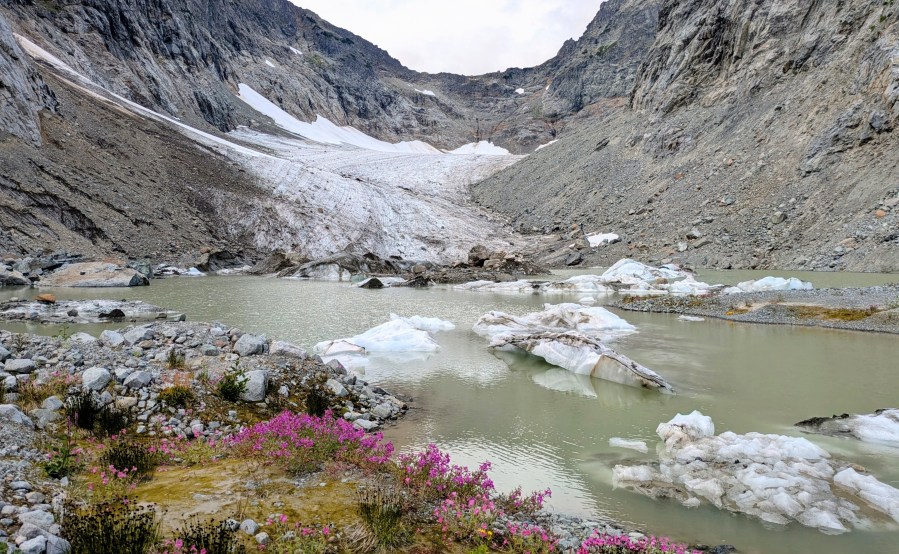
In March through July we worked with the Global Glacier Casualty List to the tell the story of specific glaciers in the United States that are disappearing, including Ice Worm Glacier in the North Cascades, Darwin Glacier in the Sierra Nevada, Twins Glacier in Wyoming and Burroughs Glacier in Alaska.
In August our field season coincided with a Seattle Time report, on Melting Mountains in the Pacific Northwest means, that we collaborated on.
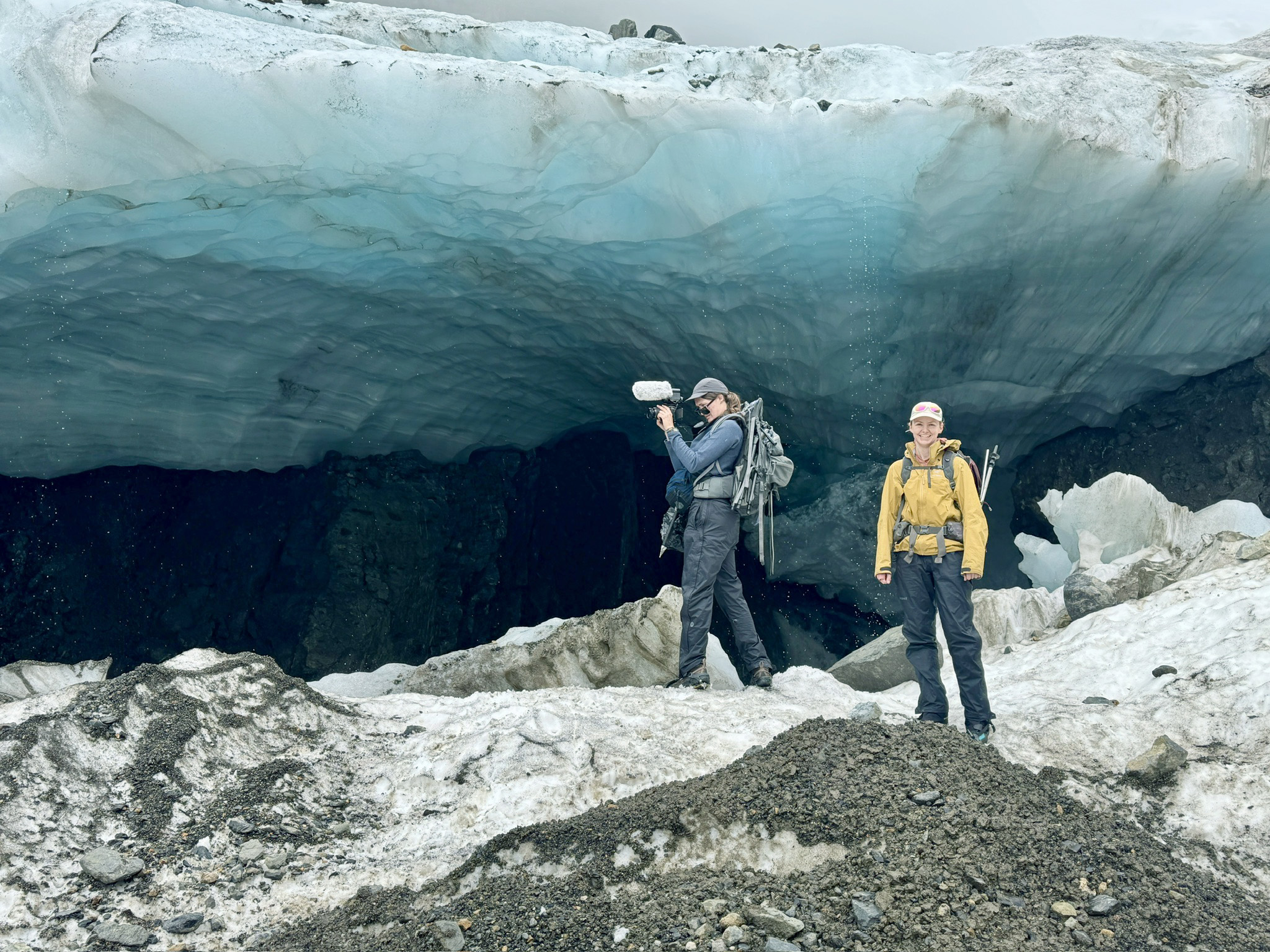
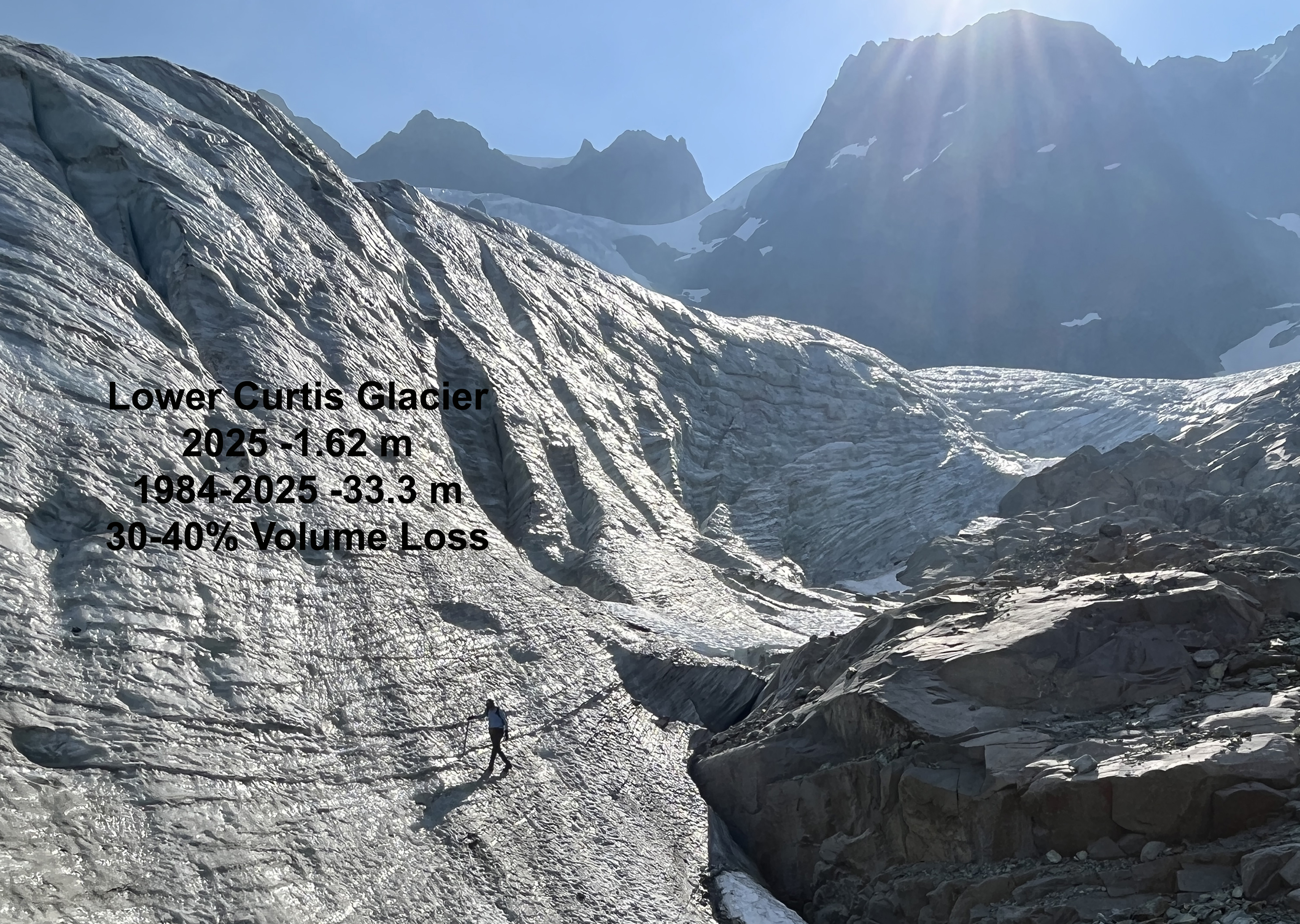
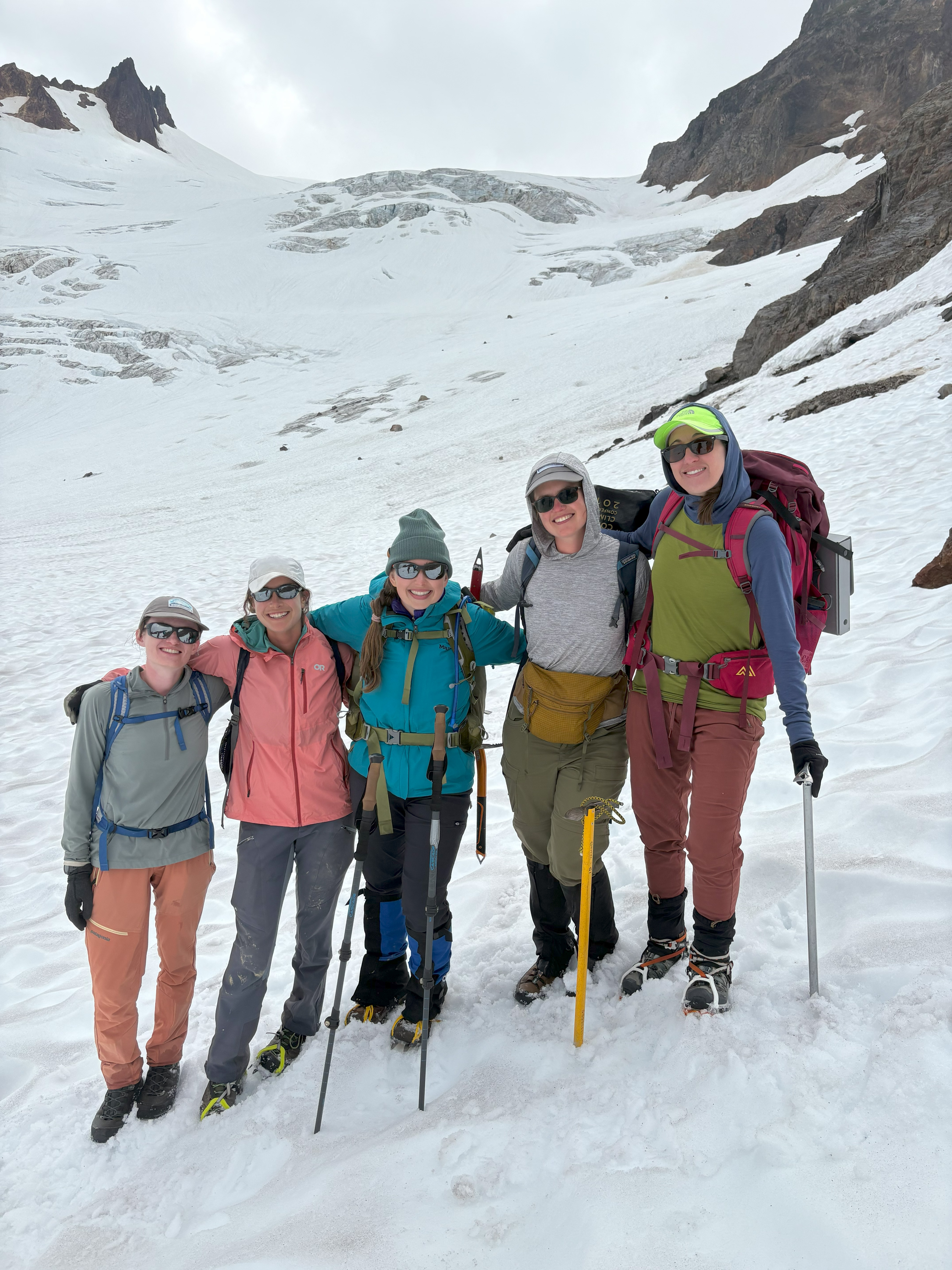
Joining us in the field on the Lower Curtis Glacier, Mount Shuksan was KING5 NBC-Seattle affiliate, led by Meteorologist Leah Pezzetti who backpacked with us into her first glacier. The logistical preparation for this by KING5 was thorough, and we provided guidance and support to them. The resulting feature was released while we were still in the field.
Upon returning to the trailhead from Lower Curtis Glacier a CBS Sunday Morning News team met us and travelled into the field with us to Sholes Glacier, Mount Baker. The overnight trip into the backcountry was a first for this news team and required extensive collaborative support. The results were shared just two weeks after the filming, and right after our field season.
We worked for a second year with Dan MacComb on a short film for the UN International Year of Glaciers’ Preservation called “Shaped by Ice”. This film published by Protect our Winters has been featured in tfour film festivals during 2025.
In January through February a second “Shaped by Ice” gallery event was held in at the Confluence Gallery in Twisp WA. This was spearheaded by Jill Pelto, Margaret Kingston, and Claire Waichler.
A poor winter snowpack will certainly lead to another year of extensive glacier loss across the Pacific Northwest and we will be there to observe it.
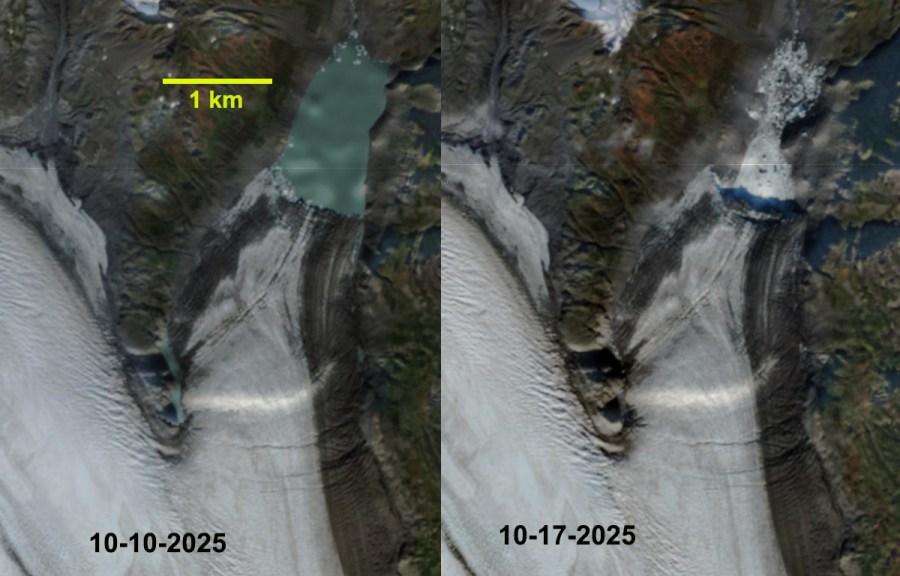
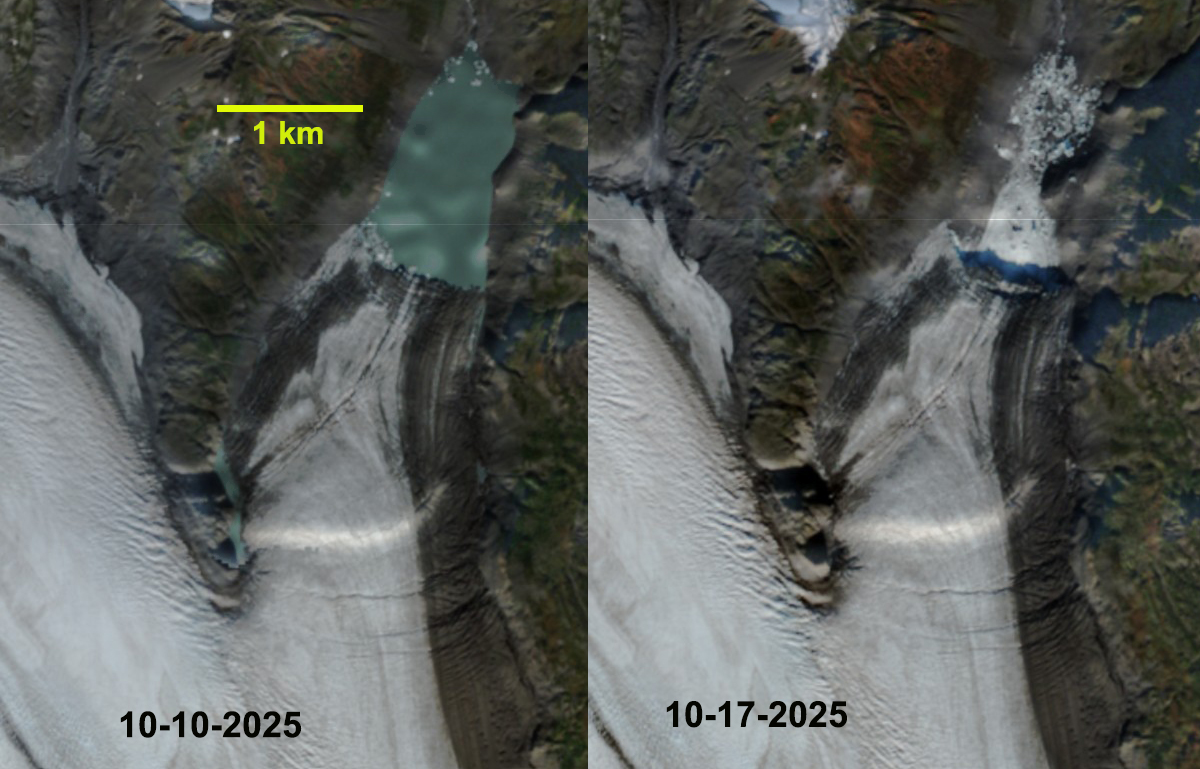
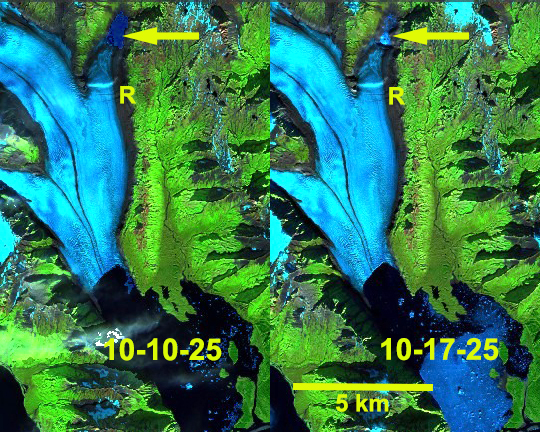
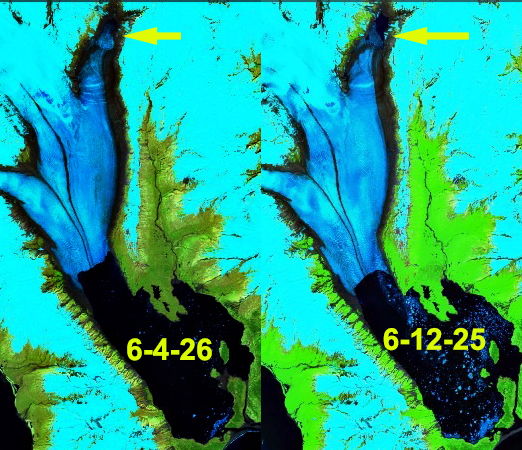
A network of extensive rifts have developed since 2023, yellow arrows. The fringing proglacial lake has not expanded. Rifting indicates uplift from partially floating glacier area.
Ice flow in the region around the developing lake, which is near the boundary with Yakutat Glacier in Sentinel Image from June 20, 2025
Novatak Glacier is between the Yakutat and East Novatak Glacier in southeast Alaska. The glacier retreated 1 km from 1987-2023 (NASA EO, 2015). The majority of the accumulation zone of these three glaciers is below 1000 m, which has made them particularly vulnerable to the warming climate. The result has been expansion of the proglacial lake, Harlequin Lake, at Yakutat Glacier from 1984 to 2024 from 50 km2 to 108 km2 (Pelto & NASA EO, 2024). There was no lake in 1908.
Novatak Glacier has been slow to form a substantial terminus lake unlike its neighbors, possibly because it lacks a sufficient basin. This has limited the retreat of this glacier as it thins. The developing rifts does show a large lake will form, with an area of 10-12 km2 . This will isolate the terminus from the main inflow to Novatak’s terminus, which will hasten a rapid meltdown. The rifts represent places where water level change causes flexure of the glacier, leading to their formation and expansion. They are not related to flow, but to uplift and down fall of ice where it is somewhat afloat. Rapid meltwater inflow to this basin will raise water level further stressing this region this summer. The degree of rifting indicates the ice is thin, but none are open enough to see water. This suggests breakup will not happen this summer. This type of rifting in 2010 and 2015 led to further breakups at Yakutat Glacier.
June 20, 2025 rifting of Novatak Glacier.The rifts represent places where water level change causes flexure of the glacier, leading to their formation and expansion. They are not related to flow, but to uplift and down fall.
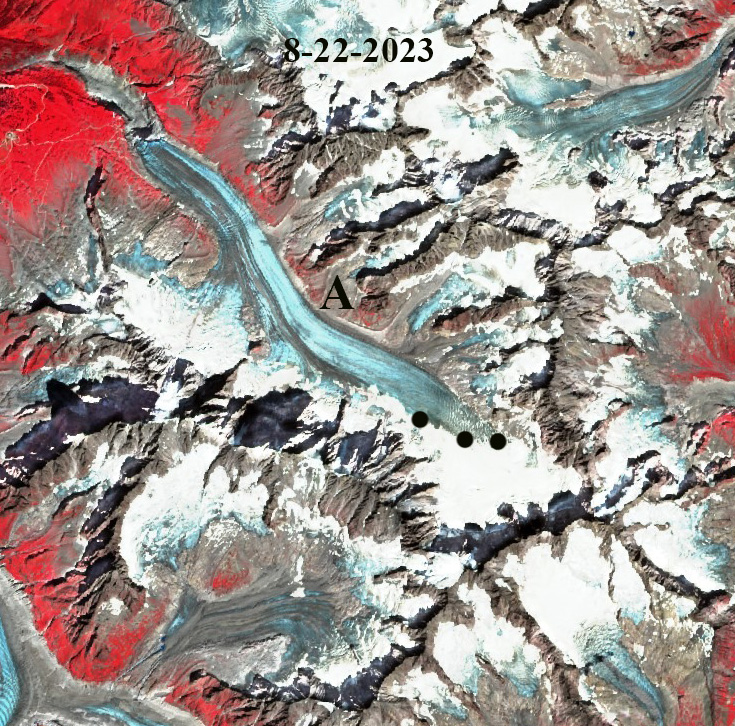
Quelccaya Ice Cap in 2013 and 2024 Landsat images illustrating snow line at 5600 m in 2024 and retreat leading to lake expansion at Point A-E from 2013 to 2024.
Quelccaya Ice Cap (QIC) is located in the tropical Andes of southeast Peru. Along with Coropuna Ice Cap it is one of two large ice caps in the area. Lamantia et al (2024) observed a 37% decline overall QIC area from 1985-2022, and a 57% decline in snow covered area. They observe snow cover is particularly limited during El Nino events. Here we examine the particularly high snowline and resulting minimum snow cover on QIC in 2024.
Quelccaya Ice Cap in 2024 August false colar and October natural color Sentinel 2 images. Snow line is at 5600 m in October with 25% snowcover.
The 2023-24 winter season featured El Nino conditions. During spring 2024 El Nino ended and neutral conditions persisted through summer. By late August 2024 the snowline on QIC averaged 5500 m (false color Sentinel Image). By late September 2024 the snowline had risen to ~5600 m, leaving the southern 1/3 and eastern arm of QIC with no snow cover, Landsat image. Overall snowcovered area dropped to ~25%, much below the 75% needed to maintain the ice cap (Lamantia et al. 2024). Despite a few minor snow events that briefly covered the ice cap, in late October the snowline had returned to 5600 m with ~25% snow cover. This is the least extensive snow cover since satellite images allow for mapping in 1984, falling below 10km2 . This is lower than the mininmum of ~15 km2 observed in 2023, which along with 1986 and 2016 had featured the lowest snow covered area on QIC (Lamantia et al. 2024). During this late summer period much of ablation is from sublimation (Fyffe et al 2021).
The high snow line elevation of 2024 exposing the majority of the ice caps glacier ice surface, which melts more rapidly than snow cover, leads to rapid thinning and volume loss.
The series of lakes that began to develop after 1991 at the margin of the QIC have expanded, and now are separating from the retreating ice margin.
Quelccaya Ice Cap in 1991 and 2023 Landsat images illustrating snow line at 5500 m in 2023 and retreat leading to lake development at Point A-E from 1991 to 2024.
Burroughs Glacier in 1986 and 2024 Landsat images. The red arrow marks terminus in 1986 and yellow arrows the 2024 terminus. Yellow dots mark the outline of the glacier in 2022. Glacier area declined from 12.5 km² to 1.2 km² during this 38 year period.
Burroughs Glacier in Glacier Bay National Park, Alaska has been retreating since 1892 when it was part of the Muir Glacier complex. The glacier is named for naturalist John Burroughs, who accompanied John Muir to the areain 1899 on the Harriman Expedition. The glacier is unusual in that it has not had an accumulation zone this century, where snow persists through the year. Without an accumulation zone a glacier cannot survive (Pelto, 2010). Mickelson (1971) summarized the retreat of the glacier from 1892-1960. In 1892 the Burroughs ice plateau was assessed as a 10 km by 25 km ice cap. By 1960 it had thinned by as much as 750 m and its calving margin had retreated 27 km. In the 1960s crevasse extension were still active (Taylor, 1963). By the end of the 1970’s the glacier was essentially stagnant (Molnia, 2008). In 1982 I briefly visited the western terminus, which provided a still imposing slope, made more so by the rain and clouds lowering onto its surface, active crevasses were still evident indicating some movement. John Burroughs in writing the narrative of the Harriman Expedition noted about vanishing glaciers “It is dead or motionless, and is therefore free from crevasses. Its rim comes down to the gravel like a huge turtle shell and we stepped up on it without difficulty. (page 45)”.
Here we examine the glacier in Landsat imagery from 1986 to 2024to illustrate the retreat, the lack of snowcover and the thinning. In the 1948 map of Burroughs Glacier, the glacier is 12.1 km long, and much of the glacier is already stagnant, the glacier has both a north and south terminus, purple arrows.
Burroughs Glacier in 1948 USGS map. Purple arrow indicate terminus locations. Former Plateau Glacier (P).
In 1948 Burroughs Glacier has an area of 22 km² and is 12.5 km long, with the crest of the glacier at 425 m. In 1986 Burroughs Glacier has an area of 12.5 km² and has no snowcover by mid-summer. The glacier terminates in proglacial lakes at both the north and south terminus and is 9 km long, purple arrows indicate 1948 terminus. In 2004 Burroughs Glacier again lacks any snowcover. The southern terminus has retreated 2.2 km from the lake, and the northern terminus has retreated into a second lake basin. The glacier is 6.3 km long, half of its length in 1948. In 2010 snowcover is lacking and retreat has continued shrinking the glacier to 5.4 km in length. The glacier was assessed with an area of 2.9 km² and a median elevation of 313 m (1025 feet) by GLIMS, in 2010. In 2013 the glacier lacks snowcover in this September Landsat image even though snow has returned to the surrounding mountains. This indicates how far below the snowline the glacier lies. Portions of a glacier are supposed to be the first locations that receive snowcover. The terminus has continued to retreat and the glacier was 4.6 km long in 2013. The northern terminus was retreating into a third basin of the proglacial lake. By 2018 the glacier area has been reduced to 2.7 km², then 1.5 km² in 2022 and 1.2 km² in 2024., 5.5% of its area remaining from 1948, 10% of its area from 1986 and 1% of the 1892 area. The length of the glacier in 2024 is 2.3 km, only 50% of the length just a decade ago, and ~20% of the 1948 length.
Thinning of this glacier from 1948-2016 is evident from a comparison of topographic maps. Thinning in remaining glacier are averages 225 m during this period, that is a rate of ~3.3 m/year. Larsen et al (2007) had found a thinning rate of ~3 m/year for the 1948-2000 period. Satellite imagery allows identification of glacier area, which declined at a linear rate from 2004-2024, correlation coefficient of 0.98. This his linear rate indicates the glacier will disappear in 2029 or 2030.
Burroughs Glacier has not been in equilibrium with climate the past century. Its retreat has been hastened by the rising snowline of the last decade note by Pelto et al (2013) on Brady Glacier. This glacier area has declined by 90% since 1986, with volume loss being even larger. Retreat usually increases as elevation declines and as the size of the remnant ice declines. There is no debris cover or persistent snowcover to slow the loss.
Overlay of 1948 (blue labeled contours) and 2014 elevation map (brown labeled contours) for Burroughs Glacier.
Burroughs Glacier area from Landsat and Sentinel images from 2004 to 2024. This is a strongly linear decrease, that projected beyond 2024 hits bottom in 2029 or 2030.
2004 Landsat image of Burroughs Glacier. The red arrow marks the west margin in 1986 and the yellow arrow the east margin.
2010 Landsat image of Burroughs Glacier. The red arrow marks the west margin in 1986 and the yellow arrow the east margin.
2013 Landsat image of Burroughs Glacier. The purple arrows mark the 1948 margin, red arrow the west margin in 1986 and the yellow arrow the east margin in 1986, pink arrows the 2013 margin.
2022 false color Sentinel image of Burroughs Glacier. The ice is dirty but not debris covered at this point, glacier area 1.5 km2.
2018 and 2024 false color Sentinel image of Burroughs Glacier. The ice is dirty but not debris covered. Area declined from 2.7 km2 to 1.2 km2
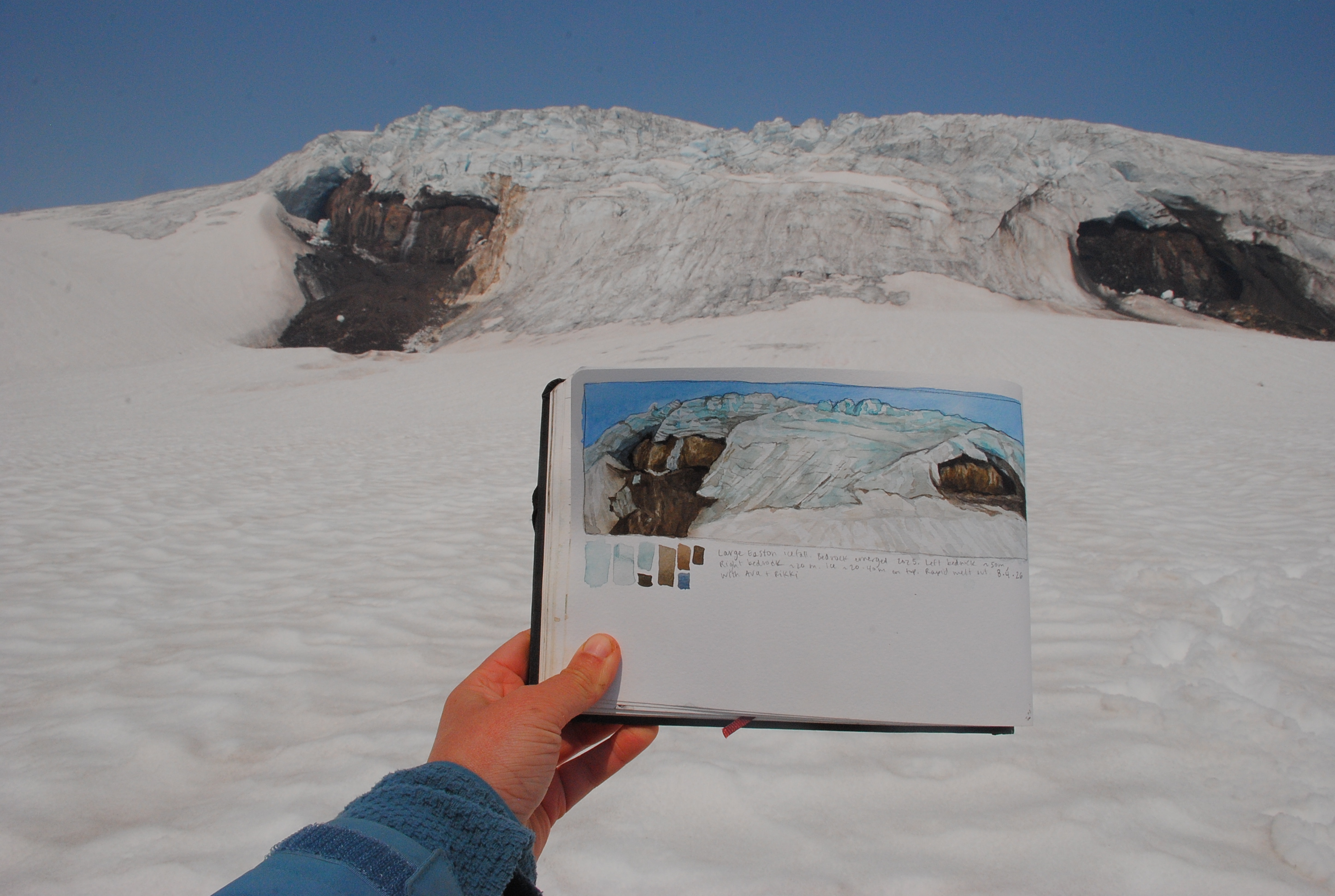
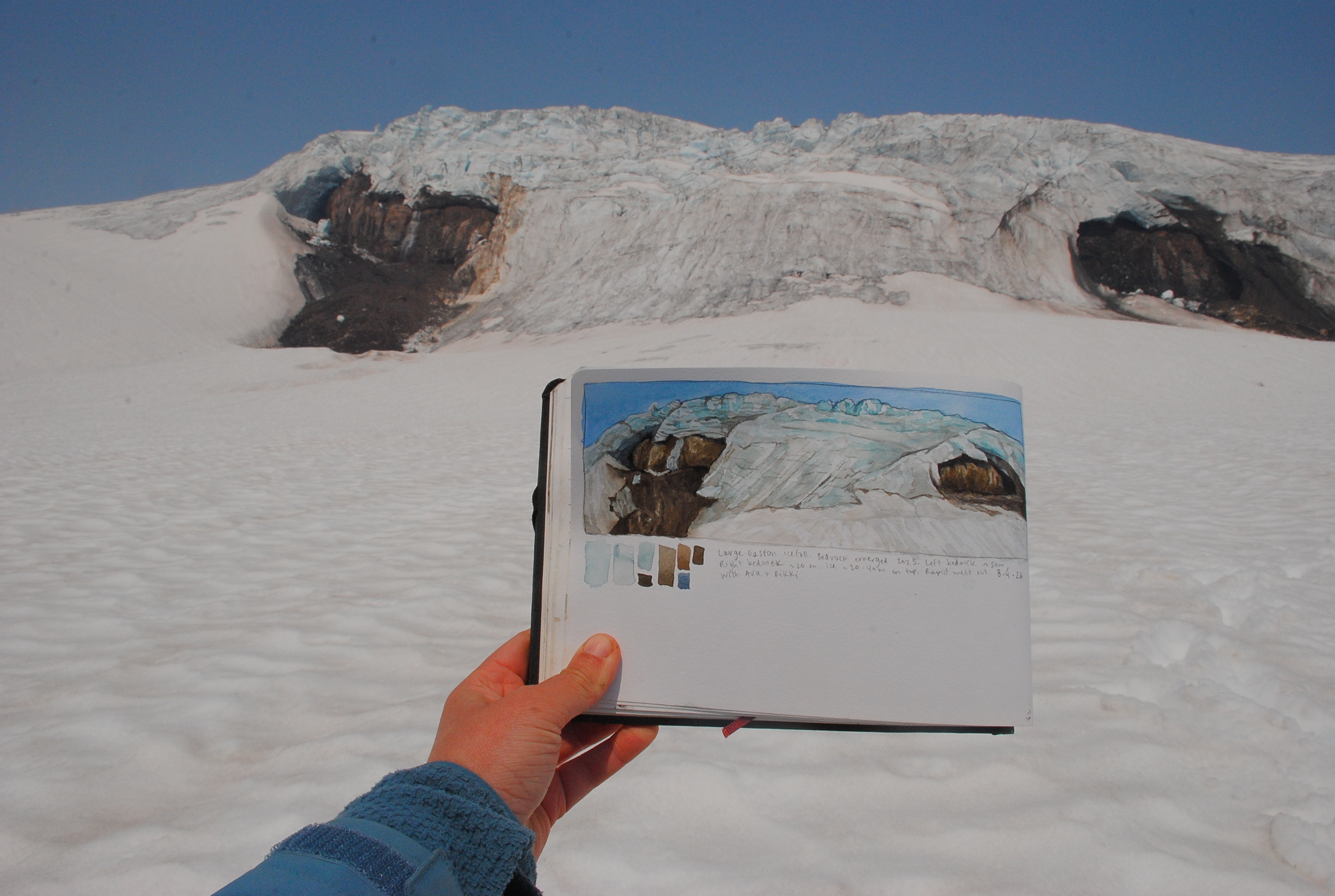
Recent glacier thinning due primarily to warm summers has exposed new bedrock knobs on upper portions of Deming, Easton and Squak Glacier on Mounty Baker, Washington
Find a location where temperatures are cold for at least 7 months of the year. This location also needs to have substantial snowfall and ideally where addtiional snow is added via avalanches or wind depostion. With these ingredients on hand, let stand for a few decades, while the snow accumulates to a thickness of at least 20 m. A key step in the recipe is the transformation of snow to ice under its own weight and with some meltwater percoloation and refreezing. Unlike bread dough you do not need stir or kneed during this period. Once there is a volume . For the glacier to persist the glacier must retain accumulation across a significant portion of its surface by the end of summer. To maintain its size we have observed this percentage to vary from 50-70% on North Cascade glaciers. The lack of a persistent accumulation zone will lead to loss of that glacier. of 500,000 m3 you are either a glacier or at the threshold of being a glacier depending on how steep the underlying slope is. Unlike rolling out a pie crust, this does not need to be an even thickness, or made on a flat surface. As the glacier matures it will develop crevasses indicating movement, which is an essential characteristic of a glacier. It is not a passive feature, its movement allows it to begin to sculpt its landscape.
Current Glacier Loss in North Cascade Range, Washington
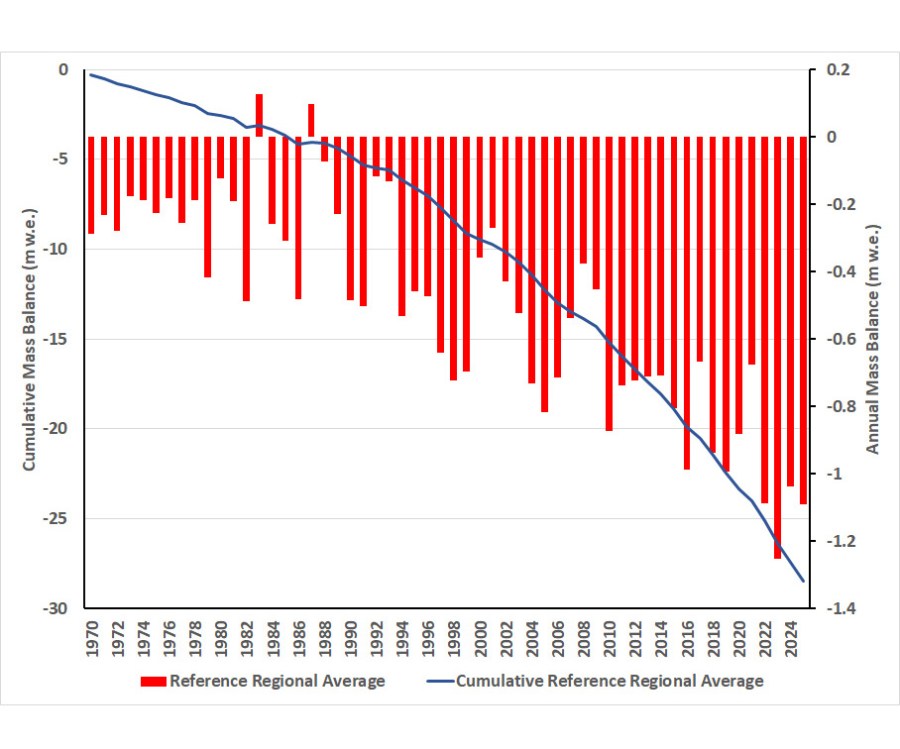
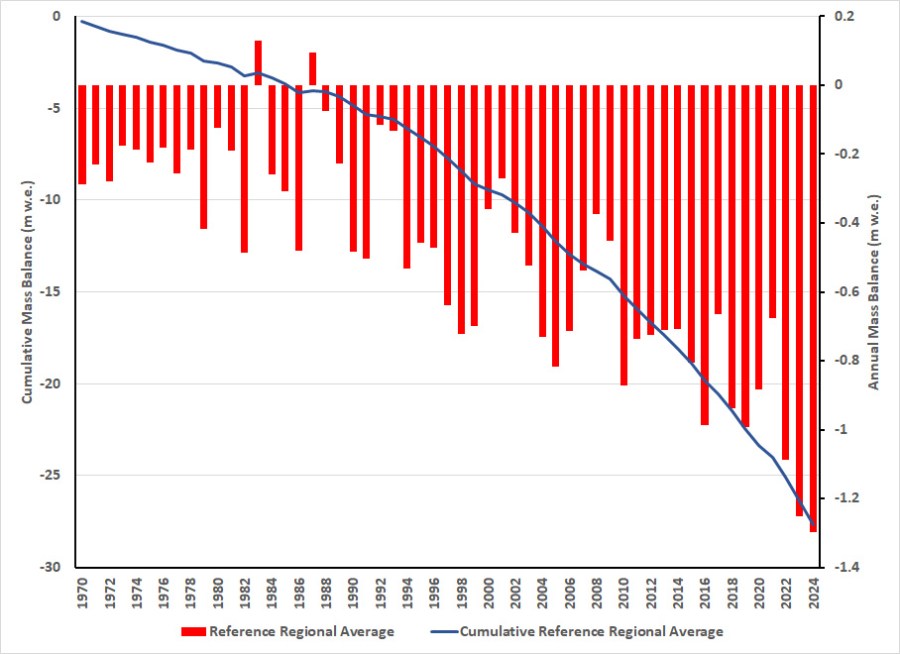
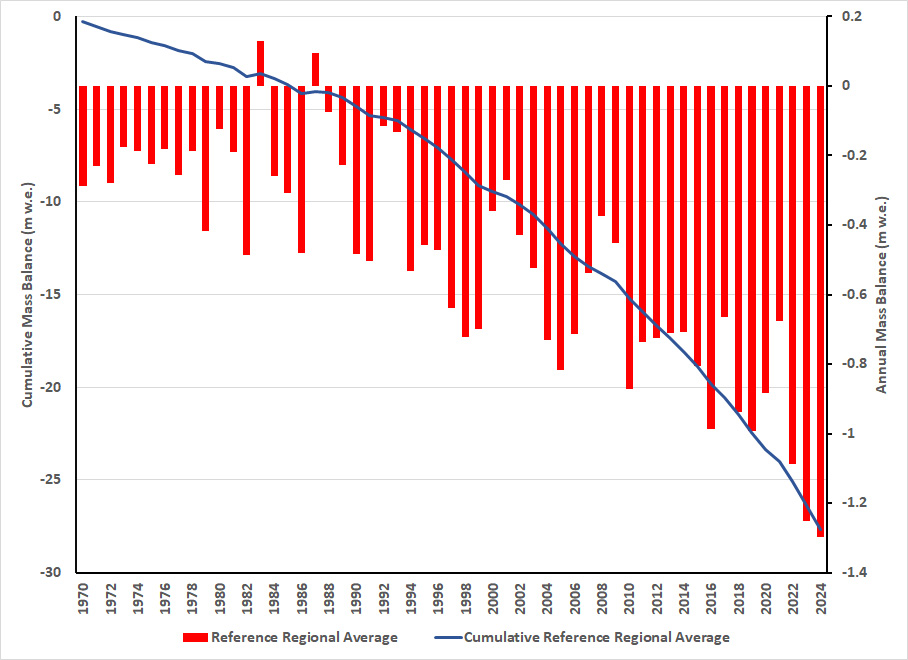
Many centuries or millenia later, the glacier has become a critical part of the landscape. Yet, changing climate is leading to the loss of many. In the North Cascades glaciers have been losing close to 1% of their volume annually over the last 40 years, with the rate rising to over 2% in the last decade. The glaciers cover 200 km2 almost all of which are in steep high elevation Wilderness areas not proximate to roads. In 2010 we noted that 2/3 of North Cascade glaciers could not survive current climate. Today this percentage has increased to more than 90%. There are 31 glaciers in the range that I completed observations on in the 1980s that are now gone. Our annual field expedition has noted the glaciers losing ~1.5 m of thickness annually in the last decade.
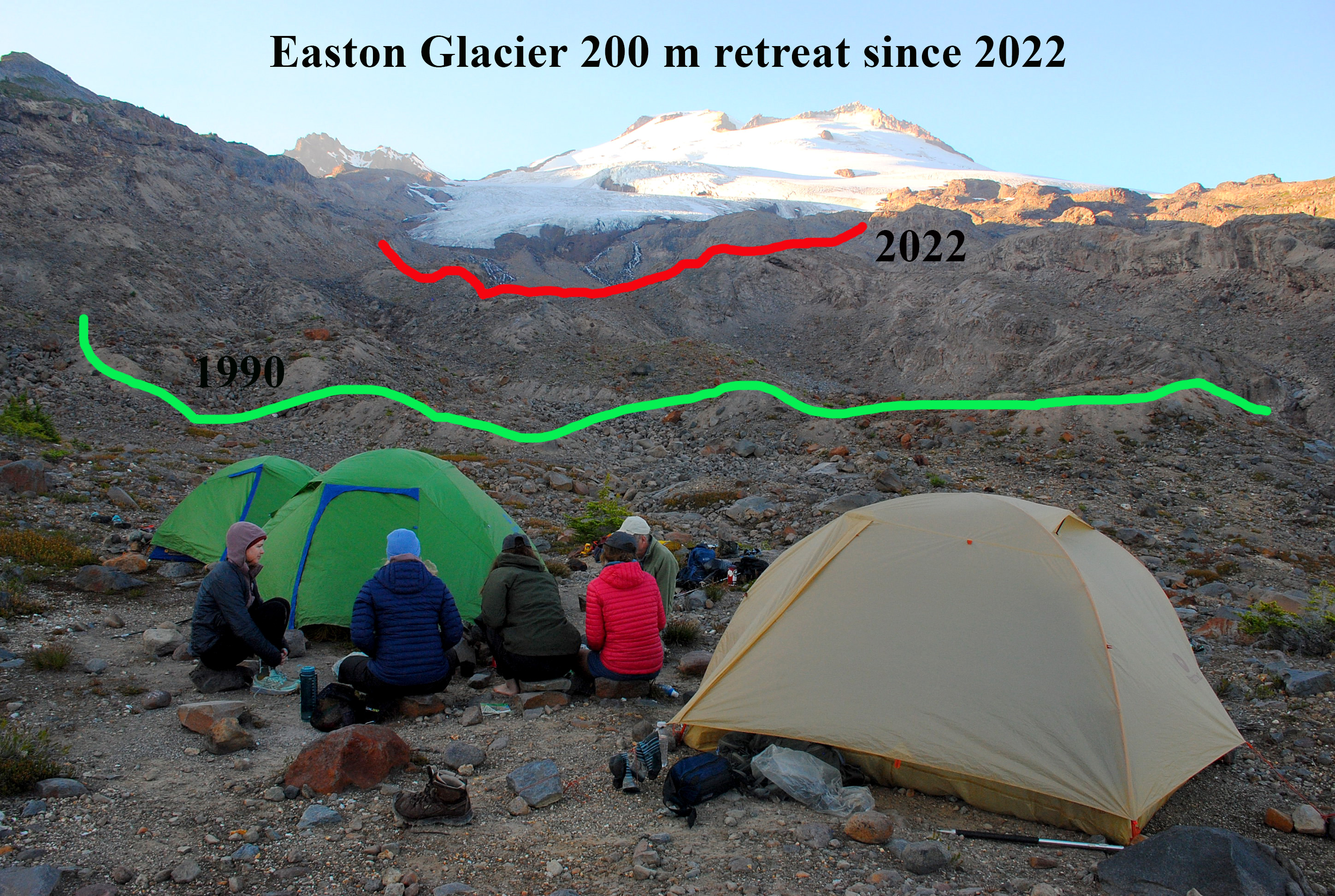
Deglaciated area below Easton Glacier, Mount Baker, WA in 2023.
Are there any Preservatives we can add to the Recipe?
What would it take to preserve the Easton Glacier in the North Cascades?
The largest snowmaking operation in North America is at Killington Ski Area, VT. At maximum capacity they can convert 35,000 m3 of water into snow per day. Given that Easton Glacier has an area of 2.5 km2 and has been losing 1.5 m water equivalent thickness per year, 3.75 million m3 of water equivalent snow has to be produced.This would take 108 days at maximum capacity of the more than 2000 snow guns. This ignores enviornmental laws and the logistics of water supply, piping, snow gun placement and electricity. This all in an environment of harsh weather with avalanches and crevasses.
To cover the glacier with geotextiles during the summer, requires 2.5 million square meter of material that would be to installed each summer and removed each winter to allow accumulation, of course summer recreation would not be practical on the glacier. The geotextiles do not last long in these conditions and cost ~$2 per square meter. How to anchor these in place and connect on a crevasse glacier would be very difficult, which is why usually only a portion of the glacier near the terminus is covered, which does not help the overall situation of glacier loss.
There are many more glaciers in this range and around the world where this same confounding logistical challenges make any artificial attempts at preservation ridiculous beyond a few isolated glaciers that are already close to existing infrastructure.
When I began this work in 1984 solar power and wind power did not exist, these are not the only renewable sources of power, and just one of many approaches to reducing CO2 emissions, but they are illustrative of rapid growth from insignificance. The Renewalbes 2014 Global Status Report and the Renewables 2024 Global Status Reports provides measures of renewaable energy production over the last decade. Global capacity for Solar Photovoltaic energy production has risen from 4 GW in 2004 to 190 GW in 2014 and then to 1600 GW in 2023. Global Capacity for Windpower has risen from 48 GW in 2004 to 370 GW in 2014 and in 2023 was 1020 GW. In 2023 alone over 500 GW was added to these two sources combined. See below for charts from this report on increased capacity. This is a preservative under development that can work with continued emphasis and in concert with other items such power grid infrastructure improvement and electric/hybrid automobile manufacturing expansion.
Steffen Glacier calved off the Z group of icebergs at start of December following on a March prodution of X and Y bergs and a December-February 2023/24 breakoff of A,B,C. The Z icebergs have an area of 3 km2, false color Sentinel image.
Steffen Glacier is the largest south flowing outlet of the 4000 km2 Northern Patagonia Icefield (NPI). On December Dec. 6, 2023 the terminus tongue has a narrow unsupported section that appears poised to calve (C). By Dec. 26, 2023 the glacier has calved berg C (0.4km2 ), joining other large bergs remaining from previous years D, E and F. Two more pieces A and B appear poised to calve. By Feb. 9 2024 berg B had calved, and by Feb. 24 berg A had calved, together they are 0.3 km2. On April 14 two more large bergs X and Y have calved from the terminus. Berg X is the largest of the year at 0.6 km2, berg Y is 0.2 km2 . Terminus retreat from Dec. 2023-April 2024 is 1.5 km. In noted in April that the terminus tongue was narrow and unsupported (Pelto, 2024) , indicating that more large icebergs should be expected in the 2025 summer season, and in December this happened releasing several icebergs Z1, Z2 and Z3 with a combined area of 3 km2 The glacier retreated 2.6 km as a result of this calving event.
Steffen Glacier in 2024 False Color Sentinel images illustrating calving events yielding bergs A,B,X and Y that have a combined area of 1.5 km2.Green arrow is Dec. 2023 terminus and yellow arrow April 2024 terminus. Exploradores terminus area on east side collapsing in 2023 and 2024, yellow dots indicate glacier edge, with a melange of bergs beyondin this false color Sentinel image.
Exploradores Glacier is an northern outlet glacier of the Northern Patagonia Icefield. In 2016 Exploradores Glacier had a 12 km2 terminus lobe with a couple of small proglacial lakes with a total area of ~1 km2. The terminus lobe of the Exploradores Glacier is now collapsing, this is a process that has already occurred at Steffen Glacier, San Quintin Glacier and Colonia Glacier. The terminus lobe is relatively stagnant as indicated by the minimal surface slope. The result will be a new substantial proglacial lake. In 2023 and 2024 an active zone of calving has developed on the east side of the terminus, yellow dots, with an area of 2.1 km2. This appears ready to continue expanding west across the glacier tongue expanding this embayment.
Reichert Glacier in false color Sentinel images illustrationg retreat in 2024 to yellow arrows from pink arrows due to calving that also generated many small icebergs.
Reichert Glacier is an outlet glacier of the Northern Patagonia Icefied that retreated 6.7 km from 1987-2015. Then was nearly stationary to 2023, with a 750 m retreat from 2022 to 2024 and an active calving period spring 2024 note new icebergs in the lake. The terminus is retreating into a narrower fjord reach,, with a pinch point 1.5 km behind the terminus, that should provide short term stability.
The 2024 field season was our 41st, from the glaciers perspective it was the fourth consecutive year of exceptional mass loss, leading to thinning, retreat and glacier loss.Below are images from the field season and reflections on each from the varied perspectives of our field team and field partners.
Coleman Glacier, Mount Baker at the golden hour as we just finished work.
Jill Pelto: During the field season our typical day involves getting up with the sun and working out on a glacier until early evening. Going to Coleman Glacier on Mt. Baker this year was special because we got to work on it during golden hour, a rare thing to experience. We had the glacier to ourselves, and the nearby big camping area — despite this being a popular destination for ice climbers. This is only my third time in sixteen years working on this glacier, and its significant loss since we last saw it in 2019, when I sat and painted on it, was so apparent. But in spite of that, I was feeling joyful to be there — something about four of us out there on our own taking measurements as the summer sun set was so magical. I was so grateful to be there at that moment and experience this landscape as it is now.
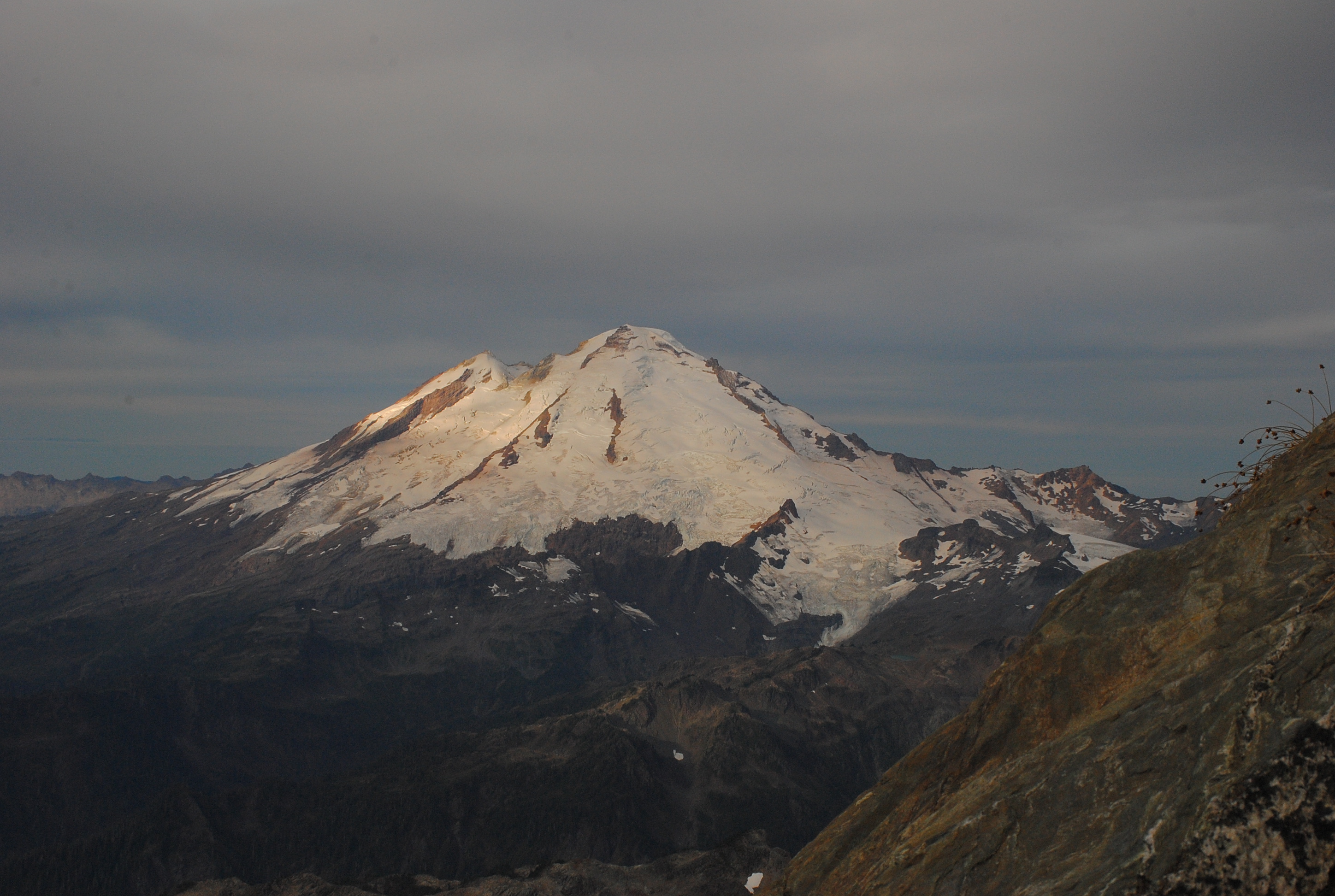
Saddle at top of Rainbow Glacier looking to summit of Kulshan (Mount Baker). Ben, Jill and Mauri Pelto a combined 70+ years of experience on these glaciers.
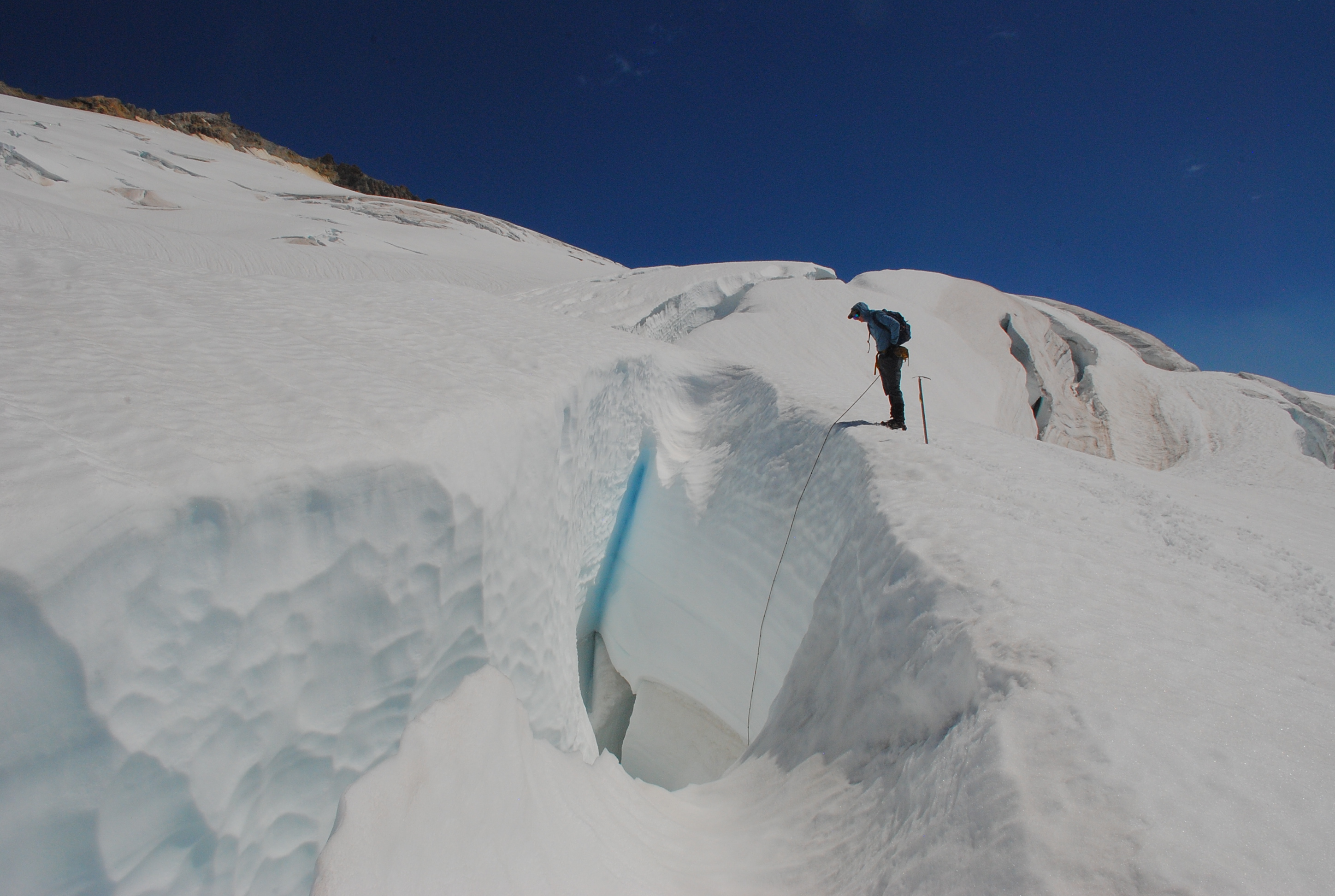
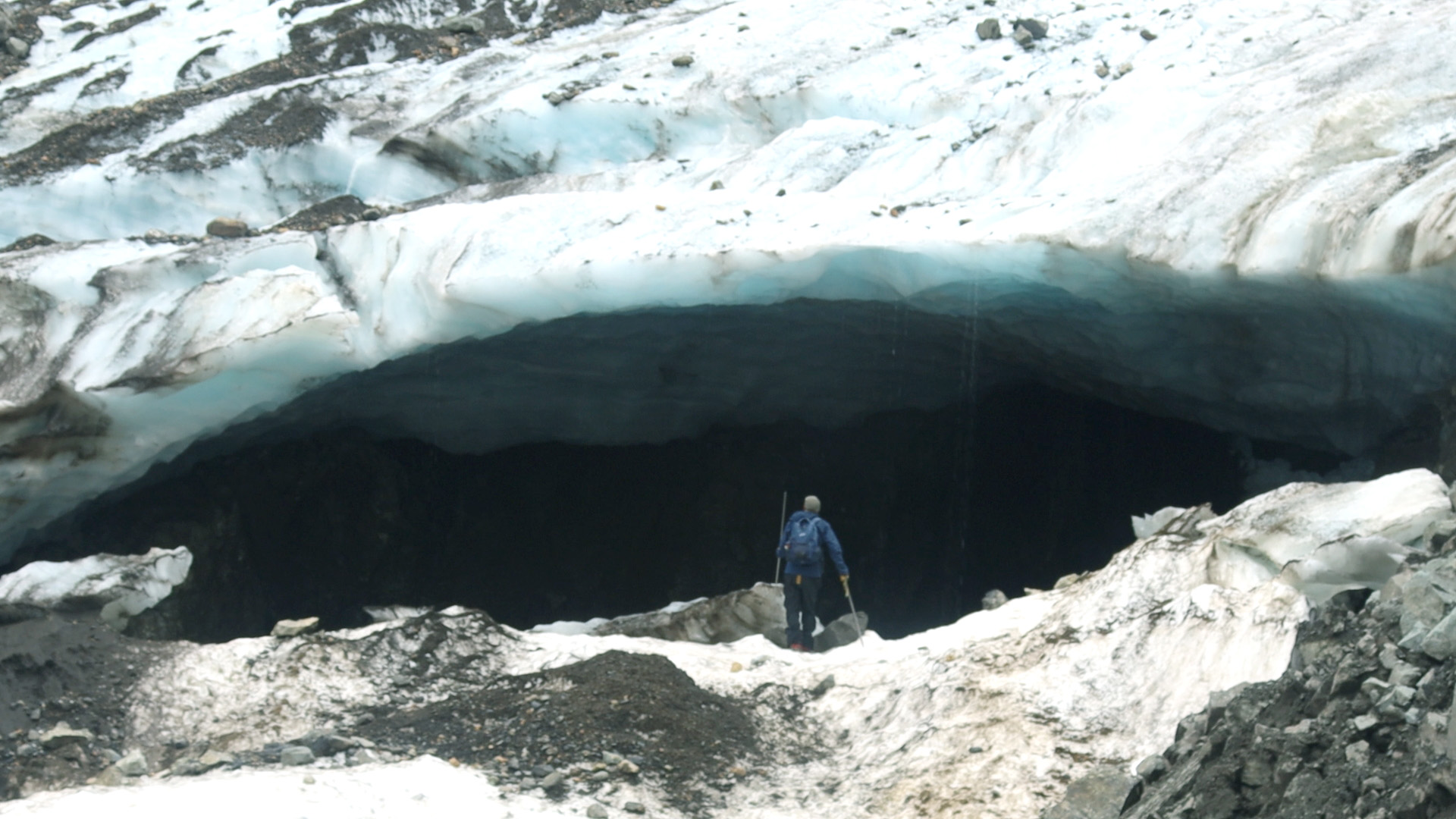
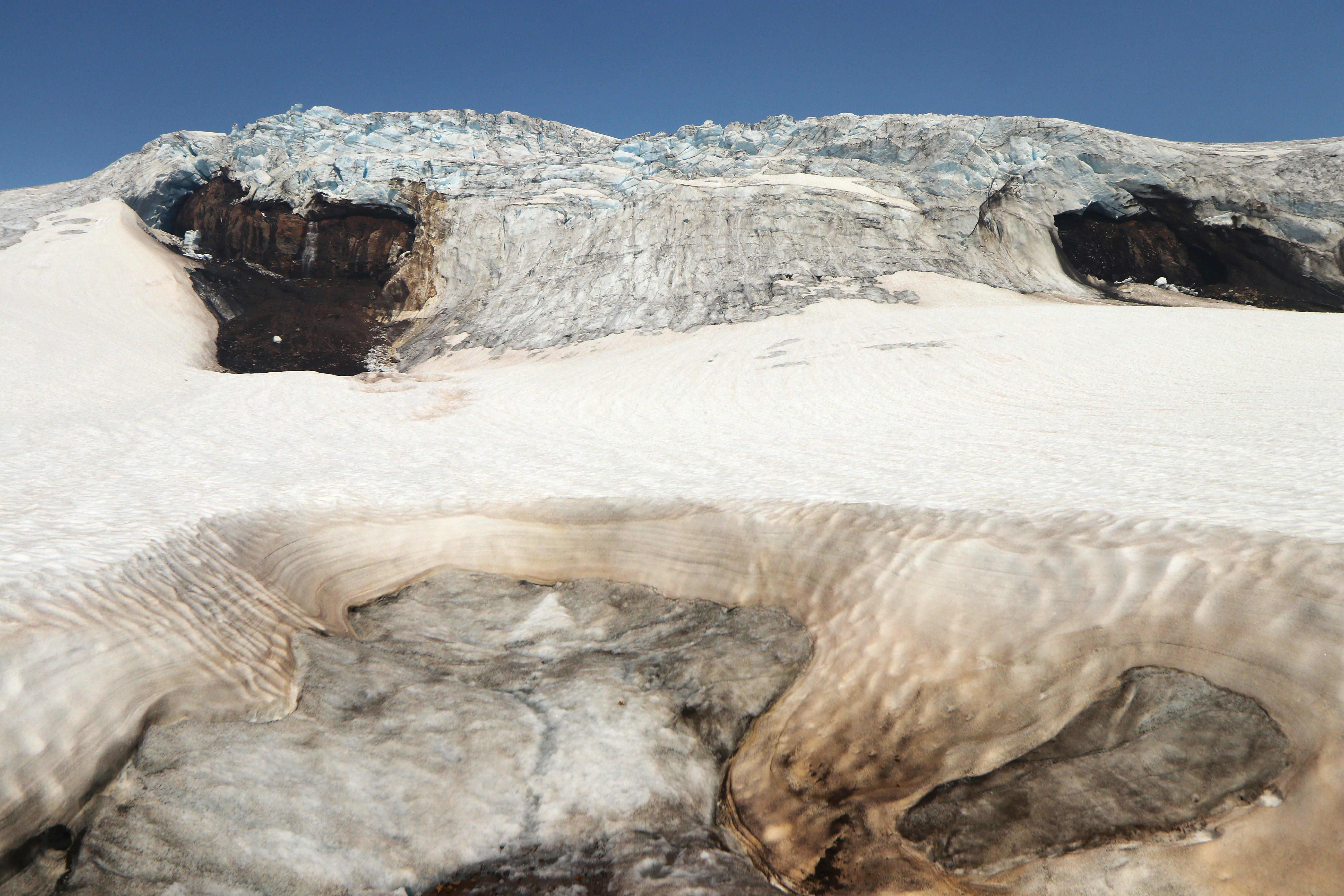
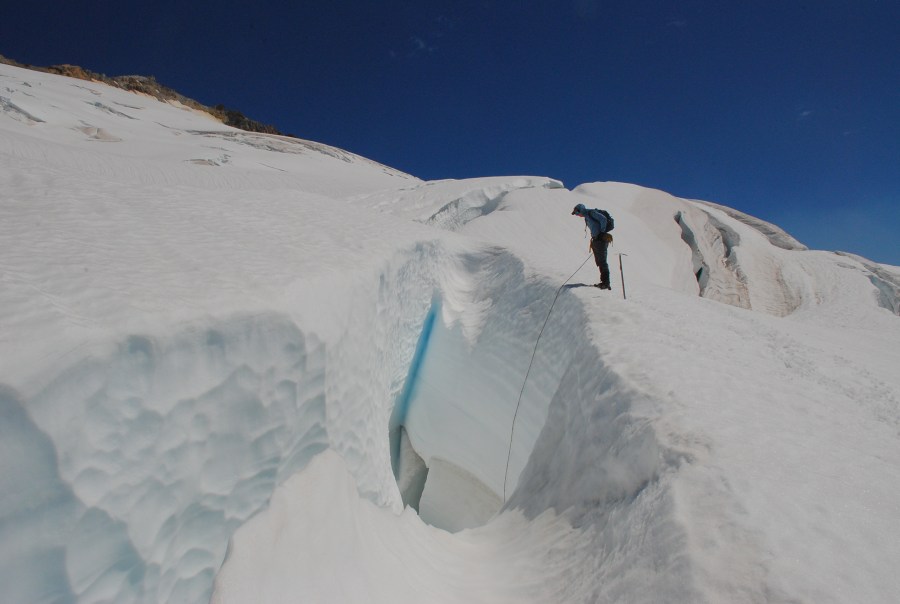
Mauri Pelto: Climate change has led to increased glacier melting on all of the glaciers we have observed. A combined 70+ years of field experience that Ben, Jill and I have provides a context that is crucial. The increased melt is apparent in the streams flowing across the surface very few meters carrying meltwater to the rivers and then the sea. This summer we saw the beauty of the final stages of decay of a glacier melting away in the ice caves that transected the former Ice Worm Glacier (image below). The cave started at the top of the glacier and continued right to the bottom, by next summer that too will be gone. The colors and atmosphere in the cave were spell binding. The landscape remains beautiful, but is losing the glaciers that are a powerful, beautiful and dynamic part of this landscape.
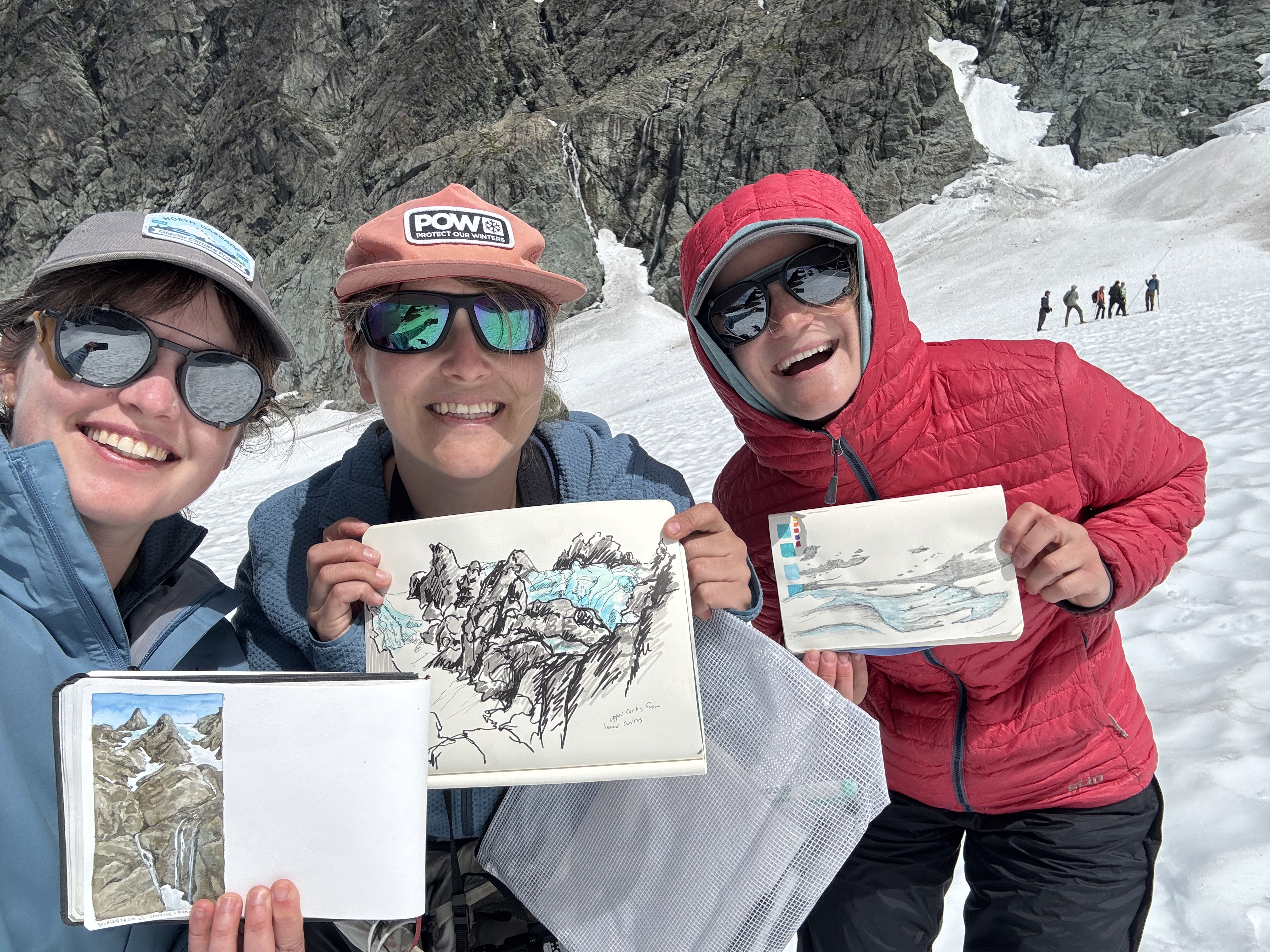
Katie Hovind: Nestled along Ptarmigan Ridge, overlooking Kulshan’s glacier-flanked slopes, was our longest campsite of the field season. Unzipping my tent to an increasingly familiar skyline four mornings in a row, I found myself developing a relationship with this place. I noticed patterns and changes alike, discovering not just the place but a sense of home in it. We followed transects across the Sholes, probing up and down the glacier; we explored a collapsed ice cave near its terminus, blue ice towering over me, ancient wisdom frozen in the dripping layers I ran my hands along; we took water measurements from the stream it feeds, pausing for a break next to the fresh melt as I sketched the textures of rock and snow and ice. We commuted across it twice to the Rainbow Glacier, a trek familiarizing me with the Sholes’ sweeping slopes and views; and we screwed an ice auger deeper than we could see, dropping stakes 3-4 feet below the surface. 19 days later, I returned to the coordinates of those four stakes, which were now all exposed, one sticking up to just over 3 feet above the surface. Reeling as I walked across the glacier I’d gotten to know, the near-incomprehensible volume of loss I saw. A feeling of belonging is so integral to caring. And then comes the question of how to transmit that connection, to spread to others the same sense of responsibility to protect a place? Being lucky enough to experience even a handful of days taking in just a small degree of the Sholes’ nuances, I felt deeply just how wrong and quick the melt is. But from the outside looking in, without any prior reference points, the severity of the glacier shrinking could be overlooked. Through these comparison photos, I hope to share just a glimpse, beauty and grief and all, of what it means to understand and love a glacier.
Emma Murray: Just a few minutes into our hike from camp to the Easton glacier, Science Director Mauri Pelto pointed out the rock that marked the spot where he put his crampons on in 1990. Looking up the valley, the ice felt SO far away. This glacier has retreated almost 600m in my lifetime already. In response to the melting at each of the six glaciers I visited during my time with the Project, I added paint, pen, and thread to canvas. These flags are both white-flag surrenders to all the melting we cannot stop and blowing-in-the-wind prayers for us all to act in the ways we can. I hope these pieces help people to visualize and feel the difference between where the ice was and where it is now. I think feeling that loss is groundwork for our urgent conversations about climate solutions, which can be uplifting and cool and pragmatic and creative!
Shari Macy: Mauri Pelto, peers into the melting terminus of the Lower Curtis Glacier; located on the southern slopes of Mount Shuksan in the North Cascades of Washington State. As founder of the North Cascade Glacier Climate Project, he has been measuring these shrinking giants since 1984. This image, to me, shows a man and what he dedicated his life to studying. A passion that drove him to spend over 700 nights in tents, camped out next to the glaciers of the North Cascades. These glaciers could use a lot more people like Mauri. Does everyone need to backpack to remote glaciers every summer? No. He already does. However, we could all be a little more dedicated to the health of our planet, our home. Our one and only. Our children’s one and only.
Megan Pelto: To me, Mt. Baker represents the North Cascades. Camping next to its looming presence makes me aware of how impactful it is, its glaciers helping support the ecosystem and the wildlife that surround it. Getting to be present in this wilderness feels like a gift and a chance to both disconnect and reconnect. Everything you have is contained in one little tent and the experience of camping in this landscape is magical. I wanted to capture that with our colorful little tents tucked into grassy hills with Baker above us. I have been able to visit this landscape over the past 10 years, and while the glaciers change each year, many things have remained peacefully the same.
Ben Pelto: Disappearing glaciers remind me of grandparents—I’m saddened by their decline, yet deeply grateful for the time I still have with them. This year, being in the field was especially meaningful, surrounded by an incredible group of people, just experiencing the mountains and soaking it all in. What I find hardest about glaciers vanishing is not just the loss of ice, but the disappearance of their dynamism and beauty from the landscape. These ancient giants bring a sense of magic and power to the mountains, and it breaks my heart to think that my children or grandchildren might never witness them as I have.
Cal Waichler: This season I ask what it means to be a voice for glaciers. How can I transmit my gratitude that I can stand on this earth, breathe glaciers’ breezes, seep in icy blue and alpenglow rose, pop alpine huckleberries in my mouth, and notice the shrinking snow and dissolving ice, while also alerting people to their vulnerabilities? Glaciers are a throughline in my explorations and art. I am so utterly enchanted by them. The awe and creative inspiration they bring to my life is a great gift. As a voice for shrinking glaciers, what stories can I share that will enchant other people with them? What will make us care enough to enact climate change mitigation and adaptation, and vote for climate leaders? Here, a snapshot of those most transient and irreplaceable things.
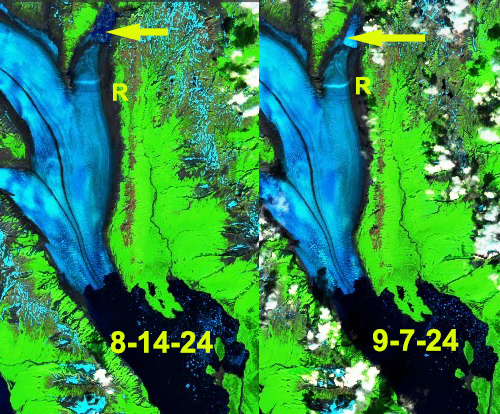
Baird Glacier terminus tongue gone in April 26, 2024 Landsat image. Red arrow indicates now joined 5 km2 proglacial lake. Yellow dots terminus of Baird and North Baird Glacier
Baird Glacier drains the west side of the Stikine Icefield in southeast Alaska. It is the only glacier of the Stikine Iceifield that did not retreat significantly from 1960-2010. Pelto et al (2013) predicted the onset of significant retreat of this glacier, which like Brady Glacier had been slow to begin retreat despite thinning that was evident when I visited the glacier in 1984. The proglacial lake that has emerged with retreat has an area of 3.25 km2 and the glacier retreat is 2800 m from 1990-2024. The North Baird Glacier separated from Baird Glacier in 2019, with a proglacial lake extending downvalley to the tongue of Baird Glacier that separated this lake from the Baird Glacier proglacial lake until April 2024.
Baird Glacier in Landsat images from 1990 and 2023 illustrating retreat and proglacial lake expansion.Baird Glacier in false color Sentinel images from September 10 2023 and May 2 2024. Proglacial lake (PGL) expanded from 3.2 to 5.1 km². Tongue extending upvalley toward North Baird Glacier (NB) broke up in late April, yellow arrow.
Baird Glacier in false color Sentinel images from July 2022 and July 2023. Proglacial lake (PGL) expanded from 3.00 to 3.25 km² width of tongue extending upvalley toward North Baird Glacier (NB) has declined from 700 m to 400 m.
In 1990 the Baird Glacier was sitting on an outwash plain, with no lake at the terminus. The North Baird Glacier was 1 km wide where it joined the Baird Glacier. By 2015 the glacier has retreated 750 m and the lake (PGL) has an area of ~1 km². In 2022 the glacier has retreated leading to a lake expansion to 3.00 km². In July 2023 the tongue of ice extending across the front of the North Baird Glacier valley has thinned 40% since July 2022. The tongue remained throughout 2023 into April of 2024 before breaking up. This leaves the main terminus of the glacier more vulnerable to further rapid calving retreat. Baird Glacier is catching up to the rest of the Stikine Icefield that has experienced significant retreat, Dawes Glacier, Patterson Glacier and Great Glacier. With Sawyer Glacier retreating from tidewater in 2023.
Great Glacier terminus change from 1986-2022 illustrating lake expansion. Red arrow=1986 terminus location, Yellow arrow=2022 terminus location.Terminus has retreated 2.1 km during this time with the lake growing 15 km2.
Great Glacier is the largest outlet glacier of the Stikine Icefield feeding the Stikine River. The name came from the large expanse of the glacier in the lowlands of the Stikine River during the late 19th and early 20th century, that has now become a large lake. In 2023 I worked on a signage project for the Great Glacier Provincial Park with Hailey Smith, BC Park Ranger, documenting the changes in this glacier particularly since 1914.
The glacier filled what is now a large lake at the terminus of the glacier pushing the Stikine River to the east side of the valley. The Tahltan nation oral history relates when the glacier bridged the Stikine River and meet Choquette Glacier. In 1914 the glacier was easy to ascend from the banks of the Stikine River, the picture above is from the National Railroad Archive. By 1965 the new lake had formed, but the glacier still reached the far side of the lake in several places as indicated by the 1965 Canadian Topographic Map below. R. Patterson (Writer and Canadian Explorer 1898-1984) noted that Great Glacier came down onto the river flats, and displayed a 7 km front visible from the Stikine River.
Map of Great Glacier in 1965 illustrating the fringing lake.
Landsat images from 1990 and 2022, illustrating changes in the glacier and lake. The transient snowline is at ~900 m in both images.
A comparison of 1986, 1990, 2011 and 2022 illustrates the retreat. By 1986 the new lake had largely developed, and the glacier was beginning to retreat into the mountain valley above the lake. Retreat from the moraines of the late 19th century was 3200 m. By 2011 the glacier had retreated further into valley, 900 m retreat from 1986-2011. From 2011 to 2022 the glacier retreated another 1200 m. The lake has expanded to an area of 15 km2
A view of the glacier from across the lake today indicates the distance to the now valley confined glacier, and the trimlines of the former ice surface, yellow arrows in middle image The Great Glacier has one major tributary on the northeast tributary that is very low in elevation with a top elevation of 800 m. Given the regional snowline of 1100-1200 meters in the 1980s (Pelto, 1987) this is too low to retain snowcover through the summer and will lead to rapid progressive thinning. In 2018 and 2019 the highest observed snowlines in the region occurred, the snowline averaged 1500 m, leaving just 10% of the Great Glacier snowcovered. This is instead of the 60% needed to maintain equilibrium. Stikine Icefield outlet glaciers are all undergoing substantial retreats including Sawyer Glacier,Baird Glacier and Dawes Glacier.
Great Glacier snowline end of summer in 2018 and 2019 reached the highest levels observed at 1500-1600 m.
Eagle Island Ice Cap has 65% snowcover on Feb. 27, 2024 in Sentinel images. After 5 of the next 10 days reached at least 9 C at Esperanza Base the snowcover is just 8% on March 8, 2024.
On February 27, 2024 Eagle Island had ~65% snowcover, by March 8, 2024 this had diminished to just 8% snowcover. This matches last year for the lowest observed snowcover of this ice cap. On February 19, 2023 Eagle Island Ice Cap, Antarctica has less than 10% snowcover. This is less snowcover than observed even after the period of record warm weather over the Antarctic Peninsula in February 2020. The repeat loss of snowcover has stripped the ice cap of firn exposing bare glacier ice that is darker and melt faster, enhancing melt losses. Temperature when the all time Antartica temperature record was set at Esperenza Base. Eagle Island Ice Cap (63.65 S 55.50W) is 40 km from Esperanza, with the summit of the ice cap is at 250-300 m and it has an area of 21 km².
In March the temperature reached 9 C on March 4, 6, 7 and 8.
In 2020 we observed blue ice areas (BI) and saturated snow areas (SS) rapidly developed from a snow covered ice cap during the heat wave (NASA EO, 2020). The impact of short term melt events like this on an ice cap like this, is visible and significant for annual mass balance, but not large in terms of long term glacier mass balance (volume change) and area. That year also led to record melt and ponding on the George VI Ice Shelf (Banwell et al, 2021). In 2022 a similar patter of blue ice developed, but no saturated snow. In 2023 the loss of snowcover was nearly complete exposing a more extensive bare ice and firn surface area that melts more rapidly. This was the result not of a heat wave but of a consistenly warm summer.
Eagle Island Ice Cap rapid snow melt and resultant melt ponds during record warmth in Feb. 2020seen in Landsat images.Eagle Island Ice Cap in Sentinel image illustrating 8-10% snowcover on 2-19-2023.
Bernardo Glacier in Sentinel images from Dec. 26, 2023 and Feb. 9, 2024 illustrating the drainage of the southern end of the proglacial lake by the northern terminus. The lake was full in 2021, partially drained by Oct. 2022, further drained by March 2023 and did not refill through Sept. 2023. The lake refilled between September and December 2023 . And drained again by Feb. 9,2024. Channel location appears to be at Point C. There is 9 km2 of exposed lake bed.
Bernardo Glacier in Sentinel images from Oct. 16, 2022 and Sept. 17, 2023 illustrating the drainage of the southern end of the proglacial lake by the northern terminus (N). The lake was full in 2021, partially drained by Oct. 2022, further drained by March 2023 and has not significantly refilled by Sept. 2023, still 8 km² of exposed lake bed.
Bernardo Glacier in Landsat images from 1986 and 2021 illustrating retreat at the southern (S), middle (M) and northern (N) terminus respectively. Red arrows are 1986 terminus locations, yellow arrows are 2021 terminus locations. Separation from Tempano (T) occurs at southern terminus, while lake expansion occurs at M and N.
Retreat of Bernardo Glacier in Landsat images from 2003 and 2015.
In 1986 Bernardo the southern terminus of the glacier was in tenuous contact with Tempano Glacier. The middle terminus primarily ended on an outwash plain with a fringing proglacial lake developing. The northern terminus had retreated a short distance south from a peninsula that had acted as a pinning point. A small lake developed completely separating Bernardo Glacier and Tempano Glacier. By 1998 the northern terminus had retreated into the wider, deeper portion of the lake basin that was now filled with icebergs. In 2015 the northern terminus had retreated 3.5 km since 1986. By 2021 the northern terminus had retreated 4.1 km. This led to a 7.8 km² lake expansion at the northern terminus, with a total lake area of 17.5 km².
On October 2, 2022 the water level had dropped some, with lake area falling slightly. The lake continued to fall through the summer season of 2023. The lake did not refill through the winter and into the spring, September 2023, with the lake having an area of 9.5 km², and 8 km² of lake bed still exposed. The lake did refill by December 2023, and then drained to an even greater extent then in 2023 as of Feb. 2024. Continue glacier thinning and retreat will reduce the ability of the glacier to continue to dam this lake. Gourlet et al (2016) identify Bernardo Glacier as having thinner ice than other large outlet glaciers such Jorge Montt or O’Higgins, which helps lead to rapid terminus change.
Southern Andean huemel an endemic deer on the foreland beyond Bernardo Glacier (Photograph from Eñaut Izagirre